Google Local Guide – The Definitive Beginner’s Guide (2026 Edition)
Few of us could have predicted the extent to which Google Local Guides would affect the local search ecosystem when it first released the service a few years ago, and even if we could, I’d like to think it would have been for the better. After all, it’s a noble and laudable purpose to enlist the opinions and assistance of real people in order to improve Google Maps’ usability and accuracy.
Sadly, the current situation is far from encouraging after speaking with several well-known individuals in the local search industry, including some Google My Business Product Experts (skilled users recognised by Google as having an excellent and in-depth understanding of their products). As you’ll see in the instances and quotes below, it appears that the professional perception of Google Local Guides is one of the bad actors, gamification, abuse, and misuse.
In April 2026, Google introduced Gemini-powered caption suggestions for photos and videos, enhanced contribution tracking with gold-colored profiles for high-level contributors, and redesigned achievement badges that clearly indicate contributor roles (e.g., “expert fact-finder,” “master photographer”). These updates are designed to reinforce the role of Maps’ community and make trusted contributors easier to identify. If you’re a business owner, now is the time to pay attention to who is reviewing your listing.
Why would someone use Google Maps Local Guides?
The Google Maps Local Guides programme enables users to register and post reviews, comments, and images of all the shops, attractions, and landmarks they have visited on Google Maps, which is an application that has already evolved into a social network. Users are granted certain permissions as Google Maps Local Guides, including early access to the application’s new features. As local guides can submit ratings and reviews to businesses’ “Supervision” features, it is a “preferred user” community.
Consequently, they are able to change ratings, comments, and ratings. Local guides can also report incorrect or spam comments if they have their own business listing on Google My Business. In addition, people can respond to frequently asked questions about the company so that Google can compare the data and view user-created information in Google Maps business profiles more realistically. Additionally, Local Guides have access to a points and badge programme that offers them a variety of perks for their Local Guide profile in addition to a variety of awards.
Here’s how local guides work.
It costs nothing to sign up to be an area travel expert. Being of legal age and having a Google account are the only requirements. Anyone who satisfies these criteria can register by clicking the link below. After signing up, you can now post ratings, leave comments, and submit photographs. Local guides can edit the information posted and add new destinations and venues to Google Maps. As was already indicated, local guides collect points for every action they perform. A rating, for instance, has a value of 10. The evaluation will, however, receive an extra 10 points if it contains more than 200 characters.
How Google’s “Local Guides” programme fails consumers and businesses despite its good intentions
The most influential Google Maps users are Google Local Guides. By posting online reviews, sharing photographs, responding to inquiries, and updating several Google Maps entries, they improve the experience for other searchers. They can therefore greatly benefit your local listing management strategy, to put it another way. This is due to the fact that Google is well-known for being the industry leader in local search and a key component of your local SEO efforts. Data on customer reviews reveals that Google alone accounts for 57.5% of all internet reviews. People who participate in the Local Guides programme help Google maintain its dominant position in online reviews and strive to be reliable resources on Maps, making them an invaluable resource for any company wanting to establish itself online.
According to local SEO experts, the Local Guides program has a fundamental flaw: it rewards quantity over quality. Bad actors can easily create fake accounts, perform minimal activities to reach Level 4, and then post fake reviews because 200-word reviews award more points. This has led to a situation where spammers and fraudulent reviewers are often the ones earning Local Guide badges. Google removed over 245 million reviews in 2024 alone, with 15.1% deemed fake or misleading. Always verify a reviewer’s profile before trusting their recommendations.
How Do People Become Google Local Guides?
Visit the Local Guides website and select the “Get Started” option at the top of the page to begin the process of becoming a Local Guide. You must first select your city and tick the boxes verifying the following three conditions after ensuring that you are signed into your Google account:
- That you are at least 18 years old (or the specified age requirement for your country)
- The Local Guides programme guidelines must be read and accepted.
- Accept the program’s offer to send you emails.
After checking the boxes, click “Sign Up” and wait for Google to approve your enrollment in the programme. There are two additional requirements for anyone who wishes to be a Local Guide in addition to the age restriction. Only Google Maps-enabled devices can access the programme. Google currently claims that Maps is accessible in “40 countries and languages.” The Local Guides are solely for individuals, not for businesses, which is the second need. This avoids any information tampering by any brand and guarantees that contributions and Google reviews from Local Guides accurately reflect the experience.
How Local Guides Contribute to Listings
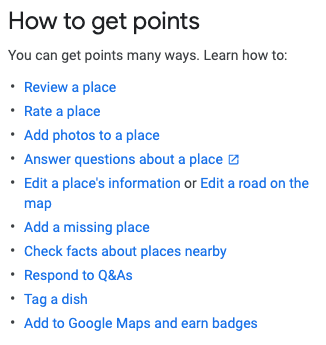
Points are awarded to a Local Guide for carrying out specific tasks on Maps, like posting a review, adding a missing location, or responding to queries. Below is a chart that Google produced that details the Local Guides point distribution. A user’s Local Guide level, which is one of ten, is determined by the amount of points they have accumulated. The user will get a Local Guides badge next to their name on Maps after they reach level 4 (250 total points). For individuals that advance through the ranks, Google also provides benefits and awards.
Google claims to offer “early access to Google products and additional rewards from partners,” however specifics are vague. Are Google Local Guides compensated for their services? seems to be a common question. As far as we can determine, the programme is optional, and the only benefits Local Guides can receive from Google are those mentioned above.
How to Get Your Business Listed in Google Local Guides
A Local Guide is hard to identify in person unless you are familiar with their face from their Google profile picture. Treating every customer like one is the only way to eventually receive recognition from a Local Guide. Starting with an updated and correct Google My Business listing, which can be done with local SEO software, is the first step in this process. You should be proactive and engaging, whether it’s by asking for reviews or knowing how to respond to unfavourable reviews, to assist enhance online visibility even before a Local Guide visits your locations.
Not only does having a focused plan for response to and development of reviews help to increase customer retention rates, but it can also open the door for a natural increase in client acquisition. Even more, individuals are drawn to your company by the social proof that your pleased consumers supply through their internet reviews. Local Guides will eventually take notice and become interested in the experience. When it comes to local search ranking initiatives, Local Guides can significantly increase company visibility from a branding perspective. Reviews and SEO work hand in hand, and Google reviews from a Local Guide may help increase consumer trust in your brand. How can you invite a Google Local Guide to one of your locations, I hear you ask?
Google Local Guides’ Strength
Having a Google Local Guide connect with your listing, in other words, can help your brand. It demonstrates that one of Google’s highly regarded sources took the effort to test your brand, which might improve your brand’s online reputation in your sector. This, however, depends on your brand living up to the standards you set for it in both the virtual and real worlds. A satisfied Local Guide attracts more consumers and offers the opportunity to enhance the customer experience by offering accurate online information together with the first-rate encounter at any place.
What is a Local Guide?
But let’s take a brief step back. For those who are unaware, a Google Local Guide is a Google user that participates in an activity programme that pays them for frequently adding information to Google Maps. Due to built-in Google access on Android smartphones, users skew more towards these users, however, the service is accessible to anybody with a Google account and access to the Google Maps app. The idea behind it is fairly straightforward: every contribution, such as uploading a photo, writing a review, responding to a user’s Q&A question, selecting a characteristic for a shop or other place you’ve been to, recommending a change to a Google My Business profile, etc., is worth points.
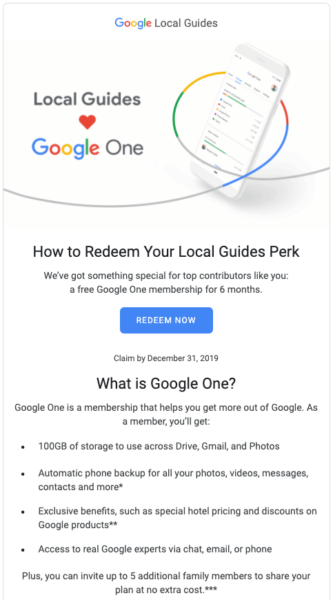
Your Local Guide “Level” rises with more points earned, and each level unlocks perks like Google One membership or movie tickets.
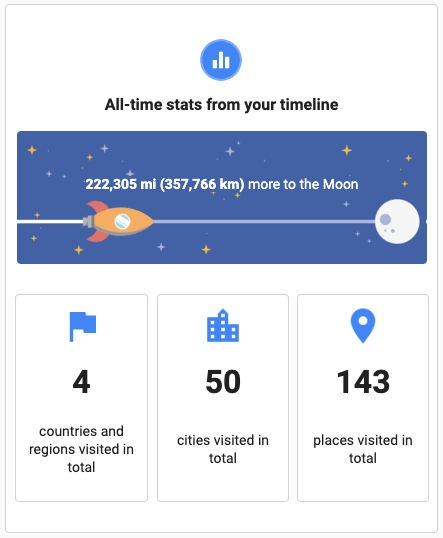
Google cleverly links this gamification to the gamification of other aspects of your life that Google tracks through your connected devices, such as travel, in order to increase user engagement.
The problem, though, is that more does not always equal better, as I’ve learned while doing the research for this article. In reality, it appears that Local Guides are having the exact opposite result from what was intended. A few themes of problems emerged in my discussions with local search experts who have a lot of first-hand knowledge of Local Guides.
Gamification promotes actions that result in points only for the purpose of getting points.
I’ve already mentioned the gamification of Local Guides, but it’s important to emphasise what a bad system it can be when used incorrectly. In many gamification systems, “badges” are obtained when users meet predetermined objectives, and Google Local Guides is no exception.
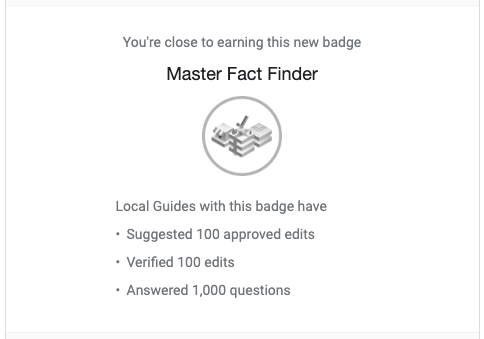
These badges are not visible to the general public, though, thus they are unlikely to increase user confidence in the Local Guide. Your “level,” which customers are much more likely to correlate with trust, is the thing that is most visible in addition to your posted contributions. Ben Fisher, a Google My Business product expert at Steady Demand, has strong feelings about this Local Guides programme feature: Since the system was implemented, I myself have not liked it. It is too simple to trick. The Local Guides programme was launched with a point-based incentive structure that rarely awards tangible incentives (the points primarily correspond to ‘levels’). Gamification has disadvantages.
The first is that it gives users the impression that they are more powerful than they actually are and promotes actions that earn points solely for the purpose of earning points. I once overheard a user say that they would do ‘check the facts’ and choose ‘not sure’ for each response merely to get points.” Andrew Shotland, a Local Guide for Local SEO Guide, concurs, saying: “I am a Local Guide myself, and while I’d like to think that I generally leave helpful reviews, I find Google’s incentivizing Local Guides to leave reviews with things like movie tickets automatically makes the whole programme suspect.
I almost look at non-Guide reviews as more legitimate
Greg Gifford of SearchLab says that while he can see why gamification was utilised in this application, he thinks that it had the exact opposite impact of what was intended: “The idea is wonderful, but the implementation has utterly ruined the value of the programme. I see why they made things more engaging and interactive.
However, the integrity of the contributions was ultimately destroyed. When you look through Google My Business Q&A, this becomes extremely obvious. Regardless of the quality of the responses, Local Guides received a tonne of points for responding questions. I’ve seen a tonne of extremely brief 1-4 word answers to questions, and a disproportionate amount of them are rude and totally unrelated to the subject. I quickly looked through the Google Q&As for businesses to demonstrate Greg’s claim. It didn’t take long to unearth a plethora of incorrect, useless, or snarky answers to questions given by users of Local Guide, all of which were for a single luxury chain.
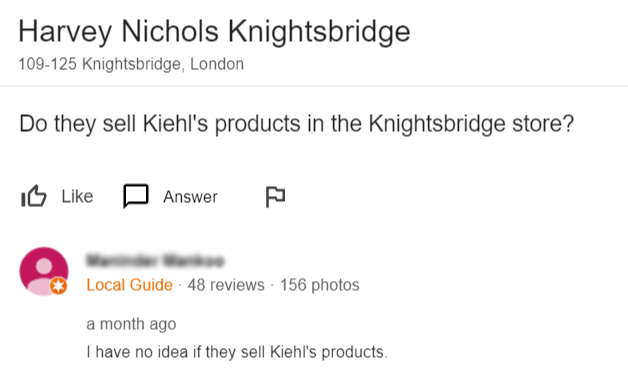
The dangers of improperly implemented gamification are perfectly summed up in the first scenario above. This is what occurs when giving a “I don’t know” answer still results in a benefit. At least the Local Guide below didn’t ask the question but provided an alternative path to the solution (still completely useless to everyone else, though).
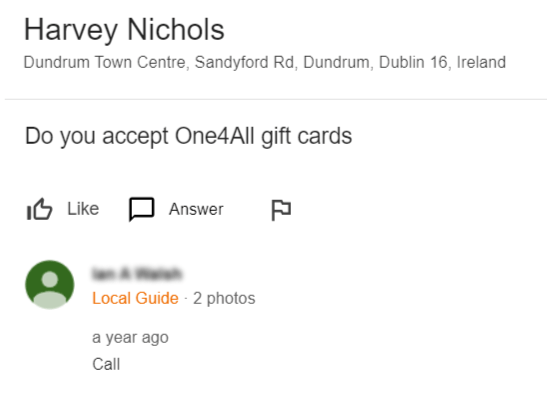
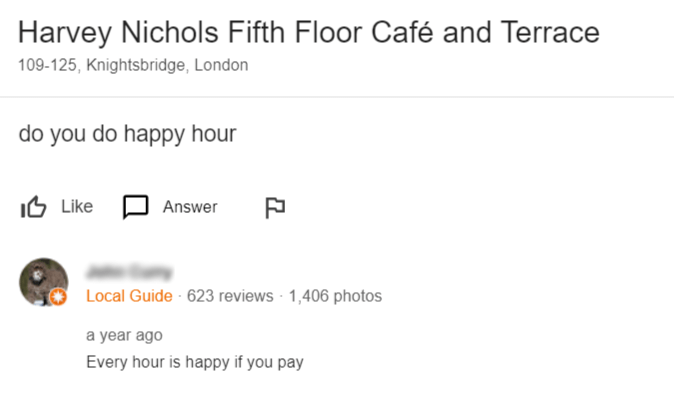
There were many more that I discovered, but I decided to end this digression with this local guide’s snarky example. (Why is it that Local Guide veterans tend to respond with sarcasm more frequently?) The quantity that results from gamification may ultimately far surpass the quality. They upload a lot of images and write a lot of evaluations because they get points, Greg observes.
While a select few participants in the programme genuinely attempt to be helpful by writing highly thorough, informative reviews and uploading high-quality images, an excessive number of others merely follow the rules to earn points. Greg’s comments about contributions to the Local Guide are probably the most scathing here: “I almost look at non-Guide reviews as more legitimate because they’re left by someone who truly wanted to leave a review, rather than by someone who was vomiting out reviews just to get a few more points in the system.”
Local guides don’t only contribute at a Gatling-gun pace because the game is so alluring. It’s a common misconception that having a high level in the Local Guides programme gives you more power to have your suggested edits to Google My Business profiles approved. This can be a huge advantage for any local SEO looking to quickly clean up listings or for bad actors looking to cause havoc among their competitors. I spend numerous hours attempting to assist businesses with their company listings on maps, therefore I tend to have a more negative opinion of the Local Guides programme, as Online Ownership’s Tim Capper (another Google My Business Product Expert) says.
There is a misconception that having a Local Guide account and more points means that updates will be accepted more frequently. This is incorrect because all information updates must pass scrutiny before being approved. While it is true that alterations are linked to your entire Google account, Ben Fisher says, “What gives you real power is the constancy and dependability of your edits. Factual adjustments might increase your trust because of a number of checks and balances.
Edits from a Level 3 guide have been accepted right away, whereas those from a Level 8 guide have been put into the “not applied” status right away. Google Local Guides: What are they? Anyone, with or without a Google account, can join up to become a local guide, assist tourists in navigating your neighbourhood, and discover well-kept secrets that only a local would be aware of. But may corporations be in peril in secret? Some claim that the Google Local Guides programme is inherently dangerously defective. Explore now.
What are Google Local Guides (and why should you care?)
The Local Guides programme enables a global community of explorers to exchange information, gather reviews, share images, verify information, modify Google My Business listing details, and contribute to the upkeep of Google Maps accuracy (and the larger ecosystem of Google features). Each month, more than a billion individuals use Google Maps to find local businesses and complete their navigational tasks.
There is a lot of local business infrastructure and data to maintain! While Google Maps users themselves contribute an astounding 20 million pieces of information every day, Google Maps is continually curating fresh information from street view vehicles, map users, local business owners, and satellite data.
 Signing up as a Local Guide is easy
How to sign up for the Google Local Guides program
It’s really simple to become a Google Local Guide. Simply visit the website, register, and begin by posting reviews and pictures of the areas you have visited. Your guide ranking will rise as you interact and review more. You might have a favourite local food, a secret location, or the ideal position to see a sunset. You may now formally serve as a helpful tour guide (and, while you’re doing it, promote your Instagram photos).
What are the perks of being a Local Guide?
For intrepid volunteers who wish to share their local expertise or travel tales with others who might be like-minded and like travelling, Google has created the Local Guides initiative. As a Local Guide, you may gain points, badges, and local guide perks to satisfy your insatiable desire for reward (right, millennials?) while also providing fantastic information for potential customers and increasing the online visibility of local companies.
Your first Local Guides badge will become available once you complete level four of the Guides programme, which will help people find your contributions and locations. You will receive additional advantages from Google, including early access to exclusive benefits, brand-new Google products, and top-secret partner benefits. If you’re lucky, you might even appear in one of their promotional videos or perhaps get invited to a summit that brings together the best Local Guides in the world, all expenses paid.
 Google Local Guides help contribute to the local community
How to score Google Local Guide points and badges
Over brand-generated information or advertising, people tend to trust customer reviews more. We frequently look to other people’s behaviours and opinions when we haven’t formed our own, whether it be while looking for a dependable plumber, dining out, or discovering a hidden gem to explore. Badges, benefits, and points are awarded for joining the Local Guides programme.
The Google Maps ecosystem is powered by local guides throughout the world, who thrive on giving reliable, current information—most of the time. Because of the real-time gamification system used by Google Local Guides, the more you share and contribute, the more points and incentives you will eventually earn. The badges and points you earn can also be exchanged with thousands of Google partners. You must contribute to Google Maps in order to receive points, and you must be active in order to receive badges.
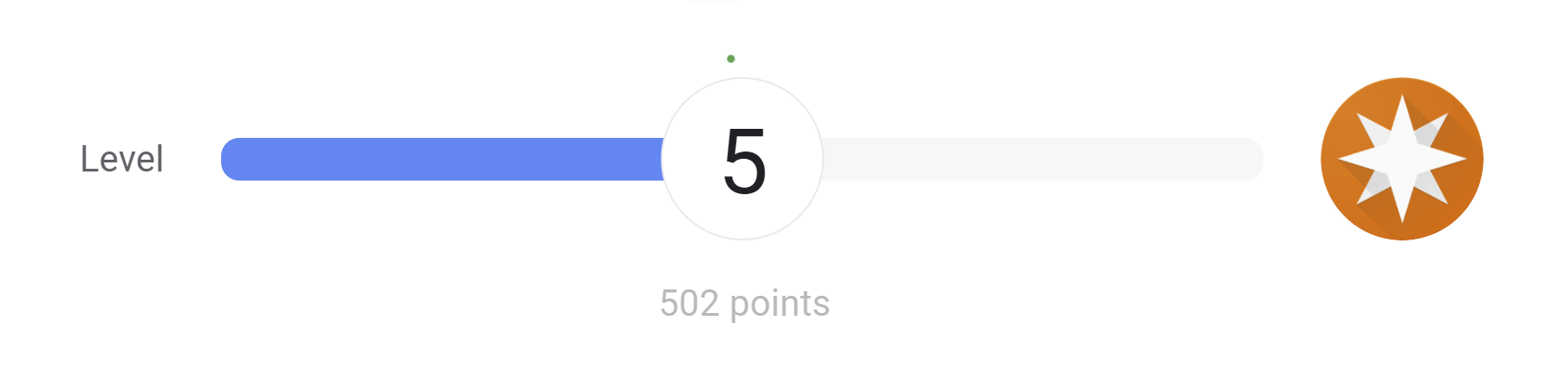
Awards, points, and badges Local guides have the ability to ask and respond to inquiries, edit locations (keeping the information current), and evaluate nearby companies. In a local search, you might answer questions on the information panel, leave a review, add a missing location, amend and update information, and frequently verify facts. You will receive a certain number of points for each contribution.
For instance, if you submit a picture, you’ll get five points; if you write a long review with more than 200 characters, you’ll get 10 points plus an extra 10 bonus points. You can earn badges by swiftly accumulating points. You need to accrue up to 250 points in order to get your first badge. The super-star tier at level ten has 100,000 points!
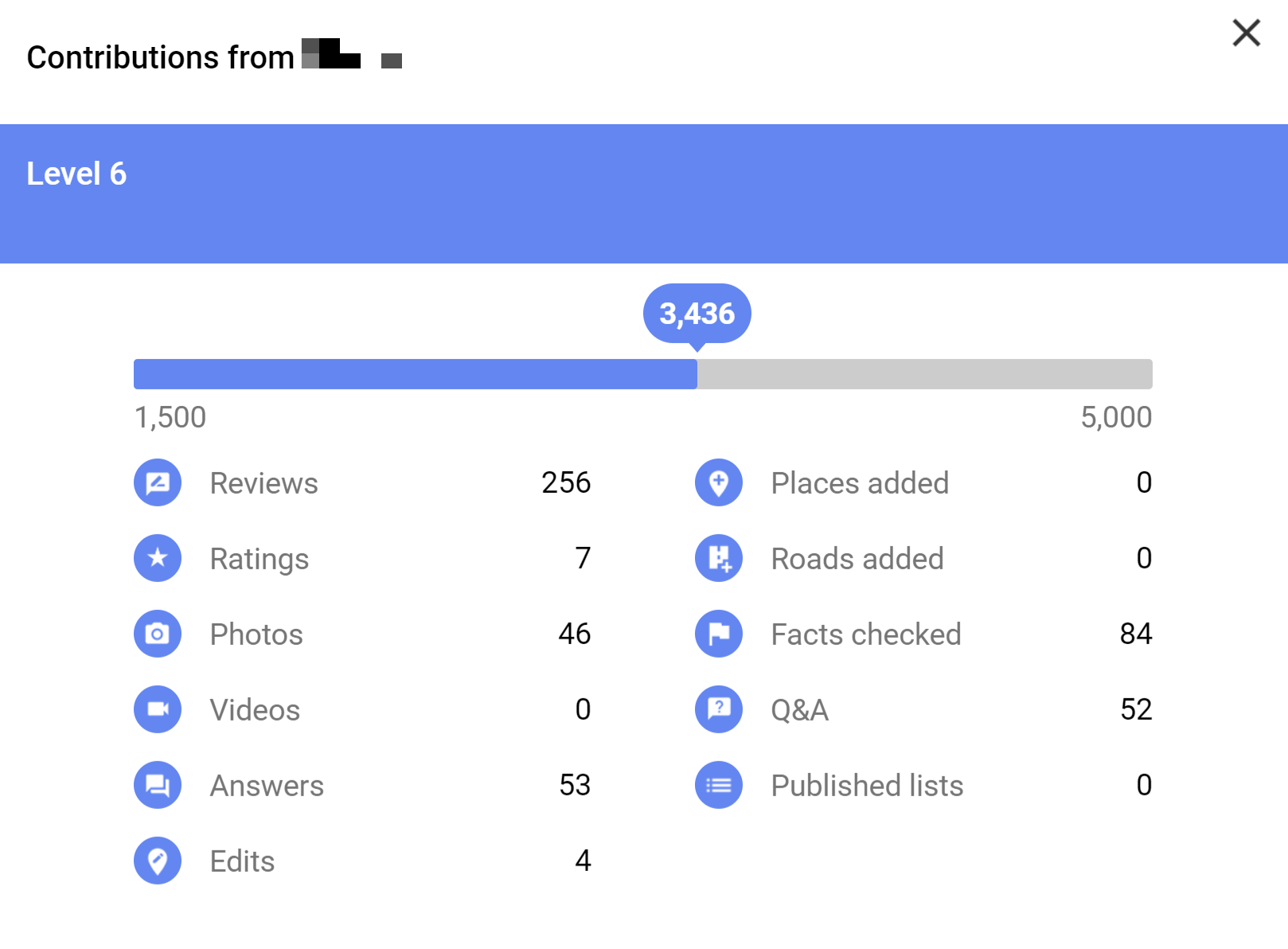
Contributing reviews, images, queries, and more will advance you as a Local Guide. Businesses are beginning to realise that their clients are their greatest brand ambassadors and supporters. Consumers have so replaced conventional product sites with user-generated content. Purchase decisions are significantly influenced by their product ratings, submitted photos and videos, questions and answers, and product ratings.
Why Local Guides are dangerous: gamifying reviews (points for the sake of points)
Although Google Maps and Local Guides were created with the best of intentions, some Local Guides are only in it for a fast rush of dopamine as they rack up badges and awards, not for the well-being of Google’s ecosystem. The term “gamification” refers to the application of game elements to non-gaming contexts. In real life, you may spot gamification when ordinarily mundane, dull, every day tasks suddenly become exciting, engaging, and rewarding.
Gamification: receive a badge for writing a review! Waze candy collection while driving? Gamified! Gamification techniques are applied to products and services by clever marketers and product designers to boost engagement, fun, and loyalty. The same may be said for Local Guides and Google Maps. However, the gamified dopamine rush of Local Guides rewards can lead people to act in a way that serves the community less authentically and more for the sake of earning points or badges. What are a few unfavourable reviews here and there, a few careless replies, or a false photo if you’re aiming for points?
The more points you get, the higher your Local Guide level (and trust level) becomes. Earned badges are hidden from the public, but your level is displayed, and other Google searchers trust this. In short, a programme that was initially a fantastic idea has lost value due to bad implementation, which has compromised the credibility of the contributions. You may navigate through the Google Q&A area and discover a tonne of quick, sarcastic responses that have scored points, but they aren’t accurate, helpful, or amusing to read.
Are Local Guides actually trustworthy? (How to tell)
Unfortunately, not all local guides are operating with the best intentions. Many businesses have at some point received fraudulent (or low effort) reviews or ratings, which are detrimental to their business. The majority of Local Guides contribute to the ecosystem as intended, though. But why would they act in this way? More thrilling than providing frank, beneficial reviews is racking up points, unlocking badges, and gaining influence. Anyone looking for a neighbourhood restaurant or shop who reads reviews may put more faith in a Local Guide’s advice. But paradoxically, you can tell how implausible certain badge holder reviews are by reading them.
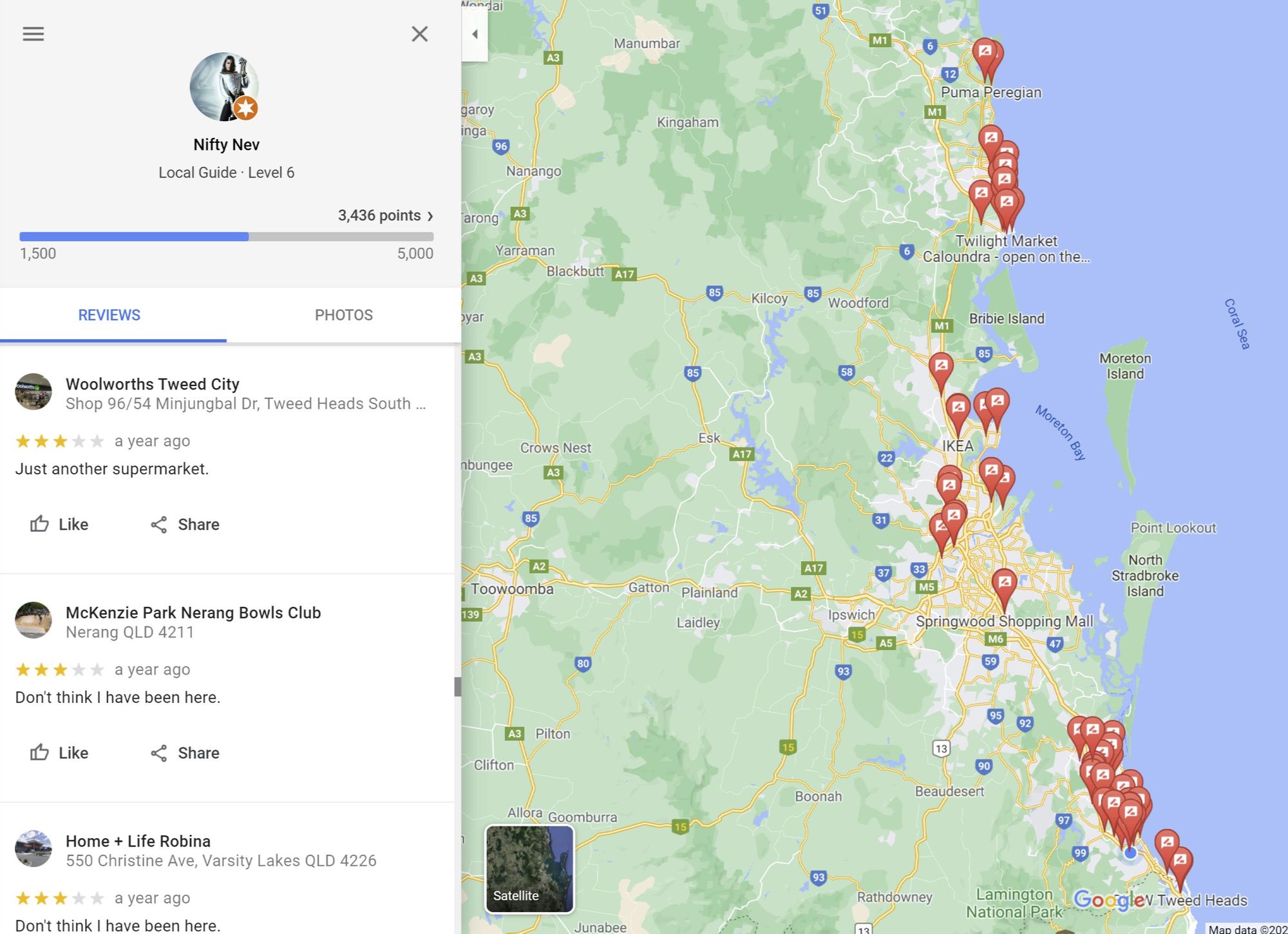
Businesses suffer when Local Guides strike. This Guide creates a trail of false testimonials in their path and rewards themselves with “points” for it. The Local Guides programme was designed to make Google Maps a reliable source of useful information that is actually helpful. Unfortunately, those who are just trying to earn a Local Guide badge are leaving an increasing number of pointless and damaging reviews. So, should you have faith in them? To see if you are familiar with the guide, click on their profile. Next, see if they have a phoney account or are trying to manipulate the system on purpose.
Businesses: how to protect yourself from bad reviews
Is the success of your company dependent on the honesty of dishonest Local Guides or competitors? It is feasible to have phoney reviews removed, despite the fact that doing so does not involve the most straightforward method (we wrote a detailed guide about it here). The greatest way to defend yourself is to attack aggressively. You may proactively push new reviews from your customers to your Google My Business profile (or nearly any other review site) using a programme like Cloutly. This will help you develop trust while burying any phoney or negative reviews that may have been posted.
Advantages of google local maps
Every user has the ability to submit their own content, explain their experience by providing evaluations and insights with replies, share images, update information by editing places, add missing places, or verify the information by checking facts using Google Maps.
You can do any of these things by selecting “Your Contributions” from the menu on the left side of the screen.
As soon as you begin making contributions as a Local Guide, Google will begin rewarding you with points and various other nifty perks.
- These points take you to higher programme levels.
- Early access to Google features and exclusive benefits from partners are yours.
- The first Local Guides badge, which promotes your contributions to areas, is unlocked at Level 4.
- Get noticed by adding a Google Guides-only badge on your Google profile.
- You gain access to special Google groups, hangouts, and competitions created just for Google Guides.
- Obtain first access to new Google features and products.
- Create a community of Google Guides and stay in touch with them whenever you want.
- By creating an event and adding it to the Google Events Calendar, you may also arrange a meetup at your location.
According to integrity-focused Local Guides, look for these red flags: accounts with 0 reviews or 0 photos suddenly posting multiple 5-star reviews; reviews that are overly generic (“Great place!”) with no specific details; profiles that have reviewed businesses in widely different geographic locations within a short time frame; and reviewers who have the same name as the business owner or employee. Always click on the reviewer’s profile to examine their review history.
Use the Local Guide badge as a tip to identify spammers.
Think again if you believed that Local Guides’ standing in the local search industry couldn’t get any worse. Because these behaviours are so common among users of this category, some people believe that the categorization actually aids in weeding out spam and fraudulent reviews on Google Maps and Google My Business. Postali’s Dan Foland, a Google My Business Product Expert, deals with spammers on a daily basis.
What he had to say regarding his interactions with Local Guides is as follows: For those of us who deal with spam and bogus reviews on a regular basis, the Local Guide badge is a tip that we utilise to discover spammers. “To the average user, the badge that Local Guides display seems to be a mark of trustworthiness.” “Because the requirements to become a Local Guide are wholly dependent on the quantity of actions completed (rating/reviewing a business, recommending business edits, etc.) rather than quality, it’s very typical for poor actors to become Local Guides,” says one observer.
Companies that sell reviews will make a tonne of bogus accounts, perform “check the facts” to advance a few levels, and then start submitting fake reviews because 200-word reviews award more points, says Ben Fisher. As a result, we frequently observe that bogus ads include three to four fake reviews from Local Guides. And when you delve further and look at the avatar and the review patterns, the gurus’ profiles appear reasonable enough. Jason Brown, a Google My Business Product Expert who works for Sterling Sky, provided me with the following excellent illustration of the review trends Ben mentions:
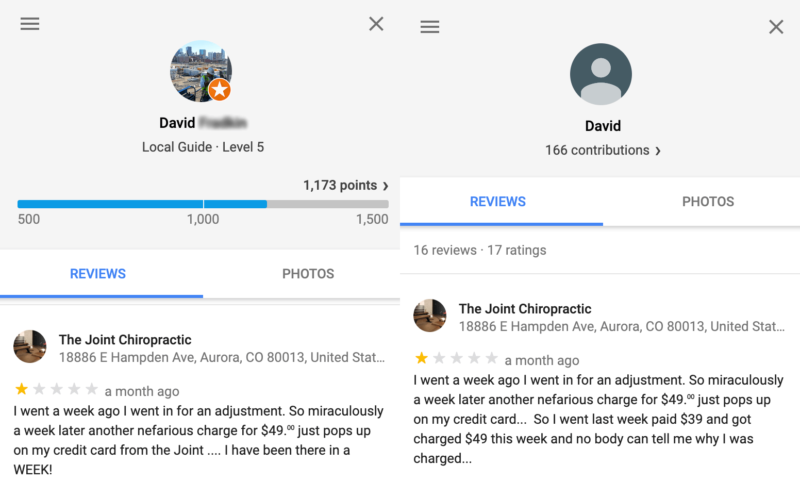
A Local Guide left a poor evaluation for a business, and a suspiciously identical review appeared, authored by someone who has the Local Guide’s first name. Blake Denman from RicketyRoo told me that Local Guides aims to give average people significance in their town. Influencers get compensated regardless of how knowledgeable they are. Only those seeking to trick the system care about their Local Guide level. Here’s the issue. The benefits are low and the ego trip negligible, so bad actors are motivated by the badge’s reputation as a credible source of information. Is Google doing anything to fix Local Guides and restore faith? Depends on who you ask.
Bad actors can make a real mess of things before a human or machine ever notices
While Joy Hawkins (from Sterling Sky), a Google My Business product expert, has positive things to say about the program’s new features (“Google is definitely trying to push the programme with their recent launches of profile descriptions and adding a follow feature. “), she saves her praise for a change designed to combat spam: “One thing I am excited about is the new ability to report Local Guides who are spamming businesses.” The programme is ultimately “a bit overstated, in that anyone can become a Local Guide and there are no actual benefits to becoming one,” according to Joy.
In regards to the new capabilities, Jason Brown is in complete agreement, adding, “It is intriguing that Google is now allowing users to follow or block Local Guides and to see what places that they recommend. Are Yelp Elites on steroids here? Is this a brand-new social feature from Google? Is it, however, “too little, too late”? Is Google’s decision to let users take action against Local Guides while also giving the Guides themselves more clout and influence actually going to result in a drop in spam? Tim Capper is dubious: “There is now a Local Guide site, but this is at best ineffective in reporting dishonest users.
In reality, you get in trouble if you include the user’s account in a forum report. The programme is also underfunded, so a report may not receive a human response for months. This indicates to me that Google believes there is not enough problematic data in the overall set of contributions to the maps programme to warrant tighter monitoring, which allows for rogue actors to create significant havoc before either a person or a machine ever notices.
Google refuses to accept that they have a massive issue.
The number of Local Guides and the occasionally spammy and frequently useless contributions they make both increase daily. Given the strong negative sentiment around Local Guides, it appears that Google has turned the local search ecosystem over to spammers in order to profit from customer and community feedback. Can anything be done about this?
Has the rot gotten out of hand, or can the wise counsellors turn the tide? I don’t have any solutions, but I can only hope that by expressing the above-mentioned consensus, we can reframe the discussion about local guides in a way that informs consumers and urges them to exercise caution in using them, at least until the programme is cleaned up. I’ll close with a remark from Dan Foland, who concisely and forcefully captures the duality at the centre of the problem: “Google doesn’t want to admit that spam, phoney reviews, and local guides are major issues.
The typical user is unaware that the Local Guide badge only considers the quantity of activities taken and ignores quality, trust, or any other factors. Ironically, a person has a higher chance of becoming a local guide the more spam and fraudulent reviews they post. No, in fact… I’ll end on a humorous note since it’s the Christmas season: a celebration of things Local Guides and an illustration of the influence of user-generated material. With the aid of “Local Guides,” Google keeps Maps up to date and thanks participants with a tier structure and a variety of benefits. Local Guide settings have been transferred from Google Maps to a new website in a minor modification.
You may examine your points total and a breakdown of the number of reviews, images, answers, and other contributions you’ve made online at maps.google.com/localguides. You may also rapidly evaluate without having to pull up a listing first. The “Connect” tab exposes a different community website, though. This website also contains a link to “Settings,” where you may choose your email preferences, “Change your city,” and unsubscribe from the programme. Google reveals that Local Guides are getting a new settings page in a brief email.
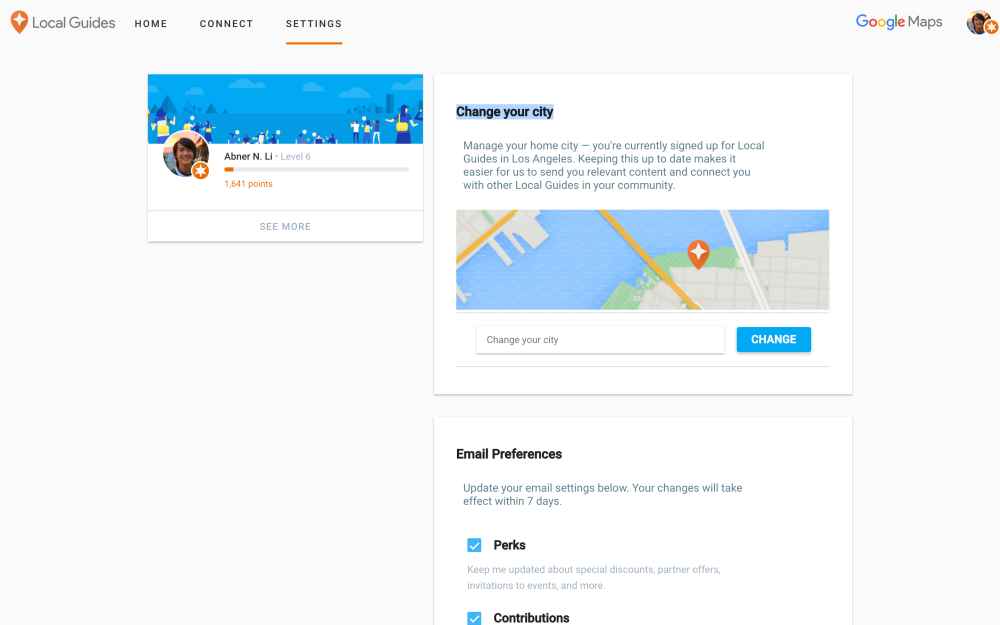
The new website — google.com/localguides/settings — just isn’t a part of Google Maps and only homes the primary two controls:
- Update your location for an extra related Local Guides expertise: Today, we ship you domestically related emails and rewards based mostly on the town choice you made if you first joined the program.
- Control the emails you obtain: change the varieties of emails you obtain, or wish to cease receiving Local Guide emails fully
Meanwhile, opt-out is changing into its own separate site that’s not linked to within the new settings. Given this path, it’s possible that maps.google.com/localguides will ultimately get replaced fully, as a lot of the performance is already built into Maps at google.com/maps/contrib. Google didn’t specify yesterday when the settings changeover is happening because the previous Local Guides web page remains to be obtainable.
Key Takeaways: What Every Business Owner and Consumer Should Know About Google Local Guides in 2026
- The program has grown massively: As of 2024, Google reported 150 million active Local Guides participants worldwide, up from 120 million in 2019. In April 2026, Google announced that more than 500 million people are now posting photos, reviews, and videos to Google Maps.
- Quality remains a major concern: Google removed over 245 million reviews in 2024, with 15.1% flagged as fake or misleading. Local SEO experts note that “Local Guides” often write reviews for places they have never visited simply to increase their levels.
- Gamification has unintended consequences: The points-and-badges system encourages quantity over quality, leading to useless Q&A responses, sarcastic comments, and fake reviews from users chasing digital trophies rather than providing genuine help.
- Businesses can protect themselves: Encourage authentic reviews from real customers, monitor your Google Business Profile regularly, report suspicious reviews using Google’s Reviews Management Tool, and respond professionally to both positive and negative feedback.
- 2026 updates aim to improve trust: Google is now highlighting high-level contributors with gold-colored profiles, introducing Gemini-powered captions for photos, and making achievement badges more transparent. However, experts remain skeptical about whether these changes will meaningfully reduce spam.
- Not all Local Guides are bad: Many dedicated volunteers provide valuable, high-quality contributions that help millions of users make informed decisions. The key is learning how to identify trustworthy guides by examining their review history and profile activity.
Frequently Asked Questions (FAQ)
What is a Google Local Guide?
A Google Local Guide is a volunteer who contributes reviews, photos, videos, answers to questions, and location edits to Google Maps. In exchange, they earn points, unlock levels, and receive occasional perks like early access to Google features or partner rewards. As of 2026, there are over 500 million people contributing to Google Maps.
Do Google Local Guides get paid?
No, Google Local Guides do not receive direct monetary payment. The program is volunteer-based. Guides earn points and badges, and may occasionally receive perks such as early access to new features, Google Drive storage upgrades, or invitations to special events. However, these perks are limited, region-based, and not guaranteed—even at higher levels.
How do I become a Google Local Guide?
To become a Local Guide, you need a Google account and must be at least 18 years old (or meet your country’s age requirement). Visit maps.google.com/localguides, click “Get started,” select your city, accept the program guidelines, and agree to receive emails. The process takes less than a minute.
Are Google Local Guide reviews trustworthy?
Not always. While many Local Guides provide genuine, helpful reviews, the gamification system rewards quantity over quality. This has led to fake reviews, spam, and useless responses from users chasing points. Local SEO experts recommend clicking on a reviewer’s profile to examine their review history before trusting their recommendations. Google removed over 245 million fake reviews in 2024 alone.
How can businesses protect themselves from fake Local Guide reviews?
Businesses should: (1) encourage authentic reviews from real customers, (2) monitor their Google Business Profile regularly for suspicious activity, (3) report fake reviews using Google’s Reviews Management Tool under categories like “Spam” or “Conflict of Interest,” (4) respond professionally to all reviews, and (5) consider using review management software to proactively solicit positive reviews.
What are the benefits of being a Local Guide?
Benefits include: earning points and unlocking levels (1-10), receiving a Local Guides badge at Level 4, early access to new Google features, occasional partner rewards (like Google Drive storage or movie tickets), invitations to special events, and the ability to follow or block other Guides. However, benefits are not guaranteed and vary by region.
What’s new for Google Local Guides in 2026?
April 2026 updates include: Gemini-powered AI caption suggestions for photos and videos, faster photo and video sharing directly from the Contribute tab, redesigned achievement badges that show contributor roles (e.g., “expert fact-finder”), gold-colored profiles for high-level contributors, and enhanced contribution tracking with total points displayed prominently.
Final Thoughts: The Future of Google Local Guides
As Google’s Local Guides program enters its second decade, it stands at a crossroads. The program’s original vision—mobilizing community knowledge to make Google Maps more accurate and useful—remains as relevant as ever. However, the unintended consequences of gamification have created significant challenges: spam, fake reviews, useless Q&A responses, and a credibility gap that undermines trust in the very system Google seeks to improve.
The 2026 updates represent a step in the right direction. AI-powered captions, gold profiles for trusted contributors, and clearer achievement badges may help users identify high-quality contributions more easily. But as local SEO experts have noted, Google has yet to address the fundamental issue: the program still rewards quantity over quality. Until that changes, bad actors will continue to exploit the system.
For business owners, the message is clear: actively manage your online reputation. Encourage genuine reviews from satisfied customers, respond professionally to all feedback, and report suspicious activity promptly. For consumers, exercise healthy skepticism. Click on reviewer profiles, look for patterns, and trust your instincts. A Local Guide badge is not an automatic seal of approval.
For aspiring Local Guides who genuinely want to help, focus on quality over quantity. Write detailed, honest reviews. Upload clear, useful photos. Answer questions thoughtfully. Your contributions matter—but only if they’re authentic.
🔍 Want to Check Your Own Local Guide Status?
Visit maps.google.com/localguides to see your points, level, and contribution history. If you haven’t joined yet, consider whether you want to contribute for the right reasons—not just for points, but to genuinely help others discover great local businesses.
This guide was last updated in April 2026 to reflect the latest Google Maps updates, Gemini AI features, and community feedback from local SEO experts and Google My Business Product Experts.