Mastering the Basics of PPC Advertising – A Comprehensive Guide
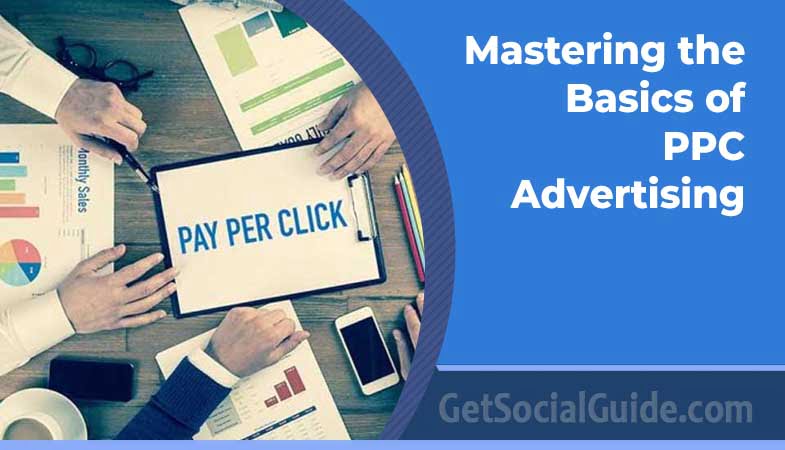
Pay-per-click advertising is one of the fastest ways to get traffic to your website. It’s also a great way to build brand awareness and complement your SEO efforts.
PPC ads can be text, image, video, or a combination of these and can appear on search engines, websites, and social media platforms. This article will cover the basics of creating and optimizing a PPC campaign.
Choosing Your Keywords
PPC Ottawa revolve around keywords; a successful campaign starts with selecting the right ones. It may seem simple since Google offers tools that can give you sample keywords based on a scan of your website, but to maximize your campaign’s ROI, you need to create a keyword strategy.
Start by identifying your target audience and the keywords they use to find your products or services. This will help you target your ad placements and create campaigns that are more likely to convert.
Using keywords with high search volume and low competition will result in higher click-through rates and quality scores, lowering costs. It would help if you also considered identifying negative keywords, which are search terms for which you don’t want your ad to appear. This will prevent your ads from being shown to people who don’t need them and could lead to a bad impression of your brand.
Advanced Keyword Research: The Foundation of Profitable PPC
Effective keyword research goes beyond simple list-building. It’s about understanding user intent and strategically selecting terms that drive qualified traffic to your business . The difference between a profitable campaign and wasted ad spend often comes down to strategy: understanding intent, filtering out unqualified traffic, and making every click count .
Understanding Keyword Match Types
Google Ads offers three primary keyword match types, each serving a distinct purpose :
- Broad Match: Provides the widest audience reach, capturing searches broadly related to your keyword including synonyms. While it maximizes exposure, it can trigger irrelevant clicks and increase wasted spend .
- Phrase Match: Strikes a balance between reach and relevance. Your ads trigger for searches containing your exact keyword phrase or close variations. For example, “running shoes” triggers for “best running shoes” or “running shoes for women” .
- Exact Match: Offers the highest precision, triggering ads only for searches closely matching your specified keyword. This significantly reduces wasted clicks and enhances CTR, though it limits traffic volume .
- Negative Keywords: Essential filters that prevent your ads from appearing for irrelevant searches, reducing wasted ad spend by up to 30% .
Long-Tail Keywords: Your Secret Weapon
Long-tail keywords are the secret weapon of high-performing PPC campaigns . Unlike broad, highly competitive keywords, long-tail keywords are more specific—often three or more words—and reflect higher user intent. They typically have lower search volumes but higher conversion rates because they target users who know exactly what they want . For example, instead of bidding on “coffee,” target “organic Ethiopian Yirgacheffe coffee beans” to attract a niche audience ready to purchase .
Keyword Research Tools for 2026
Leverage these tools to uncover profitable keywords :
- Google Keyword Planner – Free and native to Google Ads
- SEMrush – Excellent for keyword and competitor research
- Ahrefs – Search volume and keyword difficulty analysis
- SpyFu – See what competitors are bidding on
Creating Your Ad Groups
PPC advertising works through a bidding process that determines the placement of ads on search engine results pages. User searches trigger this auction based on several factors, including keywords (intent), location, device, and time of day.
To maximise the effectiveness of your PPC campaigns, it is important to structure them into ad groups. This allows you to monitor and manage your campaign. It also lets you focus on the keywords and ads that drive value and helps your team make data-driven adjustments to achieve success.
Ad groups can be grouped by a common theme, such as match types, audience needs, or landing page goals. You can even create single-keyword ad groups, which isolate a group of keywords and allow for closer attention to performance, copy optimization, and testing.
Ad Group Best Practices for Maximum Performance
A PPC ad group is a collection of ads targeted toward a shared theme and structured around related keywords . Proper ad group organization is critical for PPC optimization, allowing you to identify which keywords work best, whether ad copy is relevant, and whether landing pages align with your offers .
SKAGs vs. Themed Ad Groups: Finding the Right Balance
Single Keyword Ad Groups (SKAGs) have long been considered a hallmark of good PPC strategy, placing individual keywords in their own ad groups for maximum control over ad copy and landing page relevance . However, managing SKAGs at scale can become overwhelmingly complex. With 1,500 keywords in a SKAG structure maintaining three ads per group, you’d manage 4,500 individual creatives—compared to just 900 in a standard structure .
Modern best practice suggests a blended approach :
- Use SKAGs for high-volume hero or brand terms that drive the largest proportion of your traffic
- Use traditional tightly-themed ad groups for the bulk of your remaining inventory
- Implement Dynamic Search Ads as a “catch-all” strategy to capture new and emerging search terms
Key Ad Group Best Practices
- Organize by theme or business goal: Group keywords by product category, service type, or audience segment
- Narrow your keywords: Keep keywords within each group tightly focused to prevent overlapping targeting
- Create at least 3 ads per group: This enables rotation and A/B testing to identify top-performing creatives
- Use one landing page per ad group: Maintain consistency and relevance for users clicking your ads
Creating Your Ads
When you’re ready to create your ads, you must set up an account with the PPC platform of your choice (Google Ads is most popular). You’ll also need to choose a bidding strategy and determine how much you will pay per click. The platforms will then display your ads based on an auction system.
PPC advertising is a great way to reach your audience and achieve your marketing goals. It’s cost-effective and measurable, so you can track conversions and return on investment. It’s also ideal for regaining a brand reputation after a negative event or PR crisis.
The key to success with PPC is consistency and testing. You need to monitor your campaign and make changes based on the data you gather. You can use several tools to help you do this, including Unbounce, Databox, and Ahrefs. You should also consider ad group structure, with specialists favoring a structure known as SKAGs (single keyword ad groups). These structures allow you to control the targeting and bidding for specific keywords.
Crafting Compelling Ad Copy That Converts
Your ad is the only thing you have to get your brand’s message in front of the user . You can have the best keyword strategy and landing page, but if your ad gets lost, no one will ever see it. With Responsive Search Ads (RSAs), you now have 15 potential headlines and 4 descriptions to work with—each headline up to 30 characters and descriptions up to 90 characters .
Maximizing Ad Assets (Extensions)
Ad assets (formerly known as ad extensions) serve as extensions to your ad copy, providing additional information and increasing visibility . Take advantage of:
- Sitelinks: Direct users to specific pages on your website
- Callouts: Highlight key selling points like “Free Shipping” or “24/7 Support”
- Structured Snippets: Showcase product categories or service offerings
- Location Extensions: Display your business address and phone number
- Call Extensions: Enable one-click calling from mobile devices
Using ad extensions increases your ad’s real estate on the search results page, pushing competitors down and improving visibility .
Managing Your Ads
PPC ads are constantly changing and need to be continually monitored and optimized. Whether it’s your keywords, copywriting, or competitor analysis, you need to be proactive and continue testing new elements of your campaign.
To get the most out of your PPC campaigns, you must create ad groups with related keywords and consistent messaging. This will help you to produce more relevant and trustworthy ads that align with user search intent, boosting your quality score.
Monitoring your budget and pausing any underperforming keywords that aren’t producing results is also important. You may also want to test out different bidding strategies to find what works best for your business.
Smart Bidding Strategies for 2026
In 2026, PPC success depends less on manual optimization and more on the quality of the inputs behind automation . As Google increasingly automates bidding, targeting, and placements, your competitive advantage comes from clean conversion tracking, high-quality product feeds, and strong performance data .
Key Bidding Strategy Options
- Manual CPC: Full control over bids; ideal for experienced advertisers testing new campaigns
- Maximize Conversions: Automated bidding focused on driving the most conversions within budget
- Target CPA (Cost Per Acquisition): Guide campaigns to achieve a specific cost per conversion
- Target ROAS (Return on Ad Spend): Optimize for revenue rather than just conversions
The Importance of Conversion Tracking
According to Google, advertisers using Smart Bidding see an average conversion uplift of 20% compared to manual bidding . However, automated strategies require sufficient conversion data to work effectively. Essential tracking tools include :
- Google Ads Conversion Tracking – Tracks specific actions after clicks
- Google Analytics 4 (GA4) – Comprehensive user behavior tracking
- Google Tag Manager – Manages tracking codes without website coding
- UTM Parameters – URL tracking to identify traffic sources
Key Metrics to Track for PPC Success
Regular analysis of campaign metrics guides optimization decisions. Focus on these core KPIs :
- Click-Through Rate (CTR): Percentage of impressions that translate into clicks. Average across industries is 3.17%. Rates below 1% suggest targeting or ad copy issues
- Quality Score: Google’s rating of ad relevance and landing page quality. Higher scores (7+) can reduce CPCs by 50% compared to low scores
- Conversion Rate: Percentage of clicks that convert. Median across industries is 3.75%
- Cost Per Acquisition (CPA): Cost to acquire a customer
- Return on Ad Spend (ROAS): Revenue generated per dollar spent on ads
- Bounce Rate & Time on Page: Indicators of landing page engagement
Landing Page Optimization: Where Clicks Become Customers
An optimized landing page directly impacts conversion rates and Quality Score . Your landing page should align with the ad message and effectively convert visitors into leads or customers . Best practices include :
- Message match: Maintain consistent headlines, offers, and calls-to-action between ad and landing page
- Fast loading speed: 53% of mobile users abandon pages that take over 3 seconds to load
- Clear conversion paths: Remove navigation menus and distractions that could lead visitors away
- Mobile optimization: Over 60% of searches now come from mobile devices; use responsive design
- Simple headlines and CTAs: Use clear language like “Buy Now” or “Get Your Free Quote”
Tools like Unbounce, Instapage, and Elementor can help create high-converting landing pages without extensive coding .
Advanced PPC Strategies for 2026
The digital advertising landscape continues to evolve rapidly. Here are the top trends and strategies to watch in 2026 :
Performance Max Campaigns
Performance Max (PMAX) is central to Google’s direction for eCommerce advertising . When PMAX underperforms, the issue is usually not the campaign type but the inputs: feed quality, conversion tracking, creative assets, and budget allocation . With proper fundamentals, PMAX becomes a scalable growth channel.
AI-Powered Automation
Smarter bidding, targeting, and ad creation are increasingly powered by AI . While automation handles much of the heavy lifting, human oversight remains crucial for strategy and creative direction. The platforms are moving toward “guardrails” where advertisers guide automation through budgets, targets, and customer signals rather than managing every manual lever .
Demand Gen and YouTube Advertising
Demand Gen campaigns help reach users earlier in the journey, similar to paid social . YouTube is no longer optional for advertisers—short, low-production videos can perform well, especially in-feed placements designed for discovery and intent capture .
Privacy-First Advertising
With cookieless tracking becoming the norm, first-party data and contextual targeting are increasingly important . Ensure proper implementation of Consent Mode v2, especially for European audiences, to avoid undercounting conversions .
Common PPC Mistakes That Drain Your Budget
Avoid these costly errors that plague many advertisers :
- Not using negative keywords: Generates irrelevant clicks and wastes ad spend
- Driving traffic to the homepage: Sends all traffic to a generic page instead of a specific landing page matching ad copy
- Not A/B testing ad variations: Impossible to determine which copy or design performs best
- Not tracking conversions: Cannot improve what you cannot measure
- Optimizing less than weekly: Regular reviews save spending waste and maximize ROI
- Ignoring network performance: Search partner networks can sometimes be sources of bot traffic that don’t convert
PPC Certifications to Boost Your Expertise
PPC certifications demonstrate proficiency, establish credibility, and enhance career prospects . Consider these top industry-recognized certifications:
- Google Ads Certification – Covers Search, Display, Shopping, and Video ad products
- Meta Blueprint Certification – Confirms Facebook and Instagram ad proficiency
- Microsoft Advertising Certified Professional – Bing Ads and Microsoft ad platform expertise
- HubSpot Digital Ads Certification – Paid strategy within HubSpot tools
Key Takeaways: Your Roadmap to PPC Mastery
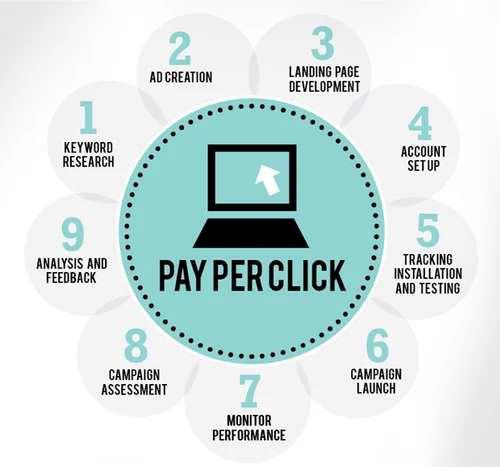
PPC advertising remains one of the most effective and measurable digital marketing strategies available today . Success requires a structured approach: start with thorough keyword research focused on user intent, organize your campaigns into tightly themed ad groups, craft compelling ad copy using all available assets and extensions, optimize landing pages for message match and conversion, and continuously monitor and test based on performance data.
In 2026, the landscape is increasingly automated, but this doesn’t mean you lose control—it means your competitive advantage comes from the quality of your data, conversion tracking, and strategic guidance you provide to the platforms . By mastering these fundamentals and staying current with emerging trends like AI-powered automation, Performance Max, and privacy-first advertising, you can build PPC campaigns that deliver sustainable, profitable results for your business .