
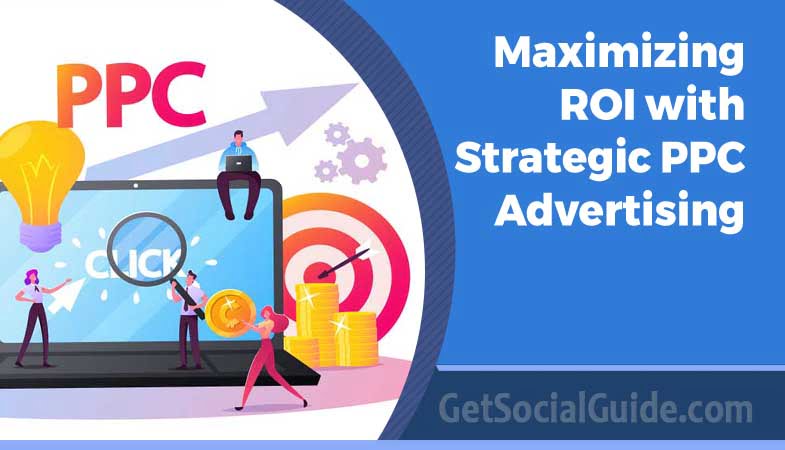
Maximizing ROI with Strategic PPC Advertising: A 2026 Guide for Businesses
Pay-per-click (PPC) advertising has revolutionized the digital marketing landscape, offering businesses a potent tool to amplify their online presence. In bustling markets like Houston, choosing the right PPC agency can make all the difference in navigating this complex terrain. Leveraging the expertise of a seasoned PPC agency in Houston not only ensures that advertisers get the most bang for their buck but also taps into local insights, optimizing campaigns for the unique demographics of the region. Whether you’re a startup or an established brand, partnering with a specialized agency can help harness the full potential of PPC in today’s competitive digital arena.

In 2026, PPC has become more sophisticated, yet many businesses still struggle to achieve a positive return on investment (ROI). According to recent data, paid search ads on Google have an average return of $2 for every $1 spent, but this average hides wide variance. Top performers achieve ROAS figures exceeding 1000%, while many others lose money. This guide will walk you through proven strategies to join the ranks of high-ROI advertisers.
Key Takeaways: Your PPC ROI Roadmap
- Track Everything: Accurate conversion tracking is non-negotiable for proving ROI and feeding AI algorithms.
- Structure Matters: A well-organized account prevents keyword cannibalization and enables precise optimization.
- Align SEO and PPC: Sharing keyword and intent data across channels reduces waste and captures more market share.
- Feed the AI Quality Data: Automation is powerful, but it amplifies your existing data quality—garbage in, garbage out.
- Prioritize Landing Pages: Your ad spend is wasted if your landing page doesn’t convert. Speed and relevance are paramount.
- Use Ad Extensions: Sitelinks, callouts, and structured snippets increase visibility and CTR without extra cost.
- Never Stop Testing: A/B test ad copy, landing pages, and bidding strategies to continuously improve performance.
Understanding the PPC Landscape
PPC advertising allows advertisers to pay a fee for each ad click, effectively enabling businesses to purchase site visits rather than relying solely on organic reach. Key platforms like Google Ads, Bing Ads, and Facebook Ads cater to different audience demographics and come with distinct features. Various pricing models, including CPC (Cost Per Click), CPM (Cost Per Mille), and CPA (Cost Per Acquisition), provide flexibility in ad spending. To maintain cost-effective online visibility, staying updated with the evolving PPC landscape is crucial.
In 2026, the PPC landscape is shaped by three major trends: AI-driven automation, the decline of third-party cookies, and increasing competition. As American Eagle notes, successful PPC campaign management now extends far beyond simple keyword bids, requiring a sophisticated approach that combines AI, advanced automation, and data-driven optimization. Meanwhile, the shift to first-party data means advertisers must build direct relationships with their audiences to maintain targeting precision.
Warning: The Cost of Ignoring PPC Trends
PPC costs have risen significantly. As the Digital Marketing Institute reports, PPC is still profitable but “not as profitable as it was” due to increasing CPCs. Falling behind on automation and data strategies will lead to wasted spend and lost market share to more agile competitors.
Setting Clear Objectives
Establishing clear objectives is the cornerstone of any successful campaign, especially in the realm of PPC advertising. Here’s why and how:
- Purpose and Direction: Clear objectives offer a roadmap. Whether the goal is brand awareness, lead generation, or direct sales, knowing the end game ensures that all strategies and tactics align in the same direction.
- Budget Allocation: With well-defined objectives, businesses can distribute their budget effectively. If the primary aim is brand visibility, for instance, a CPM model might be suitable. If it’s conversions, a CPC or CPA approach would be apt.
- Measurable Outcomes: Clearly defined objectives are typically quantifiable. Whether it’s a 10% increase in sales or generating 500 new leads, having measurable objectives allows for real-time assessment and adjustments.
- Improved Decision Making: When faced with choices – like which keywords to bid on or what ad copy to use – clear objectives provide a benchmark against which options can be evaluated.
- Accountability: Teams and individuals can be held responsible when there are specific objectives in place. If an ad campaign falls short, stakeholders can review, analyze, and course-correct based on set goals.
- Optimization Over Time: With objectives as reference points, businesses can analyze performance over extended periods, recognizing patterns, and making data-driven decisions for future campaigns.
As Rebecca Pilkington, Head of PPC at Exposure Ninja, emphasizes, “If you can’t track properly, you can’t optimise effectively, and you certainly can’t prove ROI.” Accurate tracking is the foundation that enables all other optimization efforts.
Target Audience Segmentation
One of the pillars of a successful PPC campaign is targeting. Leveraging tools that segment based on demographics, interests, and behaviors ensures your ads reach the right audience. Retargeting campaigns can pull back visitors who’ve interacted with your brand before but didn’t convert.
In 2026, effective segmentation goes beyond basic demographics. Taboola highlights that performance advertisers should leverage search keyword targeting for high-intent queries, audience targeting based on first-party data, and contextual targeting to align with relevant content. For e-commerce, Producthero advises using Customer Match to feed first-party data back into platforms, helping automation identify your most valuable customers.
Keyword Research and Selection
Keywords are the lifeblood of PPC, especially for platforms like Google Ads. Utilizing tools like Google’s Keyword Planner can help advertisers discover and select effective keywords. Emphasizing long-tail keywords can provide better-targeted traffic, while negative keywords prevent irrelevant clicks, saving money. As search behaviors evolve, continuously updating and refining your keyword list ensures that you remain relevant and competitive. Conducting regular competitor keyword analysis can also unveil new opportunities and potential market gaps to target.
According to LocaliQ, every day, around 15% of queries on Google are brand new and have never been seen before. This underscores the importance of ongoing keyword discovery. Use a combination of tools like Google Ads Keyword Planner, SEMrush, SpyFu, and AlsoAsked to find the exact phrases your ideal customers are using.
Pro Tip: Master Keyword Match Types
Google Ads now has three match types: exact, phrase, and broad. However, “exact isn’t actually exact” anymore. LocaliQ explains that close variants are included by default. Use broad match cautiously and pair it with smart bidding and a robust negative keyword list to prevent irrelevant clicks.
Crafting Compelling Ad Copy
The right keywords might get your ad in front of viewers, but compelling ad copy ensures they click. Impactful headlines, concise descriptions, and clear Call-to-Action (CTA) elements can make all the difference. It’s also advisable to split-test different ad variations to see which resonates best with audiences. Using emotional triggers or addressing a user’s pain points can elevate the persuasiveness of your ad. Furthermore, maintaining brand consistency across all ads builds trust and fosters recognition among potential customers.
LocaliQ recommends leveraging every messaging option available: headlines, descriptions, sitelinks, callouts, and structured snippets. Your ad is competing with the content on the page, the user’s environment, and other advertisers. Use clear value propositions, urgency (where appropriate), and a strong CTA to stand out.
Landing Page Optimization
A click is only the beginning, your landing page should be optimized to convert visitors. This means ensuring that the content matches the ad’s promise, loading times are fast, and the page is mobile-optimized. A/B testing can further refine the user experience and conversion rates. Including engaging visuals and clear value propositions can enhance user engagement and retention on the page. Ensuring intuitive navigation and minimizing distractions, like unnecessary pop-ups, can drive users seamlessly towards the desired action.
Google’s data shows that more than half of overall web traffic comes from mobile, yet PPC conversion rates are lower on mobile than on desktop. The primary culprit? Slow loading speeds. LocaliQ advises that if your site is slow, users will exit before it loads—but you’ll still be charged for the click. Use tools like Google PageSpeed Insights to diagnose and fix speed issues.
Warning: The Ad-Landing Page Disconnect
One of the fastest ways to waste ad spend is sending clicks to a generic homepage or a page that doesn’t match the ad’s promise. If your ad promises a 20% discount on a specific product, the landing page must prominently feature that offer. Disconnects cause high bounce rates and low Quality Scores, which increase your CPC.
Budgeting and Bidding Strategies
Setting an optimal budget prevents overspending while ensuring your ads remain competitive. Whether you opt for manual or automatic bidding, understanding strategies like Maximize Conversions or Target CPA can be pivotal in reaching desired outcomes. Periodic reviews of your budget allocation can highlight areas of inefficiency and opportunities for reallocation to more successful campaigns. Seasonality, industry trends, and competitor activities should be considered when adjusting bids and budgets, ensuring you remain agile and responsive in the ever-changing digital landscape.
In 2026, Google’s Smart Bidding is the standard for most campaigns. American Eagle outlines the key strategies: Maximize Conversions (for volume), Target CPA (for cost efficiency), Maximize Conversion Value (for revenue), and Target ROAS (for profitability). The choice depends on your campaign objective. For e-commerce with clear profit margins, Target ROAS is often the best choice.
However, automation has a flaw: It optimizes literally. If you feed it messy data, it will scale your mistakes. As Golden Owl explains, you must define the value: assign a monetary value to every conversion action so the AI hunts for revenue, not just volume.
| Strategy | Best For | Key Consideration |
|---|---|---|
| Maximize Conversions | Brand awareness, lead generation | Requires sufficient conversion volume |
| Target CPA | Cost-controlled lead gen | Needs historical data to set accurate target |
| Maximize Conversion Value | E-commerce, revenue focus | Assign monetary values to conversions |
| Target ROAS | Profitability-focused campaigns | Set realistic ROAS targets based on margins |
Ad Extensions and Enhanced Features
Platforms like Google Ads offer ad extensions such as sitelinks, callouts, and structured snippets. These not only provide additional information but also increase the visibility of ads, often leading to improved click-through rates. Ad extensions can enhance user experience by guiding potential customers directly to what they’re seeking, shortening their journey to conversion. By effectively utilizing these enhanced features, advertisers can differentiate their ads from competitors, offering a richer and more interactive ad experience to users.
Google’s own research shows that ad extensions can increase CTR by several percentage points. Use sitelinks to direct users to specific product categories, callouts to highlight unique selling points, and structured snippets to list product types or services. For local businesses, location extensions are essential. For e-commerce, price extensions can display product prices directly in the ad.
Monitoring and Analysis
Continuous monitoring ensures you’re getting the best bang for your buck. Tools like Google Analytics provide insights into how users interact with your website post-click. Regularly reviewing Key Performance Indicators (KPIs) helps in refining campaign strategies. Beyond standard metrics, delving into user behavior flow can reveal potential bottlenecks or drop-off points in the conversion funnel. Integrating feedback loops, such as customer surveys, can offer qualitative insights, complementing the quantitative data and providing a holistic view of campaign effectiveness.
One often-overlooked monitoring practice is reviewing search term reports and adding negative keywords. LocaliQ emphasizes that due to match type nuances, irrelevant queries frequently trigger your ads. Regularly audit search terms to exclude irrelevant queries, saving budget for high-intent searches.
Additionally, Backlinko suggests analyzing the SERP to fix poor ad performance. If the SERP is dominated by videos or tutorials, users may be in research mode, not purchase mode. Bidding on such terms will waste budget.
Pro Tip: Separate Brand and Non-Brand Campaigns
As recommended by Cathal Melinn on the Digital Marketing Institute podcast, run a dedicated brand campaign on exact match to protect your name and control impression share. This prevents competitor bidding on your brand terms and ensures you capture traffic from users already familiar with you.
Real-World Case Studies: High ROAS in Action
Nothing proves the power of strategic PPC like real-world results. Here are three examples from 2026 that demonstrate what’s possible.
Case Study 1: IKEA Belgium Achieves 1272% ROAS
IKEA Belgium wanted to increase online sales and achieve cost-effective conversions in a crowded market. According to Microsoft Advertising, IKEA teamed up with WPP Media Belgium and Aleph Group, utilizing Shopping ads to complement search campaigns. They used dynamic visuals, real-time pricing, and audience data for French and Dutch speakers. The result? Shopping ads delivered an incredible 1272% ROAS, far surpassing competing platforms.
Case Study 2: Foxtale Achieves 22x ROAS with Microsoft Advertising
Foxtale, an Indian skincare brand, partnered with Microsoft Advertising and InMobi to launch a multi-format campaign. The case study reveals that by leveraging Search, Shopping, Performance Max, and Audience ads, Foxtale achieved a 22x Return on Ad Spend, a 699% increase in unique visitors, and a 56% increase in campaign spends—proving that strategic investment yields exponential returns.
Case Study 3: CPG Brands Hit $11.43 iROAS with Moment-Based Ads
InMarket’s April 2026 Breakthrough Outcomes report, cited by PPC Land, showed that brands like Welch’s, OLLY, and Bob Evans Farms achieved incremental ROAS as high as $11.43 using real-time mobile targeting. The three strategic pillars were precision timing (aligning with purchase intent), creative clarity (high-impact visuals with clear calls to action), and data-led personalization. This demonstrates that even CPG brands can achieve phenomenal ROI with the right strategy.
Conclusion
A strategic approach to PPC advertising is more than just getting clicks—it’s about maximizing the return on every cent spent. With consistent learning and adaptation, businesses can not only keep up with but thrive in the competitive digital ad space. Embracing innovation and staying updated with industry trends ensures that your PPC strategies remain fresh and effective. Ultimately, a well-executed PPC campaign, rooted in research and continuous optimization, can significantly elevate a brand’s online presence and drive measurable growth.
As we’ve seen from the case studies, the businesses that succeed in 2026 are those that embrace AI-driven bidding, maintain clean data, optimize relentlessly, and align their PPC with broader marketing goals. By following the strategies outlined in this guide—from setting clear objectives and segmenting audiences to crafting compelling ad copy and monitoring performance—you too can maximize your PPC ROI and outperform your competitors.
Pro Tip: Integrate SEO and PPC
Don’t operate in silos. As Backlinko points out, the SERP is now a blended battlefield of ads, AI overviews, videos, and organic links. Share keyword data between teams. Use PPC to test the conversion potential of keywords before investing in SEO. Exclude customer support terms from PPC. This alignment reduces waste and captures more market share.
Frequently Asked Questions (FAQ)
What is a good ROAS for PPC?
There’s no universal number, as it varies by industry and profit margins. A common benchmark is 4:1 (400% ROAS), meaning $4 in revenue for every $1 spent. However, if your margins are low, you may need a higher ROAS. If margins are high, a lower ROAS can still be profitable. The key is to calculate your break-even ROAS: (1 / profit margin) x 100. For example, with a 25% margin, break-even ROAS is 400%.
How much should I spend on PPC as a small business?
Start with what you can afford to lose while learning. Many small businesses begin with $500–$2,000 per month. The right budget depends on your industry competitiveness and cost per click. In highly competitive niches like legal or insurance, CPCs can exceed $50, requiring larger budgets. In less competitive B2B niches, $1,000 per month might generate excellent returns.
What’s the difference between Google Ads and Microsoft Ads?
Google Ads has the largest reach, capturing over 90% of search market share. However, Microsoft Ads (Bing) often has lower CPCs and can be highly profitable, especially for B2B audiences and older demographics. Many advertisers recommend running both, with Google for volume and Microsoft for efficiency. As the IKEA case study shows, Microsoft Shopping ads delivered a 1272% ROAS.
How do I choose between manual and automated bidding?
Manual bidding gives you direct control but is time-consuming and cannot react in real-time. Automated (Smart) bidding uses machine learning to optimize bids for each auction. In 2026, automated bidding is recommended for most campaigns, provided you have sufficient conversion data (at least 30 conversions per month). Manual bidding may still be useful for very small budgets or highly specialized campaigns.
What are negative keywords and why are they important?
Negative keywords prevent your ads from showing for irrelevant searches. For example, if you sell premium watches, you might add “cheap” or “repair” as negative keywords to avoid clicks from users unlikely to buy. Regularly reviewing search term reports and adding negative keywords is one of the fastest ways to reduce wasted spend and improve ROI.
How long does it take to see results from PPC?
PPC can drive traffic immediately after campaign launch. However, optimizing for profitability takes time. Allow 2-4 weeks for initial learning phases, especially with smart bidding. Continuous testing and refinement over 3-6 months will yield the best results. Patience and consistent optimization are key.
What is Performance Max and should I use it?
Performance Max (PMax) is Google’s AI-driven campaign type that runs across all inventory (Search, Display, YouTube, Gmail, Discover). It automates bidding, targeting, and creative optimization. PMax can be highly effective for e-commerce and lead generation with clear conversion tracking. However, it requires high-quality assets and first-party data to perform well. Use it as a complement to, not a replacement for, standard search campaigns.
How do I track phone calls from PPC?
Use Google Ads call extensions and call reporting. You can also use dynamic phone number insertion (DNI) tools that swap numbers on your website based on the traffic source. This allows you to track which PPC campaigns generate phone calls, not just web form submissions.
What is Quality Score and how does it affect my ROI?
Quality Score is Google’s rating of your ad relevance, expected CTR, and landing page experience. It directly impacts your Ad Rank and cost-per-click. A high Quality Score (8/10 or above) can lower your CPC by 50% or more while improving ad position. Improving Quality Score is one of the most effective ways to maximize ROI without increasing budget.
Can I run PPC without a website?
Yes, but options are limited. Google Ads can direct traffic to a Google Business Profile (for local businesses) or a YouTube channel. However, for most businesses, a dedicated landing page or website is essential for conversion tracking and providing a good user experience. Platforms like Facebook and Instagram allow direct in-app purchases or lead forms, which can be effective without a website.


This was an excellent read. I really liked how the topic was explained in a simple and practical way. Looking forward to reading more articles like this.
Thank you for reading! Keep exploring and sharing — knowledge grows when it’s shared.