5 Local Visibility Tweaks That Help Small Businesses Outrank National Brands
For small to mid-sized business owners in the Lansing area, the digital landscape often feels like a rigged game. You are competing against national franchises with million-dollar marketing budgets and dedicated teams of developers. When a potential customer searches for your services, these giants often dominate the first page of search results, pushing local experts into the shadows.
However, national chains have a weakness: they lack “hyper-local” relevance. While they have broad authority, they don’t have the deep, community-specific roots that a local business possesses. By focusing on specific local signals, you can carve out a dominant position in the local map pack and organic results.
Optimizing for the “Near Me” Economy
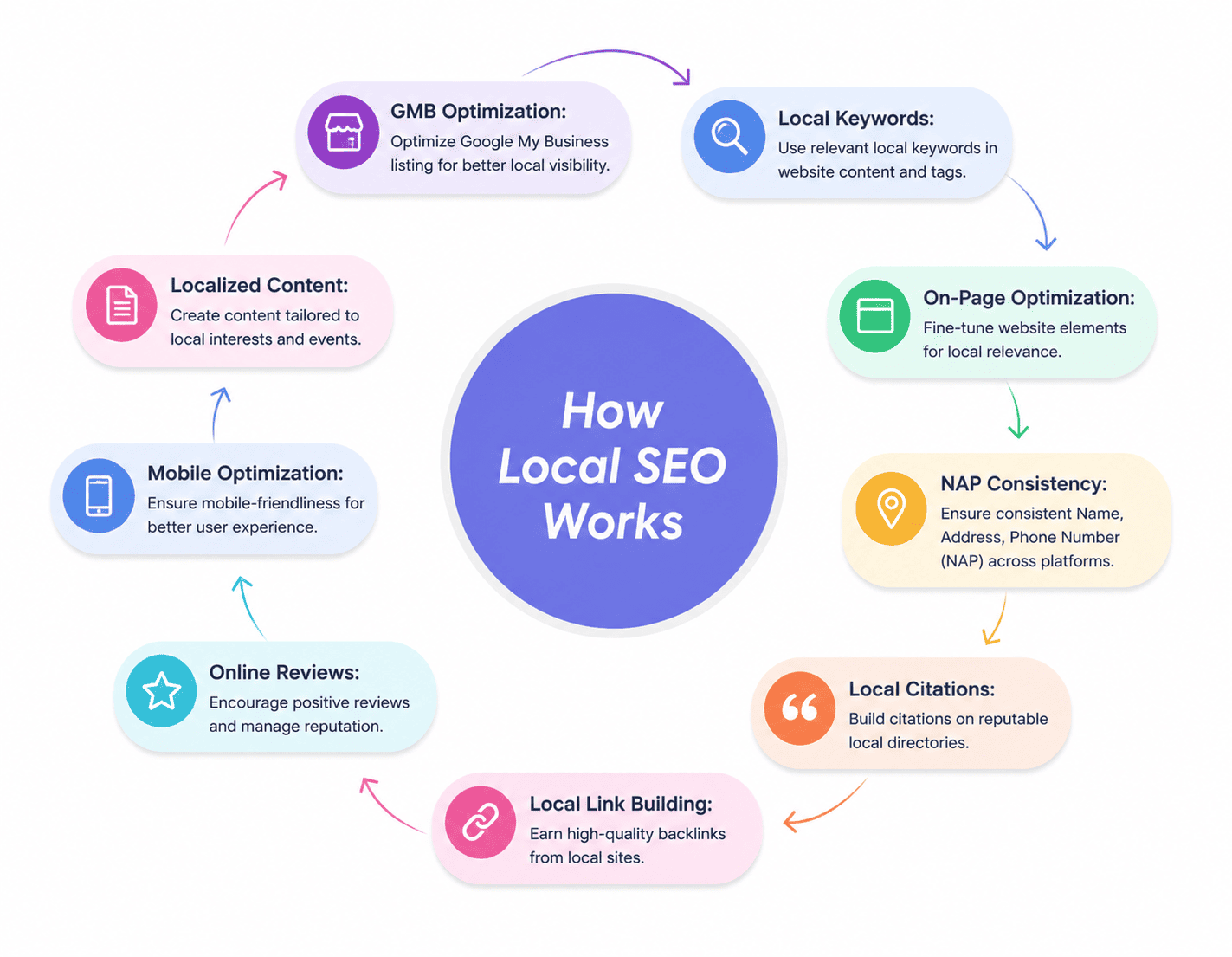
Most local searches now happen on mobile devices with “near me” intent. To capture this traffic, your digital footprint must be consistent and geographically relevant.
Claiming the Local Map Pack
The “Map Pack” is the trio of business listings that appear at the top of Google search results. To break into this space, your Google Business Profile (GBP) must be more than just “active”—it must be comprehensive.
Ensure your business name, address, and phone number (NAP) are identical across every platform. If your address is listed as “123 Main St” on your website but “123 Main Street” on your Facebook page, search engines may view these as two different locations, diluting your authority.
Leveraging Localized Content
Generic blog posts about your industry won’t help you rank in a specific city. Instead, create content that solves problems for people living in your specific zip codes.
For example, instead of writing a post on “How to Maintain Your HVAC,” write “How Lansing’s Humid Summers Affect Your AC Unit.” By mentioning local landmarks, neighborhood names, and regional weather patterns, you signal to search engines that you are a relevant authority for that specific geographic area. This is a core component of a successful strategy for Lansing SEO because it targets high-intent users who are ready to buy now.
Converting Local Traffic into Paying Customers
Ranking is only half the battle. Once a user lands on your page, the experience must feel local and trustworthy. If a customer clicks your link and finds a generic template that could be for a business in any city in America, they are more likely to bounce.
Reviews are the currency of local search. However, not all reviews are created equal. A review that says “Great service!” is helpful, but a review that says “The best plumber in East Lansing; they arrived on time and fixed my leak in the rain” is a goldmine.
Encourage your customers to mention the service they received and the location. These keywords within reviews act as secondary signals to search engines, confirming that you actually operate and provide value in the region you claim to serve.
Building Local Backlinks
Backlinks are links from other websites to yours. While national sites get links from major news outlets, local businesses should seek links from community pillars.
Consider these high-impact local link sources:
- Local Chambers of Commerce: A link from a city-specific chamber is a powerful trust signal.
- Sponsorships: Sponsoring a local Little League team or a high school event often earns you a link on a community page.
- Local News Features: Getting mentioned in a regional publication provides a level of authority that a national press release cannot replicate.
Technical Foundations for Local Growth
You don’t need to be a developer to ensure your site is technically sound for local users. Focus on two primary metrics: load speed and mobile responsiveness.
Mobile-First User Experience
Since the majority of local searches happen on the go, a slow-loading mobile site is a conversion killer. If your site takes more than three seconds to load on a 4G connection, you are handing your leads over to your competitors.
Simplify your mobile navigation. Ensure your “Call” and “Directions” buttons are prominent and easy to click with a thumb. The fewer clicks it takes for a customer to reach your front door or your phone line, the higher your conversion rate will be.
Structured Data for Search Engines
Use “Local Business” schema markup in your website’s code. This is a behind-the-scenes way of telling search engines exactly what your business does, your opening hours, and your service area. When this is implemented correctly, it allows search engines to display your business information more accurately in search results, increasing the likelihood of a click.