
Most Effective Marketing Strategies for B2B and B2C in 2026

📋 Takeway
- Foundation: Goal setting & budget (still the #1 free strategy)
- Content, SEO & AEO: Adapting to AI search
- Social Media & Commerce: Platform power in 2026
- Email, SMS & Owned Channels: The ROI champions
- B2B-Specific: ABM, LinkedIn, and partnerships
- B2C-Specific: Influencers, storytelling, and sustainability
- Omnichannel & Emerging Tech: AI agents and immersive experiences
🎯 Set an Objective and a Budget (Your True North)
Before diving into channels, every campaign needs a destination. CoSchedule’s research still holds: marketers who set specific goals are 429% more likely to report success. In 2026, this means defining 3–5 KPIs that ladder up to revenue—not just vanity metrics. The U.S. Small Business Administration’s guideline of spending 7–8% of revenue on marketing remains a solid baseline, but high-growth ecommerce brands often allocate up to 12% . The key is building a process to measure and iterate, not just setting a number and forgetting it.
💡 Pro Tip
Use a framework like Smart Insights’ RACE (Reach, Act, Convert, Engage) to map goals to specific stages of the customer lifecycle. This prevents channel silos and ensures your budget supports the entire journey .
📝 Blog Strategically & Master Answer Engine Optimization (AEO)
The original advice to focus on quality over quantity and evergreen content has aged like fine wine. But 2026 brings a seismic shift: Answer Engine Optimization (AEO) and Generative Engine Optimization (GEO) are now as critical as traditional SEO. With 48.9% of brands reporting decreased website traffic due to consumers using AI for answers, your content must be structured to appear in Google’s AI Overviews, ChatGPT, and Gemini .
B2B buyers now use LLMs to shortlist vendors; they arrive at your site later in the journey, but better informed . To win, create content that directly answers specific user intents with clear, authoritative language. Tools like SEMRush and KWFinder remain invaluable for finding low-competition long-tail keywords, but now you must also optimize for conversational queries .
📊 Content Marketing Benchmarks
| Metric | B2B Impact | B2C Impact |
|---|---|---|
| Top channel by usage | Website/Blog/SEO (48.4%) | Organic Social (41.7%) |
| Top channel by ROI | Website/Blog/SEO (30.2%) | Paid Social (28.5%) |
| SEO ROI | $7.48 per $1 spent | $7.48 per $1 spent |
⚠️ WARNING
Don’t fall into the “AI slop” trap. Generative AI has flooded the web with generic, low-value content. Google’s algorithms and discerning readers now penalize this. Use AI to scale research and drafting, but always inject human expertise, original data, and authentic voice .
📧 Build Rapport Through Email & SMS (The ROI Kings)
If there’s one channel that has consistently defied obituaries, it’s email. In 2026, it’s stronger than ever—but the strategy has matured. Omnisend data shows email delivering $36 to $79 for every dollar spent, with automated workflows driving 37% of all email sales from just 2% of volume .
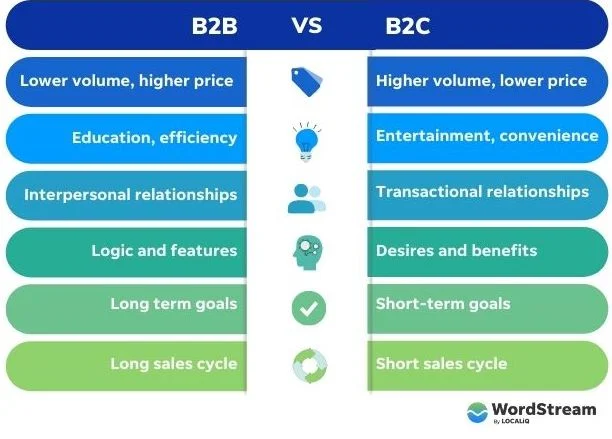
The B2B vs. B2C email dynamics are fascinating:
- B2B open rates average 37.4%, with click-to-open rates (CTOR) of 13%—much higher than B2C’s 5.5% . B2B audiences engage deeply with solution-driven content.
- B2C emails see higher open rates (40%) but lower CTR (2.1%). They thrive on urgency, personalization, and mobile optimization .
SMS marketing also punches above its weight, with ROI ranging from $21 to $71 per dollar spent . But the real magic lies in integration: combining email and SMS in automated flows (welcome, abandoned cart, browse abandonment) creates a cohesive owned-media ecosystem that reduces dependence on costly paid ads .
💡 Pro Tip
With Apple’s Mail Privacy Protection inflating open rates, focus on click-to-conversion and revenue per email as your north star metrics. Segment lists based on engagement and purchase history to boost conversions by up to 760% .
🤝 B2B Power Moves: ABM, LinkedIn, and Partnerships
B2B marketing in 2026 is about precision and relationship-building at scale. The days of spray-and-pray are over. High-growth B2B organizations now leverage an average of 17 channels, blending digital with human touch .
Account-Based Marketing (ABM)
ABM delivers 21% to 50% higher ROI than traditional channels . It starts with a crystal-clear Ideal Customer Profile (ICP) and uses personalized outreach across email, LinkedIn, and targeted ads. Forrester notes that 85% of B2B buyers prioritize vendors who understand their specific business challenges .
Influencer and Partnership Marketing
In B2B, trust is currency. 81% of B2B marketers plan to increase influencer marketing budgets . Industry experts and niche analysts can endorse your solution to a highly targeted audience. Likewise, partnering with complementary businesses (e.g., a PPC agency with a CRO firm) creates referral loops that benefit both parties.
Writing a Column / Guest Posting
Original advice on writing for publications like Forbes or industry journals still holds. It builds authority and backlinks. But today, it’s also about appearing in expert roundups and podcast interviews—where your insights can be syndicated across AI training data and human audiences alike.
🛍️ B2C: Woo Your Audience with Authenticity and Speed
Consumer attention is fractured, but the brands winning in 2026 share common traits: they stand for something, they leverage user-generated content (UGC), and they make buying effortless.
Influencer & UGC Power
Influencer marketing now delivers an ROI of $6.50 per $1 spent, and 35% of Gen Z relies on creator recommendations . But it’s not just about big names; micro-influencers and even employee advocates drive authentic engagement. User-generated content (reviews, unboxings, styling videos) is now shoppable—brands tag products directly in UGC posts, shortening the path to purchase.
Sustainability & Purpose
85% of businesses now prioritize sustainability, and consumers—especially Millennials and Gen Z—reward it with loyalty . Whether it’s eco-friendly packaging, ethical sourcing, or a circular economy model (recycling programs, second-hand markets), purpose-driven messaging differentiates you in crowded categories.
Free Consultations / Try-Ons
For high-consideration products (skincare, furniture, tech), offering a free consultation or augmented reality (AR) try-on can boost conversion rates by up to 75% . AR bridges the online-offline gap, reducing purchase hesitation.
🔮 Omnichannel, AI Agents, and Immersive Experiences
The line between digital and physical is dissolving. McKinsey reports that more than half of B2B buyers now seek true omnichannel experiences—seamless transitions from website to sales rep to social . For B2C, this means unifying data across website, mobile app, social, and physical pop-ups.
AI Agents for Marketing & Customer Service
Agentic AI—where AI systems take semi-autonomous actions—is the hottest trend of 2026. Brands are deploying AI agents for three purposes :
- For marketers: behind-the-scenes workflow automation (e.g., n8n, OpenAI’s AgentKit) that drafts content, analyzes data, and optimizes campaigns.
- For customers: smart chatbots that handle returns, product discovery, and personalized recommendations 24/7.
- Of customers: AI tools that shoppers use to compare products (e.g., OpenAI’s Shopping Research). Brands must optimize their data for these agents.
Immersive Tech: AR/VR
Augmented reality is no longer a gimmick. Furniture retailers see higher conversion when customers can “place” items in their room; beauty brands boost engagement with virtual try-on. This is especially effective for reducing returns and increasing confidence .
⚠️ WARNING
Don’t chase shiny objects without a data foundation. AI and AR require clean, integrated customer data. Invest in your CDP (Customer Data Platform) and governance policies first, or these technologies will amplify chaos .
📍 Local SEO & Google My Business (Non‑Negotiable for Local Brands)
If you have a physical location or serve a specific geographic area, optimizing your Google Business Profile is the single highest-ROI tactic. The local pack appears above organic results, and Moz’s factors (reviews, proximity, categories) still dominate. Encourage genuine reviews, post updates, and ensure NAP consistency across the web .
📌 The Ultimate 2026 Marketing Strategy Stack
Here’s the complete list of proven strategies, updated for the current era. Most businesses should pick 4–5 to start, test rigorously, and double down on winners.
- Set goals & budget (the foundation).
- Content marketing + AEO/SEO – authoritative, AI-optimized content.
- Email & SMS automation – owned channels with highest ROI.
- Social commerce – Instagram/TikTok shops, livestream.
- Paid ads (Google, LinkedIn, Meta) – with precise retargeting.
- Influencer & UGC programs – scaled authenticity.
- ABM (for B2B) – personalized account-based marketing.
- Partnerships & joint ventures – co-marketing, referrals.
- Webinars & virtual events – lead generation and authority building.
- Free consultations / AR try-ons – reduce friction.
- Sustainability & purpose campaigns – values-driven loyalty.
- Local SEO / Google My Business – dominate local search.
- Direct mail & niche print – stand out in a digital world.
- Employee advocacy & referrals – your team as marketers.
- AI agents for service & marketing – efficiency at scale.
- Speaking at events / industry columns – authority building.
As you review this list, remember: the most effective strategy is the one that aligns with your specific audience’s behavior. Use data to inform, but don’t be afraid to test creatively.
❓ Frequently Asked Questions About Modern Marketing Strategies
1. What is the single most effective marketing channel for B2B in 2026?
According to HubSpot’s 2026 data, the website/blog/SEO channel remains the top performer for B2B, used by 48% and delivering the highest ROI (30%). However, it rarely works alone. B2B success today comes from an integrated approach: SEO + email nurturing + LinkedIn thought leadership + ABM personalization. The “single” channel myth is dead; instead, focus on a coordinated core hub (your content) with satellite channels that drive traffic to it.
Both have their place, but the mix depends on your growth stage and cash flow. Organic social builds long-term community and trust, especially on platforms like Instagram and TikTok where 41.7% of B2C marketers rely on it. Paid social, however, delivers the highest ROI (28.5%) for B2C, allowing you to scale quickly and target lookalike audiences. The smartest strategy is to utilize organic content to validate messages, then amplify the winning posts with paid promotion. Allocate roughly 20% of your social budget to organic creation and 80% to distribution/ads.
3. Should I still invest in email marketing given the rise of AI and messaging apps?
Absolutely. Email marketing continues to deliver the highest ROI of any channel—up to $79 per dollar spent for ecommerce brands. It remains the backbone of owned media, giving you direct access to your audience without algorithm changes. AI actually makes email stronger by enabling hyper-personalization, predictive send times, and automated lifecycle flows. Combine email with SMS for a powerful owned-channel duo that outperforms paid channels over the long term.
4. How does generative AI affect content marketing strategy in 2026?
Generative AI has commoditized first-draft writing, but it has also raised the bar for quality. Google’s algorithms and discerning readers now penalize generic “AI slop.” Winning content strategies use AI for research, outlines, and data analysis, then inject human expertise, original research, and authentic voice. Additionally, content must now be optimized for Answer Engines (AEO) – structured to appear in Google AI Overviews and LLM answers. This means writing conversationally, answering specific questions concisely, and maintaining authoritativeness (E-E-A-T).
5. What’s the difference between B2B and B2C influencer marketing?
In B2C, influencers are often content creators with large, engaged followings (micro to mega) who promote products through authentic storytelling, unboxings, or tutorials. The focus is on reach, relatability, and driving immediate sales. In B2B, influencer marketing leans on industry experts, analysts, and thought leaders (e.g., on LinkedIn or via webinars) who build trust and credibility. B2B influencer campaigns aim for lead generation and authority transfer rather than viral sales. 81% of B2B marketers now plan to increase influencer budgets, often using them in co-created content, podcasts, and speaking events.
6. How can a small business with a limited budget compete with larger brands using these strategies?
Small businesses have agility and niche focus as superpowers. Start with one or two channels where your audience hangs out, and go intensive rather than wide. For example, if you’re a local service, prioritize Google Business Profile (local SEO) and community partnerships—both high impact and low cost. Create content that solves specific problems your ideal customers face; utilize tools like AnswerThePublic to find long-tail questions. Collaborate with micro-influencers who align with your brand (often for product exchange or modest fees). And always, always build an email list from day one—it’s your most valuable owned asset.
7. What are the biggest mistakes to avoid when implementing these strategies?
The top pitfalls:
(1) No clear goal or KPIs – without measurement, you can’t optimize.
(2) Spreading too thin – attempting every channel at once leads to mediocrity.
(3) Ignoring data privacy and first-party data – with cookie phase-out, brands that fail to collect zero-party data via quizzes, preferences, and interactive content will struggle.
(4) Chasing trends without testing – just because AI agents are trending doesn’t mean you should abandon what works. Always manage small tests before going all-in.
(5) Forgetting the customer experience – a great strategy falls flat if your site is slow, your checkout clunky, or your support unresponsive.
8. How often should I review and update my marketing mix?
The marketing landscape shifts faster than ever. At a minimum, conduct a formal review quarterly, analyzing channel performance against goals. Also sustain a pulse on monthly metrics—if a channel suddenly drops in ROI (e.g., due to algorithm changes), pivot quickly. High-growth companies often operate small experiments continuously, using a “test and acquire” budget (5–10% of total) to explore emerging platforms like new social networks or AI-driven ad formats. Annually, step back for a full strategic audit to ensure your mix aligns with market trends and business evolution.
🏁 Conclusion: Test, Measure, Adapt
The original article’s core message endures: you can’t do everything at once. But in 2026, you also can’t afford to ignore the tectonic shifts in how people search, shop, and trust. AI has changed the game, but human connection—through authentic content, stellar customer experience, and genuine purpose—remains the ultimate differentiator.
Start with one or two high-potential channels from this list, set a rigorous testing budget (10–20% of your total), and let the data guide your next move. The brands that thrive will be those that combine the art of storytelling with the science of analytics .


📱 Champion One Social Channel (Then Expand Wisely)
Neil Patel’s advice to focus on one channel at a time still resonates, but the landscape has shifted. HubSpot’s 2026 data shows the average brand now uses 5–8 channels, with Instagram, Facebook, and YouTube each used by ~70% of marketers . However, ROI varies dramatically.
Social commerce is no longer a nice-to-have. With 72% of consumers willing to buy directly on social platforms, features like Instagram Checkout, TikTok Shop, and Facebook Shops turn engagement into instant conversion . Livestream commerce is projected to hit $68 billion in the US by 2026, blending entertainment with urgency .