Top 10 Cheapest Domain Registrars for 2026: The Ultimate Guide to Saving Money on 10‑Year Registrations
📌 Key Takeaways: Domain Registrar Value (2026)
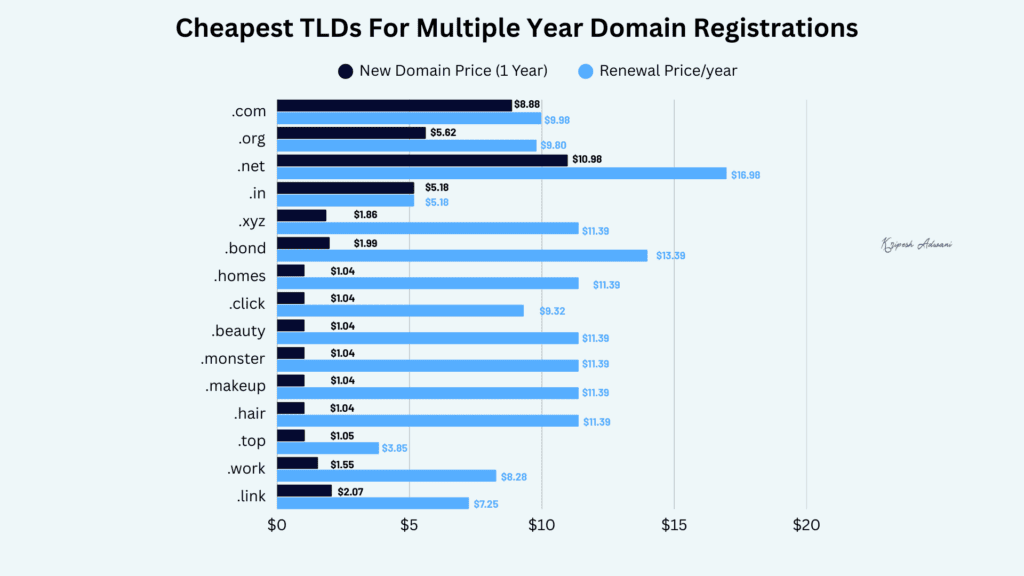
- Long-term cost > first-year teaser rates: Registrars advertising $0.99 domains often renew at $18–$25. Over 10 years, that “cheap” domain can cost $200+ – more than double the at‑cost providers .
- Cloudflare sells at wholesale: For .com domains, you pay exactly the registry fee plus ICANN fee (around $9.77–$10.46) with zero markup .
- Free WHOIS privacy is now standard: All top registrars (Cloudflare, Porkbun, NameSilo, Dynadot, Namecheap) include lifetime privacy protection. Never pay extra for it .
- Transfer to save immediately: Moving domains from expensive registrars (GoDaddy, Network Solutions) to Cloudflare or Porkbun cuts annual costs by 40–70% and adds a year to expiration .
- Hostinger bundles are a trap for pure domains: Their $0.01 deal requires hosting purchase – if you cancel hosting, the domain renews at $9.99. Good for bundled beginners, not for domain‑only buyers .
Finding the cheapest domain registrar isn’t just about the first-year promotional price—it’s about the long-term value over 5 to 10 years. Many registrars lure you in with $0.99 domains, then hit you with $25+ renewal fees. This comprehensive guide reveals the top 5 registrars and top 10 cheapest domain registration options that offer transparent pricing, free WHOIS privacy, and rock-bottom renewal rates perfect for decade-long ownership. With over 371 million registered domains worldwide, choosing the right registrar has never been more critical for your online success .

Why Long-Term Domain Registration Strategy Matters
Before diving into the rankings, understand the economics of domain registration for 10 years. The registry fee for .com domains (set by Verisign) is $10.26 wholesale plus $0.20 ICANN fee. Registrars charging significantly more are marking up profits—sometimes aggressively. A domain name provider accredited by ICANN gives you transparency, better control over your domain, and straightforward transfers .
The true cost of ownership extends far beyond the initial purchase. For example, a domain registered at $0.99 that renews at $21.99 will cost you $198.90 over a decade—more than double the $97.41 you’d pay at a transparent registrar like Porkbun . When evaluating options, always calculate the 5-year or 10-year total cost, including any mandatory ICANN fees and privacy charges .
⚠️ Warning: The First-Year Price Trap
Many budget registrars advertise domains for $0.99-$1.99, then renew at $18.99-$24.99. Over 10 years, that “cheap” domain costs $200+ instead of $100. Always calculate total cost of ownership before purchasing. For instance, a .com at GoDaddy renews at $18.99–$25.00 after the first year, adding up to a staggering 10‑year expense.
What Does a Domain Registrar Do?
A domain registrar is a company that handles the registration of website domain names on the internet. While you can’t actually own a domain name forever, you can keep exclusive rights to use it as long as you renew the registration before it expires. In simple terms, a domain registrar works somewhat like a leasing service. They allow you to reserve and use a specific domain name for your website for a certain period, usually one year at a time, with the option to renew it. A domain name is the unique web address people use to reach a site, such as getsocialguide.com. If you want to secure a domain for your own website, you must register it through an authorized domain registrar. These registrars connect with global domain registries to make sure each domain name remains unique and properly assigned.
Things to Consider When Choosing a Domain Registrar
Picking a domain registrar isn’t something most people think too hard about — until something goes wrong. The truth is, not all registrars are built the same, and the one that’s right for you really depends on what you’re building and how you plan to use your domain long-term. Here are the key things worth thinking about before you commit.
User Interface
This one gets overlooked more than it should. A messy, confusing dashboard leads to real problems — missed renewals, DNS misconfiguration, or hours spent hunting for a simple setting. A good registrar gives you a clean control panel, easy access to DNS editing, and renewal reminders that actually show up before it’s too late. It sounds basic, but you’ll appreciate it the moment something needs fixing fast.
Security
Your domain is tied to your identity and potentially your entire business — so the registrar protecting it needs to take security seriously. At minimum, look for two-factor authentication, DNSSEC support, and registry lock options. Some providers also flag suspicious account activity proactively, which adds a useful extra layer of protection for high-value domains.
Price
The advertised first-year price is almost never the full story. Many registrars lure you in with a promotional rate and then charge significantly more at renewal. Before signing up, check what year two and beyond actually cost — and don’t forget to factor in whether things like WHOIS privacy protection, SSL certificates, or DNS management tools come bundled or cost extra. Those additions can quietly double your annual bill.
Domain Transfer Policy
It’s worth knowing the exit rules before you walk in the door. ICANN mandates a 60-day lock on newly registered domains, during which you can’t transfer out — that’s standard across the industry. What varies is how easy (or painful) a registrar makes things once that window closes. A trustworthy provider won’t throw up unnecessary barriers if you decide to move on.
Customer Support
If your domain goes down or something breaks, you want a real person available — not a FAQ page. This matters especially if your domain is connected to an active business. Look for registrars that offer multiple channels like live chat, phone, and email, ideally around the clock. It’s also worth checking response time expectations before you need them, not after.
Features
Beyond just holding your domain, many registrars offer extras like email hosting, SSL certificates, website builders, or domain privacy. Some of these are genuinely useful; others are upsells you’ll never touch. More importantly, confirm the registrar supports whatever TLD you’re after — not every provider carries every extension. If you’re managing a large number of domains, features like bulk management tools, portfolio dashboards, or API access can save you a serious amount of time.
Reputation
A registrar’s track record tells you a lot about what it’s actually like to be their customer. It’s worth spending a few minutes reading reviews and checking how the company responds when things go wrong — not just when everything’s running smoothly. Consistent complaints about billing surprises or poor support are red flags worth taking seriously.
AI and Automation
A growing number of registrars are now building in AI tools — things like automated domain suggestions, basic website builders, or smart renewal reminders. These can genuinely save time, particularly if you’re new to managing domains. That said, it’s worth checking whether these features are included in your plan or treated as paid add-ons, and how the provider handles the data those tools collect. Sonnet 4.6
Top 10 Cheapest Domain Registrars (Ranked by 10-Year Value)
1. Cloudflare Registrar — Best for At-Cost Pricing

Cloudflare revolutionized the industry by selling domains at wholesale cost with zero markup. For a .com domain, you pay approximately $9.77–$10.46/year—period. No first-year discounts, no renewal hikes, no hidden fees . Cloudflare supports 392+ TLDs with identical registration and renewal pricing for most extensions, making it the most predictable registrar on the market .
Launched in 2018, Cloudflare Registrar is designed for developers and security-conscious users. It includes enterprise-grade security features like one‑click DNSSEC, automatic DS record publication, and modern ECDSA P‑256 algorithms for smaller, faster signatures . The only requirement is that you must use Cloudflare’s DNS servers, which is a small trade-off for world‑class infrastructure and free CDN services.
- 10-Year Total Cost: ~$97.70–$104.60
- WHOIS Privacy: Free forever
- SSL Certificates: Included with Cloudflare
- DNS: Must use Cloudflare nameservers
- Best For: Developers, security-conscious users, long-term holders
💡 Pro Tip: Bulk Transfer Savings
If you have domains at GoDaddy or Network Solutions paying $18-38/year in renewals, transfer them to Cloudflare immediately. You’ll save 40-70% annually with zero effort, and Cloudflare’s API access makes programmatic domain management a breeze .
2. Porkbun — Best User Experience + Value

Porkbun combines the cheapest domain registration rates with an interface that doesn’t require a computer science degree. Their $11.08 renewal rate beats most competitors, and they include free email forwarding, SSL, and WHOIS privacy . Porkbun offers promotional first‑year pricing as low as $4.08–$7.00, making it one of the most affordable entry points for new domain buyers .
With access to over 500 domain extensions, Porkbun has emerged as a favorite among domain enthusiasts for its combination of competitive pricing, excellent interface, and quirky branding . The platform includes DNSSEC, two‑factor authentication, and free URL forwarding. Support is responsive and genuinely helpful, avoiding the upsell culture prevalent at larger registrars .
- First Year: $4.08-$7.00 (promotional)
- Renewal: $11.08/year
- 10-Year Total: ~$97-100
- WHOIS Privacy: Free lifetime
- Standout Feature: Free trial domains for testing
💡 Pro Tip: Startup Credits Bundle
Porkbun offers launch credits with select domains, including hosting trials and email services. Perfect for new businesses looking to minimize startup costs beyond just domain registration. Their free SSL certificates (Let’s Encrypt with auto-renewal) add even more value .
3. NameSilo — Best Bulk Pricing & Long‑Term Value
NameSilo targets domain investors with volume discounts and lifetime free privacy. Their $11.05 renewal rate is among the lowest in the industry, and they don’t play games with promotional pricing . NameSilo’s discount program offers $11.05 .com pricing consistently with no hidden fees—the only requirement is paying using account funds with a minimum $50 top‑up .
For larger portfolios, volume discounts unlock even lower rates: $8.75/year for 100+ domains, scaling down to $7.75/year for 5,000+ domains. A 100‑domain portfolio costs $875/year at NameSilo versus $1,848 at Namecheap or $2,485 at GoDaddy renewal rates . Every domain includes free WHOIS privacy, free DNS management, and no transfer fees if you ever leave.
- Registration: $8.99–$11.05
- Renewal: $11.05 (with discount program)
- 10-Year Total: ~$99–$110
- WHOIS Privacy: Free lifetime
- Bulk Discount: Active for 50+ domains, scales to 5,000+
4. Dynadot — Best for Domain Investors & Consistent Pricing
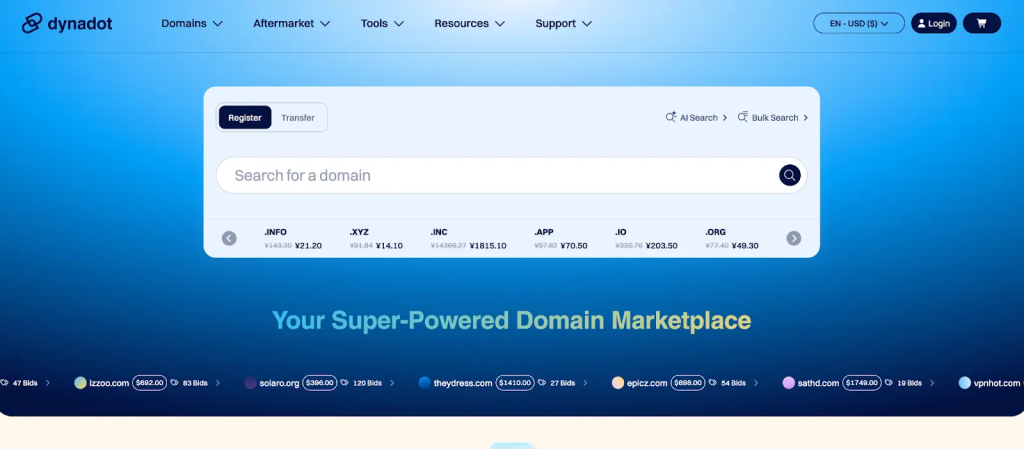
Dynadot offers consistent pricing with no surprises. At $10.88 for both registration and renewal, you know exactly what you’re paying for the next decade . Their bulk search tools and portfolio management features make them ideal if you’re managing multiple domains. Dynadot provides identical registration and renewal pricing for most extensions, including .com, .net, and .org .
Based in San Mateo, California, Dynadot is an ICANN‑accredited registrar known for transparent, consistent pricing and excellent tools for domain investors . They offer a built‑in domain marketplace, API access for automation, and no hidden fees. Bulk pricing tiers unlock discounts for portfolios exceeding $500/year in spend .
- Registration: $7.99-$10.88
- Renewal: $10.88 (locked rate)
- 10-Year Total: ~$105-110
- WHOIS Privacy: Free
- Specialty: Domain marketplace and backorder auctions
💡 Pro Tip: Smart Folders Organization
Use Dynadot’s Smart Folders feature to categorize domains by project, client, or renewal date. This prevents “zombie domains” from auto-renewing when you no longer need them. Their API access also enables full automation for large portfolios .
5. Namecheap — Best Customer Support & Beginner Experience
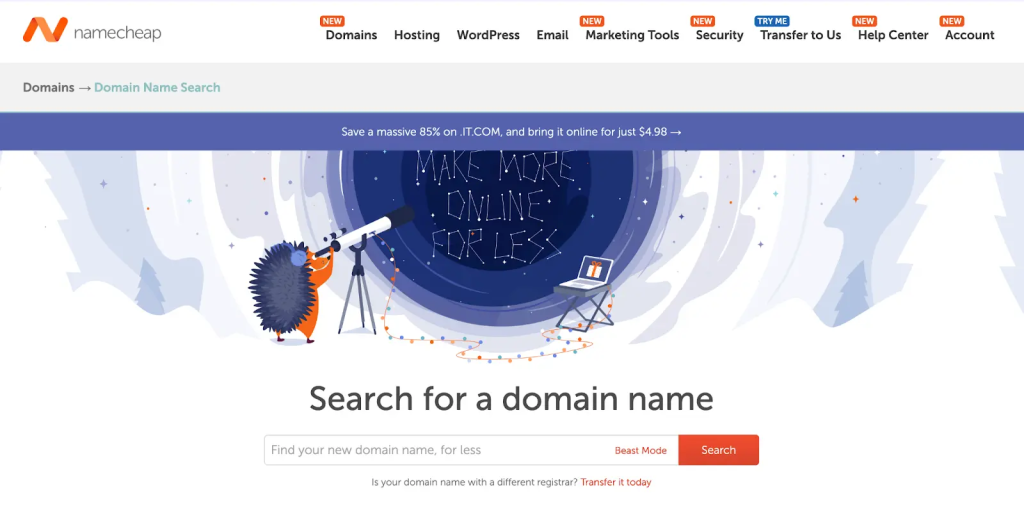
Namecheap has built a reputation as the people’s registrar. While their renewal rate ($13.98–$18.48) is higher than Cloudflare or Porkbun, their 24/7 support, free privacy protection, and user-friendly dashboard justify the premium for beginners . Founded in 2000, Namecheap now manages over 24 million domains and is known for strong privacy advocacy .
Namecheap offers free lifetime WHOIS privacy on all domains, a feature others charge extra for . Their control panel is feature‑rich yet accessible, with regular promotional codes that can reduce renewal costs by 10–20% . For those needing hosting, Namecheap’s shared hosting plans start at $1.58/month (introductory) and scale to managed WordPress and VPS options .
- First Year: $8.98-$10.18
- Renewal: $13.98–$18.48
- 10-Year Total: ~$130–$170
- WHOIS Privacy: Free forever
- Support: 24/7 live chat and ticketing
💡 Pro Tip: Coupon Code Strategy
Namecheap frequently releases renewal coupon codes (search “Namecheap renewal coupon” before paying). You can often save 10-20% on multi-year renewals by applying these at checkout. Also consider multi-year registrations to lock in better long‑term pricing .
6. Hostinger — Best Domain + Hosting Bundle

Hostinger offers aggressive first-year pricing ($0.01 with 2+ year hosting purchase) making them attractive for new website owners. However, renewal rates jump to $9.99, so calculate carefully if you’re only buying the domain . Hostinger is best known for its budget‑friendly hosting packages, and bundling a domain with hosting can yield significant upfront savings.
For users who need both hosting and a domain, Hostinger’s bundles are hard to beat. Their hPanel control panel is intuitive, and customer support is available 24/7. But if you’re a domain‑only buyer, other registrars on this list offer better long‑term value without the hosting commitment .
- First Year: $0.01 (with hosting)
- Renewal: $9.99
- 10-Year Total: ~$90 (with hosting bundle)
- WHOIS Privacy: Free
7. Hover — Simple, No-Nonsense Registration
Hover focuses purely on domains—no hosting upsells, no website builders, just clean domain management. Their $18.99 rate is higher than others on this list, but they include lifetime free privacy and straightforward renewals . Hover offers sales often on specific extensions, and you can register a domain for up to 10 years with no discount, but bulk renewals (10+ domains) do qualify for savings .
Hover is first and foremost a domain registrar, but it also offers email. If you choose Hover for your domain registration, you’ll have to find a separate web host. Pricing is transparent and identical at renewal, making it a trustworthy choice for those who value simplicity over rock‑bottom prices .
- Registration: $18.99
- Renewal: $18.99 (consistent)
- 10-Year Total: ~$190
- WHOIS Privacy: Free lifetime
- Bulk Discount: Applies to 10+ domains at renewal
8. Domain.com — Predictable Mid-Range Pricing
Domain.com offers promotional first-year rates ($0.99-$11.99) with renewals at $11.99-$21.99 depending on extension . They’re a solid middle-ground option with transparent pricing and decent support. Domain.com charges extra for domain privacy and DDoS protection, bundling those features at $17.98/year .
Other domains are pricier: a .io extension costs $47.99 the first year ($62.99 renewal) and .shop is $1.99 ($44.99 renewal). You can register a domain for up to five years at a time, after which you’ll be locked into higher renewal costs .
- Promo First Year: $0.99-$11.99
- Renewal: $11.99-$21.99
- 10-Year Total: ~$120-200
- WHOIS Privacy: $17.98/year extra
9. IONOS — Best for Business Bundles

IONOS targets small businesses with $1 first-year domains bundled with SSL certificates and email. However, renewal rates jump to $15+, making them less ideal for pure domain registration . If you get a hosting package, IONOS enhances the value with professional email, wildcard SSL security, the capacity for 10,000 subdomains, and one‑click activation .
Businesses seeking a comprehensive web hosting package with an emphasis on security and support will find IONOS compelling. They offer 24/7 customer support and a dedicated account advisor, making them a solid choice for those who value hand‑holding over pure cost savings .
- First Year: $1
- Renewal: $15.00+
- 10-Year Total: ~$136
- Includes: SSL, email, privacy
10. GoDaddy — Avoid Unless Necessary

GoDaddy ranks last not because of service quality (their support is actually good), but because of aggressive pricing and upselling. First-year rates ($11.99) seem reasonable, but renewals hit $18.99-$21.99, and WHOIS privacy costs an extra $9.99/year . With over 84 million domains under management, GoDaddy is the largest registrar, but size doesn’t equal value .
GoDaddy’s checkout process includes numerous pre‑checked add‑ons that can triple your cart total. Basic domain privacy is now free, but “Full Domain Privacy & Protection” costs $9.99/year and includes identity verification before domain changes . For most users, the free basic privacy is sufficient, but the aggressive upsells remain frustrating.
- First Year: $11.99
- Renewal: $18.99-$21.99
- WHOIS Privacy: $9.99/year extra
- 10-Year Total: ~$290+ (with privacy)
⚠️ Warning: GoDaddy Upsell Tactics
GoDaddy’s checkout process includes numerous pre-checked add-ons (privacy, email, hosting) that can triple your cart total. Review your cart carefully before payment. Their $0.01 first-year deals often require multi‑year commitments and auto‑renew at significantly higher rates .
10-Year Cost Comparison Table
| Registrar | Year 1 | Years 2-10 | 10-Year Total | Privacy |
|---|---|---|---|---|
| Cloudflare | $9.77–$10.46 | $9.77–$10.46/yr | $97.70–$104.60 | Free |
| Porkbun | $4.08–$7.00 | $11.08/yr | $97.41–$103.72 | Free |
| NameSilo | $8.99–$11.05 | $11.05/yr | $99.54–$110.50 | Free |
| Dynadot | $7.99–$10.88 | $10.88/yr | $105.91–$108.80 | Free |
| Hostinger* | $0.01 | $9.99/yr | $90.00 | Free |
| Namecheap | $8.98–$10.18 | $13.98–$18.48/yr | $130–$170 | Free |
| Domain.com | $0.99–$11.99 | $11.99–$21.99/yr | $108.90–$198 | $17.98/yr extra |
| Hover | $18.99 | $18.99/yr | $189.90 | Free |
| IONOS | $1.00 | $15.00+/yr | $136.00 | Free |
| GoDaddy | $11.99 | $18.99–$25.00/yr | $182.90–$236.90 | $9.99/yr extra |
*Hostinger pricing requires hosting bundle purchase. GoDaddy total excludes privacy costs which add $99.90 over 10 years. Calculations based on .com domain pricing as of March 2026 .

Top 5 Registrars for Specific Use Cases
Cloudflare — Zero markup means predictable costs for a decade
Porkbun — Intuitive interface with no technical barriers
Dynadot — Marketplace integration and bulk tools
NameSilo — Volume discounts from 50+ domains
Hover — Lifetime free privacy with no data selling
MarkMonitor — Brand protection and corporate management
When hunting for the cheapest domain registration, watch for these profit centers that inflate your 10-year costs :
- ICANN Fees: Legitimate $0.18-0.20/year fee, but some registrars mark this up or add it at checkout without clear disclosure .
- WHOIS Privacy: Can cost $8-15/year at registrars like GoDaddy and Network Solutions—free at Cloudflare, Porkbun, NameSilo, Dynadot, and Namecheap .
- Transfer Fees: Some budget registrars charge $15+ to transfer out. Always check transfer policies before registering .
- Restoration Fees: If your domain expires, recovery can cost $80-250. NameSilo charges $75 only if the domain enters redemption period .
- DNS Management: Basic DNS should be free; premium DNS is rarely needed. Namecheap offers PremiumDNS for $4.88/year .
- Forced Add-Ons: Pre-checked boxes for email or hosting can silently inflate your cart .
💡 Pro Tip: Auto-Renewal Management
Enable auto-renewal to prevent accidental expiration, but audit your domain portfolio quarterly. I once found 7 “zombie domains” costing $147/year for projects I’d abandoned. Use Dynadot’s Smart Folders or Namecheap’s tags to organize by project status. Calculate 5‑year total cost of ownership (TCO), not introductory price, to make informed decisions .
How to Transfer Domains for Maximum Savings
If you’re currently with an expensive registrar, transferring to Cloudflare or Porkbun can cut your annual costs by 50-70%. Here’s the process :
- Unlock your domain at the current registrar.
- Request an authorization code (EPP code) from your current registrar.
- Remove privacy protection temporarily – required for transfer verification.
- Initiate transfer at new registrar – this automatically adds 1 year to your expiration date.
- Approve transfer via email within 5 days. The process typically completes in 5–7 days.
Transfers add one year to your domain’s expiration and cost the same as a renewal. If you’re at GoDaddy paying $18.99, transfer to Cloudflare ($9.77) or Porkbun ($11.08) to save $8‑9/year immediately .
⚠️ Warning: Transfer Restrictions
Domains cannot be transferred within 60 days of registration or previous transfer . Plan accordingly if you have upcoming renewals at high-priced registrars. Also, some TLDs like .us, .ca, and .uk have special transfer requirements .
Key Takeaways
- Cloudflare offers the absolute cheapest long-term pricing at $9.77–$10.46/year with no markup, plus enterprise‑grade DNSSEC .
- Porkbun provides the best balance of low cost ($11.08 renewals) and user experience, with a delightful interface and free SSL .
- NameSilo dominates for bulk portfolios with volume discounts down to $7.75/year for 5,000+ domains .
- Never pay for WHOIS privacy—Cloudflare, Porkbun, Namecheap, Dynadot, and NameSilo include it free forever .
- Calculate 10-year costs, not first-year promotions, when comparing registrars .
- Transfer existing domains from GoDaddy/Network Solutions to save $100+ over five years .
- Avoid auto-renewal surprises by auditing your domain list quarterly and disabling unused domains .
Domain Registration Glossary
C — 1 Term
ccTLD Technical
Short for Country Code Top-Level Domain, a two-letter domain extension assigned to a specific country or territory.
Examples include .uk for the United Kingdom, .ca for Canada, and .de for Germany.
Many companies register both their local ccTLD and a .com version of their domain to build trust with regional audiences.
D — 9 Terms
Domain Registrar Organisation
A company authorized—usually by ICANN—to sell and manage domain name registrations for individuals and businesses.
Registrars act as the retail layer of the domain ecosystem, handling payments, registrations, and communication with domain registries.
Examples include GoDaddy, Namecheap, and Google Domains.
Domain Name Technical
A human-readable web address used to access a website, such as godaddy.com or wikipedia.org.
Behind the scenes, the domain name is translated into a numerical IP address through the DNS system so browsers can locate the correct server.
DNS (Domain Name System) Technical
Often described as the internet’s address book. The DNS converts domain names into IP addresses so computers can route traffic properly.
Without DNS, users would have to memorize numerical addresses instead of simple website names.
Domain Transfer Service
The process of moving a domain name from one registrar to another. Transfers usually require an authorization code and are restricted
for 60 days after the initial registration according to ICANN policy.
Domain Registrant Legal
The individual or organization that officially owns a domain name registration. The registrant’s details are recorded in the WHOIS
database unless privacy protection is enabled.
Domain Registry Organisation
The organization responsible for maintaining the master database for a specific top-level domain. For example, Verisign manages the
.com registry and keeps the authoritative list of registered domains within that extension.
Domain Privacy Service
A service that hides your personal contact information in the public WHOIS database by replacing it with proxy details from the registrar.
This helps protect registrants from spam and unwanted contact.
Domain Expiry Legal
When a domain registration period ends without renewal. Most registrars provide a grace period before the domain is released back to
the public for new registrations.
Domain Locking Security
A protective setting that prevents unauthorized domain transfers. When enabled, the domain cannot be moved to another registrar
without first unlocking it through the account owner.
the database operator, the company selling registrations, and the domain owner.
Domain Auction Service
A marketplace where domains are sold to the highest bidder. Auctions typically include expired domains or premium names being sold
by their current owners.
DNS Records Technical
Entries within the DNS database that control how domain traffic is routed. Common examples include A records,
MX records, and CNAME records.
G — 2 Terms
Generative AI Technical
A form of artificial intelligence capable of creating new content such as text, images, or code. Many domain registrars now use
generative AI tools to suggest domain names or help build websites automatically.
gTLD Technical
Short for Generic Top-Level Domain. These are widely used domain extensions like .com,
.org, and .net, along with newer options such as .tech and .store.
I — 1 Term
ICANN Organisation
The Internet Corporation for Assigned Names and Numbers. This global nonprofit oversees the domain name system, accredits registrars,
and coordinates IP address allocation.
N — 1 Term
Name Server Technical
A server responsible for storing DNS records and responding to requests about where a domain’s traffic should be directed.
P — 2 Terms
Parked Domain Service
A registered domain that currently doesn’t host an active website. Domains are often parked while being held for future use or sale.
A high-value domain name that typically costs more due to its popularity, short length, or strong keyword relevance.
R — 2 Terms
Registrar Accreditation Legal
The official approval process through which companies receive permission from ICANN to sell and manage domain names.
Renewal Period Service
The timeframe in which a domain owner can extend their registration before it expires.
S — 1 Term
SSL Certificate Security
A digital certificate that encrypts data between a website and its visitors, ensuring secure communication through HTTPS.
T — 1 Term
TLD Technical
Short for Top-Level Domain, the final segment of a domain name such as .com,
.org, or .net.
W — 1 Term
WHOIS Technical
A public database that displays registration information about domain names, including the registrant and registrar details.
The domain industry has a habit of using acronyms heavily — DNS, TLD, ccTLD, gTLD, ICANN, WHOIS — without always explaining them. Bookmarking this glossary as a reference means you won’t need to break your flow when a new term appears during the registration process.
FAQ
A: Sometimes. Registries occasionally increase wholesale prices (Verisign raised .com prices 7% in recent years). Locking in multi-year registrations protects against these increases, but you lose flexibility if you abandon the project. Registrars with consistent pricing like Cloudflare or Dynadot make multi‑year registration risk‑free .
A: Rarely. True $0.99 domains usually require hosting bundles (Hostinger) or renew at $15-25. Porkbun’s $4.08 first-year rate with $11.08 renewals is more honest than “$0.99” offers that cost $200+ over 10 years .
A: Cloudflare sells domains at-cost (wholesale + ICANN fee) with zero markup. They profit from their CDN, security, and hosting services—not domain registrations. GoDaddy marks up domains significantly to fund their massive advertising budget .
A: Yes. Without privacy, your name, address, phone, and email are public in WHOIS databases. You’ll receive spam calls and emails within 48 hours. All top 5 registrars on our list include privacy free—never pay extra for it .
A: Porkbun or Namecheap. Porkbun offers better pricing ($11.08 renewals vs $13.98) and includes email forwarding. Namecheap has superior 24/7 support if you need hand-holding. Both include free privacy and SSL .
A: Yes. Domain transfers add 1 year to your expiration date and cost the same as a renewal. If you’re at GoDaddy paying $18.99, transfer to Cloudflare ($9.77) or Porkbun ($11.08) to save $8-9/year immediately .
A: For popular extensions like .io and .ai, Cloudflare, Porkbun, and NameSilo still offer competitive pricing. .io typically runs $35-45/year, .ai $45-60/year. Always check each registrar’s TLD-specific pricing .
A: Yes. Cloudflare, Porkbun, Namecheap, and Dynadot all offer two-factor authentication, registrar lock, and advanced security options. Avoid any registrar without 2FA for domain portfolios. Cloudflare leads with automatic DNSSEC and modern ECDSA P‑256 algorithms .
A: Check pricing pages for renewal rates. “Starting at” prices usually mean significant increases. Transparent registrars like Cloudflare, Porkbun, and NameSilo display renewal rates upfront .
Summary: Cheapest Domain Registrars 2026
Choosing the cheapest domain registrar for 10 years requires looking beyond first-year gimmicks. Cloudflare leads with at-cost pricing at $9.77–$10.46/year, while Porkbun offers the best combination of low cost and usability at $11.08/year renewals. For bulk portfolios, NameSilo delivers unbeatable volume discounts. Avoid registrars charging for WHOIS privacy or hiding renewal costs .
For most users, we recommend Porkbun for its balance of price, features, and support. Developers and security-focused users should choose Cloudflare. Domain investors managing portfolios will appreciate Dynadot’s bulk tools and NameSilo’s volume discounts. Small businesses needing hand‑holding may prefer Namecheap’s 24/7 support .
Remember: a “cheap” $0.99 domain that renews at $24.99 costs $225 over 10 years. A “premium” $10.46 Cloudflare domain costs $105. Do the math before you buy, and always calculate total cost of ownership, not introductory pricing .
📚 Further Reading from Trusted Sources
- ICANN Official Site – Registry Fees Explained
- Cloudflare: What is a Domain Registrar?
- Porkbun Help Center
- Namecheap GDPR & Privacy
- Dynadot Help & Knowledge Base
- NameSilo Support
- Hover Help Center
- IONOS Domain Help
- GoDaddy Help Center
- MarkMonitor Brand Protection Resources