
Quality Content Writing Guide

Quality Content Writing Guide For Beginners
Every content writer and manager shares the ambitious goal of achieving top rankings in Search Engine Results Pages (SERPs). This highly desired position provides substantial visibility enhancements which result in increased organic traffic. The widely accepted key to unlocking these high rankings is the consistent publication of high-quality content.
The principle appears easy to implement yet its actual implementation process proves to be highly intricate. The path to SERP dominance is often paved with numerous challenges. Content creators dedicate substantial time and expertise to their work because they consider it to be outstanding content. They carefully study subjects while developing persuasive stories and conducting keyword research. Yet, despite these diligent efforts, only a select few manage to capture the coveted top spot. The intense competition requires online content to achieve exceptional quality because average content does not succeed in competing within the crowded digital environment.

What Is High-Quality Content?
Defining high-quality content is perhaps one of the most difficult things when it comes to SEO. Mostly, SEOs and content managers emphasize too much on wordcount, keyword density, or formatting to produce SEO-friendly content.
And they forget to focus on the basics, that is the reason for creating that particular content. The best content is the one that provides the best answer for the searchers’ query.
It can only happen when your content is educational, helpful, accurate, and comprehensive in regard to the topic you have chosen. The aim of your content should be to help your users rather than to rank them. If you are focusing more on the users, your content will rank.
Prioritize the users, and search engines will prioritize your content.
But how will you focus on the users? What things should you keep in your mind while writing? What are the parameters to judge the quality of content?
I will answer all your questions here.
The Core Pillars of Effective Web Content
Before diving into the “how,” it’s crucial to solidify the “why.” Effective content in 2026 rests on several interconnected pillars that satisfy both human readers and search algorithms.
- Clarity & Conciseness: Web readers scan; they rarely read every word. Present your most important information first (the “inverted pyramid” style) and use clear, straightforward language. A good target is to keep paragraphs to 70 words or fewer.
- Scannability: Structure is non-negotiable. Use descriptive headings, short paragraphs, bulleted lists, and bolded keywords to guide the reader’s eye. Research shows web users often read in an “F-shaped” pattern, focusing on the left side and top of your text.
- Authoritative Voice & Trust: Establish expertise by backing claims with credible data, citing reputable sources, and providing unique insights. In an AI-saturated landscape, a strong, authentic point of view is what makes content stand out.
- Purpose-Driven Action: Every piece should have a clear goal. Are you informing, generating a lead, or making a sale? This goal informs your structure, tone, and call-to-action.
Pro Tip: The 3 Cs Framework
Use the “3 Cs” as a quick mental checklist for every piece you write: Clarity (is it easy to understand?), Conciseness (does it use the fewest words necessary?), and Consistency (does it align with the brand’s tone and style?).
How To Produce High-Quality Content?
We need to focus on providing quality to the users, and that should be our primary purpose. Keeping the SEO stuff on second priority, let’s have a look at some ways with which we can produce high-quality content.
In the end, I will definitely discuss some SEO-related tips that can boost your ranking if your content is of high quality.
Analyze The Targeted Search Intent
The first step should be to analyze the search intent you are targeting with your content. You need to be very clear about what you want from your content. There are four basic types of search intent.
- Informational
- Commercial
- Navigational
- Transactional

Screenshot Source: SEMRush
Search intent is the basic thing behind all the search keywords. So, you should analyze if you are willing to educate your users, try to increase your appearance, or sell a product. Once you have done that, your content will focus on similar sorts of keywords, and your approach will be different with each of the content.
Similarly, you will include a CTA at the end of the content based on your targeted search intent.
Focus On Your Content Ideas And Create A Content Calendar
Once you have analyzed the search intent, it’s now time to look for some keywords so that you can create a content backlog.
Analyze your competitors and see what’s trending in your industry. Look for suitable keywords that have suitable search volume and low competition so that you can create blog topics around those keywords. Go for long-tail keywords, as they have a higher ability to convert.

For instance, if you are targeting students with your assistance, you can go for keywords like best essay writers UK, etc.
You can use keyword tools like BuzzSumo, and ExplodingTopics to find trendy topics, and keyword research can be conducted via Google Keyword Planner.
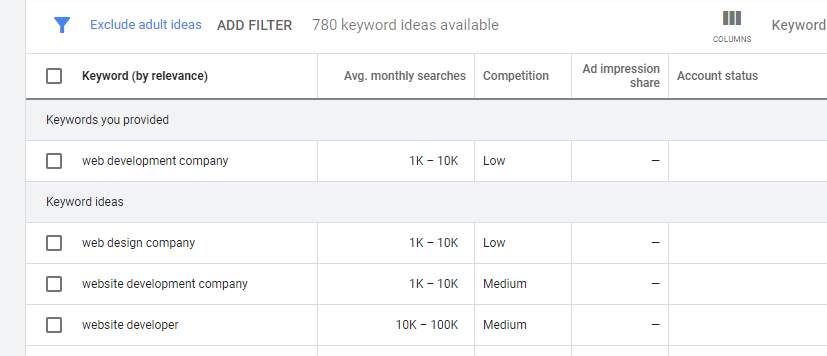
Once you have searched for suitable keywords and topics, create a content calendar and follow it to publish your articles.
Explore And Target A Niche SubTopic Always
You need to understand that general topics are very less likely to get ranked on search engines. A lot of people have already talked about them. You need to select a niche-specific topic keeping in mind your audience, their interest and your website as well.

For instance, writing on a topic like, ‘what is digital marketing’ will not really work for you. Rather, try to provide solutions to your readers and cover deep topics like, ‘how to utilize Facebook stories to boost your business’, etc.
Understanding B2B vs. B2C Content
Your niche will dictate your style. A crucial distinction is between Business-to-Business (B2B) and Business-to-Consumer (B2C) content:
| Aspect | B2B Content | B2C Content |
|---|---|---|
| Primary Focus | Logic, ROI, long-term value | Emotion, personal benefit, immediate solution |
| Language & Tone | Industry-specific, professional, data-driven | Everyday, conversational, relatable |
| Content Formats | White papers, case studies, in-depth reports | Blog posts, listicles, social media content |
| Decision Process | Longer cycle, involves multiple stakeholders | Shorter cycle, often an individual decision |
Before you start to write, it is imperative to conduct in-depth research on the topic. This will help you produce high-quality content. According to a local survey, 89 percent of readers are impressed with in-depth content and the ones that have stats.
Stats are not just numbers. They impact the psychology of the readers and help them value your content.
The Research & Planning Workflow
- Gather Facts Upfront: Before typing a word, compile all necessary data, statistics, and sources. This prevents disruptive mid-writing research and ensures your argument is built on a solid foundation.
- Define Your Core Message: What is the single most important thing you want the reader to know, feel, or do after reading? Every sentence should support this.
- Craft a Detailed Outline: Use your headings (H2, H3) to create a logical skeleton. This isn’t just for SEO; it’s your roadmap for a coherent, well-flowing article.
Give Your Article A Unique Touch With Your Own Perspective
Obviously, you have good knowledge of the field, and you have been in it for a long time. Then why not include your own perspective in the content to give it a unique touch?
It will not only provide your readers with an original article, but there are a lot of chances that your perspective can get sourced on other websites, and you can have authority backlinks that will improve your chances of getting a better rank in SERPs.
Format Your Article For Better Readability
It is important that, along with your users, your content can be read easily by the search engines as well.
More importantly, users do not like a bunch of texts and information only. The way you present your content is very important. It plays a key role in the performance of your content. A lot of people just skim through articles. And this is why it is important to structure your article in a way that can easily be understood.
Have a look at an example below of two different texts to understand what a well-formatted blog looks like and why it is easy to read.

User proper headers, subheaders, bullets, and small paragraphs. Properly utilize white spaces so that the article does not look too condensed.
Essential Web Writing Mechanics
- Headlines & Hooks: Your headline (H1) is your first and sometimes only chance to grab attention. Follow it with a compelling first sentence that promises value.
- Link Effectively: Never use “click here.” Instead, embed links in descriptive text (e.g., “learn more about web writing best practices“).
- Active Voice: Write “the team created the guide,” not “the guide was created by the team.” Active voice is more direct and engaging.
Add Multimedia To Make It Engaging
Users love to read through articles having images, and suitable screenshots that describe the text.

You can use,
- Photos
- Infographics
- Charts
- Tables
- Graphs
- Videos
- Gifs
- Memes
Using multimedia in your content will enhance user engagement, and it is an effective way to illustrate what you are saying.
Crucial Step: Always add descriptive alt text to every image. This is vital for accessibility (screen readers) and provides SEO context to search engines.
SEO Tips To Boost Your Content
Once you have taken care of the above points to create a quality article, you can follow some SEO tips to improve your chances of ranking.
- Add alt tags to your images. (As mentioned above).
- Include your focused keyword in H1, some of the subheadings, first para and try to spread it throughout the content.
- Mostly, SEO experts suggest that you should keep your keyword density from 1 to 2. But I personally recommend keeping it around 1. For instance, in a 1000-word article, your focused keyword should be around 7 to 10 times. Not more than that.
- Add LSI keywords to your content. These are similar keywords that fall around your focused keyword.
Beyond Keywords: Modern SEO & GEO
Search is evolving. While keywords remain important, Generative Engine Optimization (GEO) is about optimizing for AI assistants and featured snippets.
- Structure for Snippets: Answer questions directly and clearly. Use schema markup where possible to help search engines understand your content’s context.
- Optimize Meta Elements: Craft a compelling page title (under 60 characters) and meta description (150-160 chars) that includes your primary keyword and a value proposition.
- Internal Linking: Link to your other relevant content. This keeps users on your site and helps search engines map your site’s authority.
Critical SEO Pitfalls to Avoid
Keyword stuffing, duplicate content, and neglecting mobile-friendliness are fast tracks to being penalized or ignored by search engines. Always write for people first. Use tools like Google’s PageSpeed Insights and Mobile-Friendly Test to ensure technical quality.
The Final Polish: Editing & Proofreading
Great writing is rewriting. Never publish a first draft.
- Take a Break: Step away from your work before editing to gain fresh perspective.
- Read Aloud: This is the best way to catch awkward phrasing and run-on sentences.
- Use Tools: Leverage grammar checkers (Grammarly), readability apps (Hemingway Editor), and plagiarism checkers.
- Fact-Check: Verify every statistic, quote, and claim. Credibility, once lost, is hard to regain.
All these SEO tips could be effective only when you have created user-centric content, as we have discussed above in this article. I wish you the best of luck with your content creation in the upcoming days.
Expanding Your Content Writing Horizons
Content writing isn’t just blog posts. To build a career or a comprehensive strategy, understand these key types:
| Type | Primary Goal | Key Skills/Traits |
|---|---|---|
| Copywriting | Persuasion & Conversion | Persuasive language, understanding consumer psychology, strong CTAs. |
| Technical Writing | Clarity & Instruction | Ability to simplify complex topics, extreme attention to detail, patience. |
| SEO Writing | Visibility & Traffic | Keyword research, understanding search intent, balancing readability with optimization. |
| Social Media Writing | Engagement & Community | Concise, platform-specific communication, understanding trends, conversational tone. |
| Scriptwriting (Video/Podcast) | Storytelling & Audio/Visual Engagement | Narrative flow, pacing, writing for the ear (not the eye). |
How to Start and Build a Portfolio
For beginners, the path is clear:
- Start a Practice Blog: Choose a niche you’re passionate about. Write consistently (aim for 1,000 words daily) to find your voice and build discipline.
- Learn SEO Basics: Free resources abound on YouTube and through platforms like Coursera. Understand keyword research and on-page optimization.
- Build a Portfolio: Use your blog posts as initial samples. Then, offer to write a few pieces for small businesses or local blogs (even for free/at a low rate) to gain real-world samples.
- Start Pitching: Use platforms like Upwork or LinkedIn, or reach out directly to websites and companies in your chosen niche.
FAQ
How do I get started working from home as a content writer?
Building and maintaining a successful blog, followed by freelance work for various online publications, is the most effective way to launch a career as a content writer while working from home. You can also approach specific businesses and inquire about the possibility of offering your services to them.
How do I get started writing content when I don’t have any previous experience?
You can get started writing content even if you don’t have experience by first writing for your own blog and then using that blog for the assignments you have to do.
What are the fundamentals of writing content for websites?
When it comes to writing content, the most important thing is to ensure that the content is relevant to the audience that you are writing for and that it can be located.
What is meant by the term “SEO Content Writing”?
Writing content in such a way that it is crawled by search engines and ranks highly in those engines is the goal of SEO Content Writing, which is both an art and a craft.
What kind of structure does content writing follow?
The goal in the process of writing content is to make it as comprehensible, approachable, and interesting as is humanly possible. If you are able to do that, you will be successful in the field of content writing.
What are the different kinds of content writing there are?
Posts on blogs, content for websites, articles, reviews, white papers, videos, scripts, technical writing, digital content, and presentations are all examples of the various types of writing that fall under the umbrella term “content writing.”
What exactly are some examples of content writing?
Examples of good content writing can be found on prominent websites and publications such as Mashable, Forbes, Huffington Post, Entrepreneur, Inc., and Business Insider. Choose a subject that piques your interest, and then read through a few of the articles. Examine the structure of the documents, pay attention to how they are written, and focus on the aspects that stand out to you.
Claudia Jeffrey is currently working as an Editor At Crowd Writer, where she serves students with custom essay help as well. She blogs at Word Count Jet and loves to travel solo to explore the beauty of nature.






Thank you for your article on Quality Content Writing Guide For Beginners
I really like your post. Thanks for sharing this with us.
Thanks keep reading and sharing
The post is excellent. Thanks for sharing this helpful post with us.
Thanks keep reading and sharing
You really hit the nail on the head, thanks