

Key Takeaways for 2026:
- SEO has evolved from ranking to “answerability”: With 80% of consumers relying on zero-click results, success now means being cited in AI Overviews, ChatGPT, and Perplexity, not just appearing in the 10 blue links .
- E-E-A-T is your competitive advantage: Experience, Expertise, Authoritativeness, and Trustworthiness now determine which sources AI systems choose to cite. Real-world experience trumps generic content every time .
- Keywords matter, but intent matters more: Search engines now evaluate pages based on how well they answer queries, not how closely they match exact phrases. Semantic understanding has replaced keyword stuffing .
- Technical SEO is the foundation for AI visibility: Clean crawlability, structured data, and fast performance act as a translation layer between your content and AI systems. Without these, even great content remains invisible .
- “Search Everywhere Optimization” is the new standard: Brands must now be visible across YouTube, Reddit, TikTok, LinkedIn, and traditional search—AI pulls from this entire ecosystem .
🚀 TL;DR: SEO in 2026—What Actually Works
Have you ever heard anybody say that ranking on Google is hard work—and there simply aren’t any SEO secrets that can help you improve your ranking? Well, that’s not entirely true. But the “secrets” have changed dramatically. SEO in 2026 isn’t about tricking algorithms—it’s about being the authoritative source that algorithms trust.
The landscape has fundamentally shifted: AI agents now account for roughly 33% of organic search interactions . Zero-click searches dominate . And Google’s algorithm updates consistently reward genuine expertise over manufactured content .
The four pillars of modern SEO:
• User Experience: Fast, mobile-friendly, intuitive sites that keep visitors engaged .
• Crawlability: Clean technical foundations that allow both traditional crawlers and AI agents to access your content .
• Contextual Relevance: Content that truly satisfies searcher intent with depth and authority .
• Authority: Earned recognition through quality backlinks, brand mentions, and third-party citations .
This guide reveals the 21 most effective SEO strategies for 2026—updated with current data and real-world insights.
1. Understand Google’s Ranking Algorithm (And AI Systems)
It’s no secret that Google is constantly changing its algorithm. They don’t always announce when a change is made; therefore it remains a little bit of a mystery. In 2026, the complexity has multiplied with the integration of AI across search. Google’s algorithm now includes multiple AI systems—RankBrain, BERT, MUM, and the latest generative AI models that power AI Overviews and AI Mode .
Moz’s Google Algorithm Change History remains a helpful resource, but today’s SEOs must also understand how large language models (LLMs) like GPT and Claude interpret and cite content. The Google Webmaster Central tool is still essential, but supplement it with AI visibility monitoring tools that track your brand’s presence across AI platforms .

2. SSL Encryption: Still Non-Negotiable
An SSL encryption is a small but mighty SEO tool to consider. Google introduced it as a ranking signal in 2014, and in 2026, it’s absolutely mandatory. The SSL encryption—or “HTTPS”—boosts the security of your website. It’s great for SEO and will keep your visitors’ data safe when they land on your site. Consider activating an SSL encryption if you have an eCommerce website that requires users to enter a username, a password, and credit card information to complete a transaction. Your website guests may not know your site is encrypted with SSL, but you and the search engines crawling your site will. Beyond hosting, you can choose paid SSL providers that offer various SSL products. It’s wise to check your site’s necessity before selecting any SSL product like single domain, multi-domain, code signing, or cheap wildcard SSL certificates.

3. Structured Data: Your AI Translation Layer
The factor in our SEO secrets list is structured data. It helps Google resolve what search results will appear. This is also called Schema markup. In 2026, structured data has become essential for AI visibility. Schema markup provides AI engines with a roadmap to understand your content—customer Q&As, product specifications, user feedback, and content creator qualifications .
A combination of ratings, images, and locations will enhance your website’s ranking and increase its likelihood of appearing above competitors. Implement Product schema for e-commerce, FAQ schema for Q&A content, and Person/Organization schema to establish E-E-A-T signals .
Does every page on your website have a title tag? If it does, take a closer look. Title tags should be under 60 characters to avoid truncation in search results . The title tag tells Google and other search engines what content is on your page. The keywords should match the content that’s on the webpage. But in 2026, focus on natural language that incorporates your primary keyword while remaining compelling for users. The better the keyword choice—and the more it aligns with search intent—the higher the chance your website will appear when someone searches for what’s on your page.

5. Meta Descriptions: Your Click-Through Rate Engine
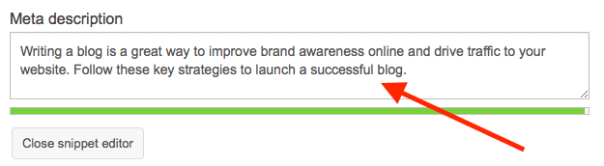
Let’s look at some fundamental SEO for the website—meta descriptions. Similar to title tags, they set an expectation for what information a person will see when they reach your page. They can increase click-through rates, which can also improve keyword rankings. A meta description should be no longer than 160 characters. The language should be compelling with a call-to-action that can attract visitors to your site over a competitor’s. In 2026, meta descriptions also influence whether your content gets pulled into AI Overviews—clear, concise summaries are more likely to be cited .
6. Use H1 Headings Correctly
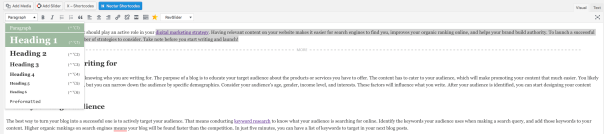
The H1 tag isn’t just a piece of bold website text that creates a heading. It’s crucial on our SEO secrets list. It sets an expectation for the content that follows. H1 headings should be used at the top of web pages to introduce content and should also include a keyword related to your topic. In 2026, header tags (H1, H2, H3) create structure and clarity for both users and search engines—and increasingly, for AI systems that parse your content hierarchy to understand relationships between topics .
Canonical tags should be used in the header of your coding and are another good tip from our search engine marketing secrets list. They tell Google that this is the truest version of a respective web page. They make it harder for code to be scraped and eliminate competition from a neighboring site with identical coding. In other words, they help you avoid duplicate content issues. In 2026, with AI systems crawling and indexing content at unprecedented scale, clean canonical implementation is more important than ever for ensuring the right version of your content gets cited .

You need images not only to improve a user’s experience on your website but also because they have a positive impact on your SEO. It’s not enough to simply have images on a site, though. To help with your Google search ranking, give creative file names and alt tags that describe what the image is. This content will help Google and other search engines determine what the image represents. The more relevant it is to the search query, the more likely your website will show up. In 2026, with multimodal search on the rise—users searching with images and voice—optimized visuals are essential .

9. Check Your Website for URL 404 Error Code Pages
Your SEO strategy might include links to other websites or pages within your own site. Sometimes pages are no longer available and content is permanently removed from a site. When that happens, website visitors land on a 404 error page. Double-check the links on your site to ensure pages haven’t been taken down without your knowledge.
- If you’ve included links to other blog posts or websites in your content, double-check those as well.
- Simply change the link to another reliable source if the pages have been taken down.
- If your own website has an error page, customize it to match your website’s design.
It’s better to have a customized 404 error code page than to have an empty page—it doesn’t send a good message to SERPs or website visitors. In 2026, broken links also hurt your crawl budget and can prevent AI agents from accessing your important content .
10. Don’t Forget About a Sitemap
Your web site must be indexed for it to show up in search results. A robots.txt file helps you determine which pages you want indexed and crawled by SERPs. Without this, there might be pages appearing in SERPs that are internal, password-protected, or not ready to go live. A sitemap tells SERPs what pages are where, making it easier for your site to appear correctly in SERPs. The more detailed your sitemap is, the easier it is for crawling and indexing to happen automatically. In 2026, consider implementing llms.txt files—a new standard specifically designed to guide AI crawlers to your most important content .
11. Evaluate Your URL Structure
A URL is more important than you might think. Your website’s URL structure is like a math formula—when followed correctly it gives you the right answer. It’s essential to eliminate any of the following characters from your existing URLs:
- Underscores
- Capital letters
- Special characters
Your URLs should also be short and descriptive. Clean, keyword-rich URLs tell search engines what the page is about before any content is parsed. This strategy has endured every algorithm update because structure remains fundamental to how search works .
12. Evaluate Your Website Speed
User experience is extremely important, and SERPs will also notice if your website takes a long time to load. They won’t be able to crawl or index your pages efficiently, and as a result, your pages might be virtually non-existent online. Your website should be designed with your customer in mind. No one wants to wait a long time for a page to load, and slow website speeds will tempt visitors to go to a competitor’s page. Your website’s load time should be under two seconds on a desktop and under one second on mobile. In 2026, Core Web Vitals (LCP, INP, CLS) remain direct ranking factors . If your site has a load time of 4 seconds or longer, it can cause a significant loss in web traffic and lower your Google rating at the same time.

🔥 PRO TIP: Core Web Vitals in 2026
Google’s page experience signals now heavily influence rankings. Focus on:
- Largest Contentful Paint (LCP): Should be under 2.5 seconds
- Interaction to Next Paint (INP): Under 200 milliseconds (this replaced FID in 2024)
- Cumulative Layout Shift (CLS): Under 0.1
Use Google’s PageSpeed Insights tool regularly to monitor these metrics. Even the best content won’t rank if your technical foundation is weak .
13. Go Mobile-First
Having a mobile design for any web site is a necessity today. Most people use handheld devices to access the web, and the chances are high that your website visitors are doing the same. Google has shifted to mobile-first indexing, meaning it primarily uses the mobile version of your content for indexing and ranking. In 2025, mobile devices accounted for 62.5% of global website traffic . Your SEO efforts on mobile are no longer optional. Google’s Accelerated Mobile Pages (AMP) program has evolved, but the principle remains: deliver high-quality web pages with near-instantaneous load times. If your site isn’t mobile-friendly, it will damage your SEO efforts.
14. Do the Right Kind of Keyword Research for 2026
Find out what keywords are already bringing traffic to your site. A SERP scan can identify these keywords for you. But in 2026, keyword research is about understanding intent, not just volume .
Your website should rank for commercial and transactional keywords, as informational keywords will only take you so far. Informational keywords like ‘free download’ or ‘how to install’ aren’t always effective. Using phrases like ‘best products for’ will help you better target your audience and drive more qualified visitors to your site.
The shift in keyword research: Search engines now evaluate pages based on how well they answer a query, not how closely they match it word-for-word. Google’s algorithms—from Hummingbird to BERT to the latest updates—have moved from mechanical keyword matching to sophisticated language understanding .

15. Use Long-Tail Keywords Strategically
Implement long-tail keywords into your content marketing strategy. Broad terms about the products or services you want to sell won’t necessarily generate high amounts of traffic to your website—simply due to the high competition. However, an SEO strategy that uses long-tail keywords will. Such keywords aren’t always heavily targeted by online marketers. But when properly optimized in content, they can bring less overall traffic but more qualified leads to your website.
In 2026, long-tail keywords align perfectly with voice search and conversational AI queries. Users ask complete questions, and your content should provide complete answers .
16. Quality Over Quantity: The E-E-A-T Imperative
The content on your website has to be unique and creative. It must be relevant to your readers, and not published only for SEO purposes. In 2026, this has become the primary differentiator for AI visibility. AI tools don’t cite content that merely repackages existing information—they can generate that themselves. What they do cite are unique insights, original research, and demonstrably trustworthy sources .
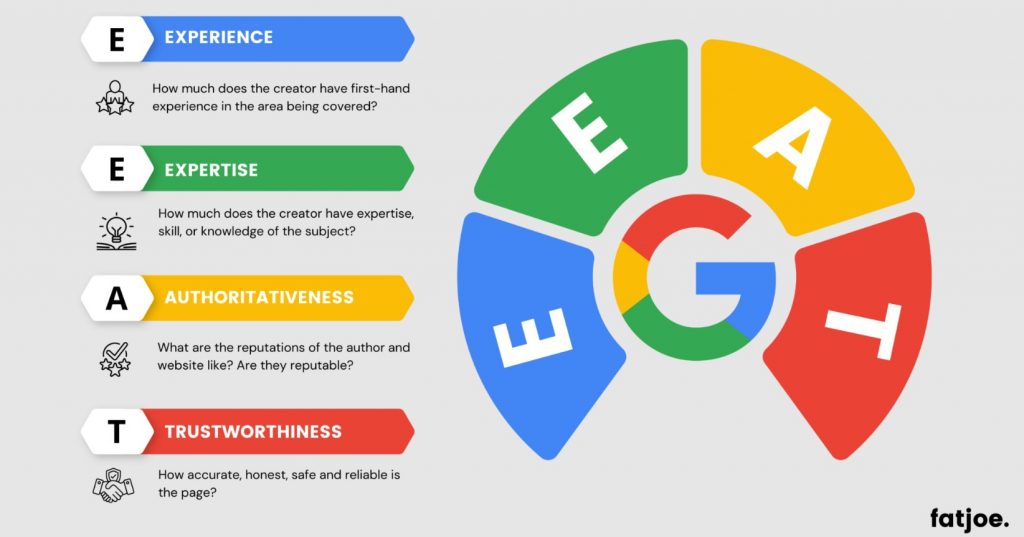
To create relevant content, research the latest trends and write blog posts that are engaging. Teach your audience how to do something, and always update old content. Focus on E-E-A-T: Experience, Expertise, Authoritativeness, and Trustworthiness .

17. Build Relationships, Not Just Links
Link building is a relevant SEO concept that refers to building credibility for your website by having your links appear on other web pages. What SEO specialists and strategists should be doing, instead of just link building, is establishing relationships with industry influencers and authoritative websites. By connecting your content with real people and real sites, you’ll develop more valuable relationships in the long-term and better link engagement.
In 2026, digital PR has become a core SEO success factor. Earned media—social mentions, reviews, quality backlinks—shapes how AI models and users perceive your brand. LLMs prioritize content from trusted, credible sources . BrightEdge data suggests approximately 34% of AI citations come from PR-driven coverage .

18. Identify What’s Working and What Isn’t
Building linking relationships with industry influencers and businesses is a great way to boost your website’s SEO. However, proper analysis will provide the insight you really need. Tracking your SEO metrics is essential to understand what elements of your linking strategy are working—i.e., which links drive the most traffic to your site. The more data you have, the better decisions you can make to leverage your SEO strategy and capitalize on your efforts.
In 2026, this means tracking new metrics beyond traditional rankings :
- AI Presence Rate: Percentage of target queries where your brand appears in AI responses
- Citation Authority: How consistently you’re cited as the primary source
- Share of AI Conversation: Your semantic presence in AI answers versus competitors
- Response-to-Conversion Velocity: How quickly AI-influenced prospects convert
Google Analytics remains essential, and it’s free. Set up your SEO reporting dashboard to track both traditional and AI-focused metrics.
19. Over-Optimization Exists—Avoid It
Over-optimization is proof that there can sometimes be too much of a good thing. Improving your ranking for certain online keywords is good, but mutilating your content by stuffing keywords into everything you write, or building way too many links with the same anchor text, won’t only look unnatural but also hurt your SEO strategy. In 2026, Google’s algorithms are sophisticated enough to detect and penalize manipulative patterns. Write for humans first, search engines second .
20. Avoid Negative SEO Attacks
SEO professionals find that negative SEO attacks are becoming more prevalent. Yes, competitors might try to penalize your site and get your website removed from Google. These types of negative attacks occur when competitors build thousands of low-quality backlinks to your website. To prevent this from happening to your site (and your SEO strategy), monitor the backlinks your site is receiving. Tools like Monitor Backlinks can alert you if another website links to yours so you’ll be able to identify an SEO attack and divert it before it’s too late.
21. Don’t Forget Your Audience
Blogging for SEO has two sides: It does help with SEO, but it also exists to engage with your audience and persuade them to continue coming to your site. Think about what you as a reader would want to get out of your website upon visiting it. When you focus on writing from an SEO perspective alone, all you’ll think about is writing for a higher ranking, and you’ll thus end up over-optimizing the content. By focusing on what the purpose of your blog really is, you’ll strike a positive balance between these two approaches. In 2026, content written for AI visibility but without human value will fail. The brands that win are those that think like AI but act like humans .
⚠️ CRITICAL WARNING: What’s No Longer Relevant in 2026
Some SEO practices that once worked are now either ineffective or actively harmful :
- Exact keyword matching: Optimizing solely to match an exact query word-for-word is obsolete. Search engines understand synonyms and context.
- Keyword density formulas: There’s no ideal percentage. Attempting to hit a specific density usually results in awkward phrasing.
- Keyword stuffing: Deliberately inserting keywords where they don’t belong is still a spam signal that hurts rankings.
- Meta keywords: Ignored by Google since 2009—don’t waste time on them.
- Over-optimized anchor text: Forcing exact-match keywords into every link now looks manipulative and can trigger penalties.
Now It’s Your Turn
How many of these SEO secrets are missing from your current strategy?
It’s never too late to improve your strategy, so you should use all of these SEO secrets. Follow this handy guide to SEO secrets to increase your site’s search engine ranking. Even just a few changes can have a significant impact on your site’s ranking. Don’t forget—it will still take time to see your hard work come to fruition!
People often ask if there are SEO secrets to doing good or great Google SEO and ranking quickly. Many still view SEO as voodoo or magic, but in reality, most SEO strategies boil down to four fundamental ranking factors for growing Google traffic :
- User Experience: Fast, mobile-friendly, intuitive design
- Crawlability: Clean technical foundations that AI systems can access
- Contextual Relevance: Content that truly satisfies searcher intent
- Authority: Enough trust to prove your site should rank above others
Google SEO Secret 1: User Experience
Our approach to Google SEO and growing traffic begins with the website experience. This includes the site’s usability, design, and brand consistency. When determining if a website meets the value that users and Google expect, we use a set of questions spanning:
- Strategy
- Structure
- Marketing Integration
- Content Value
- Brand and Image Consistency
- Cross-Device Compatibility
In 2026, user experience directly impacts AI visibility. If users struggle to read or scroll through your content, engagement signals suffer, and rankings follow .
Google SEO Secret 2: Crawlability
Website crawlability and making a site searchable goes beyond ensuring Google can “crawl” the website. Understanding how your users (including Google and AI agents) navigate your site is essential to building an information architecture. For optimal crawling, it’s crucial that the information architecture mirrors their thought processes. This helps all user types—human and machine—discover information on your site.
In 2026, AI agents including GPTBot, ClaudeBot, and Perplexity Bot account for roughly 33% of organic search activity . These agents don’t render JavaScript and need plain-text information. Your crawlability strategy must accommodate both traditional search bots and these new AI crawlers.
Google SEO Secret 3: Contextual Relevancy and Value
Ensuring a website is contextually relevant for both users and SERPs is one of the Google SEO secrets to ranking well and growing Google traffic. Being contextually relevant is rooted in four major data points :
1. Does The Website Have Content That Satisfies the Searcher’s Intent?
There are many theories, some backed by data, that show Google uses user metrics like bounce rate, click-through rate, time on site, and more when determining the relevancy of content to the searcher’s query. If your site is trying to rank for a specific topic, and yet there’s no high-value content addressing that topic, the chance of appearing in search results is small. To find these gaps in content and rankings, use a technique called Gap Analysis. This method takes an inventory of existing content and keyword targets, then compares them to the keywords and topics you want to rank for—giving you the gap between expectations and reality.
2. Is That Content Optimized for Both Visitors and Search Engines?
There are many on-page components that go into optimizing content for search engines—title tags, keyword placement, using multiple content types, topic modeling, and more. When optimizing for your site visitors, there are additional areas to focus on.
3. Is the Content Easily Scannable?
If the user scans your content (which nearly all readers will do), is the answer they’re looking for easily findable within the page they landed on? In other words, does the content use header tags (H1, H2, H3) to define sections based on sub-topics? Clear hierarchy helps both human readers and AI systems extract information efficiently .
4. Does the Content Provide Value?
Ensuring that your content explores the topic thoroughly across many relevant sub-topics, and doesn’t only provide a thin/generic answer, will help with search engine rankings and value. In 2026, content that AI can’t easily imitate—opinionated commentary, first-hand experience, data-rich insights—is driving results .
If your website has terrific user experience, is designed well, can be crawled, and contains contextually relevant content, then the final piece is building authority. Authority is built through inbound links, or what some refer to as votes, for your site. This is one of the fastest ways to rank well in Google. This is achieved by creating great content that provides so much value that other high-authority sites reference it. The ability for content to earn natural links that positively contribute to a site’s link graph is directly proportional to that content’s value. In other words, the more helpful the content is, the easier it will be to earn high-value links and increase Google traffic. Conversely, the less helpful content is, the harder it will be to earn links.
In 2026, authority signals also come from brand mentions across the web, even without links. Google’s systems can detect when your brand is discussed positively in news articles, social media, and forums .
So Are There Secrets To Ranking In Google?
That’s for you to decide. But what I choose to believe is there’s no one-size-fits-all, or quick-and-easy way to rank fast in Google. SEO secrets boil down to creating great content that can naturally earn authority and is optimized for both visitors and SERPs, and wrapping that content in experience and high-quality design that fosters engagement. So if you invest the time in the above “secrets,” then you’re giving your site the best chance and potential to reach the top positions in Google search results.
10 Tips From SEO Experts You Can’t Afford to Ignore in 2026
Search engine optimization is the process of creating a website that search engine algorithms find valuable. When a search crawler comes to your site, it goes through your pages looking for content that will be useful to users. When it finds these pages, it places them in that search engine’s index. Then, when a user types in a query, the algorithm dips into the index to find the pages most likely to answer that query.
Not too long ago, SEO was much easier—and it was easier to game the system. That led to SERPs delivering junk results to users, and that’s the last thing SERPs want to do. They’re in the business of delivering high-quality results; if they don’t, people will stop using them. Google constantly updates its algorithm, as do the other major SERPs. They’re always making tweaks and changes to ensure they deliver the best possible results to their users. Your best bet is to work with an agency that understands SEO and keeps up with the latest updates—that way, you’re always one step ahead of your competition.
Secret SEO Tip #1: Craft Killer Content That AI Can’t Replicate

Content is the backbone of the web, but here’s the catch: You have between 3 and 5 seconds to capture a user’s interest. If you can’t do it within that timeframe, they’re going to click the “Back” button and leave your site for good. (Another problem is that Google tracks these clicks away from your site and counts them toward your bounce rate. If your bounce rate is high, Google takes that as a sign that you’re not providing the information users want or expect—and then becomes less likely to deliver that page in search results.)
In 2026, the content performing best is the kind AI can’t easily imitate: opinionated commentary, first-hand experience, data-rich insights, and multimedia storytelling . Beyond the first 3 to 5 seconds, you must keep your users engaged. Most site users leave before 59 seconds have elapsed—and if you haven’t fully captivated your audience by then, you’re probably not going to. And the best way to do that is through superb content. Content can be more than text. It can be visually pleasing images, infographics, video with transcription, or product listings.
The premise of your SEO strategy should always be content. You can’t optimize your site for users without it. Text is straightforward for crawlers to understand. If your text is structured correctly, bots can sort through your page, determine what it’s about, assign it a rating, and store it in the index.
Secret SEO Tip #2: Be Consistent
SEO doesn’t happen overnight, and it doesn’t happen in a vacuum either. Once you commit to SEO, you must commit to sticking it out for the long haul. Often, you won’t see immediate results—and if you call it quits, the work you did will be for nothing. It takes time for users to notice content and for engines to deliver it. But the good news is that once search engines do start noticing your content, they’re more likely to come back and crawl regularly. When you frequently update your site with blog posts, new pages, new products or listings, and other content, your site will do significantly better than one that’s gathering dust. Regular updates show Google and other SERPs that your site is active and can offer searchers the most current information.
Secret SEO Tip #3: Make Your Website User-Friendly

Your website isn’t for you—it’s for your users. And the thing that Google is most interested in, aside from you answering a searcher’s question, is user experience (UX). The search engine prides itself on delivering the best high-quality results, and that includes websites that searchers enjoy using. Understanding—and catering to—your users is essential in creating an excellent UX. Consider your site as your customer’s pathway toward doing business with you.
If you have a brick-and-mortar location, it’s clear, easy to navigate, and easy to make purchases; your website should be the same way. Remember, too, that Google is monitoring what people do on your site when it delivers it in the search engine results pages or SERPs. The better your UX is, the longer people will stay, and the more likely they are to click through to other pages. This is a huge factor in SEO.
Secret SEO Tip #4: Speed Up Your Website
Part of a good UX is fast loading time, but there’s more to it than that—Google uses site speed as a ranking factor, notably on mobile searches. (You can use Google’s PageSpeed Insights tool to determine how fast your site loads for visitors.) Slow pages won’t rank as well, because again, Google and other SERPs are in the business of delivering the best possible results. The good news? You can almost always make your site load faster. You can optimize images, use a content delivery network, minify code, and even work with a faster web host to boost your site speed.

Secret SEO Tip #5: Answer People’s Questions
If you’re not answering any questions (or queries, which are the words people type into SERPs), Google isn’t going to deliver your site to anyone—let alone put you in the top spot on page 1. It’s extremely important that the pages on your site answer queries.
A Word on Keyphrases
Many people want to rank for “vanity” keywords. Vanity keywords are those that might describe what the site or page is about, but aren’t likely to deliver qualified traffic that produces high conversion rates. Let’s say a business owner wants to rank for the term “houseplants” because they sell stunning houseplants in Colorado. While the term “houseplants” is searched very frequently, it’s unlikely to deliver qualified prospects. That business owner would enjoy better results with a specific keyword, like “peace lily for sale in Colorado” or “buy peace lilies.” When you create content for your site, it’s essential to identify exactly what your prospects are searching for. Then, provide answers to their queries.
Secret SEO Tip #6: Take Advantage of SEO Tools and Reports
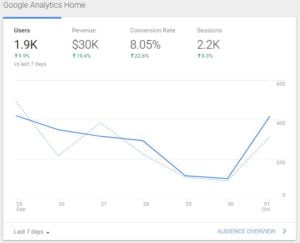
If you’re not taking advantage of analytics tools, keyword research tools, and in-depth reporting tools (or you’re not working with an agency that does), you’re not fully committed to SEO. In 2026, automation has become essential for scaling SEO performance . While there are many tools out there, here are some of the most helpful selections:
- Google Analytics 4
- Google Search Console
- Semrush or Ahrefs
- BrightEdge (for enterprise)
- Sitebulb or Screaming Frog (for technical audits)
Secret SEO Tip #7: Zoom in on Local Search

Local SEO is more essential than ever if you have a brick-and-mortar location where you sell products or serve clients. Along with putting your location on your site and having a robust Google Business Profile, you need to optimize your site for local search. To that end, title tags, header tags, and meta descriptions should include local information. Include reviews—or the ability to review your small business—on your site, and claim your profiles on review sites like Yelp. Having a great Google Business Profile and locally optimized content on your site will also help ensure that you show up in Google’s 3-Pack, the group of three results it shows beneath the map on a local search.
Secret SEO Tip #8: Structure Your Content Properly
For Google’s algorithms to understand what your site’s pages are about, you must build your content properly. That means creating a URL that has your keyword in it, using a title tag that also includes your keyword, and using variants of your keyword throughout header tags and body text within each page. Let’s say your keyword is “SEO secrets.” You’ll want to include that throughout your document, as well as variants of that phrase—like “SEO tips” and “search engine optimization strategies.” Algorithms can extract all the important information from your headers and semantic keyphrases (phrases that are related, but not an exact match, to your target keyword), and determine that you have an extremely helpful page.
Pro Tip: Name the images on your site for SEO, too, and give them alt text that reflects the same keywords.
Secret SEO Tip #9: Make Your Website Mobile-Friendly
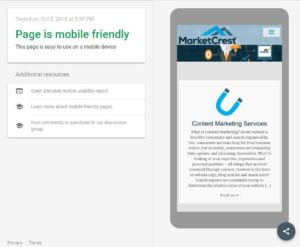
For websites, design is critical—especially when it comes to mobile-friendliness. Most searches occur on mobile devices, with a growing number of these originating with voice search—and that means your site must be mobile-friendly. Check your site’s mobile-friendliness using the Google Mobile-Friendly testing tool.
Backlinks are still an important ranking factor for search engines. They’re a signal to Google and other SERPs that your content is valuable. The key: The links must come from reputable sites. If they come from spammy, junk websites, they might even earn you a Google penalty—especially if the algorithm believes you’re trying to game the system by accumulating these junk links. Good links take some effort to get but pay off big time in the long run. You can’t get them artificially; you must create great content that people want to link to. Authentic links are the only kind of links you want.
Putting All the Secret SEO Tips Together
A great SEO strategy has many more facets than we’re able to outline here. And the fact is, no matter what you do, you’re not going to skyrocket to page 1 in the SERPs overnight. But there’s good news. Your efforts will pay off, and when they do, things will start to snowball for your web site and your business. In 2026, the brands that win are those that understand SEO is no longer a siloed channel—it’s inextricably linked to PR, product quality, social media presence, and technical infrastructure .
🔥 FINAL PRO TIP: The “Search Everywhere Optimization” Mindset
In 2026, SEO = Multichannel visibility. Rank on Google, show up in AI answers, get cited on YouTube, LinkedIn, and TikTok. One topic, many touchpoints. That’s the new SEO era .
Success comes from listening to customers and creating quality content that reflects their needs—not just chasing traffic and keywords. The search revolution is here. Adapt, and thrive.
- How to Rank on the First Page of Google – Advanced strategies for securing top positions in traditional search results.
- What SEO Stands For and Why It Matters – A foundational guide to understanding SEO’s role in business growth.
- Using Ubersuggest for SEO Success – Practical keyword research techniques with free tools.
FAQ: SEO Secrets for 2026
A: Yes, SEO remains highly effective. 74% of small businesses plan to invest in SEO. The fundamentals still matter, but the purpose has evolved from ranking higher to understanding search intent and delivering the right information at the right time .
A: Yes, but not the way they once did. Search engines now evaluate pages based on how well they answer a query, not how closely they match it word-for-word. Keywords help define relevance, but intent, context, and usefulness matter more .
A: E-E-A-T stands for Experience, Expertise, Authoritativeness, and Trustworthiness. It’s Google’s framework for evaluating content quality. Pages with strong E-E-A-T signals are more likely to appear in AI Overviews and featured snippets .
A: AI agents like GPTBot and Perplexity Bot now account for roughly 33% of organic search activity. They don’t render JavaScript and need plain-text information. Optimizing for “agent conversions” is now essential .
A: Content quality combined with technical foundations. Even the best content won’t rank if your site isn’t crawlable, fast, and secure. Conversely, perfect technicals won’t save thin, unhelpful content. Both are essential .
A: Structure content with clear headings, concise summaries, and factual information. Begin articles with a short, factual summary that answers the main question. Use structured data to help AI systems understand your content .
A: The practice of optimizing for visibility across all platforms where users search—Google, YouTube, TikTok, Reddit, ChatGPT, and more. AI systems pull from this entire ecosystem .
A: SEO is a long-term strategy. While some changes can yield quick improvements, significant results typically take 3-6 months. Consistency and quality are key .
A: Yes, but quality matters more than quantity. High-authority backlinks from reputable sites signal trust and authority. Earned media through PR and thought leadership is increasingly influential .
A: Avoid: not optimizing for mobile, writing only for search engines (not users), relying on outdated tactics, overlooking technical SEO, and ignoring user behavior trends .
Conclusion
The “secrets” of SEO in 2026 aren’t really secrets at all—they’re fundamental truths about creating valuable, trustworthy content and delivering exceptional user experiences. Google’s old search era is over . Today’s winners are those who understand that SEO is finally maturing into a holistic, multi-platform discipline that serves real human needs.
By focusing on the four pillars—User Experience, Crawlability, Contextual Relevance, and Authority—you give your site the best possible chance to thrive in an AI-driven search landscape. The work takes time, but the payoff is sustainable, compounding visibility that no algorithm update can erase.



Hi, Lovely post I would like to share this because its very helpful for me. keep it up & please don’t stop posting. Thanks for share such kind of nice information with us.