
It can be challenging to keep up with trends and figure out what will work best for your company or brand in the long run. That’s why developing a social media strategy for 2026 requires looking beyond vanity metrics and focusing on community, AI integration, and authentic storytelling. This comprehensive guide is designed to provide you with a future-proof framework, blending tactical execution with strategic foresight for the evolving digital landscape. We will break down the essential components, from foundational goal-setting to advanced AI implementation, to ensure your brand not only survives but thrives in the coming year.
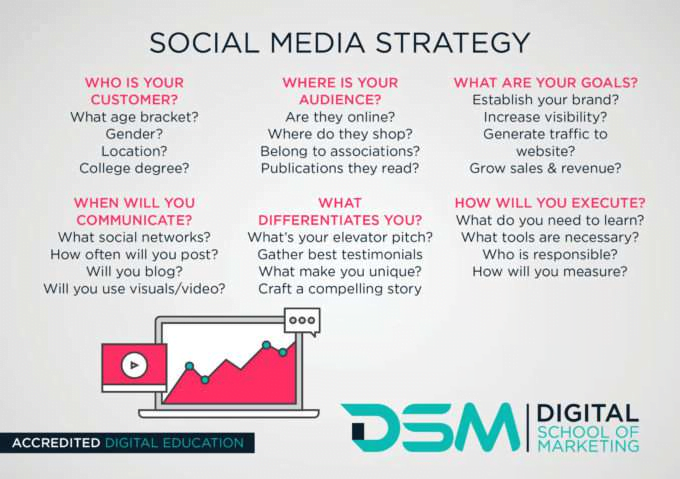
Strategic planning is the difference between noise and influence.
Invest in social media marketing courses today to build your strategy. Here are the essential pillars to get you started on the right path for the year ahead. A successful 2026 social media marketing plan hinges on adaptability, data intelligence, and a human-centric approach, even as automation becomes ubiquitous. The landscape is shifting from broad-reach advertising to precision community cultivation and value-driven interaction.
The era of “spray and pray” posting is over. Algorithms now prioritize retention (how long people watch) and shares (dark social) over simple likes. Your strategy must pivot to creating “share-worthy” content. This fundamental shift means valuing depth over breadth and conversation over broadcast. Your content’s true success is measured not by its reach, but by its resonance and ability to spark meaningful action within a dedicated community.
1. Set Goals That Are Appropriate to Your Business
It’s essential to set a goal that you feel good about. If you don’t expect much from yourself, your progress will likely be slow or stagnant. Additionally, if you set a goal that is too high and out of reach, it could negatively impact your mindset and self-esteem. Goal-setting in 2026 is less about arbitrary follower counts and more about measurable business outcomes and community health indexes. The primary shift is from output (number of posts) to outcome (impact on the business).
When setting your goals for social media marketing in 2026, make sure they are SMART (Specific, Measurable, Achievable, Relevant, Time-bound). You should also consider how long it will take to achieve them and what needs to happen in order to meet these milestones. Incorporate leading indicators like sentiment analysis and community growth rate, not just lagging metrics like monthly sales. Align each social media goal directly with a departmental business objective, whether it’s reducing customer service costs, increasing product feedback quality, or shortening the sales cycle.
Goal Examples for 2026:
2. Choose Your Target Audience Carefully
You can’t please everyone, so you have to make a choice about who you want to work with. Because you only have so much time and energy, it makes sense to focus on your audience members who are most likely to find value in what you offer. In 2026, audience definition moves beyond basic demographics into psychographics and behavioral clusters identified through AI-powered social listening tools. Creating detailed “content consumption personas” based on how different segments interact with media is now crucial.
That doesn’t mean everyone else is excluded—but it does mean that your first priority should be figuring out how to reach people who are interested in your kind of content, products, or services. In other words, choosing your target audience means deciding what you want most from social media marketing. This laser focus prevents resource drain and allows for hyper-personalized content that resonates on a deeper level. Utilize platform analytics and surveys to build segments based on content preferences (e.g., tutorial-seekers vs. inspiration-browsers) rather than just age or location.
Focus on LinkedIn and X (Twitter). Leverage detailed case studies, webinar promotions, and engagement in industry-specific Twitter Spaces or LinkedIn Audio events.
Focus on TikTok and Instagram Reels. Prioritize authentic, fast-paced UGC-style videos, leverage trending audio intelligently, and engage in duets/stitches.
Focus on Pinterest and YouTube. Optimize video titles, descriptions, and pins with long-tail keyword research, treating these platforms as visual search engines.
Focus on Discord and Instagram Broadcast Channels. Develop exclusive spaces for direct dialogue, insider updates, and fostering peer-to-peer connections among your most loyal followers.
Don’t spread yourself too thin by trying to do everything at once; just stick with one primary platform at first and see how it goes. Mastery of one channel’s algorithm and community culture is far more valuable than a shallow presence on five. Conduct a “platform audit” of your existing audience to see where your most engaged followers already congregate, and double down there.
3. Establish Important KPIs and Metrics
Key performance indicators (KPIs) and metrics are essential to setting your marketing course. Consider questions like: What is my expected conversion rate? Which social media platform will generate higher ROI? In 2026, the definition of “engagement” is becoming more sophisticated, moving beyond public interactions to include private shares, saves, and even watch time. The metric of “Attention” – the total time spent consuming your content across all touchpoints – is emerging as a key holistic KPI.
Establishing these expectations will make it easier to create a workable social media strategy that aligns with your overall marketing goals. Your analytics dashboard should be a blend of platform-native insights and third-party tools that track cross-platform journeys and attribution. Invest in tools that can connect social engagement to eventual revenue, closing the loop on ROI.
| Metric | Why It Matters in 2026 | Benchmark Consideration |
|---|---|---|
| Retention Rate (Video) | Indicates if your content is actually being consumed or scrolled past. Algorithms heavily favor content that keeps users on the platform. | Aim for >50% average watch time for short-form video. |
| Shares/Saves (Dark Social) | The strongest signal to algorithms that content is valuable. Saves indicate intent to return, shares amplify reach organically. | Track ratio of shares to impressions; a rising ratio signals high resonance. |
| Engagement Rate (Comments > Likes) | Proves community health. A thoughtful comment is 10x more valuable than a passive like in relationship-building. | Measure reply rate and sentiment in comment threads. |
| Community Growth Rate | New followers from organic content vs. ads. Shows sustainable brand appeal and content effectiveness. | Healthy accounts see 30-50% of new followers from non-paid sources. |
| Customer Service Response Time & Sentiment | Public customer service is a brand reputation lever. Speed and resolution positivity directly impact public perception. | Target under 60-minute response time during business hours. |
Make your social media content engaging by answering questions or by inviting your audience to participate. This will engage followers and drive up your shares. Engagement also helps with SEO because Google now indexes social videos (TikTok/YouTube Shorts) in search results. The first 3 seconds are your most valuable real estate; use them to state a problem, spark curiosity, or evoke emotion. In 2026, hooks must be platform-native – what works as a text hook on X will fail as a visual hook on TikTok.
The 2026 Content Pillar Framework:
- Educational Pillar: “How-to” guides, tutorials, and insights that solve your audience’s problems. This builds authority and trust.
- Entertainment Pillar: Trend-jacking, humor, and relatable skits. This builds affinity and shareability.
- Engagement Pillar: Polls, questions, “caption this,” and UGC prompts. This fuels community interaction and provides valuable feedback.
- Emotional/Storytelling Pillar: Behind-the-scenes, founder stories, customer testimonials. This humanizes your brand and builds deep connections.
Keep your content fresh: Newer posts always show up on top. Consistency trains the algorithm to serve your content to more people. Develop a content calendar that balances these pillars across your chosen platforms. Utilize scheduling tools but remain agile to jump on real-time opportunities.
Start conversations with influencers: Connect with influencers to let people know that you care about their interests, building trust and making them more likely to engage with your content. In 2026, nano and micro-influencers in niche communities often deliver higher ROI than mega-influencers. Focus on building long-term ambassador relationships rather than one-off sponsored posts.
User-Generated Content (UGC): Encourage your customers to post about your brand. UGC performs 40% better than polished brand assets in ads. Create branded hashtags, run contests, and feature the best UGC on your profile to create a virtuous cycle of advocacy. Implement a UGC rights management system to easily secure permissions for repurposing.
5. Follow the Trends (But Don’t Lose Your Identity)
In recent years, social media has become a powerful tool in marketing and advertising. The way people spend their time online has changed dramatically; so, your strategy must also reach them. That’s why it’s essential to think about your current social presence in terms of what will be relevant two years from now. Trend adoption should be a filter, not a foundation. Ask: “Can we participate in this trend in a way that is authentic to our brand voice?” Forced trend-jacking appears desperate and damages credibility.
According to recent data, AI-generated content and VR/AR experiences are the next frontier. Don’t get caught out by any surprises! Platforms are rapidly integrating augmented reality filters and shopping experiences. Early testing in these areas can provide a significant competitive advantage. Allocate a small portion of your content budget (e.g., 10-15%) to experimenting with emerging features and formats.
Key 2026 Trends to Monitor:
- Search-Led Social: Users treat TikTok and Instagram as search engines. Optimize your content with keywords in captions and on-screen text. Create content that answers specific, long-tail queries in your niche.
- Social Commerce Maturation: Seamless in-app checkout becomes standard. Your social strategy must integrate directly with sales funnels. Use platform-specific shopping features and live shopping events.
- Audio-Based Engagement: The rise of podcasts, audio rooms, and audio notes in DMs. Explore repurposing content into audio snippets and hosting intimate audio-based Q&As.
- Ephemeral & Exclusive Content: Stories, disappearing messages, and subscriber-only content create urgency and foster a sense of insider access. Use these formats for raw, unfiltered updates and time-sensitive offers.
6. Keep an Eye Out for Analytics and Keep Improving
Your social media strategy should focus on your audience, but it’s also essential to always keep an eye on your analytics. Social media analytics will provide you with insight into which content works and which doesn’t. In 2026, this moves beyond weekly reports to real-time dashboards and AI-driven insights that predict content performance and suggest optimizations. Look for predictive analytics that can forecast engagement based on content characteristics and posting time.
Even if you don’t incorporate every piece of feedback into future posts, being able to look back at a post with analytical data can be immensely helpful when thinking about what direction you want to take next in your strategy. Tools like Sprout Social or Buffer are essential for this. Dedicate time for a quarterly “strategy audit” where you review top-performing content, audience growth sources, and engagement patterns to refine your approach continuously. Create a “learning log” to document hypotheses, test results, and strategic pivots.
7. Build a Community, Not Just an Audience (The 2026 Imperative)
The most significant shift in social media strategy for 2026 is the transition from audience-building to community-cultivation. An audience passively consumes; a community actively participates, supports, and co-creates. This is your ultimate competitive moat. Platforms are rewarding this shift by prioritizing content that sparks conversations within dedicated groups, channels, or comment sections. Invest in community management as a dedicated function, not an add-on to content creation.
Practical steps to build community:
- Create a dedicated group or channel for your most engaged followers.
- Host regular live Q&A sessions, AMAs (Ask Me Anything), or virtual events.
- Recognize and reward your most active community members.
- Facilitate connections between members, encouraging them to help each other.
This focus transforms customers into brand advocates who will defend your reputation and contribute to your content strategy organically. Measure community health through metrics like member-to-member interactions, problem-solving within the community, and advocacy rates.
8. Ethical AI and Authenticity Balance
As AI tools become indispensable for scaling content and customer interaction, the brands that will win in 2026 are those that use AI ethically and transparently. Clearly disclose when AI is used in content creation if it’s not obvious. Use AI to handle repetitive tasks but ensure human oversight for community management, crisis communication, and creative direction. Your brand’s unique human perspective is irreplaceable and will become your most prized asset in an AI-saturated feed. Develop clear internal guidelines for AI use to maintain ethical standards and brand integrity.
Beyond posting content, a winning 2026 strategy involves deep, continuous social listening. Use tools to monitor brand mentions, industry keywords, competitor movements, and emerging customer pain points. This isn’t just for crisis management; it’s for opportunity creation. Social listening allows you to:
- Identify content gaps and unanswered questions in your niche.
- Spot potential collaborations with complementary brands or creators.
- Gauge real-time sentiment around product launches or campaigns.
- Anticipate customer service issues before they escalate.
Turn insights into action by creating content that directly addresses the conversations already happening.
10. Master Cross-Platform Narrative & Asset Repurposing
In 2026, each platform serves a distinct purpose in a broader narrative ecosystem. A single piece of core content (e.g., a webinar, report, or product launch) should be atomized and tailored for each channel. A long-form YouTube video becomes tutorial snippets for TikTok, quote graphics for Instagram, a discussion thread on LinkedIn, and key data points for X. Develop a “content cascade” workflow to efficiently repurpose assets while maintaining platform-specific best practices. This maximizes ROI on content creation and ensures a cohesive, omnichannel brand story.
When it comes to marketing in 2026, one size does not fit all. Each Brand & Influencer has its own personality, and that voice should come through on every platform. To do that, companies will need to consider their audience’s preferences when choosing which networks they use and ensure they have a strategy to connect with customers in each of those places. The winning formula combines data-driven precision with human-centric creativity.
A social media strategy should take into account where customers are spending time online and then what posts are likely to generate engagement there. Enrolling in a marketing course is an excellent place to start building your foundation. Remember, the core of social media in 2026 is social—building genuine relationships, providing exceptional value, and fostering a sense of belonging will outperform any short-term tactical trick. Start by auditing your current presence against these pillars, pick one area to improve, and iterate relentlessly. The future belongs to agile, community-focused brands that leverage technology to enhance, not replace, human connection.
Ready to Upgrade Your Skills for the 2026 Landscape?
Stay ahead of the curve with professional training designed for the future of digital marketing and community management.
Author Bio:
Rohit Chandiramani is the CEO of London Business Training & Consulting, specializing in providing management courses. Having completed his MBA, not only is Rohit a student of Business and Management but through his firm has also facilitated the delivery of the subject matter to hundreds of learners over the years. A regular trekker, he likes to scale greater heights in the Himalayas, and in the world of business.



Thank you so much for sharing this information. It is very useful information for Businesses.
Thanks keep reading and sharing