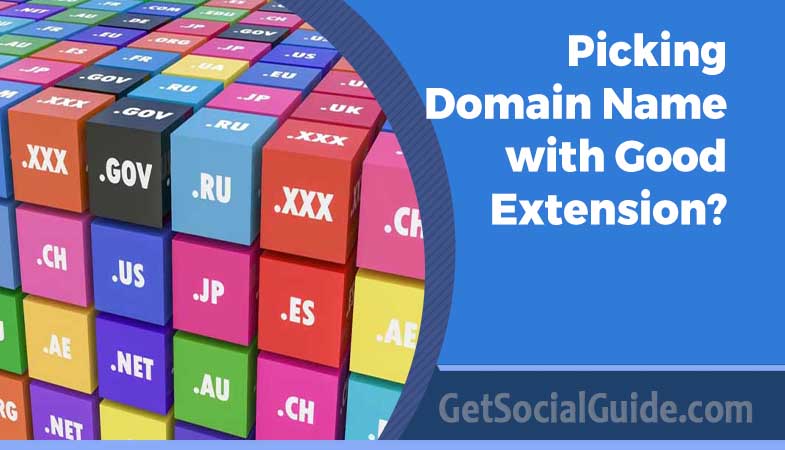
Your Domain Name Is Great, But Did You Pick the Wrong Extension?
Domains are your website’s online identity. If you have brainstormed any on a domain availability checker, register it today! But make sure it is memorable, user-friendly, and keyword-rich. Although you might have nailed one for your website, choosing the wrong domain name extension could hurt your brand’s credibility.
In this age, where human attention spans are lower and fierce competition is there, domain extension is not just a technicality but a branding move. Several cheapest domain name options like .tech, .store, .agency, or classic ones .com are available for users. So, confusion in choosing anyone will reduce click rates and hamper SEO. Let’s decode why you must not pick the wrong domain extension.
Reasons Not to Choose the Wrong Domain Extension
Credibility and Trust Factor
Extensions like .com, .org , and .net establish the brand’s website’s credibility and trustworthiness. These are common options and a universally recognized domain extension. If you choose options like .ninja or .xyz, users may not click because of the anonymity.
Moreover, phishing scams are high, which makes web users cautious. Hence, they do not always choose trendy or very creative domain extensions. However, depending on your business niche, you can make the decision. For instance, .ai and .tech are two major domain extensions for technology-related business websites. These are unique and are now commonly used as well.
SEO and Search Visibility
Google may claim that domain extensions don’t directly influence rankings; however, reality suggests otherwise. A.com domain still tends to get more click-throughs simply due to users trusting it more; higher click-through rates (CTR) could indirectly enhance search performance over time.
Region-specific extensions such as.uk or.ca provide further indicators of geographic relevance for businesses operating within certain geographical locations; using regional TLDs can increase both SEO and business credibility by helping your presence appear more frequently during regional searches, helping both your SEO strategy and credibility improve over time.
User Memory and Type-Ins
Users have a shorter attention span and, therefore, don’t put in any difficult domain extensions. Using the lesser-known extension may put visitors on suspicion about the website’s credibility.
This kind of brand leakage is especially problematic for word-of-mouth traffic and offline marketing. Even if your domain name is catchy and well-branded, an unexpected or hard-to-remember extension can reduce your site traffic and diminish your marketing ROI.
Email Deliverability and Professionalism
Your domain extension not only impacts the way people experience your website; it may also have an effect on email. Sending from lesser-known domain extensions could trigger spam filters within corporate email systems, resulting in lower open rates for emails sent using those domain extensions and missed business opportunities.
Customers judge your professionalism based on your email address; for instance, customers might perceive sommayasingh@gmail.com to be more reliable than sommayasingh@gmail.com – choosing an incorrect extension may save a few bucks upfront but could cost your conversion rates and customer trust in the long run.
Influence on Search Engine Ranking
Google prefers search engines with user-friendly domain extensions. But this is just a half-story. Although domain extensions don’t directly impact SEO, user behaviour does. If users find any website suspicious over a certain extension, it results in lower click-through rates, influencing the rankings over time.
Moreover, certain country-code top-level domains (ccTLDs) like .uk, .ca, or in are geo-targeted. It means that if you are targeting a global audience but use a regional extension, the website might perform poorly outside the specific country. The SEO impact of an extension is subtle but very real through indirect metrics.
Future-Proofing
Trends change, and so does your domain extension. Modern extensions might go trending today but may become obsolete over time. Hence, choosing a reliable extension is a smart decision. Choose extensions like .com, .net, or an industry-relevant TLD to ensure the brand’s longevity.
Think ahead to where your business might be in five or 10 years and whether its current extension still reflects your audience, geography, and goals. If your plans include expansion or rebranding at some point in the future, selecting an inappropriate extension today might hamper those efforts and make transitioning more costly and complex later.
Wrap Up
Searching for and selecting an effective domain name is paramount, but selecting an extension with which your brand resonates just as significantly is also imperative. Your extension’s subtle yet powerful effects on how users perceive your brand, whether or not they remember and trust you, as well as influence SEO indirectly or email deliverability and branding consistency, are not to be taken lightly.
If you have already chosen an excellent domain name but opted for less desirable extensions, now might be an opportune time to make changes. Opting for trusted extensions like .com can enhance user trust and build your credibility online. The right extension ensures your domain won’t just look fantastic; it performs superbly, too.