

Amateur Blogging Tips: Turn Your Passion into a Profitable Blog (2025-2026 Guide)
Welcome to the ultimate amateur blogging guide for 2025‑2026. If you’re reading this, you’re probably dreaming of a life where you can work from anywhere, share your passions with the world, and maybe even earn a living doing what you love. That image—a cozy café in Paris, a laptop on a tropical beach, or a quiet evening by the fireplace with your thoughts flowing onto the screen—is incredibly romantic. And it’s achievable.
However, the reality of blogging, especially amateur blogging, is that it requires strategy, consistency, and a willingness to learn from mistakes. I’ve been where you are now, and I’ve made more than my share of errors along the way. The good news? You don’t have to repeat them. This comprehensive guide will walk you through everything you need to know about starting, growing, and eventually profiting from your amateur blog. We’ll cover the essential steps, common pitfalls, and insider tips that will set you on the path to success.
What Is Amateur Blogging?
An amateur blogger is someone who blogs primarily as a hobby—driven by passion, curiosity, and the joy of sharing. There’s no pressure to monetize, no strict editorial calendar, and often no technical expertise. It’s simply the act of writing and publishing because you love it. Many professional bloggers started this way, but it’s important to recognize that turning a blog into a money‑making venture is not as easy as it looks. It requires dedication, consistency, and a willingness to learn over time.
One of the most important traits of a successful amateur blogger is the readiness to put yourself out there and face potential criticism. Sharing your opinions and experiences publicly means opening yourself up to discussion, disagreement, and sometimes negative feedback. That’s part of the deal—but it’s also how you grow, connect with like‑minded people, and build a loyal readership.
In short, amateur blogging starts as a hobby, fueled by passion. It can become a powerful tool for personal expression and community building. And yes, some bloggers later decide to monetize, but the original motivation should be the joy of writing and sharing, not the pursuit of money.
Should You Start Amateur Blogging?
I know how exciting it can be to start a blog. The possibilities feel endless. But before you dive in, let’s make sure you’re doing it for the right reasons. Here’s a quick self‑assessment.
✅ Amateur Blogging IS Right for You If You:
- Want to help people by sharing information and experiences
- Crave more freedom and flexibility in your life
- Are willing to stay consistent with your content
- Understand it’s not a get‑rich‑quick scheme
- Are ready to fail and learn from mistakes
- Enjoy writing (or are willing to learn to enjoy it)
- Are open to experimenting with different strategies
❌ Amateur Blogging Is NOT Right for You If You:
- Want to become wealthy overnight
- Aren’t willing to put in the work
- Hate marketing and social media
- Are not ready to invest in your blog
- Don’t enjoy writing and aren’t willing to improve
- Don’t have time to dedicate to the process
- Are unwilling to learn and invest in yourself
If you’re willing to do the work and invest your time and (eventually) money, there’s a reward at the end that can potentially change your life. But it starts with realistic expectations and a genuine love for your topic.
2025 Blogging Statistics You Must Know
Before you start, it helps to understand the landscape. Here are some of the most interesting blogging statistics for 2025:
- Long‑form content gets an average of 77.2% more links than short articles (Backlinko).
- 60% of marketers report that content marketing generates demand/leads (Content Marketing Institute).
- There are over 600 million blogs out of 1.9 billion websites worldwide (Hosting Tribunal).
- 77% of internet users read blogs (Social Media Today).
- Bloggers who publish more frequently are more likely to report “strong results” (Orbit Media).
- WordPress powers over 42.8% of the internet (W3 Tech).
- Approximately 70 million new posts are published on WordPress every month (WordPress).
- The most popular monetization method for bloggers is Google AdSense, followed by affiliate marketing. However, for high‑income bloggers, AdSense ranks third—they are 2.5 times more likely to sell their own products or services (GrowthBadger).
- 45% of bloggers earning over $50,000 per year sell their own products or services, compared to only 8% of lower‑income bloggers (GrowthBadger).
How to Start a Blog: Step‑by‑Step for Beginners
Starting a blog is exciting but can also be overwhelming. Here’s the simplest path to getting online.
Step 1: Choose Your Niche and Blog Name
Your niche is the topic you’ll write about. It should be something you’re passionate about and can sustain over time. A specific niche helps you attract a dedicated audience faster. Your blog name should be memorable, easy to spell, and ideally hint at your topic. If you’re unsure, go with a .com domain—they’re still the most trusted.
Step 2: Pick a Blogging Platform and Hosting
Free platforms (like WordPress.com) are tempting, but they come with serious limitations: you can’t install custom plugins, you have limited control over your site, and you don’t truly own your content. For a serious blog, you need a self‑hosted WordPress.org site. This requires a hosting provider. I recommend Hostinger for beginners—they offer affordable plans, a free domain for the first year, and one‑click WordPress installation.
Step 3: Install WordPress and Choose a Theme
Most hosting providers offer a simple WordPress installation process. Once WordPress is installed, you can choose a theme under “Appearance” → “Themes.” Start with a free, responsive theme like “Twenty Twenty‑Four” and customize it later.
Step 4: Install Essential Plugins
Plugins add functionality to your blog. For a new blog, start with:
- Yoast SEO or Rank Math: Helps you optimize your posts for search engines.
- Akismet Anti‑Spam: Protects your comments from spam.
- UpdraftPlus: Automates backups of your site.
- Contact Form 7 or WPForms: Creates a contact page.
Step 5: Write and Publish Your First Post
Go to “Posts” → “Add New.” Write a compelling title, add your content, and use headings and images to break up text. When you’re ready, hit “Publish.” Congratulations—you’re now a blogger!
💡 Pro Tip: Don’t agonize over perfection. Your first posts won’t be your best, and that’s okay. The important thing is to start and improve with every article.
Choosing Your Niche and Blog Name
Your niche is the foundation of your blog. Write about what you know and love—your passion will shine through and keep you motivated. Here are some popular niches:
- Technology: New gadgets, software reviews, tech tutorials.
- Travel: Destination guides, travel tips, packing lists.
- Fashion: Outfit ideas, trend analyses, sustainable fashion.
- Lifestyle: Healthy living, home decor, personal development.
- Business: Entrepreneurship, marketing, productivity.
- Personal Finance: Budgeting, investing, side hustles.
When naming your blog:
- Keep it short and easy to spell.
- Make it meaningful—hint at your topic if possible.
- Avoid hyphens and numbers.
- Aim for a .com domain.
- Check that the name isn’t already taken.
- Trust your gut—you’ll be writing it a lot!
5 Essential Pages for Every Blog
To build trust and comply with legal requirements, your blog needs a few key pages.
- About Page: Introduce yourself, explain why you started the blog, and share your expertise. This page helps readers connect with you.
- Contact Page: Make it easy for readers, brands, and potential partners to reach you. Include a contact form and your social media links.
- Privacy Policy: Explain how you collect, use, and protect visitor data. This is legally required if you use analytics, email marketing, or ads.
- Terms of Use: Set the rules for using your site, including copyright, comment guidelines, and liability disclaimers.
- Disclaimer: Disclose your affiliate relationships, sponsored content, and any other partnerships. Transparency builds trust and keeps you compliant with FTC guidelines.
Beginner’s Guide to Keyword Research
Keyword research helps you understand what your audience is searching for. It ensures you create content that people actually want to read.
Start with a topic you love. Then use tools like Google Trends or free keyword research tools to find related terms people are searching for. Look for keywords with decent search volume but lower competition. Your goal is to help people find the information they need. When you genuinely help someone, they’re more likely to return, subscribe, and share your content.
Amateur Blogging Content Tips
Great content is the backbone of a successful blog. Here’s how to create it:
- Write with purpose: Every post should have a clear goal—inform, entertain, inspire, or persuade.
- Add visuals: Humans are visual creatures. Use images, infographics, and even videos to break up text and illustrate your points.
- Craft compelling headlines: Your headline is the first—and sometimes only—impression you make. Spend time crafting something that grabs attention.
- Keep SEO in mind: Use your target keyword naturally in the title, headings, and body. Write for humans first, but don’t ignore search engines.
- Post consistently: Whether it’s once a week or twice a month, stick to a schedule. Consistency builds trust and helps with SEO.
- Research thoroughly: Don’t spread misinformation. Fact‑check your posts and link to reputable sources.
- Be clear and readable: Write for a broad audience. Use short paragraphs, subheadings, and bullet points to make your content scannable.
- Develop your own voice: Don’t try to copy successful bloggers. Your unique perspective is what will attract readers.
- Check your grammar: Mistakes undermine your credibility. Use tools like Grammarly to catch errors.
How to Promote Your Blog & Get More Traffic
Writing great posts is only half the battle. You also need to promote them.
- Be active on social media: Share your posts on platforms where your audience hangs out. Engage with followers and participate in relevant conversations.
- Join blogging communities: Participate in forums, Facebook groups, and other communities related to your niche. Share your expertise (and occasionally your content) genuinely.
- Create a Facebook page for your blog: It’s a central place to share updates and interact with readers.
- Start a YouTube channel: YouTube is the second largest search engine. Repurpose your blog content into videos to reach a new audience.
- Use Twitter/X: Share your posts, engage with influencers, and join niche conversations.
- Create Pinterest pins: Pinterest is a powerful traffic driver, especially for lifestyle, fashion, food, and DIY blogs. Create eye‑catching pins for every post.
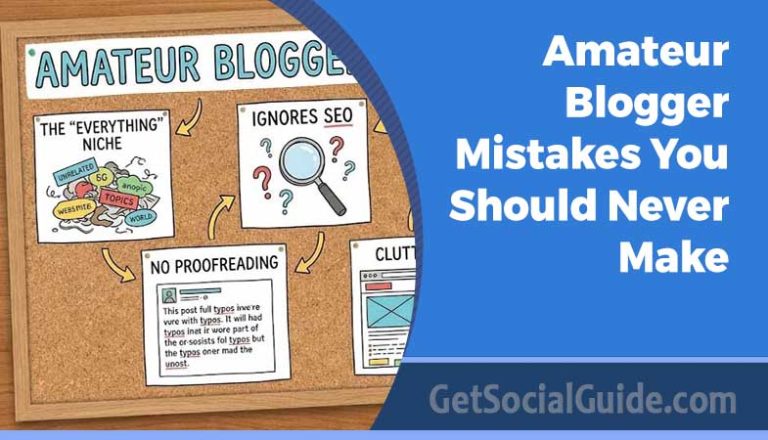
10 Common Amateur Blogging Mistakes to Avoid
Even small mistakes can hold your blog back. Here are the most common ones, and how to avoid them.
- Not adding photos: Posts without images are less engaging. Always include relevant, high‑quality visuals.
- Ignoring video: Video is incredibly popular and great for SEO. Consider adding a video to your posts or starting a YouTube channel.
- Lack of clear purpose: Every post should have a goal. What do you want readers to do after reading?
- Not knowing your audience: Write for your readers, not yourself. Understand their problems and interests.
- Using the same format for every post: Vary your formats—lists, guides, opinion pieces, interviews. Keep things fresh.
- Ignoring comments: Engage with commenters. It builds community and encourages return visits.
- Skipping keyword research: You need to know what people are searching for to attract organic traffic.
- Not understanding SEO: Learn the basics of on‑page SEO—title tags, meta descriptions, internal linking.
- Lack of interactivity: Use polls, surveys, and questions to engage readers.
- Too much text: Break up long paragraphs with headings, images, and bullet points. Keep it readable.
Additional mistakes:
- Starting on a free platform (you don’t own your content).
- Choosing a niche you don’t care about.
- Over‑doing SEO (keyword stuffing).
- Buying expensive tools before mastering the basics.
- Writing boring headlines.
- Copying other bloggers without adding your own value.
- Posting inconsistently.
- Neglecting internal and external links.
- Ignoring email marketing.
📊 Blogging Platforms Comparison
| Platform | Cost | Ownership | Customization | Best For |
|---|---|---|---|---|
| WordPress.org (self‑hosted) | Starting at $2.75/mo | Full | Unlimited | Serious bloggers who want control |
| WordPress.com (free) | Free | Limited | Limited | Hobbyists who don’t mind restrictions |
| Blogger | Free | Limited | Limited | Very beginners |
| Wix | Starting at $14/mo | Full | Good | Users who want drag‑and‑drop ease |
| Squarespace | Starting at $16/mo | Full | Good | Design‑focused users |
💡 Pro Tip: The single most important factor in blogging success is consistency. Publish on a regular schedule, engage with your audience, and keep learning. Even if you start as an amateur, with time and effort you can build a blog that truly makes a difference—and maybe even a living.
⚠️ Important: Avoid the temptation to buy expensive tools and courses before you’ve even published your first post. Start with free tools, learn the basics, and invest only when you have a clear need and a proven track record of creating content.
Frequently Asked Questions (FAQs)
Is amateur blogging still worth it in 2026?
Absolutely. In an era saturated with AI-generated content, there is a massive “revival” of interest in authentic, human-first amateur blogs. Readers are increasingly seeking real perspectives over polished branding. It’s a rewarding way to document your life, build a niche community, and reclaim your attention from addictive social media algorithms.
Can an amateur blogger actually become a “Pro” someday?
Yes, and the path is clearer than ever. Many successful professional bloggers earn over $100,000 annually in 2026. The key is “Information Gain”—providing unique personal insights that AI cannot replicate. If you build a loyal audience, you can monetize through newsletters (Substack), niche affiliate programs, or digital products.
Can I start on a free platform and upgrade later?
Yes, but with a warning. You can start for free on platforms like Blogger, Wix, or Medium. However, migrating your content to a professional setup later can be technically difficult and may hurt your SEO rankings.
How much does it cost to start a blog in 2026?
Starting a blog is one of the most affordable businesses you can launch. On average, you can run a professional-looking blog for under $100 for the first year:
• Domain Name: ~$10–$15/year.
• Web Hosting: ~$3–$10/month (often includes a free domain for the first year).
• Platform (WordPress.org): $0 (Free).
• AI Writing Assistants: Many powerful free tiers exist for ideation and editing.
How often should I post?
In 2026, quality and consistency have officially beaten frequency. The “slower” pace of the new blog era favors one high-quality, authentic post per week or even per month over daily “filler” content. Pick a schedule you can maintain without burnout.
Do I need to be a professional writer?
No. In fact, “perfect” writing can often feel robotic. Readers in 2026 value an authentic tone over polished branding. As long as you can communicate clearly, your unique voice and lived experience are your greatest assets. You can use AI as a “prep cook” to help refine your grammar or structure while keeping your human voice as the “chef.”
How long until I start making money?
Blogging is not a “get-rich-quick” scheme. Most bloggers begin seeing their first revenue within 6 to 12 months. The most successful 2026 bloggers focus on building an email list early, as this provides a direct connection to the audience that isn’t dependent on search engine algorithms.
Can I start on a free platform and upgrade later?
How much does it cost to start a blog?
Do I need to be a great writer?
How long until I make money?
Conclusion: Your Amateur Blogging Journey Starts Now
Blogging is a powerful medium to share your ideas, passions, and knowledge with the world. Whether you’re a hobbyist or an aspiring entrepreneur, a blog can be an invaluable tool. For businesses, it increases online presence, drives traffic, and builds trust. For professionals, it showcases expertise, builds a personal brand, and opens career doors. And for individuals, it’s a creative outlet that can connect you with like‑minded people around the globe.
Success as an amateur blogger doesn’t happen overnight. It takes commitment, strategic planning, and a willingness to learn. But it is absolutely achievable. This guide has given you the essential steps: choosing a niche, setting up your blog, creating quality content, promoting it, and avoiding common mistakes.
Now it’s up to you. Take the first step today. Pick your niche, buy your domain, and write your first post. The world is waiting to hear what you have to say.
🚀 Ready to Start Your Blogging Journey?
Get started with Hostinger today for as low as $2.75/month and get a free domain name. Launch your blog in minutes!


Thank you for Amateur Blogging