
“`html
7 eCommerce Marketing Strategies For Increasing Sales
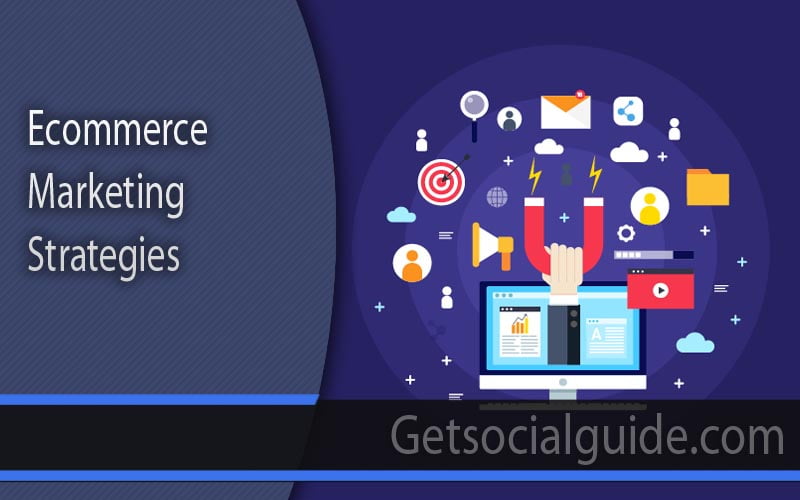
Ecommerce marketing is the use of promotional tactics to drive traffic to your online store. It helps to convert that traffic into paying customers and retain those customers post-purchase.
 Source: Pexels
A comprehensive eCommerce marketing strategy is composed of marketing tactics. An effective marketing strategy will help you build brand awareness, drive customers’ loyalty, and finally increase online sales. Brands can promote their online store by using eCommerce marketing tools for businesses as a whole. This helps to drive more sales for specific products. They help you to get your online shop in front of the people who want to buy your products.
What is eCommerce marketing?
Before going any further, we need to set a clear definition of what marketing for eCommerce means.
In brief, eCommerce marketing is the method of attracting potential customers to your online store and making them a customer of your products or services. The tactics of eCommerce marketing are usually a combination of three approaches:
- Traffic generation: Use both paid and unpaid tactics such as SEO, content marketing, social media, paid ads, and email marketing to attract new customers to your store.
- Conversion optimization: Use methods to increase sales and average order value (AOV) such as personalization, user-friendly website design, and special offers.
- Customer retention and loyalty: Take care of your existing customers with personalized offers, loyalty programs, and rewards so that they continue buying from your brand and get new customers by word-of-mouth marketing.
These tactics together aim to achieve benefits like:
- Increase marketing efficiency and ROI
- Understand customers better
- Being at the same level with competitors and even getting ahead of them
- Make your brand well-known and more visible
- Grow the business and have a better cash flow
eCommerce marketing strategies to test out
Optimize for mobile users
Without a doubt, a mobile-friendly eCommerce site is essential with the ever-increasing number of people that purchase goods via their smartphones and tablets. Mobile optimization allows your website to be navigated easily as well as loading quickly on any smartphone or tablet. For that, you need to simplify your checkout process, optimize images and videos for mobile and, additionally, be sure that buttons and links offer you an easy clicking feature. The benefits of a mobile-friendly layout go beyond just improving the user experience as they can also result in increased conversion rates and reduced bounce rates.
Leverage video marketing
Video marketing is an effective instrument to attract customers, deliver your brand message precisely, and introduce your products in an appealing manner. The ideas of product demos, customer testimonials and behind-the-scenes videos will not only demonstrate your products but also gain the confidence of the customers. Video content is not only limited to your eCommerce site but can also be used for social media and email campaigns to generate more leads.
Integrate chatbots for customer service
With the integration of chatbots on your site, visitors get the help they need 24/7 which eventually results in an increase in their satisfaction and loyalty. Chatbots thus become an indispensible element of customer service. On top of that, chatbots can gather a great deal of valuable info about customers which can be implemented in personalized marketing campaigns.
Implement subscription models
Subscription models provide an easy way for customers to get products on a regular basis and, at the same time, bring a steady flow of revenue to a business. This model is especially suitable for consumables such as beauty products, food, and other recurring necessities. The subscription proposition can be loaded with benefits like discounted prices, exclusive products or early access to new collections, all of which encourage customers to stay loyal to your brand and increase your customer lifetime value. Besides that, subscription boxes can help build up the excitement as well as the anticipation factor of the overall shopping experience.
Embrace sustainability and ethical marketing
Buying decisions of customers are greatly influenced by the fact whether a company practices sustainability and ethics or not. Besides saying it, you better show it by backing your statements about eco-friendly packaging, sustainable sourcing and fair labor practices in your marketing efforts. Being very open and honest with your standards will help you gain trust and make that your values match with the beliefs of socially conscious customers.
Encourage user-generated content
User-generated content (UGC) is a great resource that you can use to present your products from your customers’ points of view. The best way to achieve that is to ask customers to share their own photos, videos, and reviews of your products on social media, which will provide potential buyers with authentic testimonials. By featuring UGC, you not only gain social proof but also deeply involve your customers and get their trust.
Plan seasonal and holiday marketing
Seasonal and holiday marketing campaigns provide an excellent opportunity to increase your sales during the busiest shopping periods. The promotions of your website that are in line with these events like Black Friday and Cyber Monday, Valentine’s Day, and back-to-school season can not only generate sales by creating a sense of urgency but also increase your customer base. Moreover, the early planning of your campaigns allows you to be ahead of your competitors in reaching your audience when they are most likely to buy.
Strategies to Boost Your Ecommerce Marketing Sales
Every business is different. With that in mind, how do you know which eCommerce marketing strategies will work for your business? To begin with, you must know the main goal of every strategy. This may be bringing visitors to your store, conveying them to customers, or retaining your customers. For those goals to be supported, you’ll need to have a set of balanced marketing strategies. You must also consider the timelines for every eCommerce marketing strategy.
How quickly do you expect to see the results, for instance? This will help you to balance your eCommerce marketing strategies to work for you now and later on. Lastly, you’ll need to get the right tools to support your marketing strategies. There are lots of ecommerce marketing software tools in the market. So you must be sure to buy a tool that meets your business needs. Let’s get into discussing the strategies needed to boost sales in eCommerce marketing.
 Source: Pexels
Digital Performance Marketing
There’s a thin line between running profitable marketing and wasting the organization’s resources. The problem comes in knowing when you’re crossing that line. While large organizations can spend millions on branding and exposure, a lot of brands need to focus on ensuring profitable returns. So how do you ensure that your marketing brings the right exposure and visibility? This is where digital performance marketing comes in.
Digital performance marketing has completely changed how brands sell and advertise their products. Whether your intention is to generate new leads, drive action, or increase traffic to your site, performance marketing enables you to achieve real results. It provides insights into your performance, enabling you to maximize your campaign to achieve results. Below are some basics for executing digital performance advertising:
- Pay per lead
- Pay per mile
- Pay per click
- Cost per acquisition
Sell on Marketplace
It’s obvious that marketplaces are where a lot of people shop online. According to reports, top online marketplaces sold $3.32 trillion in goods in 2021. This accounted for two-thirds of the global ecommerce sales. Marketplaces like eBay and Amazon help people in discovering your brand much easier. This will make it easier for your product to reach millions of people around the world. Some consumers are die-hard marketplace shoppers.
So there’s a possibility that they’ll buy something from you on a channel they know. You must, however, note that they come with hefty selling fees and other red flags to consider. That’s why it’s important that eCommerce brands use marketplaces to complement their branded stores. You don’t have to list all your products on a marketplace. Just list a few of the bestsellers. Then create a compelling list that shows off your brand and add branded packaging inserts to marketplace orders. This will encourage people to shop directly from your website.
Create a TikTok Marketing Strategy
The use of TikTok for business should be part of every entrepreneur’s marketing plan. This platform has more than one billion monthly active users worldwide, with 142.2 million users in North America alone. In the last quarter of 2021, TikTok had 173 million first-time installs across app stores. This makes TikTok as powerful as other social media marketing platforms. A lot of businesses today thrive on TikTok by publishing genuine content. Raw and authentic videos tend to get more exposure and engagement. This is what makes TikTok unique when it comes to strengthening relationships with users. Below are some advantages that make TikTok unique:
- Its UI is designed to keep users on the app for much longer
- Its algorithm prioritizes content from creators that you may have never seen before
- Its discovery engine enables videos to go viral without considering your follower count
People are purchasing what they see from content creators on TikTok. Research suggests that over half (51 percent) of TikTok users buy from brands they see on the app. This is the case for every niche that’s on the platform. The platform also provides live-stream shopping and advertising.
Host a Contest
Contests are a great way of building engagements and driving traffic to your website. You may have to wait a little longer for engagements to turn into sales. But, growing an audience is never a bad idea. RafflePress, for instance, is the best WordPress giveaway builder. It allows you to run any giveaway or contest on your site while being shareable on other platforms. Participants can earn entries by visiting a sales page or by sharing a giveaway on social media. All these actions can drive a lot of traffic to your online store.
Start an Affiliate Program
Affiliate programs are a great way of leveraging one of your best assets, which is the existing customer base. By paying a commission on the sales brought in by your affiliates, you will be able to turn your biggest fans into a credible sales force. You also get to minimize your risks since you won’t pay anything for affiliate marketing unless the sale is made. The use of a plugin like AffiliateWP is one way of creating and managing an affiliate program.
That’s because of its ease of use, live affiliate tracking, and premium affiliate experience. Remember that the success of your affiliate program depends on the reach and influence of individual affiliates. AffiliateWP helps brands support their affiliates with:
- Landing pages
- Affiliate portals
- Automatic payouts
- Unlimited creative assets
Optimize Your Site for SEO
Search engine optimization encompasses a lot of things. Below is what you must keep in mind if you’re just starting out: Put yourself in the user’s mind. What does your target market say about your brand and what do they want to know? Be attentive when it comes to the on-page content. On-page content is the product titles and descriptions, images, blogs, and any other content that you may have. Make sure that the language used in creating the content is one that consumers will use when searching for related products. It must answer their questions.
Meta tags are just as crucial. Title tags enable search engines to figure out what every page is about. Every page on your site must have unique title tags. Meta descriptions are short summaries of every page and when your site shows up on a search engine result page, users will see your title tag and meta description before anything else.
 Source: Pexels
Partner With Complementary Brands
Create partnerships for cross-promotion with other brands. Find a business with a complementary product targeting a similar audience. This makes it easy for each of the partners to reach a whole new, yet relevant audience. If, for instance, you sell outdoor gear, a relevant partnership would be with an entrepreneur whose brand is focused on hiking shoes. The actual methods for cross-promotion vary.
As such, there are ways in which you can do it at every level of the funnel. Top-of-the-funnel activities include co-sponsoring an outdoor living podcast. Depending on the time of the year, a co-branded gift guide would be a good drive. You can also do down-funnel promotions such as a discount on one product with the purchase of another.
Ecommerce marketing strategies FAQ
Conclusion
Brands are supposed to have a plan that will generate traffic and increase sales. This is what will ensure success with eCommerce marketing. Note that eCommerce marketing strategies go beyond generating traffic. That’s because you must convert and retain a percentage of that traffic to continue patronizing your brand. Consumer expectations have grown from what they used to be in the past. As such, the businesses that will thrive are those that can meet these expectations.
“`

Smart ecommerce growth comes from using email for stories and SMS for quick, urgent nudges. Together, they drive deep customer connection and better conversions. Really useful strategy — thanks!
Thank you for reading! Keep exploring and sharing — knowledge grows when it’s shared.