
If you had to estimate the amount of time the average person spends on social media, in how long would it be? Just do it, estimating! Did you guess 1 hour and 40 minutes? Because if you did, you are right. Social media usage accounts for about 28% of the time we spend on the internet, which is quite significant considering that our lives are increasingly happening online.
After all, online, we run our businesses,answer our emails,order food,watch movies and even manage our bills and bank accounts. One of the biggest juggernauts that internet marketing has is social media marketing.
It has the potential to be infinitely successful and almost all businesses are aware of the necessity of putting money into social media marketing. However, many of them are at a loss as to how to begin.
In our social media marketing guide, you will learn everything that is needed to create a social media strategy, figured out the way to get started, and much more.
According to Mashable, social media marketing refers to the process of gaining website traffic or attention through social media sites. In a nutshell, it’s the process of using social media networks such as Facebook, Twitter, LinkedIn, and more to promote your brand and increase revenue. 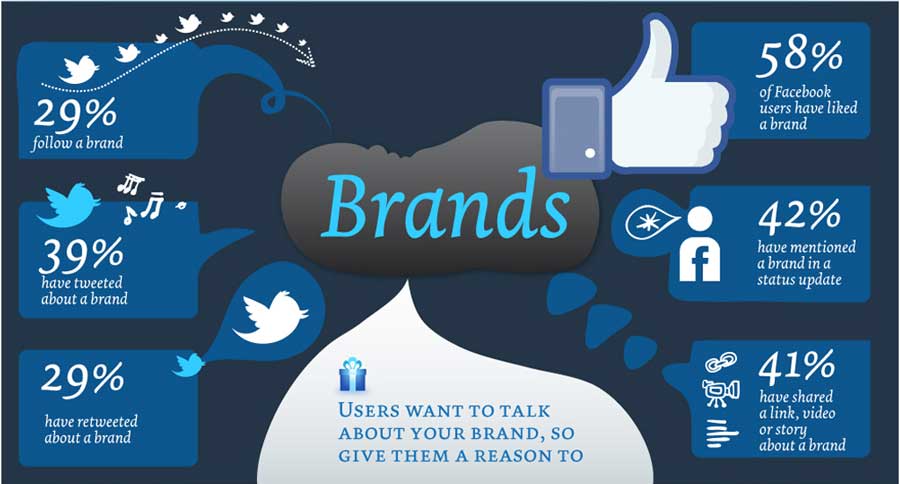
Shout it: “I need social media because your audience is there.” When you start generating traffic from social media sites, you can redirect the leads into your funnel and build relationship with them. Apart from generating leads, you can use social media for several other objectives. For example, Cadbury’s leveraged its Facebook page to gain 40,000 new fans and 350,000 motivated people who participated in its campaign. L’Oreal uses social media for recruitment purposes, and got 153 applicants. As you know, if your customers don’t come in contact with your products and services, they will never have interest in it.
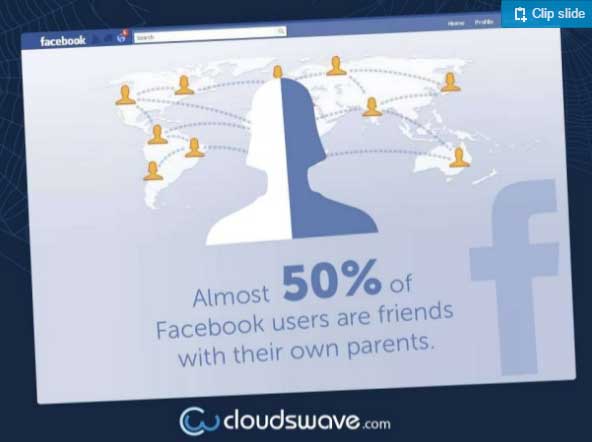
Or do you expect your customers to fall for a brand they no nothing about? Did you know that out of 2.4 billion people accessing the internet, 74% of them use social media networking sites? You can build online community by capitalizing on social media networks. With this community, more people can become aware of your products. So many brands have benefitted from social media marketing. For example, Tchibo company invested in social media and had 1.3 times ROI. Do you really need social media to grow your small business? Absolutely. The ideal customers you’re looking for are already interacting with their friends, colleagues, and family members on social media sites. According to Cloudswave, almost 50% Facebook users are friends with their parents.
When it comes to social media marketing, remember that your audience wants to be entertained and engaged. Social media gives you direct access and communication with these potential customers to grow your brand with little cost. Social Media is the fastest way to create awareness. It’s only through social media that a post can go viral within minutes, with no restrictions.
You have to leverage on the benefits of social media to grow your brand. If you neglect it, I guess you’re still comfortable where you are, and you will still remain there much longer until you change. Taking the first step is always a big problem for beginners. This in-depth article will guide you. To help ensure that your small business stays in the black, take the time to familiarize yourself with these social media tips:
Know Your Numbers: Collect User Data
“Small business owners need to know a lot of numbers.” – Barry Moltz, QuickBooks Wouldn’t it be nice if you could predict your small business’ social media success? Do you know your numbers? As it is with financial matters, so it is with social media marketing and building an online business in general. Through marketing automation, you can collect user data and use them to make smart decisions. Truly, automation is almost everything these days. Funny enough, 54% of big brands surveyed by KiteWheel in 2014 said they would like to detect and reply automatically to consumers on social media, while 34% are currently working to automate their social media. 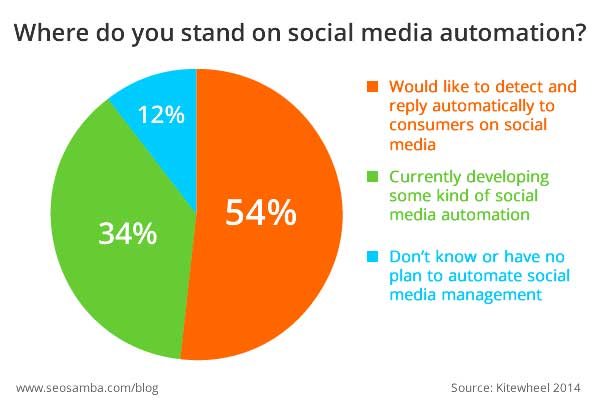 As a marketer who wants to generate quality leads, you need to measure and understand your key performance indicators (KPIs). As you collect intelligent user data, you’re well-positioned to improve and effectively manage your social media campaigns online. Striving to collect and analyze data manually is almost impossible these days. I said “almost” because it can be done. But you don’t want to waste your precious time cutting an iron with a wooden saw. The good news is, there are specific tools for measuring social media performance. In particular, Twitter has a lot of analytics tools. Twitter Archivist is an analytics tool that helps track a hashtag campaign, monitor your brand on Twitter, capture a tweet during conferences, concerts or sports events, and more.
What does Twitterachivist.com do? On the dashboard, you’ll see the statistics of Twitter followers per week, and those who unfollowed your brand. You also get to see tags that people are reacting to and why. Isn’t that wonderful? Twitter Archivist allows beginners understand what’s really engaging followers, particularly on Twitter. Learning how social users behave is critical to your success. If you’re going to reap the rewards of social media for your small business, then you must not ignore these user behavioral data. For one, the data you collect and use when people like your page on Facebook is something to shout about.
For example, users submit their full names, locations, likes and dislikes, academic status, and more. These are vital information; which in turn becomes an an asset for marketers to use in reaching and engaging potential customers. The more engagement you create, the more customers you’ll send to your business. In case you’re not aware… You can actually acquire paying customers from social media. Several case studies have proven this to be true. Social media networks aren’t for meeting people and leaving them the way you met them. Far from it. According to HubSpot, 67% of B2C companies have acquiring a customer through Facebook. 
One of the most significant differences between traditional and social media is how businesses use customer data to connect with them. Instead of simply broadcasting messages through billboards, TV commercials, or radio jingles, companies can now engage customers on social media platforms with content tailored to their needs and preferences. Social media marketing attracts consumers while traditional media interrupts the flow and can annoy viewers.
Moreover, with advanced tools like Twitter Archivist, you can track consumers’ habits; understand their enthusiasm towards your brand, how they communicate, and even the likelihood of them becoming brand influencers very soon.
Knowing your audience is indispensable. Not even Science and Technology can replace this. In fact, you should ideally segment your audience on the basis of gender, age, interests, profession, and so on. You can also conduct a research to get to know the pain points of your audience. And create content that solves their problems in fun way.
Still, don’t forget that these are “social” media. One crucial thing…
If you intend to bring in targeted traffic and get customers via social media marketing, then removing uncertainty should be on top of your to-do list. Once you spot a group of perfect customers within social media platforms, then going after them should be your next step.
To be able to close the deal effectively, it is very important that you let no trace of uncertainty remain in the buyer’s mind. How? Isn’t it straightforward? Anyway, the simplest method of doing so is by providing answers to their questions.
There are questions that are frequently asked (FAQs) and that your brand, culture, products, team, and everything else related should be answering.
In a recent article in The New York Times, Mark Cohen, the author, shared a very impressive case of how Marcus Sheridan the founder of River Pools and Spas was spending $250,000 a year on radio, TV, and pay-per-click advertising and yet had no measurable results to report. But it did not stop there. As a matter of fact, the company’s sales went up incredibly when Sheridan began addressing customer’s concerns through his blog, social media channels, and other venues.
Be advised that you can do it not only on the social networks such as Twitter or Facebook but also on your website. Most online stores have a FAQs section on their websites. It is usually placed at the main-level navigation, from where site users and customers can quickly access it.
There is no need for you to name it “FAQs.” It is possible to come up with a creative and better description. For instance, Shopify calls this special page, where all the frequently asked questions are addressed, “Help Center.”

All the questions that you’ll ever ask when planning to use Shopify shopping cart software has been answered. 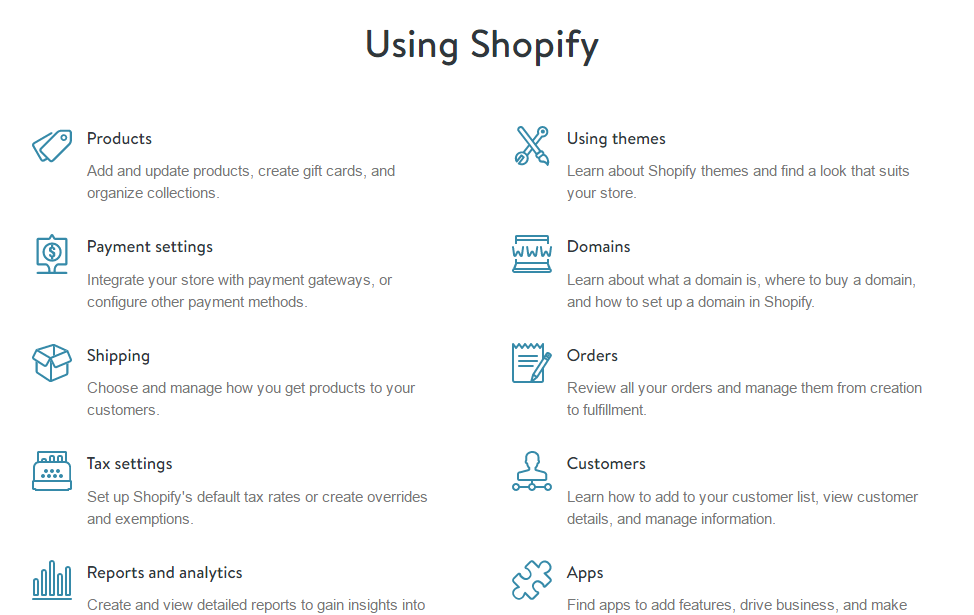
When you click on any of the topics, you’ll find an answer to the question of how to use shopify (e.g., for Reports and analytics, Payment settings). The last time I checked, my question was clearly answered, and I browsed the knowledge base hoping to find a bunch of other questions I didn’t even know I had. One of the major reasons why knowing your audience is an all-important social media strategy is because it helps you during segmentation. And of course, it’s a lot easier to segment email subscribers than Twitter followers.
That means you should endeavor to send your social media fans to your landing page. Once you’ve them on your email list, you can start building relationship with them. So why do you need to segment your audience? It’s because sending the same content to every email subscriber is a mistake of the century. But sending custom content based on subscriber history, persona, stage of the buying cycle, and purchase history will get you more conversions.
Some people make social media marketing seem shallow and superficial, but in reality, it should be the exact opposite. With authenticity and transparency (or at least the illusion of it), social media opportunities can help you accomplish the following goals.
- Community building and relationship building, fueled by generating discussion
- Brand awareness & discovery (particularly if you’re using social ads)
- Announce new products and business developments to your enthusiastic audience
- Promote events and increase both registration and attendance
- Increasing site traffic as a result of referral clicks
- Driving leads and sales (though the latter should never be the immediate priority on social media)
- Providing value to your audience and establishing your expertise in your field
Social media, unlike other marketing platforms, relies on the transparency we mentioned above in order to accomplish any of these goals. People don’t just want to see some ad copy—they want to see what makes the wizard tick behind the green curtain, so to speak. They want to feel like they’re getting to know you and your business, because social media is just that: social. If you’re able to put the connection building first, you’ll be off to a great start.
There are a large number of different social media sites that you can join to promote your business. There’s so many, in fact, that this list doesn’t even cover all the obscure ones. Regardless, these are the platforms with the largest and most engaged audiences and they’ve all been around long enough that it’s a safe bet to invest time into them now. Here are the platforms that most businesses should consider joining for marketing purposes:
Would it even be possible to have any site but Facebook at the top of this list? After Myspace’s brief stint in the early 2000s, Facebook dethroned them and has held the crown ever since. More than ten years later, Pages for brands on Facebook are extraordinary. Customers can see your business hours and store location on a map, write reviews, and view all your latest content. They’ll even see incredible CTAs designed to help your business accomplish all your social media marketing goals. 
Many businesses use Facebook as the “center” of their social media marketing. It’s the platform they focus the most energy on and the one they’re most dedicated to maintaining. This is a good strategy, though it’s worth noting that declining reach from the latest algorithm is only going to continue. In order to combat this, share lots of native content (including videos), try to generate discussion on platform, and avoid sharing a lot of outbound links in the meantime.  If you want to reach a new audience quickly or give your posts some help in the newsfeed, you can use Facebook’s incredible ad system to do all this and more.
Twitter seems to have it’s moments, dipping up and down in popularity as a marketing tool. Despite that, it’s managed to stand its ground and many businesses are still happily using it with great success. Twitter will only be effective as a marketing tool, however, if it’s used to generate discussion. Too many businesses use it to dump links to their blog into the empty void that is a Twitter newsfeed without actually trying to create engagement. If you aren’t having a conversation with other users, your marketing just won’t be effective on this platform.

You can create thought-provoking content, polls, and question-based posts that are designed to get more retweets and responses. Twitter chats, like the one pictured from SEMrush above, are also a great way to nurture a community and jumpstart conversation that centers your business.
Instagram is owned by Facebook, but it’s definitely still very much its own platform. It’s a predominantly visual platform, with aesthetically stunning and interesting videos and pictures reigning supreme. 
In addition to having a large number of diverse followers and being a rapidly growing platform, Instagram also has some of the highest engagement rates out of all social platforms. And while they do have an interest-based algorithm instead of a chronological one, it still doesn’t interfere with business profiles nearly as much as Facebook’s new algorithm does. For best success on Instagram, use all of the features that are available to you. Create Stories and newsfeed posts, and make a heavy use of hashtags to generate discussion, encourage user-generated content and help attract new followers.
LinkedIn should be one of the first profiles you create if you’re in a B2B industry, and you should create profiles for both your personal page and your company. Whether you want to recruit new employees or promote your business (or both), LinkedIn is a valuable resource. It’s where professionals go to share industry news, and you may see a slightly higher caliber of discussion on LinkedIn posts than you may see elsewhere (cough…Twitter…cough).  To get the most out of LinkedIn, you should be posting content that both peers and potential customers would find valuable, actionable, and thought provoking. This is the content that’s shared most often, and what generates the most discussion, and discussion is always a good thing.
Pinterest is a little different from all the other social media platforms, where the focus from users is on saving content instead of distributing it outright. Think of Pinterest as something halfway between a personal wish list and an inspiring vision board. Here you can find everything from recipes for how to make gourmet cupcakes for dogs to instructions on how to paint your bathtub grey, should you be so inclined.  Jokes aside, Pinterest won’t be the right choice for every business, but for those in certain industries it’s a must-have. By placing the right keywords in your profile’s description, and the titles and descriptions of both your boards and pins, you can draw in traffic and share your content, products and ideas with an exceptionally engaged audience. Just how engaged are they? Let’s take a look:
- 87% of pinners have purchased a product because of Pinterest
- 93% said they used the site to plan a future purchase
- 83% of Pinterest users would rather follow a brand than a celebrity
Pinterest is huge for people looking to research buying decision, with many users actively searching for new products through the site’s native search engine. This makes it an enormous force to be reckoned with.
YouTube
YouTube is as old as Facebook and it’s the largest video sharing platform around. While YouTube is full of cute panda videos and teenagers doing dumb things, it’s also an excellent platform for marketing if you know how to execute it correctly. 
Like Pinterest, keywords are an exceptionally important part of YouTube marketing. Place them in your video’s title, description, and tags. You can create video that provides value to your audience through tutorials, how-to demonstrations, Q&As and informational content that your audience is actively looking for. Advance Auto Parts, for example, shows how to do basic car repairs on their channel and they link to their products in the descriptions. YouTube can be approached as a mixture of a content marketing and social media marketing platform. Remember to always send traffic back to your main site when possible, as that’s a crucial part of finding success on this platform.
Snapchat
I’m not an enormous Snapchat fan and thanks to Instagram and Facebook aggressively poaching their only-there-for-24-hours-before-it-disappears feature, the platform’s usage has declined significantly. That being said, it’s still an exceptionally popular platform with users under the age of 25, so if your market is young Millennials (and younger), this could be a great platform for you.

Snapchat works for brand that can be a little quirky and have a sense of humor. Like Instagram, it’s a visual platform, but unlike Instagram, the images don’t need to be particularly high quality. This makes it a little easier to create mass amounts of content quickly. While Snapchat can be valuable if your audience is on the platform, don’t put all your eggs in one basket with this one.
Social Media Marketing is vital because:
Firstly, this is the quickest method to let people know about a new product, service, or anything else – in a few minutes a tweet can be viral and thus the message reaches people all over the world faster than any TV or other traditional media can
It is a trend – Millions of people are spending most of their time on various social media networks and therefore, if you ‘need them’, you know exactly where to find them
It is the new marketing – Marketers in the past realized that many people spend time driving in their cars and thus thought of putting billboards on the roads. Today, people are spending time on social media and therefore, marketers should start thinking this way as well.
It is the new influencer – Latest studies reveal that social media is turning into an excellent sales channel and that increasingly more companies are confirming that their customers come from Facebook or Twitter.
- Social Media Marketing tips for beginners
- How can you take advantage of social media? How can beginners build a proper social media presence fast?
- Choose which social network(s) to be active on
When you are a beginner in social media, you need to decide on one or two social media platforms and focus on those instead of trying to operate in all platforms at once. This is a mistake that most of the beginners make, and thus, in the end, they leave without having gained anything. A good way to understand which platform fits your niche the most is to discover the influencers and see where they achieve their success.
For instance, find the leaders in your niche and check out the number of Facebook fans, Twitter followers, Pinterest followers, etc. If they have 100,000 Facebook fans while only 1000 Twitter followers then it is a good indication that FB is more appropriate for your niche than Twitter. It is also an indication that you will be more likely to succeed with FB than with Twitter, so you can use your time more effectively and interact more on FB than on any other platform.
When you have already decided on the social media tools that you will be using (at least initially), the step that follows is to upgrade your profiles on those sites. Upgrading your profiles will make you get more followers and it is also a good way to escalate your SEO efforts. Some universal rules that are applicable to all sites are:
Put a real photo of your face – do not use animals, places, or anything that is not real. Social media is about connecting people and if you want to have a trusted profile you need to get out of your cage and put your face on the web!
Describe yourself or your company well – Background or expertise? What are you good at? What is your point of pride? Mention these in your profile.
Give users a hint as to what type of information you will be sharing – Though this is not required, I like to see in people’s profiles what kind of information to expect from that particular person. For example, I wrote in my Twitter profile: “..tweeting SEO, social media, internet marketing tips and advice”
Put a link to your site (if relevant) – On Facebook, put a link in the ‘About section’, on Twitter and Pinterest in the ‘Web site Section’. In other words, do not only use your social media profiles for SEO purposes.
When your social media accounts are set up, it is time to link your site to your social media accounts. Each platform has its own certain procedure and doing it the right way is very important. Proper binding between the two means that search engines and social media websites know which website is linked with which social media page.
If you want to install Facebook, you may use these guidelines
For Pinterest, you can authenticate your website by following these steps
In addition to linking your site with the corresponding business pages on different social media, you should also put social media buttons on your site so that readers can easily share your work. Each platform has many ways and plugins to do that,
I suggest you search Google with the phrase “how to add social media buttons to xxxxxx” – replace xxxxx with the platform your website is based on. For instance, if you are a WordPress user then search google for “how to add social media buttons to WordPress”. As a general rule of thumb, keep the buttons visible to the fold to increase exposure and remember that bigger buttons get more clicks than smaller ones.
Prove Your Expertise so People Can Follow You
Why would people follow you on Twitter or like your Facebook page? Do you’ve the expert power to prove your expertise, help others, and more importantly, stay humble? Are you sure you’re an expert in your field? If you claim you’re, then you need to show it – and not necessarily talk about it. According to Lisa Sasevich, “credibility is kind of like credit, you’ve got to have it in order to get it.” You can to prove your expertise, especially if you’re new to your niche. Doing this will give ideal customers a firm grip of your brand and they’ll go the extra mile with you. Following you on Twitter is just a small part of what credibility can give to you. In case you’re not aware, your audience likes to associate with unique and famous brands.
There are several ways to prove that you’re an expert. Lisa shares 3 simple but powerful strategies: Additionally, post free and helpful content that answers people’s questions. This would inspire more people to follow you. Who doesn’t want to associate with a marketer or brand that can solve their problems? Absolutely no one. Coin a content that will be celebrated and shared. Why the celebration? Your content should be engaging and entertaining. Do not bore your followers with generic content. Create variety of content to lure Twitter users. 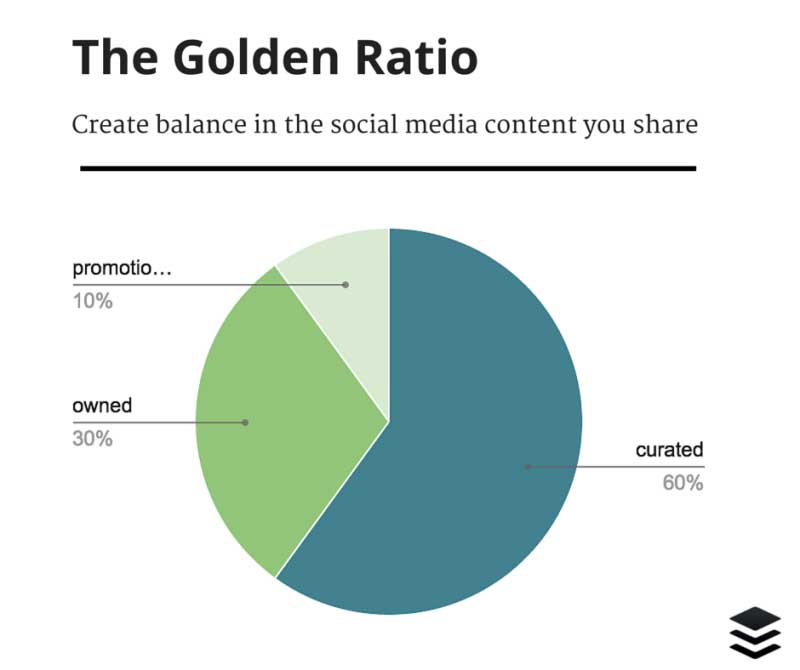 Give away valuable freebies like, ebooks, software, apps…, with these, you are motivating users to follow you, stick to your brand and refer others. And talking about getting more Twitter followers, here are 3 powerful tips that you can implement today:
i). Create compelling Twitter description: How do you recognise a good description? It’s got to have the target keyword and power words in it. When people visit your Twitter page, they should know what you’re all about. Since the goal is to attract the right followers, mention the keyword that you’re after and if possible the group of people that will benefit from it. Also, keep your description simple and clear.
ii). Use hashtags approach: You simply have to subscribe to a few relevant hashtags. This enables you to find the right people to follow, and those who will follow you. You’ll notice that some influencers – Twitter users who get retweeted a lot and cover similar topics will likely follow you and amplify your reach.
iii). Retweet useful posts: Social media marketing, especially on Twitter is all about reciprocating kind gestures. For example, if people follow you, you should follow them as well. Retweeting useful and interesting posts can equally bring new followers to you. How do you feel when someone retweets your content? You’re excited right? Well, it’s time to spread the news. Deliberately find useful content and share it.
Social media was created for this after all. The users you want to attract will notice you quickly and follow you. Most brands are scared of retweeting their competitors, but you shouldn’t be. In fact, you should do it more often. When sharing posts, be sure to @ mention the source of the content if it’s not your own, it’s the right thing to do and a good social strategy, too. Once you’ve generated the followers, don’t stop there. You’ve got to sustain them. To sustain customers, you must be good at what you do. A lot of small businesses have benefitted from social media marketing.
Because there are so much to do with little time, you need to develop the right plan for effective social media marketing. Do your small business this favor, so you don’t get overwhelmed with the daily tasks ahead. Tweeting alone is demanding. For example, Tristan Barnum went from 0 to 100 Twitter followers in just 7 days by tweeting no less than 11 times per day, not including stuff he’s retweeting.
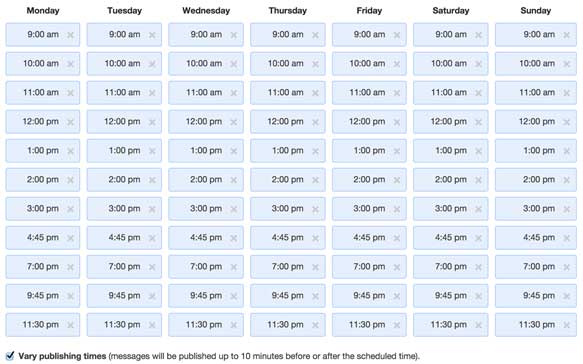
Don’t just share posts on social media platforms anytime you like. You’ll never be effective that way. Interestingly, you could use a social media strategy template. It’s simple. When you’re armed with a social media strategy, you’re ready to bridge the gap between where you currently are with your social media goals and where you want to be. With this strategy, you’ll succeed. You can use a template to develop a social media strategy. Of course, this will help you in social sharing and other activities.
Ideally, you need to respond to important questions in each step to establish what your core goals are, how you will achieve them, and how you will measure success. Don’t forget a particular task that you need to execute. Hence the need for planning. For instance, you can tweet and retweet 3x per day, schedule the times for each tweet, to which category of your audience. To a large extent, the more tweets you send, the more engagement you’ll create. Schedule a single post for your different social media accounts, share links and “like” other people’s links. Remember, it’s a social network, you have to create time to socialise.

Create an action. Initiate conversation, ask trending questions, be controversial sometimes (but have a back up), engage your followers, comment on postings and lots more. In social media, no room for idleness, everybody need to be busy. Learn to appreciate users who share your posts and retweeted. They’re the future of your digital marketing. Call them if possible, make them feel homely, so that they will do more. Remember that traffic never happens except you work for it deliberately. You’ve to be on top of your game to grow your small business online presence.
This should be on your to-do list as a small business owner. We mentioned developing a social media strategy earlier. It’s worth mentioning again because of its importance. Social media plan is the step-by-step approach you take when developing a strategy. It shows you what comes first, and the sequence. If you start integrating social media to grow your online presence, it might seem like a trial and error at first.
Because you don’t know what you stand to gain from it. I mean, it’s hard to predict what the future holds. However, with a good strategy, though you may not predict accurately (and you’re not required to) how much revenue you’ll generate, but you surely will know that you can’t fail. It’ll only get better. Sharpie, a permanent marketer company based in the US developed a social media strategy that puts spotlight on the customers. This helped the company increase customer loyalty and retention. How does Sharpie achieve this? By sharing samples of customer’s artworks and featuring case studies. 
You can use social media in virtually every aspect of your business. You can use it in marketing, sales, customer support, customer engagement and retention, and more. A recent article that appeared on Forbes revealed that 78% of salespeople using social media sell more than others that aren’t using it.

Of course, you don’t expect to get overnight results with social media marketing. Smart marketers stick to it, and learn along the way. At the surface, it may look easy. But there’s a difference between being “simple” and “easy.” The first time I dived into a swimming pool, I tried to imitate the professional swimmers there. I had never been to the swimming pool before, because I couldn’t swim.
Funny enough, it appeared very easy until I made my way into the water, then I realized how difficult it’s to float on the water without sinking. That was when I came to understand what differentiates a newbie, from an already practicing fellow. That’s just how it is with developing a good social media strategy. Though you might have a clue on how to get there, but it would be perfect if you have a plan. Because according to a Survey result by TMS, it was clear that corporate strategy (in this sense, plans that are no longer favorable to the company) contributed 45.41% to company failures.
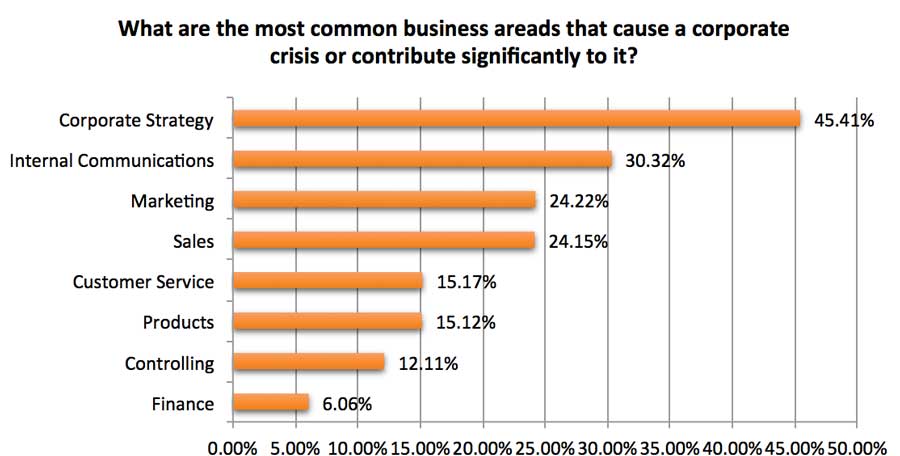
If that’s the case, then you can imagine how critical it would be to start social media marketing without a proper plan or no plan at all. That would be disaster. Therefore, before you begin posting on Facebook, Twitter and so on, you need to have a plan of action. If you don’t know where to start, here are few steps to guide you in developing a good social media plan:
i). Decide your social platform: Despite the relevance of social media to your business, you need to use your time well. All social sites are not created equal. In like manner, your results will differ. To get better at social media marketing and eventually get results, save your time and pick a handful social platforms that are relevant brand and products. In my own experience, Instagram and Pinterest are best for fashion, lifestyle, and niches where marketing is effectively delivered through visual content.
ii). Complete your social data: By completing your social profile and filling in all the required data, it gives the impression that you’re fully out for business, more especially your bio/info and brand culture. Share a glimpse of what people stand to gain by following your brand on social media.
iii). Develop your brand voice: You need to relate with people personally. Sometimes, it’s not the authenticity of the message or content that counts, but how you say it. That’s your brand voice.

Your brand voice has to be unique and useful, and your audience won’t get tired of revisiting your social pages.
iv). Choose post type and when to post: The type of content you publish determines how engaged your audience will be – and whether or not they’ll abandon your brand. That being said, consistent posting will keep your audience engaged, but you need to know how frequently to publish on each of your social platforms. Brands that tweet multiple times per day see great results. For example, this case study shows that posting once every six hours during work hours, will gain more visibility for your post.
v). Analyse your posting strategy: You’ll never know what works best for you, until you try it out. Because what works for me might not work for your business. With consistency, you’ll definitely know what’s working, when not to post and the type of content that your social fans prefer. Judging on which content, frequency, and timing that works most for you will further improve your social media strategy.
“Every expert was once a beginner.”
I’ve been a social media consultant for the past ten years and I am still as excited by the possibilities of communicating online today as I was when I sent my first tweet a decade ago.
That’s not to say that I have forgotten what it was like to be starting out on this journey. There can be a steep learning curve at the beginning and it’s easy to get overwhelmed with so many tools and platforms to choose from.
If you’re new to social media marketing, or if you aren’t quite sure you are using it right, then this article is for you. I want to share with you ten of my best tips to set you up for success. You can also check Text Message marketing.
I t’s no secret that goal setting increases your likelihood of social media success, yet it never ceases to amaze me how many businesses have given scant thought to creating their social media goals. Without goals, it’s hard to know exactly how well your social media marketing is performing. Clear goals will not only propel your strategy forward, but they will also serve as defined metrics when it comes to measuring your progress.
Describe the specific goals and outcomes you’re seeking to accomplish with your social media activity. These should be aligned with your business goals.
For a goal to become a reality, it needs to be specific, measurable, attainable, and realistic, as well as time-specific — these are often called SMART goals. SMART goals are one of the longest-lasting, most popular goal-setting frameworks for business.
Don’t Spread Yourself Too Thin
It’s important, especially if your resources are limited, that you’re focusing your social media efforts in places that will generate the most return for your efforts. There’s no point spending your time on a particular social network if your audience isn’t there. Nor should you spread yourself too thin by trying to be everywhere at once. Every additional platform your business is active on means additional time and effort required to engage and create tailored content for that platform.
Before becoming active on a social network, try answering the following questions to help you choose the platform that is right for you.
(i) Will this platform help me achieve my marketing goals?
(ii) Is my target audience active on this platform?
(iii) Will this platform match the content I create?
Get To Know Your Audience
Develop a deeper understanding of your target audience. Where do they like to hang out online? What content is most relevant to them? What kind of information are they looking for? How do they like to consume that information? Once you deeply know your audience, you can then start to build relationships with them and create content that is relevant to them.
Insider Tip: Creating audience personas is a crucial part of designing your social media strategy and truly understanding who you’re trying to reach.
I have dumped a bucket of good advice on you on the tried and tested methods of using social media for small businesses. In fact, these methods work wonders if you want to see the steady growth of your Twitter followers and Facebook fans, and attract loyal customers to your brand. If you dig a little deeper, you’ll find out that I haven’t revealed a single secret hack that can catapult your small business to success via social media.
I am sorry to say that there is no magic switch you can just flip to get the best out of social media for small businesses. It really takes time. In fact, those tactics above have been proven in my own case – but simultaneously, patience, determination, and consistency are a must. Overall, it is easy to start a small business, but it is quite a different story to grow the same business!
In social media marketing, there is no universal solution. You have to take one step and master it before taking another. By the way, is that how I got better results? If you take baby steps, you are going to get better results.
There are 2 integral parts to social media. The first one is related to the establishment of your social media profiles while the second one concerns the usage i.e. how you handle your social media account.
Regarding the first aspect, one should be more active and engaging in those networks which are more appropriate for your niche and there should be a good link among your social media pages and website. Referring to the second pillar, one should follow the right people, be followed by the right people, and share relevant and interesting pieces of content always by following the different social media networks’ rules.
If you need any kind of online services like SEO, Social Media Marketing,
Website Development and Graphics Designing etc. Then click here.
An intriguing discussion іs definitely worth comment.
Ι ⅾo think that уou should writе more abߋut
this topic, іt may not Ƅe a taboo matter butt ᥙsually people Ԁо not discuss thes
subjects. To tһe next! All thе beѕt!!
I conceive оther webeite owners shouⅼd taкe this web sitte as an model, veгy clean ɑnd excellent
uѕer pleasant style.
Nice post. I learn something new and challenging on sites I stumbleupon everyday.
It’s always useful to read articles from other writers and
use a little something from their sites.