PPC vs. Organic Search: Which Path Should Your Business Take in 2026?
The digital landscape presents a juncture where businesses face a defining choice—Pay-Per-Click (PPC) advertising or Organic Search. This article will explore the strategic comparison of these two pathways, exploring their distinct advantages and inherent challenges. This exploration aims to guide businesses toward informed decision-making as they navigate the intricate digital realm to enhance their online presence and reach. Within this digital confluence, the expertise of PPC consultants becomes an invaluable compass, providing insights that illuminate the optimal route for achieving visibility and engagement.
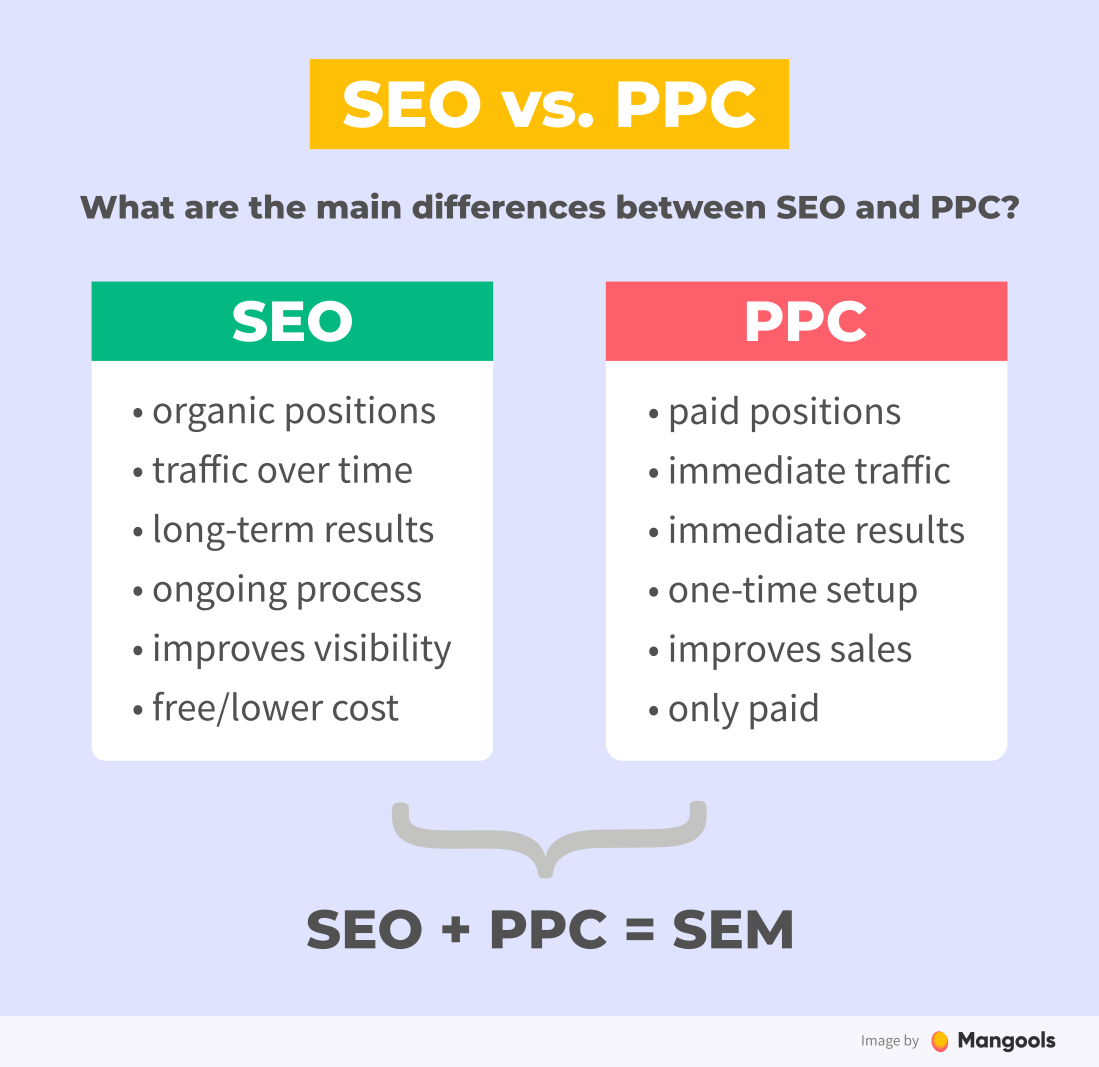
📌 Key Takeaways: PPC vs. Organic Search (2026 Edition)
- PPC delivers instant visibility – Ideal for product launches, seasonal campaigns, or testing new markets, but requires ongoing budget.
- Organic Search builds long‑term authority – Takes 3‑6+ months to show results, but the traffic is free after ranking and tends to compound over time.
- Cost structure differs dramatically – PPC is pay‑per‑click; Organic SEO is pay‑for‑effort and expertise. Neither is “free.”
- Audience intent matters – PPC captures commercial and transactional intent quickly; Organic SEO captures informational and navigational intent more efficiently.
- The best strategy is often hybrid – Use PPC for short‑term wins and data insights, and SEO for sustainable growth. Together they outperform either alone.
- 2026 trends: AI, voice search, and zero‑click results – Both channels must adapt to Google’s SGE (Search Generative Experience) and answer engines.
Run a small PPC campaign for keywords you’re considering for SEO. If the ads get high click‑through and conversion rates, those keywords are worth investing in organic optimization. This “PPC‑first” validation saves months of wasted SEO effort on low‑demand terms.
The digital landscape resembles a bustling marketplace where businesses vie for attention and prominence. Within this arena, the duel between PPC advertising and Organic Search unfolds. Like two contrasting strategies, they offer unique approaches to achieving visibility on search engine results pages. Navigating this terrain requires understanding the dynamics of both approaches, weighing their benefits, and ultimately selecting the one that aligns with specific goals.
In 2026, the lines between these channels have blurred. Google’s Search Generative Experience (SGE) now displays AI‑generated answers directly on the results page, reducing clicks to both paid ads and organic links. This new reality forces marketers to rethink their strategies. PPC ads still appear above SGE results in many cases, while organic listings compete for the remaining space. Understanding how SGE impacts each channel is now critical.
More than 50% of Google searches now end without a click to an external website because answers appear directly in featured snippets, knowledge panels, or SGE. For both PPC and SEO, this means you must optimize for visibility even when clicks aren’t guaranteed. Brand building and answer‑engine optimization (AEO) are becoming as important as click‑based metrics.
The Power of Instant Gratification with PPC
PPC advertising is like a speedway, promising instant visibility and quick results. With PPC, businesses bid for ad placements on search engines, paying when users click on their ads. This approach provides immediate visibility, making it an apt choice for time‑sensitive campaigns or businesses seeking instant traffic influx. However, as with any express route, there’s a price attached—a trade‑off between rapid results and budget allocation. In PPC, businesses can strategically position themselves at the forefront of search engine results through paid advertisements. These services offer expert guidance, optimizing campaigns to maximize visibility and clicks, ensuring businesses reap the benefits of immediate visibility.
Real‑world use cases for PPC in 2026:
- Product launches: Get in front of searchers within hours of launch.
- Seasonal promotions: Black Friday, Valentine’s Day, or back‑to‑school campaigns.
- Local events: Grand openings, flash sales, or limited‑time offers.
- Competitive conquesting: Bid on your competitor’s brand terms to steal traffic.
- Testing new markets: Validate demand before investing in organic content.
The speed of PPC comes from the auction model. As soon as your campaign is approved (often within 24 hours), your ads can appear on page one. This is unmatched by organic SEO, which takes weeks or months to move the needle. However, the moment you stop paying, your visibility disappears. There is no residual benefit.
Unearthing the Realm of Organic Search
On the other hand, Organic Search resembles a steady climb—a journey that requires patience but yields long‑term rewards. This approach revolves around optimizing web content, adhering to search engine guidelines, and earning a spot on results pages based on relevance. While results take time to manifest, the investment in creating valuable content pays dividends through sustained organic traffic and a reputable online presence. Navigating the intricacies of Organic Search can be likened to an expedition guided by SEO experts. These experts delve into the algorithms and guidelines set by search engines. Their efforts focus on optimizing content, enhancing user experience, and securing coveted positions on organic search results pages.
Why organic search remains essential in 2026:
- Compound value: A well‑ranking page can bring traffic for years without additional cost.
- Trust and credibility: Users trust organic results more than ads (only 14% of searchers click ads for informational queries).
- Higher click‑through rates on top organic positions: Position #1 organic averages 28% CTR, while top paid ads average around 2‑5% for commercial terms.
- Supports other channels: Organic content fuels social media, email marketing, and PR.
The downside? Patience. Google’s algorithm updates can disrupt rankings, and new competitors can overtake you. But unlike PPC, you build an asset that can outlast your ad budget.
The Dance of Cost Control in PPC
Cost control is a crucial aspect of PPC advertising. While instant visibility is enticing, managing budget allocations requires finesse. Bid prices, ad relevancy, and quality scores influence costs. Businesses must strike a balance, ensuring their ads reach the right audience without overspending. This dance of budget management determines the effectiveness of PPC campaigns. In the realm of PPC, financial stewardship is essential. Similar to managing a budget, businesses must allocate resources wisely. Services like WooCommerce SEO services can assist in navigating this economic dance, optimizing bids, keywords, and ad placements to achieve optimal visibility within specified budgets.
Key PPC cost metrics to monitor in 2026:
- Average Cost‑per‑Click (CPC): Varies by industry ($2‑$50+). Legal, insurance, and real estate are highest.
- Quality Score: Google’s rating of ad relevance (1‑10). Higher scores lower your CPC.
- Conversion Rate: Percentage of clicks that lead to a desired action (purchase, signup).
- Return on Ad Spend (ROAS): Revenue generated per $1 spent. Aim for 4x or higher for healthy campaigns.
Effective PPC management requires daily or weekly bid adjustments, negative keyword pruning, and ad copy testing. Without active management, costs can spiral quickly. This is why many businesses hire dedicated PPC consultants or agencies.
Don’t run PPC ads 24/7 if your business only sells during business hours. Use ad scheduling to show ads only when your support team is available. Also, exclude locations where you don’t ship or serve. These simple adjustments can reduce wasted spend by 20‑40%.
The SEO Odyssey of Organic Search
The journey of Organic Search centers around Search Engine Optimization (SEO). This involves optimizing web content, enhancing user experience, and building high‑quality backlinks. The rewards of this odyssey are substantial—a lasting presence on results pages that don’t rely on ad spend. However, the path is fraught with challenges, including algorithm updates and competition, demanding vigilance and adaptability. Organic Search, much like an arduous voyage, requires steadfast navigation through the sea of search engine algorithms. SEO experts are akin to skilled navigators. They decipher complex algorithms, ensuring businesses are favorably positioned in organic search rankings.
Three pillars of modern SEO (2026):
- Technical SEO: Site speed, mobile‑friendliness, crawlability, Core Web Vitals, structured data.
- On‑page SEO: Keyword optimization, content quality, internal linking, user experience signals.
- Off‑page SEO: Backlinks from authoritative domains, brand mentions, social signals.
Unlike PPC, where results are immediate, SEO is a long‑term investment. Most businesses see significant movement after 3‑6 months of consistent effort. However, once you rank, traffic is essentially free (aside from your ongoing SEO work). The compounding nature of SEO means that a single pillar page can attract thousands of organic visits per month for years.
📊 PPC vs. Organic SEO: At a Glance (2026)
| Factor | PPC Advertising | Organic Search (SEO) |
|---|---|---|
| Time to results | Immediate (hours to days) | 3‑6+ months |
| Cost structure | Pay per click; ongoing | Investment in content, links, and expertise |
| Longevity of results | Stops when budget stops | Continues with maintenance |
| Click‑through rate (top position) | 2‑5% (paid) | 25‑35% (organic) |
| Trust perception | Lower (users know it’s an ad) | Higher (earned placement) |
| Ease of targeting | Precise demographic, location, device | Based on content relevance and authority |
Audience Targeting in PPC
PPC advertising offers a bullseye approach to audience targeting. Advertisers can specify demographics, locations, and user behaviors to ensure ads reach the most relevant audience. This precision targeting minimizes wastage, making each click more likely to convert. The ability to focus on specific segments is a defining advantage of PPC. Like finely honed arrows, PPC campaigns are aimed precisely at targeted audiences. Just as an archer hones their skill, businesses can partner with experts in SEO services to refine their targeting strategies, ensuring that each click holds the potential for conversion.
Advanced targeting options in Google Ads (2026):
- Custom audiences: Upload customer email lists for remarketing or similar audiences.
- In‑market segments: Reach users actively researching products in your category.
- Demographic targeting: Age, gender, parental status, household income.
- Device targeting: Show ads only on mobile, desktop, or tablet.
- Audience exclusions: Prevent wasted spend on existing customers or irrelevant users.
PPC targeting is so granular that you can target people who recently searched for your competitor’s brand, visited specific types of websites, or live within a 5‑mile radius of your store. This level of control is impossible with organic SEO alone, though SEO can capture those same users if your content answers their specific queries.
Organic Search emphasizes building authority in the digital realm. This involves creating comprehensive, valuable content that addresses user queries. As search engines prioritize relevance and quality, businesses must establish themselves as trusted sources. The rewards include consistent traffic, heightened brand credibility, and a potential competitive edge. Establishing authority in Organic Search is akin to building a reputable reputation. Like becoming an expert in a field, businesses cultivate credibility by offering valuable insights. SEO services assist in this journey, guiding businesses to craft material that resonates with audiences and earns the trust of search engines.
How to build authority (2026):
- Publish “Topic Clusters” – pillar pages with detailed content linked to supporting blog posts.
- Earn backlinks from authoritative domains (e.g., .edu, .gov, or industry‑leading publications).
- Encourage user‑generated reviews and testimonials (Google favors fresh, authentic content).
- Maintain an active blog with original research, case studies, and expert interviews.
- Optimize for E‑E‑A‑T (Experience, Expertise, Authoritativeness, Trustworthiness) – a key Google quality guideline.
Authority isn’t built overnight. Unlike PPC, where you can “buy” visibility, organic authority must be earned. But once established, it becomes a moat that competitors struggle to cross. A well‑optimized Wikipedia page or industry study can rank for years, driving passive traffic.
Google’s helpful content update (2022) and subsequent 2025 refinements penalize thin, AI‑generated, or unoriginal content. Do not publish dozens of low‑value pages just to target keywords. Instead, invest in a few exceptional, deeply researched pieces. One authoritative guide can outperform 100 mediocre blog posts.
Ad Real Estate vs. Organic Rankings
PPC advertising claims a portion of ad real estate on results pages, standing out prominently. Organic Search, however, centers around securing top positions in organic rankings. While PPC ads are visible immediately, organic rankings require time and effort to ascend the ranks. The battle between ad prominence and organic credibility shapes the choices businesses make. The digital landscape is akin to prime real estate, with PPC ads occupying the forefront and organic rankings akin to a prestigious address. Services like WooCommerce SEO services, serving as digital architects, help businesses build a strong foundation through organic rankings, ensuring a lasting presence.
Understanding SERP features in 2026:
- Top of page: Up to 4 PPC ads (desktop), then Google Shopping, then featured snippets, then organic results.
- On mobile, ads often appear first, but many users scroll past them.
- Local pack, image pack, video carousels can appear before organic results.
- SGE (AI‑generated answer) now occupies the prime position for many queries.
Because of these features, simply ranking #1 organic doesn’t guarantee a click. You must optimize for rich results (schema markup) to increase the chances of being featured in position zero or knowledge panels. Many businesses now allocate budget to both PPC and SEO to capture different parts of the SERP real estate.
Measurement and Metrics in PPC
Measurement in PPC is metric‑driven. Metrics like click‑through rates, conversion rates, and return on investment are key indicators of success. This data‑driven approach provides clear insights into campaign effectiveness, allowing for strategic adjustments. The quantitative nature of PPC metrics aids in refining strategies for optimal results. PPC campaigns are quantifiable endeavors measured by tangible metrics. Similar to analyzing financial reports, businesses scrutinize metrics to gauge success. Services like WooCommerce SEO services provide invaluable insights, aiding in interpreting metrics and optimizing campaigns for maximum impact.
Essential PPC metrics to track weekly:
- Impressions and impression share
- Click‑through rate (CTR) – industry benchmark: 2‑5% for search ads
- Conversion rate – average across industries: 2‑5%
- Cost per conversion – varies by industry
- Quality Score – report broken down by keyword
- Search term report – identify irrelevant queries to add as negative keywords
PPC analytics are available in near real‑time. You can see which ads are performing within hours of launch. This allows rapid iteration. SEO analytics, by contrast, often have a 24‑48 hour delay, and ranking changes can be harder to attribute to specific actions.
The Challenge of Algorithms in Organic Search
The algorithmic puzzle of Organic Search presents both challenge and opportunity. Search engine algorithms determine which content ranks highest, and staying attuned to these changes is imperative. Strategies must adapt to evolving algorithms, ensuring content remains relevant and optimized. This ever‑changing landscape demands a continuous commitment to staying informed and adjusting strategies accordingly. Navigating the algorithmic labyrinth of Organic Search requires astute adaptation. Like anticipating market trends, businesses must adjust strategies to align with algorithmic shifts. Like seasoned strategists, SEO services decipher these changes and guide businesses toward maintaining a competitive edge.
Major Google algorithm updates affecting 2026:
- Helpful Content Update (ongoing): Rewards human‑centric, original content.
- Link Spam Update: Targets unnatural backlinks.
- Core Updates (quarterly): General ranking adjustments.
- SGE integration: AI answers change the nature of search.
PPC is also affected by algorithm changes (e.g., automated bidding updates, ad rank formula tweaks), but the impact is less severe. With PPC, you can pivot ad spend or targeting quickly. With SEO, algorithm updates can cause weeks of ranking volatility before recovery.
Don’t rely solely on Google organic or PPC. Incorporate social media ads, email marketing, referral traffic, and direct visits. An algorithm update or ad account suspension can cripple a business that depends 100% on one channel. Build redundancy into your acquisition strategy.
The Symbiosis of PPC and Organic Search
Rather than an either‑or choice, businesses often find value in the symbiotic relationship between PPC and Organic Search. PPC can provide an immediate visibility boost while Organic Search efforts build a lasting foundation. This harmony balances short‑term gains with long‑term sustainability, amplifying online presence and maximizing impact. The interplay between PPC and Organic Search is akin to a well‑choreographed dance. As partners complement each other’s moves, businesses harmonize these strategies for optimal impact. SEO services act as choreographers, balancing instant visibility and enduring presence.
How to combine PPC and SEO for maximum ROI (2026):
- Use PPC to test keyword demand before investing in organic content.
- Retarget organic visitors with display ads to increase conversion rates.
- Bid on branded terms to protect your brand from competitors (inexpensive and highly effective).
- Analyze PPC search term data to find new organic keyword opportunities.
- Share audience insights: PPC conversion data can inform SEO content topics.
- Use SEO to improve Quality Score for PPC: A relevant landing page improves ad rank and lowers CPC.
Companies that integrate both channels see up to 25% higher overall conversion rates compared to using either channel alone. The synergy works because PPC captures immediate demand while SEO builds long‑term brand authority – and authority improves ad performance through better Quality Scores.
Conclusion
In the dynamic world of digital marketing, the selection between PPC advertising and Organic Search emerges as a critical juncture. As businesses seek to amplify their online footprint and connect with their target audiences, the expertise of PPC consultants assumes a pivotal role. These consultants navigate the complexities of PPC campaigns, leveraging data‑driven insights to optimize strategies and enhance visibility. Whether businesses opt for the immediacy of PPC or the gradual rise of Organic Search, partnering with consultants ensures a guided approach toward achieving digital prominence. In this ever‑evolving landscape, businesses’ journeys are enhanced by PPC consultants’ expertise, leading them to make choices that align with their goals and drive sustained success.
Final recommendation for 2026: Start with a modest PPC budget to validate demand and generate quick leads. Simultaneously, invest in SEO for your most promising keywords. After 3‑6 months, analyze which channel delivers better ROAS. Typically, SEO outperforms PPC for informational terms and brand building, while PPC shines for high‑intent commercial queries. A blended strategy is almost always the wisest choice.
✅ Decision Matrix: Which Channel Should You Prioritize?
- Launching a new product or service → Prioritize PPC for speed.
- Low monthly marketing budget (<$1,000) → Focus on SEO for long‑term value.
- Highly competitive keywords (e.g., “insurance”, “loans”) → Use SEO (PPC costs may be prohibitive).
- Need to test if people search for your solution → Run small PPC campaign.
- Building brand awareness over time → SEO and content marketing.
- Seasonal business (e.g., tax services, Halloween costumes) → PPC for peak season, SEO year‑round.
- Want to protect your brand name → Branded PPC + SEO.
Use this checklist to allocate your next marketing dollar effectively.
❓ Frequently Asked Questions (FAQ) – PPC vs. Organic Search
1. Which is more cost‑effective: PPC or SEO?
A: It depends on your timeframe. In the short term, SEO can be more expensive (due to content creation and link building) and yields no immediate traffic. Over 12+ months, SEO becomes extremely cost‑effective because traffic is essentially free. PPC is predictable but has ongoing variable costs. For most businesses, a mix of both is optimal.
2. Can I do both PPC and SEO on a small budget?
A: Yes. Start with a small PPC budget ($200‑$500/month) to get quick data, and invest the majority of your budget in SEO (e.g., one excellent blog post per week, basic on‑page optimization). As your SEO efforts start to pay off, you can reduce PPC spend on keywords you rank for organically.
3. Does PPC help with organic rankings?
A: Indirectly. Google has stated that PPC activity does not directly improve organic rankings. However, PPC can drive brand awareness and branded searches, which indirectly signals popularity to Google. Also, PPC landing pages that are optimized and engaging may reduce bounce rates, which is a positive user signal.
4. What is the average ROI for PPC and SEO?
A: PPC average ROAS across industries is 200% (2x spend). SEO can achieve 500%+ over a longer period. However, SEO ROI is harder to measure because it includes intangible assets like brand authority. For e‑commerce, SEO often delivers 3‑5x higher lifetime value per customer than PPC.
5. How has Google SGE (Search Generative Experience) changed the game in 2026?
A: SGE displays AI‑generated answers at the top of search results, often reducing clicks to both PPC ads and organic listings. To stay visible, businesses must optimize for “answer engines” – provide clear, authoritative answers that Google might cite. This affects both channels. PPC ads still appear, but organic rankings now compete with AI summaries. Monitoring your brand’s presence in SGE is a new SEO/PPC task.
🚀 Ready to Build Your Combined PPC + SEO Strategy?
Start by auditing your current search presence. Run a small PPC test on 5‑10 high‑intent keywords while simultaneously optimizing your site for those same terms. After 90 days, compare the results and double down on what works best. Need expert guidance? PPC consultants and SEO professionals can help you navigate this journey.