What Font Is This? How to Identify Any Font in 2026
Typography is one of the most important aspects of any work of art or design. A visual expression of your design can be expressed through typography, a sort of art. It has also become clear that typography is the ideal catalyst to enliven your design and elevate it with just a few tweaks as we approach a new wave trend in web design.
By selecting the appropriate typography, you can evoke a certain mood, create a specific atmosphere, or reinforce your brand identity. Your style and the message you want to get over to your audience will determine everything. You can switch between some of the most gorgeous serif and sans serif fonts to convey your message, depending on whether you want your design to have a more traditional and elegant aesthetic or perhaps you are trying for a more contemporary style.
- Browser extensions (WhatFont, Fonts Ninja) identify live web fonts in one click.
- AI‑powered scanners (WhatFontIs, WhatTheFont) match fonts from screenshots and photos.
- Interactive questionnaires (Identifont) help when you only have a description.
- Always check licensing before using a font commercially.

The Ultimate Font Identification Toolkit
How many times have you come across a gorgeous font yet been unable to identify it? With the use of the right font identification tools, the mystery of “what font is this?” will no longer leave you hanging. The key is to pick the right tool for your specific situation.
| Tool Type | Best For Identifying Fonts From… | Top Tool Examples | Key Advantage |
|---|---|---|---|
| Browser Extensions | Live websites & web text | WhatFont, Fonts Ninja, Fontanello | Instant, accurate detection from live code |
| AI Image Scanners | Screenshots, logos, photos, PDFs | WhatFontIs, WhatTheFont, Font Matcherator | Massive database; works on any image |
| Interactive Tools | A description (when you have no image) | Identifont | Guided questionnaire to narrow down choices |
| Bookmarklets | Quick checks without installing extensions | Fount, TypeSample | Lightweight; works across browsers |
In-Depth Tool Reviews & How to Use Them
1. For Live Websites: Browser Extensions
Fontanello Free
We’ll start the list with a Google Chrome extension called Fontanello, which is a favorite of designers. Install the extension, then whenever you are browsing the internet and come across a stunning piece of web design, simply right‑click on the text and choose “Fontanello.” The type of font that particular website is employing will be instantly detected and displayed to you.
This is the quickest and most efficient way to locate a typeface on a live website. Other helpful features, such as the font’s weight, size, color, letter‑spacing, and other specifics, are displayed. The biggest feature of this application is that it gives you instant access to finding any typeface in a couple of seconds.
WhatFont Free
Another cutting‑edge font identification browser plugin is WhatFont. Simply click the WhatFont icon on the extension bar and then hover over the text you want to identify. It will display the precise typeface that a website is using. Click on the text to reveal a display popup with all the font family, style, weight, size, color, and other information.
Fonts Ninja Free Pro Version
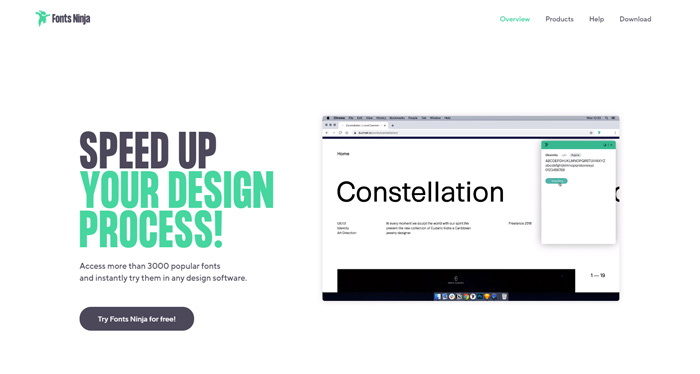
Fonts Ninja offers a variety of cool features. It detects all fonts on a page and lets you test them with your own text. You can integrate it with design software like Adobe Photoshop, Sketch, and Figma. The free version identifies fonts, while the $5/month Pro version allows automatic downloading of discovered fonts.
2. For Images & Logos: AI‑Powered Identifiers
WhatFontIs Freemium
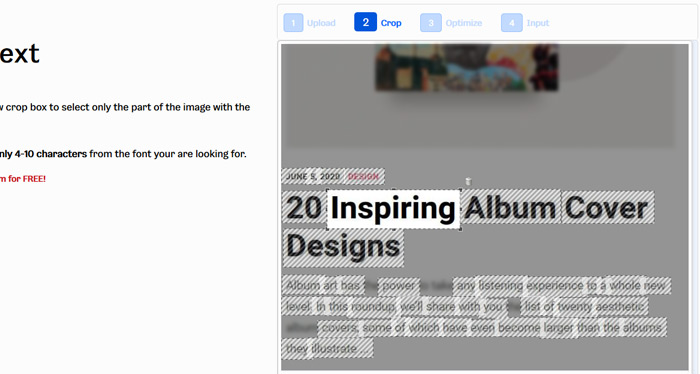
One of the most well‑known web resources for finding fonts is WhatFontIs. It features a sophisticated AI engine and a database of over 600,000 fonts. Simply upload a clear image with the text or paste the image URL. This website is able to locate the typeface in an amazing 90% of cases.
The free version lets you choose between 4 and 10 characters from your image. You’ll then see a list of fonts that are similar to the one in your uploaded image, with direct links to download or purchase them.
WhatTheFont Free
WhatTheFont, provided by MyFonts, allows you to identify typefaces by simply uploading a screenshot or photo of the text. The tool will ask you to verify the characters it detects, then show you a list of the closest matching fonts from its massive commercial library.
Font Matcherator Free
Font Spring’s Matcherator is a powerful free tool that can detect most fonts, including variable fonts and color fonts. It includes an integrated image editor to help you crop and clean up your sample before matching.
3. When You Have No Image: The Questionnaire Approach
Identifont Free
Identifont differs from other tools by asking you questions about the font’s appearance. It’s perfect when you have a font in mind but no image to upload. You answer questions about serifs, letter shapes, and other characteristics to narrow down possibilities from its database.
How to Choose the Best Font for Your Website
Typography is much more than just a means of communication. Fonts provide aesthetic value and have a big impact on how people perceive your brand. Given the wide variety of typefaces available, choosing the ideal font can be challenging. Here’s a practical framework:
Align with Brand Personality
Choose a font that reflects your brand’s character. A modern sans‑serif (like Helvetica Neue) suggests cleanliness and innovation, perfect for tech brands. A classic serif (like Times New Roman) conveys tradition and reliability, ideal for finance or law. A friendly rounded sans‑serif (like Nunito) works well for lifestyle or family brands.
Prioritize Readability & Legibility
For body text, prioritize clear, simple fonts with:
- Sufficient x‑height (the height of lowercase letters)
- Open letterforms (clear ‘e’, ‘a’, ‘c’ openings)
- Good letter spacing (avoid overly tight or loose tracking)
- Multiple weights for creating hierarchy
Ensure Technical Performance
Web Fonts vs. System Fonts: Use web font services (Google Fonts, Adobe Fonts) for custom typography that loads consistently. Always specify fallback system fonts in your CSS (e.g., font-family: 'Your Font', Arial, sans-serif;).
Loading Speed: Limit font file sizes by only loading the weights and styles you actually use. Consider using font-display: swap in CSS to prevent invisible text during loading.
Respect Licensing & Usage Rights
Always check the license! A “free for personal use” font requires a commercial license for websites. Google Fonts are entirely free for commercial use. Services like Adobe Fonts include licensing in their subscription. Never use a font without verifying you have the proper rights.
Create Visual Hierarchy
Use font weights, sizes, and a complementary secondary font to guide readers. A common approach:
- Headings (H1, H2): Bold weight of your primary font, or a distinctive complementary font
- Body Text: Regular weight of a highly readable font
- Accents & Captions: Italic or light weight for subtle differentiation
Professional Workflow: From Discovery to Implementation
Follow this systematic approach to find, test, and implement fonts for your projects:
- Discover & Identify: Use browser extensions (WhatFont, Fonts Ninja) to identify fonts you admire on competitor sites or design inspiration galleries.
- Research Alternatives: Use tools like WhatFontIs or Identifont to find similar fonts if your ideal choice is too expensive or has licensing restrictions.
- Test Thoroughly: Use Google Fonts’ “Type Tester” or Fonts Ninja’s preview feature to test your shortlisted fonts with actual content. Check readability at different sizes and on mobile devices.
- Check Pairings: Use tools like FontPair or Typewolf to find proven font combinations that work well together.
- Implement & Optimize: Load fonts efficiently via CDN, set proper fallbacks, and use CSS features like
font-displayandfont-weightranges for optimal performance.
Advanced Tips & Common Mistakes
@media queries that may change font sizes or weights on different screens—this helps you understand the designer’s responsive strategy.FAQ
A: Yes, but accuracy drops. Use AI tools like WhatFontIs and manually adjust the crop to include only the letters. Increase contrast in an image editor before uploading for better results.
A: Most offer free tiers: WhatFont, Fonts Ninja, WhatTheFont, and Identifont are completely free. WhatFontIs has a free version with limited searches; premium plans remove limits and provide higher‑resolution previews.
A: The tool will show visually similar fonts. You can then use those as inspiration or check font forums like Reddit’s r/identifythisfont for human help.
A: Take a high‑resolution screenshot of the PDF page and use an AI image scanner (WhatTheFont or WhatFontIs). For editable PDFs, open the file in Adobe Acrobat Pro and check the font list under File > Properties > Fonts.
A: Yes. Use apps like WhatTheFont (iOS/Android) that let you take a photo and get matches. For websites, you can use Safari’s inspector on iPhone or install Kiwi Browser on Android to run Chrome extensions like WhatFont.
A: Both identify fonts, but Fonts Ninja also lets you test‑drive fonts with your own text and buy them directly. WhatFont is simpler and slightly faster for quick identification.
A: Very accurate—most tools now claim 90%+ accuracy on clean samples. They also handle variable fonts, color fonts, and even some hand‑lettering styles by suggesting the closest commercial typeface.
A: Not for basic identification. WhatTheFont and Identifont work without an account. WhatFontIs requires a free account after a few searches to prevent abuse.
Mastering Font Identification & Selection
Finding and selecting the right fonts no longer requires guesswork or endless searching. With the tools outlined in this guide—browser extensions for live sites, AI scanners for images, and interactive tools for descriptions—you can identify virtually any font you encounter. Remember that successful typography combines aesthetic appeal with technical practicality: choose fonts that reflect your brand, ensure they’re readable and properly licensed, and implement them with performance in mind. Your typography choices will significantly impact user experience, brand perception, and overall design success.
We hope this guide helps you in your design journey. Have questions about a specific font identification challenge or font pairing? Feel free to ask in the comments. If you found this useful, please share it on social media.