

Top 10 Real Work from Home Jobs in 2026: The Ultimate Verified Guide
- Remote work is no longer a pandemic experiment — it is the new standard: Over 35% of US workers now hold fully remote positions at verified companies in 2026, and FlexJobs confirms remote job postings have grown 44% year-over-year with no sign of reversal.
- The top companies hiring remotely in 2026 include TELUS (the #1 ranked employer on FlexJobs’ Top 100 list), Elevance Health, Lockheed Martin, GitLab, Zapier, and Automattic — all offering legitimate full-time roles with benefits.
- Remote work scams increased 38% in 2024 — always verify employers on Glassdoor and LinkedIn, never pay upfront fees, and apply only through established boards like FlexJobs, We Work Remotely, or DailyRemote.
- AI literacy is now a competitive differentiator: 72% of employers in 2026 prioritise AI tool proficiency in candidates. Learning to use AI responsibly in your specific role increases earning potential by an average of 34%.
- Freelancers and independent contractors make up a growing share of the remote workforce: Platforms like Upwork, Fiverr, and Toptal give skilled professionals direct access to global clients without the need for a traditional employer relationship.
The New Reality: Remote Work Has Permanently Reshaped Employment
The conversation around remote work shifted decisively between 2020 and 2026. What began as an emergency measure during the COVID-19 pandemic — with over 30 million Americans filing for initial jobless benefits during the peak crisis months — evolved into a deliberate, permanent restructuring of how work gets done. The question is no longer whether remote work is viable. It is, and the data is unambiguous. The question now is how to identify the best legitimate opportunities in an increasingly crowded and scam-saturated landscape.
FlexJobs’ 2026 Top 100 Companies for Remote Work report found that TELUS claimed the top spot for the most remote job postings across customer service, bilingual, computer and IT, and research roles. Elevance Health and Lockheed Martin followed in second and third. Across all career categories, project management and computer and IT experienced the largest increases, with postings nearly doubling within FlexJobs’ database.
Career expert Toni Frana from FlexJobs put it plainly: remote work has evolved significantly over the past several years, but workers’ demand for job flexibility has remained constant. The employers leading in 2026 are those that understand the critical role flexibility plays in retaining talent across career levels.
The Legitimacy Framework: How to Spot Real Remote Jobs vs. Scams
Remote work scams increased 38% in 2024 according to BBB Scam Tracker data, and 2026 has continued that trend. The rise of AI-generated fake job postings, deepfake “video interviews,” and elaborate phishing schemes targeting job seekers makes it more important than ever to have a systematic verification process before engaging with any remote opportunity.
Remote Opportunity Verification Checklist
Top 10 Real Work From Home Jobs in 2026 — Verified & Ranked
1. Online Writer / Freelance Content Creator

Freelance writing remains one of the most genuinely accessible and scalable remote income streams available in 2026. The proof is in the numbers: Holly Johnson earns over $200,000 annually as a freelance writer — a figure that was exceptional when first reported and is now increasingly achievable as businesses allocate larger content marketing budgets to replace declining organic reach from social media algorithms.
The writers earning at the higher end of the market in 2026 specialise rather than generalise. Technical writers who can translate complex AI, cybersecurity, or software concepts for business audiences command rates between $0.20 and $0.50 per word or $100–$250 per hour. SEO content specialists who understand topical authority, semantic keyword clustering, and E-E-A-T principles are in sustained high demand from agencies and in-house marketing teams. Copywriters with demonstrable conversion rate data earn $75–$200 per hour from direct-response clients and e-commerce brands.
AI has not replaced skilled writers — it has resharpened the market. The Upwork Research Institute’s Work Innovators report specifically flagged growing demand for human writers to combat “workslop” (AI-produced content with errors and inconsistencies lacking quality safeguards). Writers who can produce genuinely original, well-researched, human-feeling content are more valuable in 2026, not less.
💡 Writing Specialisation Pathways That Pay Best in 2026
The three highest-earning writing niches remain: (1) Technical documentation and software documentation — $75–$150/hour; (2) B2B SaaS and fintech content marketing — $0.25–$0.50/word; (3) Direct response copywriting — project rates of $2,000–$15,000+ per campaign. Each has a different learning curve but similar six-figure income potential within 2–3 years of focused effort.
Entry-level writers typically earn $20,000–$35,000 in their first year while building a portfolio. Established writers with a clear specialisation average $40,000–$80,000. Top performers with proven niches and repeat clients consistently exceed $100,000–$200,000 annually within 3–5 years.
Build an initial portfolio using platforms like Contently or your own WordPress site. Choose a niche based on your existing expertise — writers with industry knowledge command significantly higher rates than generalists. Master SEO fundamentals through Moz’s SEO Beginner’s Guide and learn to pitch directly to editors and marketing managers rather than relying solely on content mills.
2. Proofreader / Copy Editor

If you find yourself mentally correcting grammar on restaurant menus or catching typos in published articles that everyone else missed, proofreading is genuinely worth exploring as a remote income source. Caitlin Pyle — whose story has become something of a touchstone in the work-from-home community — earned $43,000 in her first year proofreading part-time. That story is backed up by real market data: the demand for human proofreaders has remained stable despite AI grammar tools, precisely because AI checkers frequently miss contextual errors, homophone substitutions, and tonal inconsistencies that skilled human proofreaders catch instinctively.
Specialisation matters enormously in this field. A general proofreader might charge $0.01–$0.02 per word. A court transcript proofreader, academic manuscript editor, or medical document reviewer commands $0.03–$0.07 per word or more — representing a 3x to 7x earnings multiplier from choosing the right niche. Legal proofreading in particular is a high-demand niche with low supply of qualified practitioners and a tolerance for premium pricing among law firms.
Part-time proofreaders typically earn $1,000–$2,500 monthly. Full-time general proofreaders average $35,000–$50,000 annually. Specialised proofreaders in legal, medical, or academic niches earn $55,000–$85,000 with established client rosters.
The Chartered Institute of Editing and Proofreading offers recognised training and certification that signals professional credibility to serious clients. Upwork and Reedsy both have active proofreading marketplaces for building an initial client base. Consider starting with academic proofreading (consistent student demand regardless of economic conditions) before progressing to legal or medical specialisations.
3. Virtual Bookkeeper

Virtual bookkeeping is one of the most structurally stable remote jobs available because the need it addresses — accurate financial record-keeping — is legally required for every business, regardless of economic conditions or technology trends. Small businesses are the primary market, and there are over 33 million of them in the United States alone, the vast majority of which cannot afford a full-time in-house accountant but need bookkeeping support regularly.
Cloud accounting has transformed this profession’s remote viability. Tools like QuickBooks Online, Xero, and FreshBooks have made it trivially easy for a bookkeeper to access a client’s financial records, categorise transactions, reconcile accounts, and deliver monthly reports from anywhere in the world. The bookkeeper working remotely delivers the same output as one sitting in the client’s office — without either party paying for the overhead.
E-commerce bookkeeping is the fastest-growing sub-niche in this field in 2026. The complexity of multi-channel selling (Amazon, Shopify, Etsy), sales tax nexus rules across states, and COGS (cost of goods sold) tracking makes e-commerce businesses eager to pay premium rates for bookkeepers who understand their specific challenges.
Entry-level remote bookkeepers typically start at $18–$25 per hour. Experienced bookkeepers with established client portfolios earn $35–$60 per hour. E-commerce or non-profit specialists often command $60–$90 per hour given the complexity of their niche.
Obtain QuickBooks Online ProAdvisor certification (free through Intuit’s training portal) as a baseline credential. Complete the complementary Xero certification to expand your marketability. List your services on Upwork and LinkedIn initially, then transition to direct client acquisition through local business networking once you have 3–5 client case studies demonstrating results.
4. Virtual Assistant

The virtual assistant role has evolved substantially beyond answering emails and scheduling appointments. In 2026, the most sought-after VAs are specialists — professionals who have built deep competency in one high-value domain and market themselves accordingly. A podcast VA who can record, edit, write show notes, create audiograms, and distribute episodes across all platforms commands $40–$75 per hour. A real estate VA handling MLS listings, CRM management, transaction coordination, and social media commands similar rates. A systems VA who builds and manages automation workflows in Zapier, Make, or HubSpot is among the highest-paid in the category.
The distinction that changes everything is positioning: a general VA competing on Upwork for basic administrative tasks earns $10–$20 per hour. A specialist VA who markets directly to a specific industry commands $35–$100 per hour for fewer clients with far less competition. The income gap between these two positioning strategies is the single most important insight for anyone entering the VA space in 2026.
General VAs typically earn $15–$30 per hour. Specialised VAs in high-demand niches (podcast management, real estate, executive support for C-suite, social media management) earn $40–$100 per hour. Full-time specialist VAs regularly achieve $60,000–$95,000 annually.
Platforms like Time etc and Belay provide structured entry into VA work with established clients. To accelerate toward specialist rates, pick one industry you understand deeply, obtain relevant certifications (HubSpot for marketing VAs, QuickBooks for finance VAs), and market exclusively to that vertical from day one.
5. Start a Blog and Build Passive Income

Blogging remains one of the most powerful passive income models available to anyone with expertise in a specific topic and the patience to build authority over 12–24 months. The economics are compelling: a blog post written once can generate advertising revenue, affiliate commissions, and lead generation for years without any additional effort. The most successful bloggers treat their sites as media businesses rather than digital diaries — with systematic keyword research, strategic internal linking, and multiple revenue stream diversification baked in from the start.
The bloggers earning consistently in 2026 are not chasing viral social media content. They are building topical authority sites — clusters of tightly interconnected content that establish their domain as the definitive source on a specific subject. Mediavine (the premium ad network) requires 50,000 monthly sessions to join and pays $25–$50 RPM for approved sites. A blog hitting 100,000 monthly sessions with Mediavine ads, one or two affiliate programs, and a digital product generates $3,000–$8,000 passively per month — while you focus on new content or entirely new projects.
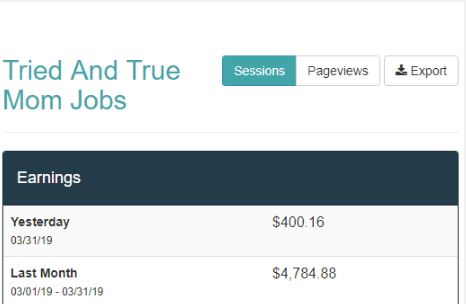
New bloggers typically earn nothing in the first 6–12 months while building traffic. Income of $500–$2,000 monthly is achievable within 12–18 months with consistent effort. Established blogs with 100,000+ monthly visitors regularly earn $3,000–$15,000 monthly through diversified monetisation. Top bloggers in competitive niches report $50,000–$100,000+ monthly.
Choose a niche narrow enough to dominate but large enough to sustain an audience. Build a WordPress site (the platform this guide is published on), install an SEO plugin like Rank Math, and conduct keyword research with Ahrefs or Moz before writing your first post. Publish consistently — one thoroughly researched post per week outperforms five shallow posts in Google’s current quality-first ranking environment.
6. Teach English Online

Online English teaching remains a genuine, stable income source for qualified professionals in 2026. The market has consolidated since the COVID surge in online education, with platforms like Magic Ears, Cambly, and Preply focusing on adult learners (corporate English, business communication, exam preparation) alongside the established K-12 markets. This consolidation has actually been positive for teachers who commit to it professionally — the survivors are better-run platforms paying better rates to vetted educators.
Business English teaching is the highest-growth sub-segment. Companies hiring internationally need their employees to communicate in English for client calls, written communications, and presentations. A business English specialist working with corporate clients through Preply or direct contracts earns $25–$60 per hour — significantly more than general conversational English tutoring on consumer platforms.
Entry-level ESL platforms pay $10–$18 per hour. Established teachers on premium platforms like iTalki or Preply typically earn $18–$35 per hour. Business English specialists with corporate clients command $35–$60 per hour, with full-time annual incomes reaching $45,000–$70,000.
A Bachelor’s degree and TEFL/TESOL certification are standard requirements. Obtain certification through TEFL.org or International TEFL Academy (both widely recognised). Start on consumer platforms to build student reviews, then transition to Preply’s corporate programme or direct B2B contracts for better hourly rates.
7. Resell Items Online — Amazon FBA and Beyond

Amazon’s Fulfilled by Amazon (FBA) program continues to enable entrepreneurial individuals to build profitable e-commerce businesses without managing warehousing, shipping, or customer service infrastructure. You source products, ship them to Amazon’s fulfilment centres, and Amazon handles everything downstream — storage, packaging, delivery, returns, and customer service. Your role becomes product research, supplier management, and marketing.
The most successful FBA sellers in 2026 have moved beyond retail arbitrage (buying discounted retail items to flip on Amazon) into private label selling — identifying high-demand, low-competition product categories, manufacturing custom products under their own brand, and building sustainable long-term revenue streams. Private label requires more upfront capital ($2,000–$10,000 for initial inventory) but generates far higher margins and brand equity than arbitrage models.
Part-time resellers commonly earn $1,000–$3,000 monthly through retail arbitrage. Private label sellers typically reach $5,000–$20,000 monthly within 12–18 months of their first successful product. Full-time FBA businesses generating $100,000+ annual profit are well-documented across the community.
Essential tools for product research include Helium 10 and Jungle Scout. Start with retail arbitrage using the Amazon Seller App to scan products in clearance sections of local retailers, then reinvest profits into private label development. Study the free content from seasoned sellers like Jungle Scout’s YouTube channel before committing capital.
8. Make Printables and Sell on Etsy

Digital printables are one of the purest forms of passive income available online. You design a product once — a budget planner, a weekly meal planner, a classroom activity sheet, a wedding planning kit — and that product can sell hundreds or thousands of times without any additional effort on your part. Etsy’s built-in traffic of over 90 million active buyers provides a ready-made audience that would take years to build independently.
The most successful Etsy printables sellers do not simply design pretty templates. They research high-demand, low-competition keywords using tools like Marmalead or eRank, understand what problems their target buyer is trying to solve, and create functional, genuinely useful products that solve those problems better than anything else in the search results. A budget planner designed for single mothers, a homeschool schedule template for large families, or a seasonal menu planner for health-conscious households each targets a specific buyer persona with specific needs — and that specificity converts browsers into buyers.
New Etsy shops typically earn $100–$500 monthly in the first 6 months while building listings and reviews. Established shops with 50+ products commonly earn $1,000–$4,000 monthly. Top-performing shops with well-researched product lines and strong SEO report $8,000–$20,000+ monthly.
Canva Pro is the most accessible design tool for beginners. Adobe Illustrator enables more sophisticated designs for advanced creators. Research your niche using eRank or Marmalead before investing significant design time — verify actual search volume and competition levels for every product concept before creating it.
9. Online Tutor

Online tutoring has expanded well beyond school subjects in 2026. While academic tutoring in maths, science, and languages remains consistently in demand, the most interesting growth has come from specialised skill tutoring — coding bootcamp support, GMAT and GRE preparation, music instrument instruction, college application essay coaching, and professional certification exam preparation. Each of these sub-niches commands premium rates because the stakes for the student are high and the supply of qualified tutors is limited.
Independent tutors who build their own client base — rather than relying entirely on marketplace commissions — earn 40–60% more for the same work. A tutor earning $25 per hour on Wyzant earns $15–$20 after the platform’s commission. The same tutor charging $45 per hour to direct clients keeps the full amount. Building a direct client base requires more initial marketing effort but pays off substantially over a 12-month horizon.
General academic tutors on platforms like Wyzant or Varsity Tutors earn $18–$45 per hour. Specialised test preparation tutors (SAT, ACT, GRE, GMAT, LSAT) command $60–$150 per hour from motivated students. Direct-client tutors in competitive academic subjects earn $50–$100 per hour consistently.
Platforms like Wyzant and Varsity Tutors provide immediate access to students while you build reviews and testimonials. For test preparation, obtain official certification from the College Board (SAT) or ETS (GRE) to add credibility. Transition toward direct client acquisition through school parent networks, local community Facebook groups, and a simple professional website once you have 5–10 verified student success stories.
10. Customer Service Representative

Remote customer service roles represent the most accessible entry point into legitimate work-from-home employment — particularly for people without specialised credentials or prior remote experience. Major companies including Apple, Amazon, American Express, Verizon, Cigna, and Hilton all hire remote customer service representatives regularly, offer comprehensive training programmes, and — critically — provide the equipment you need (laptop, headset, software) at no cost to you.
This last point deserves emphasis: equipment provision is a key legitimacy signal in 2026. FlexJobs and RatRaceRebellion both maintain updated lists of verified companies that ship equipment directly to remote employees. If a company is asking you to purchase your own equipment before starting, investigate carefully before proceeding — this is a common precursor to the “equipment advance” scam.
Remote customer service positions typically pay $13–$21 per hour, with companies like Apple’s At-Home Advisor programme and American Express offering toward the higher end with benefits. Full-time annual salaries range $28,000–$45,000 depending on company and specialisation. Technical support and healthcare customer service roles command premium rates within the category.
Apply directly through company career pages rather than third-party listings — this eliminates the scam intermediary risk entirely. Target companies with published remote-friendly cultures: Apple (At-Home Advisors), Amazon, American Express, Verizon, and TELUS all have dedicated remote hiring programmes. Most require a high school diploma, reliable internet, a quiet workspace, and basic computer proficiency. Specialised industries (healthcare, financial services, tech support) may require additional certifications that companies often provide during onboarding.
High-Growth Remote Sectors Beyond the Traditional Top 10
The ten roles above represent established, proven pathways into remote income. But 2026’s remote job market also contains several high-growth sectors that did not exist in meaningful form five years ago — and which offer competitive early-mover advantages for professionals who enter them now.
| Emerging Sector | Growth Rate 2025–2026 | Average Earnings | Required Skills | Entry Barrier |
|---|---|---|---|---|
| AI Prompt Engineering | 85% | $75–$150/hour | Natural language processing, domain expertise | Medium |
| Cybersecurity Remote Analyst | 72% (BLS: 29% through 2034) | $95,000–$145,000/year | Network security, threat analysis, CISSP/CompTIA | High |
| Telehealth Coordination | 63% | $45,000–$75,000/year | Healthcare administration, patient coordination | Medium |
| Sustainability Consulting | 55% | $90–$180/hour | Environmental compliance, ESG reporting | Medium |
| Data Scientist / Analyst (Remote) | 48% | $75,000–$120,000/year | Python, SQL, Tableau, statistical analysis | High |
| UX/UI Designer (Remote) | 42% | $95,000–$160,000/year | Figma, user research, prototyping | Medium-High |
Global Remote Work Compensation: What Location Means for Your Earnings
One of the most important strategic considerations for remote workers in 2026 is geographic arbitrage — the practice of earning salaries pegged to high-cost markets (San Francisco, New York, London) while living in lower-cost regions. Remote work has made this strategy accessible at scale, and it represents one of the most powerful personal finance tools available to skilled remote professionals.
| Geographic Region | Software Development | Digital Marketing | Content Creation | Virtual Assistance |
|---|---|---|---|---|
| North America | $110,000–$180,000 | $65,000–$120,000 | $55,000–$95,000 | $45,000–$75,000 |
| Western Europe | €85,000–€140,000 | €55,000–€95,000 | €45,000–€80,000 | €38,000–€65,000 |
| Asia-Pacific | $45,000–$85,000 | $35,000–$70,000 | $25,000–$55,000 | $20,000–$45,000 |
| Latin America | $50,000–$90,000 | $40,000–$75,000 | $30,000–$60,000 | $25,000–$50,000 |
The 90-Day Remote Work Transition Plan
Days 1–30: Honest Skill Assessment and Market Research
Complete a skills inventory using LinkedIn’s Skills Assessments. Research 3–5 target industries using the Bureau of Labor Statistics Occupational Outlook Handbook. Identify 2–3 skill gaps and create a focused learning plan to close them through free resources (YouTube, freeCodeCamp, Coursera audits) before committing to paid courses.
Days 31–60: Portfolio Development and Network Activation
Create a professional portfolio with 3–5 quality samples relevant to your target role. Optimise your LinkedIn profile specifically for remote work — include “Open to Remote Work” in your headline, use remote-specific keywords (“async communication,” “distributed team,” “remote-first”), and request recommendations from past employers or clients. Join 2–3 industry communities on Slack or LinkedIn Groups to develop visibility among hiring managers and potential clients.
Days 61–90: Strategic Applications and Offer Negotiation
Apply to 5–10 positions weekly with customised, specific cover letters that reference the company’s culture and the role’s specific requirements. Practice virtual interview techniques — camera angle, lighting, audio quality, and background all affect first impressions in remote hiring. Use Big Interview for structured video interview practice. Secure your first position, even at entry-level rates — demonstrated remote work experience is the credential most valued by subsequent employers.
Skill Development: What Remote Employers Value Most in 2026
AI Collaboration and Prompt Engineering
72% of employers now prioritise AI tool proficiency. Master using ChatGPT, Claude, Copilot, and Gemini within your specific role rather than in generic ways. Professionals who can direct AI tools to produce high-quality role-specific output while maintaining quality control earn 34% more than equivalent peers without AI skills.
Data Literacy and Visualisation
Learn Tableau, Power BI, or Google Looker Studio. Professionals who can translate raw data into clear, actionable visual stories earn premium rates across every remote category — not just data analyst roles.
Async Communication Mastery
Remote-first companies like GitLab and Automattic operate entirely asynchronously. The ability to communicate clearly, concisely, and completely in writing — leaving nothing for a follow-up meeting to clarify — is among the most valued skills in distributed team environments.
Cybersecurity Fundamentals
Every remote worker handling client data, financial records, or proprietary information needs baseline security knowledge: VPN usage, two-factor authentication, phishing recognition, and secure file sharing. Many employers now require CompTIA Security+ or equivalent for roles with data access.
Best Platforms for Finding Legitimate Remote Jobs in 2026
Vetted Job Platforms
- FlexJobs — every listing verified, no scams
- We Work Remotely — tech and creative focus
- Remote.co — diverse categories
- DailyRemote — 85,000+ new posts weekly
- Remote100K — $100,000+ positions only
Skill Development
- Coursera — university-backed courses
- LinkedIn Learning — employer-recognised
- freeCodeCamp — tech skills, fully free
- Udemy — affordable practical courses
Freelance Platforms
Productivity and Payments
- Notion — documentation and task management
- Toggl Track — time tracking for billing
- Deel — international contractor payments
- Focusmate — virtual co-working sessions
Additional Verified Remote Opportunities
Virtual Receptionist
Companies like Smith.ai offer structured virtual receptionist roles with defined shift options: 10am–6pm Eastern, 9am–5pm Central, 8am–4pm Mountain, or 7am–3pm Pacific. A minimum of 20 hours weekly is required, with full benefits including medical, dental, and vision insurance, retirement plans, and weekly pay. Starting rates begin at $10 per hour ($11 for bilingual applicants). This is a genuinely well-structured entry-level remote position for organised, professional communicators.
Life Coach
Life coaching specialisations showing the most growth in 2026 include career transition coaching (particularly for workers displaced by AI automation), executive performance coaching, and wellness coaching for remote workers experiencing isolation and burnout. Certification through the International Coaching Federation dramatically increases credibility and justifies premium rates of $100–$300 per hour for experienced, credentialed coaches.
Transcriptionist
Specialised transcription remains viable despite AI transcription tools because accuracy requirements in legal, medical, and academic contexts remain higher than current AI tools consistently deliver. Medical transcriptionists earn $0.06–$0.14 per line. Legal transcriptionists earn $25–$45 per hour. AI-assisted transcription review roles — where a human checks and corrects AI output — are an emerging category paying $15–$25 per hour with lower accuracy demands than traditional transcription. Training through the Transcription Certification Institute provides industry-recognised credentials for the medical specialisation.
Future Remote Work Trends to Watch Through 2028
| Trend | Current Status | Projected Impact | What to Do Now |
|---|---|---|---|
| AI-Augmented Remote Roles | Active — 45% annual growth | Roles combining human expertise with AI tool use will command premium salaries | Learn AI tools specific to your role today |
| Async-First Culture | Becoming standard at remote-first companies | Strong written communication replaces meeting attendance as primary work medium | Develop clear, complete written communication skills |
| Digital Nomad Visas | 54 countries offering specialised visas | Geographic arbitrage accessible to more remote workers globally | Research visa options for your target countries |
| Four-Day Work Week | 78% of remote companies experimenting | Productivity-per-hour replaces hours-worked as the primary performance metric | Track your output, not your hours — demonstrate results |
Ready to Start Your Remote Work Journey in 2026?
The opportunities are real, verified, and accessible — whether you are building a freelance career, transitioning to a fully remote employer, or launching your own online business. Start with one opportunity, execute it consistently for 90 days, and let the results guide your next move.
- Boost Your WordPress SEO with Rank Math: Complete 2026 Tutorial — If you are starting a blog, this guide walks you through every configuration step to maximise your organic traffic and income potential.
- Top 10 Divi WordPress Templates for 2026 — Build a professional freelance or business website quickly using these reviewed Divi layout packs.
- The Complete Guide to Promoting a Blog Post Online — Once your blog is live, this guide covers every distribution strategy to maximise reach.
- Streaming Services: The Best Ways to Enjoy Them — How to manage your entertainment budget as a remote worker with irregular income.
Summary
Remote work in 2026 is not a niche arrangement for a fortunate few — it is a mainstream career structure accessed by over 35% of the US workforce and growing globally. The ten opportunities reviewed in this guide span a wide range of skill requirements, income levels, and time-to-first-income timelines: from customer service roles paying $13–$21 per hour that can be started within two weeks, to blogging and Amazon FBA businesses that require 12–18 months of consistent effort before delivering meaningful passive income.
The common thread running through every successful remote worker’s story is the same: specificity, consistency, and a clear understanding of the value they deliver to clients or employers. Remote work rewards people who treat their careers as businesses — tracking results, continuously improving skills, and positioning themselves precisely rather than broadly.
Start with the opportunity that aligns most closely with what you already know and can already do. Build proof of results. Then expand. The remote work landscape of 2026 rewards initiative and demonstrable competence more than credentials and proximity to an office. That is an exceptional shift for anyone willing to take it seriously.
FAQ
A: The most consistently legitimate remote jobs in 2026 include roles at verified employers like TELUS, Elevance Health, Apple, Amazon, American Express, and GitLab — all of which regularly hire remote workers with structured onboarding and company-provided equipment. For freelancers and self-employed workers, the most legitimate income sources are freelance writing, virtual bookkeeping, virtual assistance, online tutoring, and Etsy digital product selling — all with active markets and verifiable income data from real practitioners.
A: The clearest red flags for remote job scams in 2026 are: upfront payment requirements (application fees, equipment purchases, training fees), guaranteed high income with no experience required, job offers made within hours of initial contact, communication through personal Gmail or Yahoo accounts rather than company domains, and requests for banking details or government ID before a signed employment contract. Legitimate employers — including Apple, Amazon, and Verizon — provide equipment directly and never ask you to pay anything to start working. Always verify the company independently through Google, Glassdoor, and LinkedIn before engaging further.
A: Earnings vary dramatically by role and experience level. Entry-level remote customer service positions at major companies pay $28,000–$45,000 annually. Skilled freelancers (writers, bookkeepers, VAs) typically earn $45,000–$85,000. Technical remote roles (software engineers, UX designers, cybersecurity analysts) command $95,000–$180,000. Entrepreneurial remote income streams (blogging, Amazon FBA, Etsy) have unlimited upside but require 12–24 months to build meaningful revenue. The most accurate way to estimate realistic earnings in your chosen path is to research community forums (Reddit, Facebook groups) where practitioners share real income data.
A: Most remote jobs require a reliable laptop or desktop computer, a stable internet connection of at least 25 Mbps download speed, a functioning webcam and microphone for video calls, and a quiet workspace. Many employers — particularly in customer service, tech support, and corporate roles — provide the computer and headset directly, which eliminates the equipment cost barrier. For freelancers and entrepreneurs, a mid-range laptop ($500–$1,000), a decent USB microphone ($50–$150), and a reliable internet plan are the foundational requirements for the majority of remote income streams.
A: The most trusted platforms for finding verified remote jobs in 2026 are FlexJobs (every listing vetted, subscription required), We Work Remotely (free, tech and creative focus), DailyRemote (85,000+ new postings weekly), Remote.co (diverse categories), and LinkedIn’s remote filter (largest network, set up job alerts). For six-figure remote roles specifically, Remote100K curates $100,000+ positions. For freelance work, Upwork, Toptal, and Contra provide access to global clients. Always apply through company career pages when possible — this removes scam intermediaries from the process entirely.
A: Yes — 54 countries now offer digital nomad visas specifically designed for remote workers, including Portugal, Spain, Costa Rica, Thailand, and the UAE. Working remotely from another country does introduce tax complexity (you may have obligations in both your employer’s country and your country of residence) and some US-based employers require a minimum of 4 hours overlap with Eastern or Pacific time zones. Use platforms like Deel or Remote.com to manage international contractor payment compliance, and consult a tax professional familiar with expat and digital nomad taxation before relocating.
Disclaimer: Earnings and opportunities vary based on individual effort, skill level, market conditions, and geographic factors. This guide provides industry averages based on publicly available data and should not be considered financial or career advice. Always conduct independent due diligence before accepting any position or investing in any business model described above.




Hi! Thanks for sharing these amazing ideas after reading this, I recommended one of my friends to go for an online writer job. And now she is about to have her final interview round in few days.
Thanks keep reading and sharing