
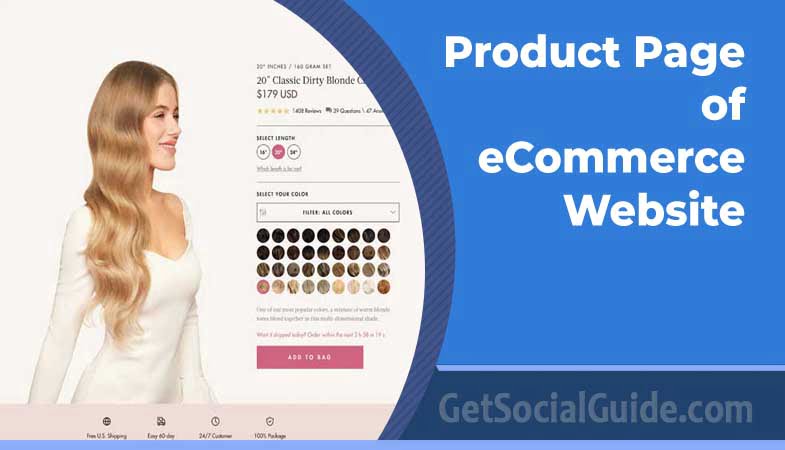
Product Page of eCommerce Website – What to Include
If you have an online business website, product pages are a moment of truth for your business. They either make your visit a customer or not. That’s is not new information. Everyone knows that successful product pages are crucial to successful websites. Why are there so many bad guys?
Every visitor who lands on a product page has incredible difficulty and money to get there. The product sheet isn’t the time to waste that hard work. Your job is to create a user‑friendly interface that gives the visitor what he needs to become a customer.
Why is product page design important? On average, only 3% of online store visits are purchased, and a whopping 69% of shopping carts are abandoned.
To combat these less attractive statistics, you need to offer your customers the most convenient payment method. Here are our main tips on the product page.

⚠️ The High‑Stakes Reality of Product Pages
With only 3% of visits converting and 69% of carts abandoned, your product page is make‑or‑break territory. A poorly executed page doesn’t just lose a sale – it wastes all the marketing budget you spent to bring that visitor to your site. Every element must earn its place.
Why is a product detail page so important?
Your marketing plan must include a well‑designed product description page since this is the page that converts visitors into customers. Giving customers more details about the product they are interested in is crucial; otherwise, how would they know what size it is or what features it has?
Customers will be more dubious about your products if you don’t have an ecommerce product description page, and they might decide not to add anything to their online shopping carts.
98 percent of consumers, according to Shiprocket, stop making a purchase if the product information is unreliable or inaccurate. Not to mention, thorough product descriptions reduce the possibility of client complaints and returns.
The ultimate objective is to provide consumers and potential purchasers with all the information they require to make an informed decision. We’re discussing particular product information, advantages, key characteristics, social proof, and more, which we will go into more depth about below.
You must get the essential elements of your product description pages perfect because they are a crucial page for initiating the purchasing process and generating sales.
abandon purchase if product info is unreliable
average cart abandonment rate
average e‑commerce conversion rate
9 Proven Tips for Product Page Success
This article has nine tips for creating store product pages that lead to the top tier. These are the basics that have to be applied and tweaked regularly.
Tip #1: Focus on Your Product Name & Descriptions
When crafting product descriptions, it is crucial to include relevant details to help buyers find the products easily. However, the primary focus should be on highlighting how the products will benefit the consumers. Understanding your audience is key – their needs, problems, desires, and the language they use to express them. Your product descriptions should be tailored to address their needs, concerns, and wishes.
Rather than simply listing features like size, weight, or battery life, emphasize how these features positively impact the buyer’s experience. For example, instead of stating “This smartphone has a large battery that lasts for 12 hours,” you could write, “Stay connected all day without worrying about battery life, thanks to the long‑lasting 12‑hour battery.”
To effectively appeal to your audience, consider the following tips when writing product descriptions:
- Address Pain Points: Identify the common challenges or problems your target audience faces and explain how your product provides solutions.
- Showcase Benefits: Clearly outline the benefits of your product and how it enhances the buyer’s life.
- Use Relatable Language: Speak the language of your target audience. Use words and phrases they use.
- Create a Story: Craft a narrative around your product to evoke emotions and engage buyers.
- Use Social Proof: Incorporate customer reviews, testimonials, or ratings to reinforce value.
- Focus on Unique Selling Points (USPs): Highlight what sets your product apart from competitors.
- Keep it Clear and Concise: Avoid overwhelming the reader with excessive information.
✍️ Pro Tip: Use Bullet Points for Scannability
Most users scan, not read. Use bullet points to break up long paragraphs. Place the most important benefits at the top. A well‑structured description can increase time on page and improve conversion rates by up to 20%.
Tip #2: Optimize Your Product Feature Image
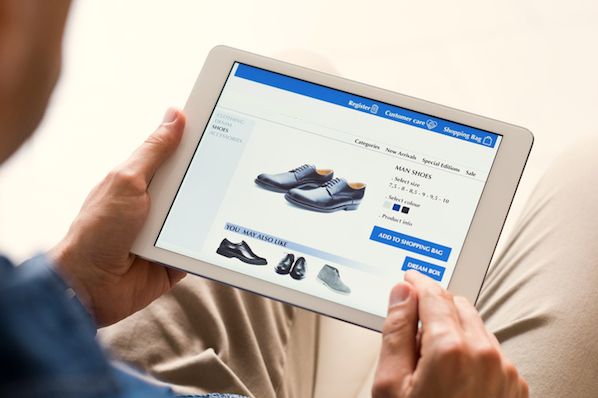
The most crucial element in designing e‑commerce product pages is your functional image. It is a medium to long eye view of your product. Imagine what a page about a commercial product might look like with a poorly lit and pixelated image, or even without a picture!
Would you trust a business that cannot photograph their products properly?
Your main image can excite or scare visitors as it gives them a first impression and helps them decide whether to keep looking. A sanded image with a white or light background, a perfectly centered image, and smooth shadows or no shadows work best.
Tip #3: Add Product Video
Video plays a vital role in converting businesses online. Since buyers cannot physically examine an item in online stores, they can only trust visuals. A product video helps potential customers understand the product better.
The importance of product videos is reflected in the fact that 92% of shoppers say pictures influence their buying decisions and are likely to be purchased by around 64% of users after watching a product video.
WooCommerce Product Video
The WooCommerce Product Video Plugin allows you to add videos to product pages. The product’s video plug‑in can transmit incredible information very quickly.
When you showcase your product in videos, customers get a lot more information about what it looks like. You can also find an emotional response and subconsciously tell customers how they feel about it.
Buyers of online stores are very concerned about the quality of products when buying online. They are not sure if the product meets your expectations.
The WooCommerce product video removes your doubts and trusts the quality of the product. That’s why shoppers feel more comfortable shopping after watching a video. It enhances the awareness of the brand. People understand that a company is reputable and not a scam. The higher you gain their trust, the more sales you will make.
say images influence purchase decisions
more likely to buy after watching a video
Tip #4: Show Clear Pricing
Where is the price on your product page? Above the brochure
Prices should always be marked at the top of the page – don’t let buyers find out how much your products are worth!
No one buys a product without knowing in advance how much it will cost. It is therefore recommended to place it at the top of the page. Usually, it would help if you put the product name or the Add to Cart button.
No matter how good quality your products contain, people want to know the price before buying it. So it is wise to show the prices on the product page as clearly as possible!
💰 Pro Tip: Highlight Discounts and Savings
If a product is on sale, show the original price crossed out and the new price in a contrasting color (often red or green). Display the percentage saved (e.g., “Save 20%”) near the price. This creates urgency and reinforces value.
Tip #5: Prioritize Page Speed
Food sheets should be fluffy and responsive. Weak hands can destroy self‑confidence and increase impatience. Both become killers. Avoid overly styled pages as they load quickly and respond even faster. Nordstrom is an example of a website doing serious work on a product page.
According to Google, as page load time goes from 1 second to 3 seconds, the probability of bounce increases by 32%. For e‑commerce, every second of delay can cost you 7% in conversions. Compress images, minify code, and use a content delivery network (CDN) to keep your product pages lightning fast.
Tip #6: Create Persuasive Calls‑to‑Action
Call‑to‑action buttons are the primary part of a customer’s journey from the point of view to purchase. The primary purpose of your product page is to get customers to click on your call to action. So it’s worth taking the time to fix it.
Without a call to action, shoppers cannot add their favorite items to their cart, which means you will lose their purchases – which is not ideal for making a profit!
So your call to action must be at the top of the page – easy to see, easy to click, and easy to understand.
🖱️ Pro Tip: Use Action‑Oriented Text
Avoid generic “Add to Cart” labels. Test phrases like “Buy Now,” “Get Yours Today,” or “Add to Bag – Only 3 Left!” The button should stand out with a contrasting color and be large enough to tap easily on mobile.
The reality is that people trust their peers more than companies, advertisers, and marketers.
Vendors plan to sell products that are more likely to mitigate benefits and alleviate problems. Colleagues tend to focus more on discussing products.
That’s why social proof, such as customer reviews, is so important. The commonly touted statistic is that user reviews are twelve times more potent than marketing claims.
And while the number itself may not be exact, customer reviews are essential for every eCommerce page.
Display star ratings, number of reviews, and actual review snippets prominently. Consider adding a “Reviews” tab or section near the top of the page.
Tip #8: Turn One‑Time Shoppers into Loyal Customers
Lastly, conversions only go so far in e‑commerce. Lots of products are affordable so in order to gain ROI from your marketing efforts there needs to be a large sum of transactions that occur on a regular basis. All e‑commerce marketers should be thinking of ways to make their customers come back time and time again.
Haase told me about one of his largest e‑commerce clients, “The number one thing they spend their time on is tactics to make people come back. This is their job,” says Haase. “How can I get someone to buy more stuff? You need to answer that question, which comes down to your own creativity and strength of your business.” Haase recommends trying to build a relationship with each and every customer through new, interesting, and fun experiences.
One company that Haase recommends learning from is BetaBrand: “They’re always coming up with new campaigns. They also know their persona and know what they’re looking for. Unless that’s happening, none of your marketing is going to do anything.”
Even just visiting BetaBrand’s site for the first time it’s clear that they do a lot of marketing to not only engage with their current customers but also gain new customers through creative tactics. See the example below where they’re giving customers a $25 credit for each friend they refer to, as well as the new customer $25 off on their first purchase.
Tip #9: Test and Optimize Relentlessly
Once you have implemented some of the product page elements mentioned earlier, you can proceed with A/B testing to determine the optimal format for increasing conversions on your pages.
At a high level, the conversion rate optimization (CRO) process should follow these principles:
- Be Data‑Based: A/B testing should always be data‑driven and not based on random choices or gut feelings. Utilize data from analytics, heat maps, and user testing to identify the areas with the most potential for increasing the conversion rate.
- Formulate Hypotheses: Based on the data, create hypotheses about which elements or changes might improve conversion rates. Test these hypotheses through A/B testing and statistically evaluate the results to make informed decisions.
- Be Structured: Start with the areas that have the highest potential for improving conversion rates. Test one element at a time, evaluate the results, and make necessary adjustments. Then move on to the next most important area and repeat the process.
- Be Iterative: Conversion rate optimization is an ongoing process and not a one‑time activity. After identifying a winning variation in an A/B test, conduct another A/B test where the winner is compared to another potential optimization. The more you iterate and refine, the more you will see your conversion rate improve over time.
By following these principles, you can continually optimize your product pages and enhance the user experience, leading to higher conversion rates and improved overall performance of your e‑commerce website. A/B testing allows you to make data‑driven decisions and ensure that your efforts are focused on the elements that have the most significant impact on conversions.
| Tip | Key Action | Impact on Conversion |
|---|---|---|
| 1. Descriptions | Focus on benefits, not just features | High |
| 2. Main Image | Use high‑res, centered, clean background | Very High |
| 3. Video | Add product demo or explainer video | High |
| 4. Pricing | Display clearly at top; highlight savings | Medium |
| 5. Speed | Optimize images, minify code | High |
| 6. CTA | Use contrasting, action‑oriented buttons | Very High |
| 7. Social Proof | Show reviews, ratings, testimonials | High |
| 8. Loyalty | Encourage repeat purchases (referrals, etc.) | Long‑term |
| 9. Testing | A/B test continuously | Compounding |
Mobile Optimization & SEO for Product Pages
With over 60% of e‑commerce traffic coming from mobile devices, your product pages must be fully responsive. Thumb‑friendly buttons, readable font sizes, and fast loading on cellular networks are non‑negotiable. Google also uses mobile‑first indexing, meaning your mobile page determines your search ranking.
SEO best practices for product pages:
- Use unique, keyword‑rich product titles and meta descriptions.
- Include structured data (schema.org) for products to enable rich snippets in search results (price, availability, reviews).
- Optimize image file names and alt text with relevant keywords.
- Ensure your URLs are clean and include the product name.
- Internal linking from category pages and related products boosts SEO.
📱 Mobile Warning: Test on Real Devices
Don’t rely only on browser resizing. Test your product pages on actual smartphones and tablets. Check that buttons are tappable, text is readable without zooming, and images load quickly on 4G connections. A poor mobile experience will kill conversions.
FAQs on Product Pages
What is a product detail page (PDP)?
A PDP, or product detail page, is a web page on an e‑commerce website that offers details about a particular product.
What are PLP and PDP?
An individual product’s details are included on a Product Detail Page (PDP). All the items that fall under a certain category or those that have been sorted are simply listed on a product listing page (PLP).
What makes a great product page?
A excellent product page will have all the details a user is searching for, presented in an interesting and clear manner. For more ideas, see our template below.
Putting It All Together
Product pages can create or destroy your sites. As a UX specialist, you need to create an experience that turns as many visitors as possible into customers. Trying and testing these nine tips will help you identify the best conversion drivers on your website’s product pages.
Do you still have any useful tips or websites with high‑quality product pages? Let us know in the comments. If you tested any of these tips on your website, come back and let us know how they worked for you. We hope you find that conversions increase with customer satisfaction. Mission accomplished!






you’re in reality a excellent webmaster. The site loading speed is incredible. It kind of feels that you’re doing any distinctive trick. Furthermore, The contents are masterpiece. you’ve done a fantastic activity on this subject!
thanks for nice comments keep reading and sharing
Thanks for one’s marvelous posting! I actually enjoyed reading it, you’re a great author.I will ensure that I bookmark your blog and will eventually come back sometime soon. I want to encourage you to definitely continue your great writing, have a nice holiday weekend!
Thanks for nice comments
nice post
thanks keep reading and sharing
Nice article. Thank you for sharing with us.
thanks keep reading and sharing
This is my first comment here so I just wanted to give a quick shout-out and tell you I truly enjoy reading your posts.
This is my first time commenting here, so I just wanted to say hello and tell you how much I enjoy reading your stuff.
Thanks keep reading and sharing
To optimize SEO For Ecommerce Product Pages, make sure you choose product-focused keywords that your potential customers will probably be searched
thanks keep reading and sharing
I would love to hear about your experience. Sharing your insights and success stories will not only help others but also serve as a valuable learning opportunity for everyone.