

How Hackathon Helps Create Brand Value: The Ultimate Guide for Modern Brands
A hackathon—a combination of ‘hack’ and ‘marathon’—represents more than just a tech event; it’s a strategic brand-building powerhouse in today’s innovation-driven economy. Originally conceived as intensive coding sessions, hackathons have evolved into sophisticated brand value creation tools that can transform company culture, drive innovation, and position brands as industry leaders. This comprehensive guide explores how forward-thinking companies leverage hackathons to build tangible brand value, attract top talent, and stay ahead in competitive markets.

The Modern Hackathon: Beyond Code to Brand Building
A hackathon is a high-energy, time-bound event where diverse professionals collaborate intensively to solve problems or create innovative solutions. The term combines ‘hack’ (referring to creative problem-solving) and ‘marathon’ (suggesting endurance and persistence). These events, also known as hack days, code fests, or datathons, have evolved from niche tech gatherings to mainstream business strategies for driving innovation and building brand equity.
The first recorded hackathon was the Open BSD hackathon held on June 4, 1999, in Calgary, Canada. Today, hackathons have expanded far beyond their tech origins. Organizations across healthcare, finance, education, and even government sectors now use hackathons as strategic tools for problem-solving and innovation. What began as developer gatherings have transformed into sophisticated brand-building platforms that deliver measurable business value beyond immediate technical solutions.
🚀 Pro Tip: The 2024 Hackathon Advantage
In today’s hybrid work environment, hackathons serve dual purposes: they drive innovation while rebuilding team cohesion. Consider combining physical and virtual elements to create “hybrid hackathons” that leverage the energy of in-person collaboration with the reach of remote participation. This approach maximizes both innovation output and brand exposure.
6 Types of Hackathons for Brand Value Creation
Modern organizations deploy various hackathon formats depending on their strategic objectives. Understanding these types helps brands select the right approach for their specific brand-building goals:
1. Internal Innovation Hackathons
These closed events engage existing employees across departments to solve internal challenges or develop new products. Internal hackathons boost employee engagement, foster innovation culture, and often yield immediate business improvements. Companies like Google and Facebook regularly run internal hackathons that have produced features used by billions of users.
2. External/Open Hackathons
These public events invite developers, designers, and problem-solvers from outside the organization. Open hackathons serve as powerful talent recruitment tools and brand awareness platforms. They position the hosting brand as an industry leader committed to innovation and community building.
3. Demographic-Specific Hackathons
Targeted events for specific groups (women in tech, student developers, underrepresented communities) demonstrate corporate commitment to diversity and inclusion. These hackathons build brand affinity with specific demographics while accessing unique perspectives and talent pools.
4. Product Development Hackathons
Focused on creating specific applications or solving particular technical challenges, these events accelerate product development while generating buzz around new technologies. Many successful products—including Twitter’s original prototype, GroupMe, and Zapier—emerged from hackathon environments where teams developed applications under time pressure.
5. Virtual/Online Hackathons
Leveraging collaborative platforms like Zoom, Slack, and GitHub, virtual hackathons enable global participation without geographical constraints. These events expanded dramatically post-2020 and offer cost-effective ways to engage international talent while positioning brands as digitally progressive.
6. Theme-Based Hackathons
Focused on specific challenges like sustainability, healthcare innovation, or financial inclusion, theme-based hackathons align brand values with social impact. They demonstrate corporate responsibility while solving meaningful problems that resonate with modern consumers.
How Hackathons Work: The Modern Framework
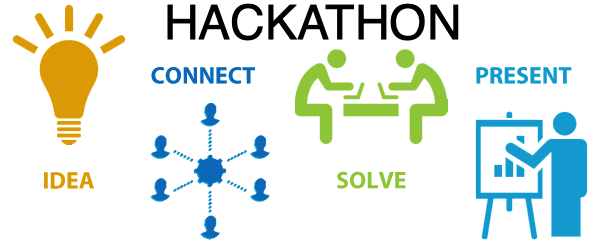
Successful hackathons follow specific principles that maximize innovation while delivering brand value:
- Intensive Time Compression: Typically 24-48 hours of focused work creates urgency that breaks conventional thinking patterns and accelerates innovation cycles.
- Collaborative Environment: Cross-functional teams combine diverse skills and perspectives, often yielding breakthrough solutions that wouldn’t emerge in siloed departments.
- Competitive Energy: Prize structures and recognition motivate participants to push creative boundaries, while the competitive atmosphere mirrors real-world market dynamics.
- Resource-Rich Setting: Providing necessary tools, mentors, and APIs enables rapid prototyping and validation of ideas that might otherwise take months to develop.
🚀 Pro Tip: The “Goldilocks” Duration
Research shows 36-hour hackathons often yield optimal results—long enough for substantial development but short enough to maintain intensity. Consider starting Friday evening and ending Sunday morning to maximize participation from working professionals.
To organize a successful hackathon that builds brand value, careful planning across logistics, theme selection, participant recruitment, and follow-through is essential. The most effective hackathons balance structure with creative freedom.
⚠️ Critical Warning: Budget Realistically
Hackathons often cost 2-3 times more than initial estimates. Factor in venue, food, prizes, marketing, and staff time. For a 100-person event, budget at least $25,000-$50,000. Virtual hackathons reduce venue and food costs but require investment in platforms and digital marketing.
The Modern Hackathon Schedule: Maximizing Brand Impact
Contemporary hackathons follow refined schedules designed to maximize innovation output while enhancing brand perception:
| Phase | Duration | Brand Value Opportunity | Key Activities |
|---|---|---|---|
| Pre-Event Marketing | 4-8 weeks | Build anticipation, position as innovation leader, attract talent | Theme announcement, social media campaigns, partner outreach |
| Opening Ceremony & Theme Reveal | 2-3 hours | Set brand narrative, demonstrate thought leadership | Keynote speeches, challenge presentations, networking |
| Team Formation & Ideation | 3-4 hours | Showcase company culture, facilitate networking | Icebreakers, pitch sessions, team matching |
| Development Sprint | 24-36 hours | Create content for social media, highlight innovation process | Mentor sessions, workshops, live streaming of progress |
| Final Presentations | 3-4 hours | Showcase solutions, generate PR opportunities | Demo sessions, investor pitches, media interviews |
| Awards & Recognition | 1-2 hours | Reinforce brand values, create memorable experiences | Prize ceremony, participant testimonials, sponsor recognition |
| Post-Event Follow-up | 4-12 weeks | Sustain engagement, implement solutions, measure ROI | Solution implementation, participant surveys, case studies |
🚀 Pro Tip: The “Golden Hour” Strategy
The first hour after team formation is crucial. Provide structured brainstorming frameworks (like Design Sprint methodologies) to guide teams toward viable concepts quickly. This prevents wasted time and increases the quality of final outputs.
How Hackathons Create Tangible Brand Value
Brand value encompasses how customers, employees, and the market perceive an organization. Hackathons contribute to this perception through multiple mechanisms that strengthen brand positioning in the competitive market:
1. Innovation Leadership Positioning
Hosting hackathons signals that your brand invests in forward-thinking solutions and embraces emerging technologies. This positions your company as an industry innovator rather than a follower, increasing credibility with customers, investors, and potential hires.
2. Enhanced Employer Brand
Hackathons attract top talent by showcasing your company as an exciting, innovative workplace. Participants experience your culture firsthand, while the event itself becomes a powerful recruitment tool. Successful hackathons can reduce hiring costs by building pipelines of pre-vetted candidates.
Well-executed hackathons generate organic media coverage and social media buzz. The event creates shareable content—from participant experiences to innovative solutions—that amplifies your brand message across multiple channels without traditional advertising costs.
4. Customer-Centric Innovation
By focusing hackathons on real customer problems, brands demonstrate commitment to user needs. Solutions developed during these events often address pain points more effectively than traditional R&D processes, leading to products that resonate strongly with target audiences.
Hackathons addressing social, environmental, or community challenges showcase brand values in action. These events build goodwill and differentiate your brand in markets where consumers increasingly prefer companies with genuine social impact initiatives.
6. Cross-Functional Collaboration
Internal hackathons break down organizational silos, fostering collaboration between departments that might not normally interact. This improves internal communication, sparks innovative ideas, and creates a more agile, responsive organizational culture.
7. Rapid Prototyping & Cost Efficiency
Hackathons compress development cycles from months to days, allowing brands to test concepts with minimal investment. This lean innovation approach reduces risk while accelerating time-to-market for promising ideas.
8. Partnership & Ecosystem Development
Hackathons facilitate connections with startups, academic institutions, and technology partners. These relationships can evolve into strategic alliances that extend your brand’s capabilities and market reach.
Real-World Hackathon Success Stories
Originally developed during an internal hackathon, the “Like” button became one of social media’s most iconic features. This simple innovation fundamentally changed user engagement across the platform and demonstrated how hackathon ideas can achieve global impact.
Airbnb’s Photography Initiative
An Airbnb hackathon produced the idea to offer professional photography services to hosts. This initiative significantly improved listing quality, increased bookings, and became a core differentiator in the competitive travel marketplace.
Slack’s Platform Ecosystem
Slack’s annual hackathons have generated numerous integrations and features that expanded their platform’s capabilities. These innovations strengthened Slack’s position as more than just a messaging tool but a comprehensive workplace ecosystem.
Pfizer’s COVID-19 Solutions
During the pandemic, Pfizer hosted hackathons that accelerated development of tools for vaccine distribution and patient communication. These initiatives demonstrated corporate agility while addressing urgent global health challenges.
Organizing Brand-Focused Hackathons: Best Practices
Pre-Event Strategy
- Align with Brand Objectives: Ensure hackathon themes directly support broader business goals and brand positioning
- Assemble Cross-Functional Team: Include marketing, HR, product, and engineering in planning
- Secure Executive Sponsorship: Leadership involvement signals organizational commitment
- Develop Clear Success Metrics: Define how you’ll measure brand impact beyond immediate outputs
During the Event
- Create Shareable Moments: Design photo opportunities, testimonials, and demo sessions
- Provide Branded Resources: Swag, tools, and environments should reflect brand identity
- Facilitate Media Coverage: Prepare press kits and arrange interviews with key participants
- Document the Journey: Capture behind-the-scenes content for post-event marketing
Post-Event Follow-through
- Maintain Participant Engagement: Continue communication through newsletters or communities
- Implement Winning Solutions: Demonstrate commitment by actually deploying hackathon outcomes
- Share Success Stories: Publicize results through case studies, blogs, and social media
- Measure Long-term Impact: Track how hackathon participation affects recruitment, innovation metrics, and brand perception
⚠️ Critical Warning: The Implementation Gap
70% of hackathon projects never progress beyond the event. To avoid this, allocate dedicated resources (budget and personnel) for post-hackathon development. Create a clear pathway for promising ideas to receive further support and development.
Measuring Hackathon ROI: Beyond Immediate Outputs
To justify ongoing investment, brands must measure hackathon impact across multiple dimensions:
| Metric Category | Specific Measurements | Brand Value Impact | Measurement Tools |
|---|---|---|---|
| Innovation Output | Number of prototypes, patent filings, implemented solutions | Direct contribution to product pipeline and competitive advantage | Project tracking software, IP databases |
| Talent Engagement | Participant satisfaction, follow-up job applications, referral rates | Enhanced employer brand and reduced recruitment costs | Survey tools, ATS analytics |
| Brand Awareness | Media mentions, social media reach, website traffic spikes | Increased visibility and market positioning | Google Analytics, social listening tools |
| Cultural Impact | Employee engagement scores, internal collaboration metrics | Stronger organizational culture and innovation readiness | Internal surveys, collaboration platform analytics |
| Business Value | Cost savings from implemented solutions, new revenue streams | Direct financial impact and innovation efficiency | Financial tracking, ROI calculators |
🚀 Pro Tip: The 30-60-90 Day Measurement Framework
Track hackathon impact at three intervals: 30 days (immediate feedback and media coverage), 60 days (project progression and talent pipeline development), and 90 days (implementation results and cultural changes). This provides a comprehensive view of ROI beyond the event itself.
Pro Tips & Warnings: Hackathon Mastery
🚀 Advanced Pro Tips
1. The “Pre-Hack” Preparation
Provide datasets, APIs, and problem statements 1-2 weeks before the event. This allows participants to research and form ideas beforehand, leading to higher-quality outputs during the hackathon itself.
2. Diverse Judging Panels
Include judges from different backgrounds: technical experts, business strategists, designers, and even end-users. This ensures solutions are evaluated from multiple perspectives, increasing their real-world viability.
3. Post-Event Incubation
Offer mentorship and small grants to winning teams to continue development for 3-6 months post-event. This dramatically increases implementation rates and demonstrates genuine commitment to innovation.
4. Community Building
Create a permanent online community (Slack/Discord) for all hackathon participants. This turns a one-time event into an ongoing innovation network that continues delivering value.
5. Corporate-Startup Collaboration
Invite startups to participate alongside internal teams. This creates unique learning opportunities and potential partnership or acquisition opportunities.
⚠️ Critical Warnings
1. Burnout Prevention
Mandate breaks and provide healthy food options. 48-hour coding marathons can lead to exhaustion and poor-quality outputs. Consider structured sleep schedules for longer events.
2. Intellectual Property Clarity
Have lawyers draft clear IP agreements before the event. Ambiguity around ownership can lead to legal disputes that damage brand reputation.
3. Diversity Failures
Hackathons dominated by one demographic (typically young male developers) send exclusionary messages. Actively recruit diverse participants through targeted outreach and partnerships.
4. Solution Sustainability
Many hackathon solutions are technically impressive but unsustainable in real-world contexts. Include business model and scalability requirements in judging criteria.
5. Over-Hyping Results
Avoid exaggerating hackathon outcomes. The tech community quickly identifies “innovation theater” – events designed for PR rather than genuine problem-solving.
Conclusion: Hackathons as Strategic Brand Investments
Modern hackathons represent far more than technical exercises—they’re strategic investments in brand value creation. When executed thoughtfully, hackathons deliver multidimensional returns: they position brands as innovation leaders, attract and retain top talent, generate media visibility, foster customer-centric solutions, and create tangible business improvements.
The most successful organizations treat hackathons not as isolated events but as integral components of their innovation ecosystems and brand-building strategies. Whether conducted internally to boost employee engagement or externally to showcase thought leadership, hackathons offer unique opportunities to demonstrate brand values in action while solving real business challenges.
🚀 Final Pro Tip: The Iterative Approach
Start small with internal hackathons to build organizational capability before scaling to large public events. Each hackathon should inform and improve the next, creating a virtuous cycle of innovation and brand building.
As competition intensifies across all industries, the ability to innovate rapidly and visibly becomes increasingly valuable. Hackathons provide structured yet flexible frameworks for achieving these objectives while building lasting brand equity. For organizations seeking to strengthen their market position, attract exceptional talent, and drive meaningful innovation, incorporating hackathons into brand strategy represents a powerful approach with proven returns.






Thank you for Hackathon Helps Create Brand Value
You’re welcome! I’m glad you found the article helpful. If you have any more questions or need further assistance, feel free to ask. I’m here to help!