ClickFunnels vs Leadpages: Which One is Right for Your Business?
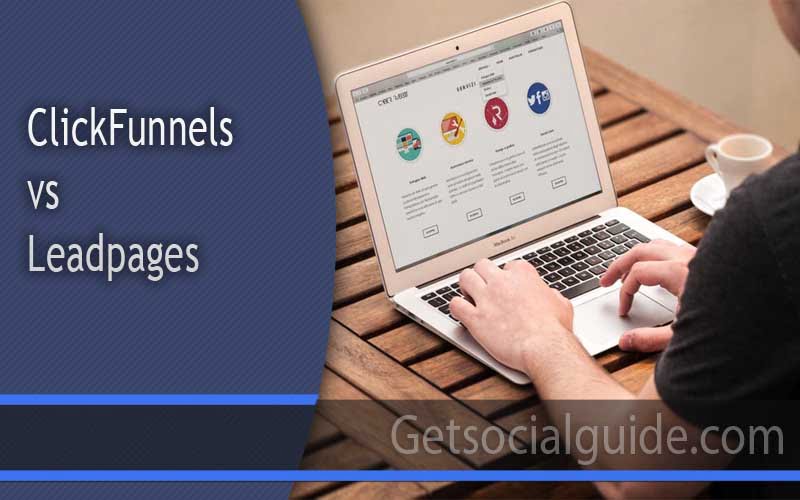
Visual comparison of ClickFunnels and Leadpages interfaces showing funnel building versus landing page creation workflows
In today’s hyper-competitive digital marketplace, where every click represents potential revenue and every visitor could become a loyal customer, choosing the right marketing platform isn’t just important—it’s critical to your business survival and growth.
Online marketing has become an essential part of running a successful business in the digital age, with landing pages and sales funnels emerging as two of the most powerful tools that help businesses systematically generate leads and drive conversions. As entrepreneurs and digital marketers seek to optimize their conversion pathways, the debate between comprehensive funnel builders and specialized landing page platforms has intensified.
When choosing between these tools, you are effectively deciding between an “All-in-One Ecosystem” (ClickFunnels) vs. a “Best-of-Breed Stack” (Leadpages + External Email + External CRM). Your decision should hinge on your team’s technical capacity to manage integrations versus your desire for centralized simplicity.
ClickFunnels and Leadpages represent two distinct philosophical approaches to digital marketing success. One offers an all-encompassing ecosystem for building complete customer journeys, while the other provides laser-focused precision for creating high-converting entry points. This detailed comparison will help you navigate this crucial decision, examining not just features and pricing, but strategic alignment with your business model, team capabilities, and long-term growth objectives. Whether you’re launching a new product, building an email list, or creating complex sales sequences, understanding the fundamental differences between these platforms will save you time, money, and frustration.
Key Takeaways for 2026 Strategy:
- ClickFunnels 2.0 excels at complete sales funnel construction with built-in marketing tools, Hubs, and Courses.
- Leadpages specializes in high-speed, high-conversion landing pages and lead capture optimization.
- Pricing reflects different approaches: all-in-one suite vs. specialized tool.
- Page Speed (Core Web Vitals) differs significantly between the two, affecting SEO and ad costs.
- Your business model determines which platform delivers better ROI.
Overview: Core Philosophies and Primary Functions Explained
Understanding the fundamental design philosophy behind each platform is crucial for making the right choice. These aren’t just different tools—they represent different approaches to digital marketing strategy and execution.
ClickFunnels positions itself as a complete sales funnel builder that allows you to create not just landing pages, but entire customer journeys from initial awareness through purchase and into ongoing customer relationship management. It functions as an all-in-one solution for building sales funnels, managing leads, and processing payments. Think of it as a comprehensive marketing operations center where you can design, execute, and track complete conversion systems without needing multiple disconnected tools.
Leadpages, by contrast, operates as a specialized, high-conversion landing page builder with supplementary lead generation tools. Its primary mission is to help you create stunning, high-performing landing pages with maximum efficiency. The platform supplements this core function with robust lead generation tools such as pop-ups, alert bars, and opt-in forms that can be deployed across your entire digital presence.
While both ClickFunnels and Leadpages offer landing page building capabilities, ClickFunnels goes a step further by offering a complete sales funnel building solution. If you are looking to create a complete sales funnel with multiple pages and stages—such as webinar registration pages, sales pages, order forms, upsell sequences, and membership areas—ClickFunnels provides the integrated architecture to build these systems efficiently. Leadpages, while capable of linking pages together, focuses on perfecting individual conversion points rather than managing complex, multi-step sequences.
Deep Feature Analysis: Beyond Basic Comparisons
To truly understand which platform serves your needs, we need to move beyond feature checklists and examine how these features actually work in practice for different business scenarios.
1. ClickFunnels: The Complete Funnel Ecosystem

ClickFunnels is engineered for marketers who think in terms of complete customer journeys rather than individual pages. With the release of ClickFunnels 2.0, the platform has expanded into a full Customer Management System (CMS).
2. Leadpages: The Conversion Optimization Specialist

Leadpages focuses its development resources on perfecting the art and science of lead capture through beautifully designed, psychologically optimized landing pages and conversion tools. In 2026, their focus has shifted heavily toward AI-assisted creation and Page Load Speed.
Detailed Comparison Matrix: 2026 Edition
To help you decide, here is a granular breakdown of the key capabilities of each software:
| Feature Category | ClickFunnels 2.0 | Leadpages |
|---|---|---|
| Primary Focus | Complete sales funnel ecosystem & Business Center | High-converting landing pages & Lead Capture |
| Best For | Multi-step sales processes, Courses, eCommerce | Single-page conversions, PPC Landing Pages |
| Page Load Speed | Good (Improved in 2.0) | Excellent (Industry Leader) |
| AI Writing Assistant | Basic copywriting tools | Advanced AI for Headlines & Imagery |
| Email Marketing | Built-in (Native functionality) | Integrations only (Requires Mailchimp, etc.) |
| Affiliate Management | Yes (Built-in Backpack feature) | No |
| A/B Testing | Funnel-wide testing | Granular Page-level testing |
| Learning Curve | Moderate to Steep | Gentle, Beginner-friendly |
Ease of Use: Learning Curve and Daily Operations
Usability often becomes the deciding factor for teams with limited technical resources or those prioritizing rapid deployment over comprehensive functionality.
ClickFunnels and Leadpages both offer intuitive drag-and-drop page builders that make it possible for users without coding experience to create professional-looking pages. However, their approaches to usability reflect their different philosophical foundations.
ClickFunnels can present a steeper learning curve, particularly for users new to funnel thinking. The interface presents multiple layers of functionality—funnel creation, page building, email automation, affiliate management—all within a single dashboard. While this consolidation is powerful, it can overwhelm beginners who simply want to create a landing page. However, ClickFunnels mitigates this through its “Follow-the-Recipe” approach, providing step-by-step guidance for building specific funnel types. Once users understand the funnel metaphor and workflow, they often find the platform remarkably efficient for building complete marketing systems.
Leadpages has built its reputation on user-friendliness and rapid deployment. The interface is clean, focused, and intuitive, with a clear separation between page creation, widget management, and analytics. Users can typically create and publish their first professional landing page within 30 minutes of signing up. The platform’s design prioritizes simplicity without sacrificing customization depth, making it accessible to complete beginners while still offering advanced options for experienced marketers. For businesses that need to create multiple landing pages quickly for different campaigns, products, or audience segments, Leadpages’ streamlined workflow delivers significant time savings.
Pricing Models and Value Analysis: Investment Versus Return
Understanding the true cost of each platform requires looking beyond monthly fees to consider what additional tools you’ll need, implementation time, and potential return on investment. Prices have adjusted for the 2026 market landscape.
ClickFunnels Pricing Structure
Positioned as a premium, all-in-one marketing solution, ClickFunnels pricing reflects its comprehensive nature:
- Basic Plan (~$147/month): Includes 20 funnels, admin users, 1 domain, and core funnel building features. Suitable for startups.
- Pro Plan (~$197/month): Includes 100 funnels, 3 domains, API access, and the Affiliate Program management. This is the standard for growing businesses.
- Funnel Hacker (~$297/month): Unlimited funnels, 9 domains, and advanced analytics.
Value Proposition: ClickFunnels justifies its higher price point by consolidating multiple marketing functions (page builder, email service provider, affiliate software, membership platform) into a single system.
Leadpages Pricing Structure
Leadpages employs a more traditional SaaS pricing model that scales with feature needs:
- Standard Plan (~$49/month): 1 site, unlimited landing pages & pop-ups, free hosting. Ideal for solo entrepreneurs.
- Pro Plan (~$99/month): 3 sites, online sales and payments, unlimited A/B testing. This represents the sweet spot for most small to medium businesses.
- Advanced Plan (Custom): For agencies requiring master accounts and sub-accounts.
Value Proposition: Leadpages offers a lower initial investment and predictable scaling. Its pricing model assumes you’ll use best-in-class specialized tools for email marketing, CRM, and other functions.
Strategic Capabilities: Funnel Architecture Versus Conversion Precision
When evaluating capabilities beyond basic feature lists, we must consider how each platform enables different marketing strategies and business models. As ClickFunnels is taken into account as an all-in-one sales funnel builder, it offers more features, not simply in comparison with Leadpages but every other platform. That also explains why ClickFunnels could be so popular.
If your traffic strategy relies heavily on Google Ads (PPC) or SEO, Leadpages often has a slight edge due to lighter code and faster server response times, which positively impacts Quality Scores and organic ranking.
Before moving into the detailed evaluation, let’s go through some major features of ClickFunnels and Leadpages first to overview the variations between them.
- Number of features and integration depth: ClickFunnels has more built-in features than Leadpages because it serves for building an entire sales funnel ecosystem. However, Leadpages offers deeper, more specialized integrations with third-party tools in each category (email, analytics, CRM).
- Customizability and design control: Both are excellent web page builders with easy to make use of drag and drop features and custom CSS options. But, Leadpages’ design choices are more optimized and highly customizable for individual page perfection, while ClickFunnels prioritizes funnel workflow efficiency over pixel-perfect design flexibility.
- A/B split testing sophistication: This characteristic of Leadpages allows you to perform unrestricted A/B split testing on each landing page for performance optimization. ClickFunnels offers basic split testing, but Leadpages provides more sophisticated testing capabilities with clearer analytics and implementation workflows.
- Email marketing integration approach: ClickFunnels integrates well with most main email software and features a built-in email responder on Platinum plans, and so does Leadpages through integrations. However, Leadpages doesn’t include an autoresponder like ClickFunnels, instead focusing on seamless connections with specialized email platforms.
- Upsells and Downsells functionality: ClickFunnels allows one-click upsells, downsells, and order bumps for all variations, while Leadpages only includes basic payment features on the Pro plan and doesn’t offer native upsell/downsell sequences.
Implementation Scenarios: Real-World Use Cases
Understanding how each platform performs in specific business scenarios helps clarify which solution aligns with your actual needs:
Ideal ClickFunnels Scenarios
- Digital Course Launches: Gated membership areas and upsell flows.
- eCommerce Funnels: “Free plus shipping” offers with Order Bumps.
- High-Ticket Coaching: Application funnels with automated scheduling.
- Affiliate Programs: Running your own army of affiliates.
Ideal Leadpages Scenarios
- PPC Campaigns: High-speed landing pages for Google Ads.
- Webinar Registration: Simple, high-converting opt-in pages.
- Local Lead Gen: Service pages for dentists, real estate, etc.
- Blog Asset Upgrades: Pop-up boxes for PDF downloads on blogs.
ClickFunnels vs Leadpages: Frequently Asked Questions
Who is ClickFunnels for?
ClickFunnels is designed for digital marketers, entrepreneurs, course creators, and individuals in the marketing business who require a comprehensive funnel visualization tool for creating high-converting landing pages, pre-built webinar or sales funnel templates, and an affiliate program management system. It is also suitable for those who require gated content with membership websites and want an all-in-one solution that minimizes the need for multiple third-party tools.
Who is Leadpages for?
Leadpages is for small business owners, bloggers, freelancers, marketing agencies, and professionals who need a user-friendly landing page builder that can create great landing pages in just a few minutes. Its sales landing page templates are optimized for lead generation and conversion. However, it does not provide pre-made templates for complete sales funnels.
Which is better: ClickFunnels or Leadpages?
The suitability of ClickFunnels or Leadpages depends entirely on the user’s business model, technical comfort, and marketing strategy. For complete funnel construction, choose ClickFunnels. For superior landing page optimization and lead capture, choose Leadpages.
Can I build a complete sales funnel with Leadpages?
While Leadpages can technically be used to build multi-page funnels by creating individual pages and linking them together, it lacks the native funnel management tools, one-click upsell sequences, and integrated checkout systems that make ClickFunnels efficient for this purpose. Building complex funnels with Leadpages requires manual configuration of each step and integration with multiple third-party tools.
Does ClickFunnels help with SEO?
ClickFunnels 2.0 has significantly improved its SEO capabilities compared to the classic version, offering a blog feature and better metadata controls. However, purpose-built websites or specialized pages on Leadpages often still edge out in raw speed and code cleanliness, which are ranking factors.
Is ClickFunnels worth the higher monthly investment?
ClickFunnels delivers value through consolidation rather than individual feature superiority. If you’re currently paying for separate landing page software, email marketing automation, affiliate management, and membership platform fees, ClickFunnels Platinum can actually reduce your overall software expenses while simplifying your marketing operations.
Final Strategic Recommendations and Decision Framework
Making the right choice between ClickFunnels and Leadpages requires honest assessment of your current situation and future goals. Here’s a framework to guide your decision:
Choose ClickFunnels If:
Choose Leadpages If:
Summary: ClickFunnels vs Leadpages – The Strategic Choice
If you aim to create high-converting sales funnels for your business with minimal external dependencies, ClickFunnels is the ideal choice as it provides a dedicated funnel builder with pre-made templates and integrated marketing tools. Although Leadpages can also create linked page sequences, its main focus is on generating leads and improving conversions through optimized landing pages. As a result, setting up a complete funnel with Leadpages requires manual configuration of each component, as there are no pre-built funnel templates available.
Moreover, if you want to include affiliate marketing in your comprehensive digital marketing strategy, ClickFunnels provides an all-in-one solution with its Backpack system, whereas Leadpages does not offer native affiliate management features, requiring integration with third-party tools.
However, if your primary objective is to generate as many qualified leads as possible and create your sales funnels separately using specialized tools for each function, Leadpages delivers superior landing page optimization, faster deployment, and better integration with your existing marketing ecosystem.
Both ClickFunnels and Leadpages are powerful online marketing applications that are highly recommended for monetizing your lifestyle business, scaling your digital presence, and converting visitors into customers. Ultimately, the choice between the two represents a strategic decision about your marketing philosophy: comprehensive control versus specialized excellence. Consider your business goals, team capabilities, existing tool stack, and growth trajectory to select the platform that will not just meet your immediate needs, but accelerate your journey toward sustainable online business success.
Ready to Scale Your Business?
Don’t stay in analysis paralysis. Both platforms offer trials that allow you to test the workflow before committing.