
PWA vs. AMP: The Evolution of Mobile Web Development in 2026 and Beyond
Progressive Web Apps (PWA) and Accelerated Mobile Pages (AMP) were once seen as competing technologies. In 2026, the landscape has shifted dramatically. PWA has emerged as the dominant standard for app-like web experiences, while AMP has largely been deprecated in favor of Core Web Vitals optimization. This comprehensive guide explores how these technologies work, why PWA is winning the long game, and how modern developers can leverage them for superior user engagement, improved SEO performance, and sustainable technical architecture.
The bridge between web and native apps has never been stronger or more essential in the 2026 mobile-first digital landscape.
This guide explores how these technologies work, why PWA is winning the long game, and how you can leverage them for superior user engagement. The transition from traditional mobile websites to progressive web applications represents one of the most significant shifts in web development since the advent of responsive design. Understanding this evolution is critical for businesses, developers, and digital marketers who want to stay competitive in an increasingly mobile-first world where user expectations for speed, reliability, and engagement continue to rise exponentially.
What is a PWA (Progressive Web App)? Understanding the Modern Web Application Paradigm
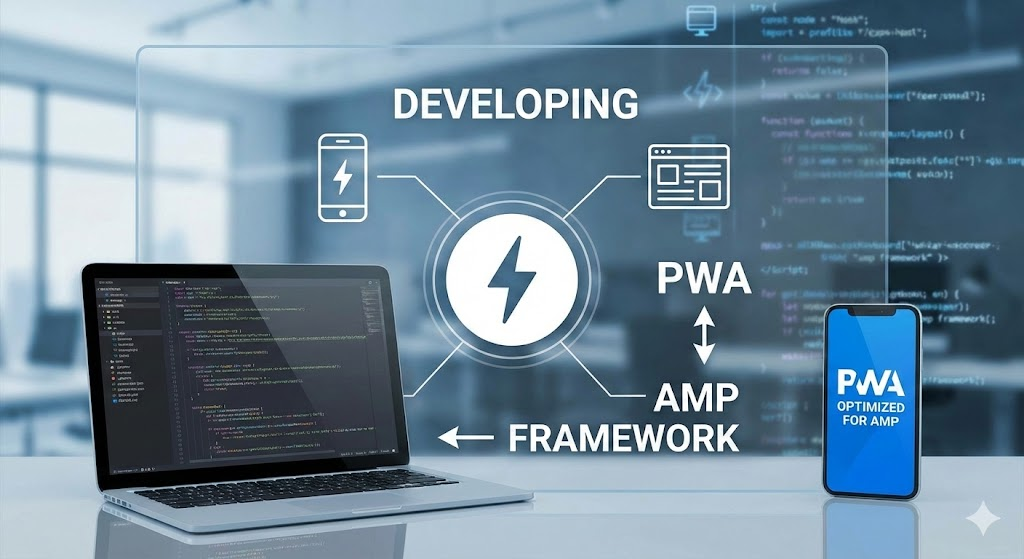
Progressive web apps are a modern approach to technology which encompasses features of both the web browser as well as the features of a mobile application. PWA is like a web app that has native features but lives in the browser. This hybrid approach delivers the best of both worlds: the discoverability and linkability of the web combined with the engagement and performance capabilities previously exclusive to native applications.
When a user visits a web page that is optimized for PWA, the browser hits the user with a prompt “Would you like to add this page to your home screen?” If the user hits yes, the web app gets installed instantly without an app store. This frictionless installation process represents a fundamental shift in how users access digital services, removing the barriers of app store approvals, mandatory updates, and storage concerns that have traditionally limited native app adoption.
Key PWA Features That Define Modern Web Experiences in 2026:
Several major brands including Starbucks, Pinterest, and Twitter (X) use this functionality to bypass app store fees and improve retention. Starbucks reported a 2x increase in daily active users after implementing their PWA, while Pinterest saw a 40% increase in time spent on their platform and a 44% increase in user-generated ad revenue. These results demonstrate the tangible business impact that well-implemented PWA strategies can deliver in competitive digital markets.
What is AMP (Accelerated Mobile Pages)? The Rise and Evolution of Mobile Performance Optimization
AMP is a framework originally designed by Google to help mobile web pages load faster. Its goal was to strip away heavy JavaScript and CSS to deliver near-instant load times, particularly for content-heavy sites like news articles and blogs where speed directly impacts user engagement and retention.
However, since Google removed the “AMP Badge” from search results and prioritized Core Web Vitals as a ranking factor, the necessity of AMP has declined. Today, a well-optimized standard HTML page can be just as fast as AMP without the restrictions. The evolution of web performance optimization has shifted from framework-specific solutions to holistic performance strategies that prioritize user experience metrics over compliance with specific technical implementations.
AMP is technically still supported, but most developers now prefer building fast, standard websites using frameworks like Next.js, Astro, or SvelteKit, which offer comparable speed without locking you into Google’s ecosystem. The 2026 web development landscape emphasizes performance by default rather than performance through restriction, with modern frameworks incorporating best practices that previously required AMP’s constraints.
The Historical Context: Why AMP Was Created and Why It’s Declining
AMP was launched in 2015 as a response to the mobile web performance crisis, when the average mobile webpage took 19 seconds to load on a 3G connection. By restricting HTML, CSS, and JavaScript usage, AMP achieved remarkable speed improvements that significantly enhanced the mobile browsing experience, particularly in emerging markets with limited connectivity.
However, several factors have contributed to AMP’s declining relevance in 2026:
| Factor | Impact on AMP | Modern Alternative |
|---|---|---|
| Improved Network Infrastructure | 5G and widespread broadband reduced the need for extreme optimization | Standard performance optimization techniques |
| Browser Performance Improvements | Modern browsers handle complex sites more efficiently | Native browser optimizations |
| Developer Tools Evolution | Better tooling makes standard optimization easier | Lighthouse, WebPageTest, Core Web Vitals |
| Search Algorithm Changes | Google shifted focus to Core Web Vitals | Performance optimization without AMP restrictions |
The Speed Equation: DOM vs. Full Page Load in Modern Web Performance
The speed of loading up of any web page is the greatest factor in deciding the bounce rate. Speed depends upon two time factors basically, but modern performance analysis has evolved to include several additional critical metrics that together determine user experience and search ranking potential.
- DOM (Document Object Model) Ready Time: The measurement of time it takes to load up the HTML structure. If the HTML is bloated, the site feels sluggish instantly. Modern best practices emphasize minimal, semantic HTML that browsers can parse and render efficiently, with many frameworks now implementing partial hydration and island architecture to optimize this critical metric.
- Full-Page Load Time: The time taken to load images, videos, custom fonts, and scripts. A lower DOM ready time and a lower full-page load-time contribute to a lower bounce rate. However, in 2026, we measure not just when elements load but when they become usable, leading to metrics like First Contentful Paint (FCP) and Largest Contentful Paint (LCP).
- Time to Interactive (TTI): Measures how long it takes for the page to become fully interactive. This metric has become increasingly important as web applications become more complex and JavaScript-heavy.
- Cumulative Layout Shift (CLS): Measures visual stability by quantifying unexpected layout shifts. This metric directly impacts user experience and has become a critical ranking factor in search algorithms.
The 2026 Performance Optimization Stack
Modern web performance optimization utilizes a comprehensive toolkit that extends far beyond simple page speed improvements:
How Does AMP Help PWA? Understanding the “PWAMP” Hybrid Strategy
In short, PWA is the fusion of the best app features with the web browser. The entire credit for which should be given to Service Workers, a script that runs in the background and is the backbone for every PWA. Service workers enable capabilities like offline functionality, push notifications, and background synchronization by acting as a proxy between the web application, the browser, and the network.
The Challenge: Service workers are great for repeat visits (caching), but the first visit still needs to be fast. This is where the AMP + PWA hybrid model shines, particularly for content discovery scenarios where users arrive via search engines or social media links and need immediate access to content without the overhead of service worker installation.
Ensures the first load is instant by delivering a stripped-down, ultra-fast page optimized for initial content discovery. This addresses the “cold start” problem where service workers haven’t yet been installed to cache resources.
Takes over after the first click, installing the Service Worker to enable offline browsing and app-like interactivity for subsequent clicks. This transforms the initial content page into a fully-featured application for returning users.
3 Advanced Implementation Strategies for AMP-PWA Integration:
- AMP as a PWA Entry Point: The entire site is built in AMP but uses a Service Worker for offline support. This approach prioritizes initial load speed while still providing progressive enhancement for returning users. The AMP framework handles the initial rendering, while service workers enhance subsequent interactions.
- AMP to PWA Transition: The landing page is AMP (for speed), but clicking a link transitions the user into a full PWA (for features). This strategy uses AMP as a lightweight entry point that “warms up” the PWA installation process, gradually introducing more complex functionality as users engage more deeply.
- AMP in PWA Shell Architecture: Embedding AMP documents inside a PWA shell to ensure content loads instantly within the app frame. This approach maintains the PWA’s app-like interface while leveraging AMP’s performance for dynamic content loading, creating a seamless hybrid experience.
Technical Implementation Considerations for 2026:
Top 5 Frameworks to Build a PWA in 2026: Ecosystem Analysis and Selection Criteria
Given below is the list of the top frameworks developers use today, along with detailed analysis of their strengths, weaknesses, and ideal use cases for modern PWA development. The 2026 framework landscape has matured significantly, with each major player offering robust PWA capabilities out of the box or through well-documented plugin ecosystems.
| Framework | Best For | Learning Curve | 2026 PWA Features | Performance Profile |
|---|---|---|---|---|
| React.js + Next.js | Large ecosystems, SEO-focused applications, and enterprises requiring robust tooling | Medium to High | Automatic static optimization, incremental static regeneration, built-in image optimization | Excellent with proper configuration; requires optimization for Core Web Vitals |
| Vue.js + Nuxt.js | Rapid development, developer experience, and progressive enhancement strategies | Easy to Medium | Automatic code splitting, modern image handling, hybrid rendering modes | Very good out of the box; excellent for achieving high Core Web Vitals scores |
| Angular | Enterprise-grade applications, TypeScript enthusiasts, and teams requiring strong conventions | Steep | Service worker support via @angular/pwa, ahead-of-time compilation, lazy loading | Good with optimization; bundle sizes can be larger than competitors |
| Ionic Framework | Cross-platform mobile apps, teams with native app experience, capacitor integration | Easy | Native hardware access via Capacitor, pre-built UI components, app store deployment | Good for mobile; can be heavier than framework-specific solutions |
| Svelte/SvelteKit | Performance-critical applications, small bundle sizes, and simplicity-focused development | Easy | Zero-runtime overhead, automatic code splitting, adapter-based deployment | Exceptional; consistently achieves excellent Core Web Vitals with minimal optimization |
Framework Selection Criteria for 2026 PWA Development:
Flaws of AMP in the Modern Web: Why Developers Are Moving Away in 2026
AMP helps make web pages faster, but it comes with adverse effects that have led to its decline in the 2026 development landscape. While AMP achieved its initial goal of improving mobile web performance, its architectural constraints have become increasingly problematic as web capabilities have expanded and user expectations have evolved beyond simple content delivery.
⚠️ Why Developers Are Dropping AMP in 2026:
- Design & Creativity Restrictions: AMP limits CSS and JavaScript, making it difficult to create unique, branded experiences that differentiate in competitive markets. The constrained component library often results in homogenized designs that fail to reflect brand identity or support innovative interaction patterns.
- URL Confusion & Brand Dilution: AMP pages are often served from Google’s cache (google.com/amp/yoursite.com), which confuses users and hurts branding. This URL obfuscation makes it difficult for users to identify the content source and reduces direct traffic attribution for publishers.
- Ad Revenue & Monetization Impact: Some publishers reported lower ad revenue on AMP pages due to restricted ad formats and limited customization options for ad placements, viewability tracking, and programmatic advertising integration.
- Development Overhead & Maintenance Burden: Maintaining separate AMP and non-AMP versions of content creates development overhead, increases testing requirements, and complicates content management workflows, particularly for dynamic or personalized content.
- Limited Framework Integration: AMP’s constraints make integration with modern JavaScript frameworks challenging, forcing developers to choose between AMP compliance and leveraging the productivity benefits of contemporary development ecosystems.
The 2026 Alternative: Core Web Vitals Optimization Without AMP
Modern alternatives to AMP focus on achieving comparable performance through optimization rather than restriction:
The Future of Mobile Web Development Beyond 2026
Looking beyond the current PWA vs. AMP debate, several emerging trends will shape mobile web development in the coming years:
Web3 & Decentralized Web Integration
PWAs will increasingly integrate with decentralized technologies, enabling new authentication models, content monetization strategies, and data ownership paradigms that challenge traditional app store economies.
AI-Powered Performance Optimization
Machine learning algorithms will automatically optimize asset delivery, caching strategies, and code splitting based on individual user behavior patterns and device capabilities.
Cross-Reality Experiences
PWAs will expand beyond traditional screens to support augmented reality, virtual reality, and mixed reality experiences through standardized WebXR APIs, creating immersive web experiences without native apps.
Ready to Build a Future-Proof PWA Strategy?
Future-proof your web presence with a Progressive Web App that delivers superior performance, engagement, and business results without the limitations of legacy approaches like AMP.
Author Bio: Rick Boklage is working for Focus It Solution. Focus It Solutions helps businesses embrace technology and offers custom web-application services. Our developers create robust and reliable web applications for diverse industries such as healthcare, insurance, banking, manufacturing, and many more. With over a decade of experience in web development and a focus on modern architectural patterns, Rick specializes in helping organizations transition from legacy systems to future-proof progressive web applications that deliver measurable business value. Get in touch with him now for any assistance regarding Web Development. Follow his company, Focus It Solution on LinkedIn.





Lovely post!!
thanks keep reading and sharing
Thanks for the Great Information
thanks keep reading and sharing