In the span of just two decades, social media has evolved from a niche communication tool into a global ecosystem that shapes how we connect, consume information, and perceive ourselves. From Facebook and Instagram to TikTok and X (formerly Twitter), these platforms have woven themselves into the fabric of daily life. But as their influence grows, so do concerns about their effects on mental health, social cohesion, and personal well-being. This comprehensive guide explores the multifaceted impact of social media—both the benefits that have strengthened communities and the risks that demand our attention. We’ll also examine practical tools like the “Facebook Review Link Generator” and demystify common Instagram acronyms such as “St” and “Tm” to help you navigate the digital landscape more effectively.
Introduction
The proliferation of social media in the Internet age has fundamentally altered how people make new acquaintances, acquire new knowledge, and communicate. Social media has become widespread as an instrument for taking action and raising awareness and as a platform for making connections with others and having fun. Concerns have been voiced about the potentially harmful consequences social media could have on the well-being of individuals and society as a whole. This is although social media has numerous good aspects. In this essay, we examine the many different sides of social media’s impact, ranging from the positive contributions it has made to our society to the potential dangers it poses to our individual and collective well-being. In addition, we will go over the “Facebook Review Link Generator,” which is a beneficial resource for businesses attempting to deal with social media that affects their online reputation.
Integration of Society and Progress Made in the Community
The platforms for social media have altered the method by which individuals communicate with one another. They have made it possible to connect with people worldwide and establish virtual communities based on shared interests and hobbies. As a result of the increased opportunities for social connection, people from all different walks of life can now engage with one another. In addition, social media has shown to be an effective medium for spreading knowledge about relevant issues, galvanizing support for deserving causes, and encouraging political engagement.
For example, movements like #BlackLivesMatter and global climate strikes have demonstrated how social media can amplify marginalized voices and mobilize millions in record time. According to Pew Research Center, 69% of U.S. adults now use social media, and a significant portion say these platforms help them become more civically engaged. Moreover, social media has enabled small businesses and entrepreneurs to reach global audiences, democratizing access to markets that were previously out of reach.
The Effects on Psychology and the State of Psychological Health
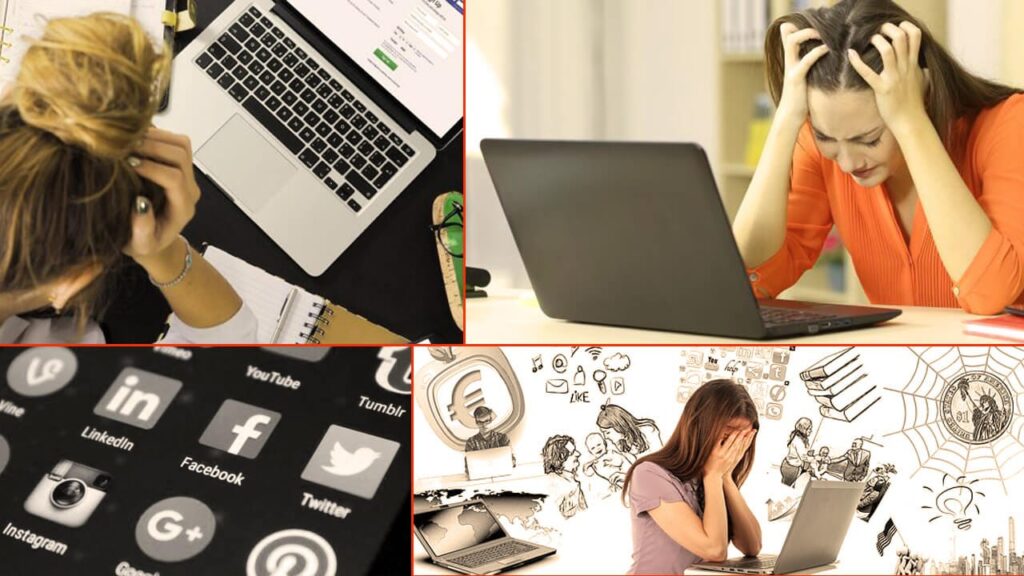
When it comes to a person’s mental health, engaging in activities on social media can have both beneficial and adverse effects. Constant exposure to curated content and the pressure to present an idealized picture of oneself can lead to feelings of inadequacy and comparison in some individuals. There is a connection between FOMO, often known as the fear of missing out, and anxiety and hopelessness. Cyberbullying and online harassment are also rising problems that significantly influence people’s mental health, particularly among adolescents. This is especially true in the case of cyberbullying.
A growing body of research from institutions like Mayo Clinic and The Lancet confirms a strong correlation between heavy social media use and increased rates of depression, anxiety, and sleep disruption—especially among teens and young adults. However, it’s important to note that social media also provides crucial support networks for individuals with rare diseases, mental health challenges, or marginalized identities who may lack in-person communities. The key lies in how we use these tools and whether we maintain healthy boundaries.
Pro Tip: Practice Mindful Scrolling
To protect your mental health, set daily time limits for social media apps using built‑in tools like Screen Time (iOS) or Digital Wellbeing (Android). Curate your feed to follow accounts that inspire you and unfollow those that trigger negative comparisons. Remember: what you see online is often a highlight reel, not reality.
St And Tm Mean On Instagram
St And Tm Mean On Instagram. It use the abbreviations “St” for “Story” and “Tm” for “Tagged Mention.” A “St” after a user’s name indicates that they have shared a “story,” a 24-hour-long graphic or video update. If another user mentions or tags you in their story, a “Tm” will display next to your name. When a user is mentioned in an article, a button appears that, when clicked, takes the reader directly to the user’s profile. These elements are crucial for driving user participation and facilitating relationships on the site.
Understanding platform‑specific terminology helps users navigate interactions more effectively. For businesses, knowing how stories and mentions work can boost engagement and reach. According to Hootsuite’s 2025 Instagram statistics, over 500 million accounts use Instagram Stories daily, making them one of the most powerful formats for brand storytelling.
Productivity and Time Administration
The habit-forming qualities of social media sites make it challenging to prioritize and complete tasks. Skimming through news feeds and profiles for long periods might harm focus and productivity. As a result, it can be challenging for people to strike a good balance between their virtual and offline lives.
Research by Harvard Business Review found that even brief interruptions from social media notifications can reduce cognitive performance equivalent to losing an entire night’s sleep. The constant switching between tasks (known as context switching) drains mental energy and leads to “attention residue,” where thoughts of the previous task linger and impair focus on the current one. Strategies such as scheduling specific “social media breaks,” using focus modes, and turning off push notifications can help reclaim productivity.
Impact on Self-Concept and Body Image
Online photo-sharing services have given rise to the “selfie” phenomenon. While photo sharing can be a statement of confidence, it has also been linked to increased self-esteem concerns related to appearance. Adverse effects on self-esteem and body image, including the development of eating disorders, have been linked to prolonged exposure to idealized beauty standards on social media.
A landmark study published in the Journal of Adolescent Health revealed that adolescents who spend more than three hours per day on social media are twice as likely to experience symptoms of depression and anxiety. The constant exposure to filtered, edited images—often labeled “Instagram vs. reality”—creates unrealistic benchmarks. Fortunately, platforms are beginning to respond: Instagram now hides like counts in some countries, and TikTok offers optional “digital wellbeing” reminders. Yet individual media literacy remains the most powerful shield. Teaching children and teens to critically evaluate curated content can help mitigate these harms.
Warning: Unrealistic Beauty Standards
Be mindful that many images on social media are heavily edited using filters or apps like Facetune. Following accounts that promote body positivity and authenticity (such as @bodyposipanda or @jameelajamilofficial) can help counteract the pressure to conform to unrealistic ideals. If you notice that social media consistently leaves you feeling worse about yourself, consider a digital detox or consulting a mental health professional.
Misinformation and Fake News Distribution
Misinformation and fake news have proliferated on social media platforms because of their ease of use and rapid distribution rate. The rapid spread of false stories has the potential to sow discord and divide communities. This behavior is especially pernicious during high stakes, such as elections, health crises, and social movements.
During the COVID‑19 pandemic, the World Health Organization (WHO) coined the term “infodemic” to describe the overwhelming flood of false information spreading alongside the virus. According to a MIT study, falsehoods on Twitter spread six times faster than the truth. Social media platforms have since introduced fact‑checking labels and down‑ranking algorithms, but the speed and emotional appeal of misinformation often outpace these interventions. Users can combat this by verifying claims through reputable sources like Snopes, Reuters Fact Check, or official government websites before sharing.
CFS means on Instagram
Check CFS mean on Instagram. Instagram users who use the abbreviation “CFS” in a post or comment are looking for suggestions for an appropriate caption to accompany their photo or video. Instagrammers are always looking for clever and original captions to accompany their posts; this is where the “CFS” request comes into play. They boost engagement and audience size by inviting others to contribute to the content creation by suggesting captions.
This trend reflects a broader shift toward community‑driven content. When users ask for caption suggestions, they’re not only engaging their audience but also tapping into collective creativity. For brands, responding to such requests can humanize their presence and foster genuine connections.
Effects on Communication and Relationships
While social media has simplified establishing and maintaining interpersonal connections, it has also changed the nature of traditional modes of communication. Relationship quality might suffer when people prioritize online communication over in-person contact. These problems might be made worse by misunderstandings that arise from conversations that take place online.
A landmark study from the Proceedings of the National Academy of Sciences found that people who used Facebook more frequently reported lower levels of moment‑to‑moment happiness and overall life satisfaction over time. The researchers hypothesized that social comparison and passive consumption (scrolling without interacting) were key drivers. Conversely, active use—sending messages, commenting, and sharing—was associated with more positive outcomes. This underscores that it’s not social media itself that’s inherently harmful, but how we use it. Couples and families can strengthen their bonds by establishing “device‑free” times and prioritizing face‑to‑face conversations.
Facebook Review Link Generator: A Tool for Reputation Management
As businesses increasingly rely on social media for customer acquisition, managing online reviews has become critical. The “Facebook Review Link Generator” is a simple but powerful tool that allows businesses to create a direct link customers can use to leave a review on their Facebook page. Instead of asking customers to navigate through Facebook’s interface, businesses can share a custom URL that leads directly to the review section. This convenience increases the likelihood of receiving feedback, which in turn boosts social proof and search visibility.
According to BrightLocal’s 2025 survey, 88% of consumers read online reviews to determine the quality of a local business. A proactive review strategy can significantly impact a company’s bottom line. By combining the review link generator with a consistent response policy (responding to both positive and negative reviews), businesses demonstrate accountability and build trust.
The Role of Algorithmic Curation and Echo Chambers
One of the less visible but equally significant effects of social media is the way algorithms shape what we see. Platforms like Facebook, X, and TikTok use machine learning to prioritize content that maximizes engagement. While this creates personalized feeds, it also tends to reinforce existing beliefs—a phenomenon known as “echo chambers.” When users are repeatedly exposed to viewpoints that align with their own, they become less open to alternative perspectives, which can polarize society and erode empathy.
Researchers at Science Magazine have documented how algorithmic filtering can lead to “filter bubbles,” where users are isolated from information that contradicts their worldview. Breaking out of these bubbles requires deliberate effort: following diverse voices, fact‑checking before sharing, and engaging in respectful discourse with people who hold different views.
- Social media is a double‑edged sword: It enables connection, activism, and business growth, but also carries risks for mental health, productivity, and social cohesion.
- Mindful usage matters: Setting boundaries—like time limits, notification controls, and intentional content curation—can dramatically reduce negative effects while preserving benefits.
- Education is prevention: Media literacy programs for children and adults can help people recognize misinformation, resist unhealthy comparison, and use platforms responsibly.
- Businesses can leverage tools like the Facebook Review Link Generator to manage reputation and build trust. Responding to reviews, engaging authentically, and showing transparency go a long way.
- Platforms and policymakers share responsibility: Regulations like the EU’s Digital Services Act aim to increase transparency and accountability. Meanwhile, users must advocate for healthier digital environments.
Conclusion
Social media’s social and psychological implications are multifaceted and challenging to predict. It has undoubtedly altered how we relate to one another, exchange ideas, and learn new things. However, its effects on social harmony, economic output, and psychological well-being cannot be ignored. Users, platforms, and legislators all need to work together to promote the responsible use of social media and put users’ health first if we reap the advantages while minimizing the risks. Finding a happy medium between online and face-to-face time with others might help us make the most of the opportunities presented by social media without compromising our physical, mental, or spiritual health.
As we move forward, a balanced approach—embracing the connectivity while being mindful of its pitfalls—will be essential. By cultivating digital literacy, setting healthy boundaries, and holding platforms accountable, we can harness the power of social media for good while protecting what matters most: our well‑being and the quality of our real‑world relationships.
Frequently Asked Questions (FAQ)
There is no universal threshold, but research suggests that spending more than 2–3 hours per day on social media is associated with higher rates of anxiety, depression, and sleep problems, particularly among adolescents. However, the quality of use matters more than quantity: passive scrolling is more harmful than active engagement with close friends. Aim for intentional use rather than mindless consumption.
Ongoing research suggests that social media’s design—especially variable rewards (like notifications and likes)—can affect the brain’s dopamine pathways, similar to other addictive behaviors. While this doesn’t cause permanent structural damage, it can create habits that are hard to break. Neuroplasticity means we can always develop healthier digital habits with conscious effort.
Start with open, non‑judgmental conversations about online safety. Set clear rules regarding time limits, privacy settings, and acceptable content. Use parental control tools but also teach critical thinking: discuss how images can be edited and why people might present unrealistic versions of their lives. Most importantly, model healthy social media use yourself—children learn by example.
How can I use the Facebook Review Link Generator?
You can find the Facebook Review Link Generator by searching for it on Facebook’s business help center or using third‑party tools that simplify the process. Once generated, you’ll have a direct URL that you can share via email, SMS, or your website. Customers who click it will be taken directly to the review section of your Facebook page, making it easy for them to leave feedback.
The answer varies by individual and context. For many, social media provides vital social support, business opportunities, and access to information. For others, it can become a source of stress, anxiety, and time waste. The overall impact depends on how it’s used. By being intentional—curating your feed, limiting screen time, and engaging meaningfully—you can tilt the balance toward the positive.
Start by auditing your feeds, setting time limits, and using tools like the Facebook Review Link Generator to build your brand’s reputation. Small changes can lead to significant improvements in your well‑being.