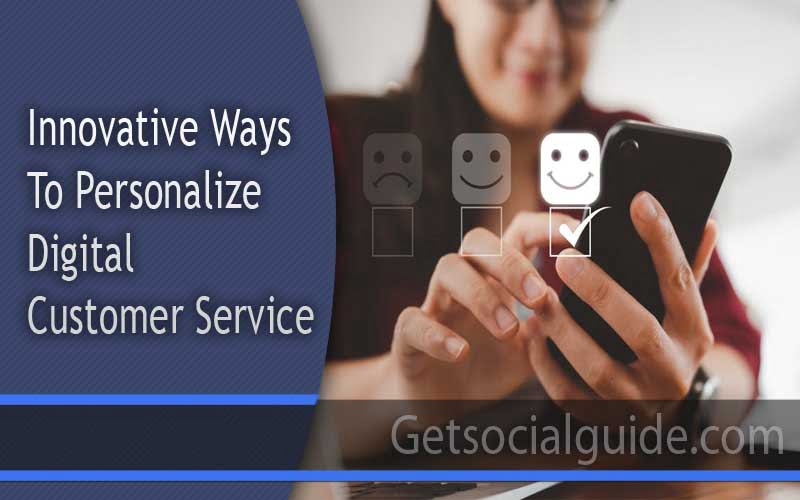
7 Innovative Ways to Personalize Digital Customer Service: The Ultimate Guide to Building Customer Loyalty
The global shift toward digital transformation in customer service has fundamentally changed customer expectations in ways we couldn’t have predicted just a few years ago. Today’s hyper-connected consumers demand more than just quick solutions—they seek deeply personalized customer experiences that anticipate their needs, remember their preferences, and make them feel genuinely valued as individuals. With 84% of customers stating that being treated like a person rather than a number is absolutely crucial to winning their long-term business, personalization has rapidly evolved from a competitive advantage to a non-negotiable business necessity. This comprehensive 2024 guide explores seven innovative, actionable strategies that will transform your digital customer service strategy from generic, transactional interactions to memorable, personalized experiences that drive unprecedented loyalty, increase customer lifetime value, and fuel sustainable business growth in today’s crowded marketplace.
Key Takeaways
Quick Answer / TL;DR
Personalizing digital customer service means using customer data to tailor every interaction—from proactive support to loyalty rewards. The seven most effective strategies in 2024 are: (1) intelligent loyalty programs, (2) true omnichannel support, (3) gamified customer journeys, (4) a customer-first culture, (5) high-quality support as a differentiator, (6) strategic technology investment, and (7) communicating in your customers’ language. Implement these using a 4-phase framework: Assess → Implement → Pilot → Scale. Measure success with CSAT, NPS, CES, FCR, and CLV. Avoid creepy personalization, over-automation, and siloed efforts. Start small with one high-impact use case, then expand systematically.
The Evolution of Digital Customer Service: From Transactional to Transformational
The recent global health crises fundamentally reshaped the economic landscape and forced companies to reconsider their approach to customer engagement. The lockdowns and social distancing measures disrupted traditional customer contact channels while simultaneously offering forward-thinking brands an unprecedented opportunity to innovate and deliver truly personalized customer interactions at scale. Today, progressive brands strive to deepen their online personalized customer service capabilities by strategically leveraging advanced call center omnichannel solutions that create seamless, connected experiences across every touchpoint.
In their comprehensive innovation management programs, modern businesses utilize sophisticated feedback collection mechanisms including dynamic loyalty programs, smart QR codes, digitized suggestion boxes, interactive quizzes, and behavior-triggered surveys to gather rich customer preference data. This data isn’t just collected—it’s meticulously analyzed using advanced analytics platforms to develop a nuanced understanding of what customers genuinely want, when they want it, and how they prefer to receive it. This evolution represents a fundamental shift from reactive customer service to proactive anticipatory customer experience design.

Source: Pixabay – Modern businesses leverage multiple channels for personalized customer engagement
This strategic approach isn’t just about collecting data—it’s about transforming insights into action. Forward-thinking companies proceed to use these insights to develop and deliver hyper-relevant products or services, or to create personalized customer offers that genuinely resonate with individual preferences. McKinsey & Company’s groundbreaking Next in Personalization 2021 Report reveals that over 71% of modern customers now expect businesses to deliver consistently personalized interactions across every channel. But what happens when companies fail to tailor their experience to individual customer needs and preferences? The research confirms that over 76% of customers become frustrated and ultimately abandon such brands, representing a significant revenue loss and brand equity erosion.
The report further illuminates a critical insight: the fastest-growing companies now generate approximately 40% of their total revenue directly from offering sophisticated personalized customer service. This isn’t incidental—it’s intentional. Therefore, to remain relevant, competitive, and profitable in today’s dynamic market, brands must absolutely create a winning digital innovation experience strategy that places personalization at its core. What follows are seven highly effective and genuinely innovative ways to personalize digital customer service that will help you significantly increase brand loyalty, drive revenue growth, and build sustainable competitive advantage.
🚀 Pro Tip: The Personalization Maturity Model for Strategic Planning
Objectively assess your current personalization level using this strategic framework: Level 1 (Basic Segmentation) – Grouping customers by demographics; Level 2 (Rule-Based Personalization) – Using predefined rules for personalization; Level 3 (Predictive Personalization) – Leveraging machine learning to predict preferences; Level 4 (AI-Driven Hyper-Personalization) – Real-time, contextual personalization using advanced AI. Research indicates that most companies currently operate at Level 1-2, but genuine competitive advantage and market leadership come from systematically progressing to Level 3-4 through sophisticated data integration and AI implementation strategies.
7 Innovative Ways to Personalize Digital Customer Service for Maximum Impact
1. Customer Loyalty Programs: Beyond Basic Points & Rewards
Beyond simply adopting an omnichannel contact center to personalize digital customer service, truly sophisticated companies design intelligent loyalty programs that keep their brand perpetually relevant in customers’ lives. While traditional customer loyalty programs can be simple and straightforward, research shows that businesses must add genuine value to their customers’ purchase journey rather than simply offering transactional rewards. Modern businesses can leverage loyalty programs to provide truly personalized experiences to their most loyal and valuable customers.
Rewarding customers strategically eliminates the damaging perception that they’re merely eyeballs to be targeted with generic ads. Providing people with personalized extras or exclusive benefits helps them save money while feeling genuinely appreciated. Getting meaningfully rewarded for buying from your business keeps your brand at the top of their mind while creating positive emotional connections that transcend mere transactions. For maximum effectiveness, consider implementing dynamic loyalty personalization that adapts rewards based on individual behavior patterns rather than one-size-fits-all approaches.
To take your loyalty program to the next level, consider integrating predictive analytics that identify customers at risk of churn and automatically offer personalized retention incentives. For example, if a customer who typically purchases monthly hasn’t engaged in 45 days, trigger a tailored offer based on their past preferences. This proactive approach, recommended by Gartner’s personalization research, can reduce churn by up to 25%.
2. Omnichannel Support: Creating Seamless Experiences Across All Touchpoints
Today’s customer can contact a brand through numerous channels including phone, email, live chat, SMS, social media platforms, and emerging channels like WhatsApp Business or Apple Business Chat. Conversely, forward-thinking brands leverage integrated technology stacks to provide genuinely seamless and unified customer service experiences across these diverse channels. They implement sophisticated call center omnichannel support solutions to meet customers wherever they prefer to engage and offer them precisely the help they need in that moment.
An effective omnichannel customer service team understands at a fundamental level that speed and consistency are vital to customer satisfaction, particularly for those seeking assistance via asynchronous channels like emails and SMS. Consequently, well-trained contact center agents must strive to respond to customers as rapidly as possible, even when managing high inquiry volumes across multiple communication channels. The true power emerges when context transfers seamlessly between channels, eliminating frustrating repetitions and creating truly frictionless experiences.
According to Forrester’s Customer Experience Index, companies with true omnichannel personalization see a 3.5x higher customer retention rate compared to those with siloed channels. To achieve this, invest in a Customer Data Platform (CDP) that aggregates data from every touchpoint and makes it instantly available to service agents and automated systems.
3. Gamify the Customer Journey: Making Every Interaction Engaging
Strategic gamification transforms mundane or routine activities into genuinely fun, interactive experiences that customers actively enjoy. Innovative brands incorporate gamified elements throughout their customers’ pre and post-purchase journey to dramatically improve engagement and satisfaction. These efforts can keep customers positively engaged with your brand even during traditionally tedious tasks like paying a bill, completing a survey, or navigating complex setup processes.
A powerful example involves incorporating gamified elements directly into your website or mobile application and encouraging users to participate in challenges, earn points, unlock achievements, or collect rewards. These activities maintain customer engagement during otherwise transactional interactions while simultaneously motivating them to return more frequently and engage more deeply with your brand ecosystem.
The most effective gamification strategies incorporate elements of personalized gamification that adapt to individual user preferences and behavior patterns. For instance, some customers might respond better to competition-based elements (leaderboards, challenges), while others prefer collection mechanics (badges, points) or exploration-based approaches (unlocking content, discovering features). By tailoring the gamification approach to individual preferences, you dramatically increase both engagement and effectiveness.
Research from Harvard Business Review shows that well-designed gamification can increase customer engagement by up to 60% and reduce churn by 20%. For example, Starbucks’ gamified rewards program drives 40% of their sales through personalized challenges and bonus stars.
4. Nurture a Customer-First Culture: The Foundational Element of Personalization
Companies succeeding in today’s digital era build their customer-first strategy deliberately from the top down, with executive leadership genuinely prioritizing customer needs and systematically training their entire organization to put customers first at every decision point. Consistently communicating these values across the company creates a durable culture centered on customer success and delight rather than mere transaction completion.
A genuinely customer-first culture, when combined with best-in-class omnichannel platforms, represents perhaps the most powerful way to personalize digital customer service authentically. Attempting to nurture a unique corporate culture without simultaneously investing in modern cloud contact center software solutions and integrating them with intuitive innovation management software inevitably frustrates service agents. The absence of creative digital spaces and appropriate tools systematically prevents customer service representatives from doing what’s necessary to genuinely delight customers.
A deeply embedded customer-first culture delivers measurable benefits in three critical areas:
- Enhanced Communication Timing: Providing timely, relevant communication based on individual customer preferences and behavior patterns
- Improved Customer Outcomes: Systematically increasing positive customer outcomes through personalized support approaches
- Reduced Attrition Rates: Dramatically decreasing customer and employee attrition through superior experiences
According to Deloitte’s customer-centricity research, companies that embed customer-first values into their culture see 60% higher profitability than those that don’t. Zappos, a classic example, empowers agents to send flowers, upgrade shipping, or even create personalized video responses—all without approval. That’s the power of a customer-first culture.
5. High-Quality Customer Support: The Ultimate Differentiator in Commoditized Markets

Source: Pexels – Modern support teams leverage collaboration tools for personalized customer experiences
Forward-thinking brands increasingly use customer service as a primary customer acquisition channel rather than merely a cost center. A well-trained call center omnichannel support team that consistently provides high-quality, personalized customer experiences directly contributes to helping their business reach new prospects while systematically retaining existing customers. Today’s informed customers demonstrate willingness to pay premium prices for products when they receive genuinely excellent, personalized customer service.
Forbes research confirms that across almost all industries, 58% of customers are willing to purchase a product that costs significantly more as long as they receive consistently excellent, personalized customer service. Therefore, your team must provide demonstrably better customer support than your competitors, as this delivers a powerful marketing advantage that attracts new leads while maximizing lifetime value from existing customers.
The most sophisticated organizations are now implementing predictive customer support models that anticipate issues before customers experience them, reaching out proactively with personalized solutions. This represents the pinnacle of customer service personalization—addressing needs before customers even recognize them, creating extraordinary experiences that generate intense loyalty and advocacy.
A Zendesk Customer Experience Trends Report found that 75% of customers expect consistent experiences across all channels, and those who receive personalized support are 3x more likely to become repeat buyers. For example, Amazon’s proactive refunds for delayed shipments or Netflix’s personalized “Because you watched” recommendations are forms of predictive support that reduce customer effort dramatically.
6. Strategic Investment in Customer Service Tools: Technology Enablement for Personalization
Growth-focused brands work tirelessly to expand their customer base, but this success creates operational challenges: the more customers acquired, the greater the pressure on customer service teams to maintain quality while scaling operations. Initially, your team might successfully offer consistent service quality across multiple channels, but they’ll inevitably struggle to maintain these standards as customer volumes increase without appropriate technological support.
Consequently, while one brand might opt to hire additional representatives (increasing costs linearly), another more strategic brand will implement an intelligent omnichannel contact center solution with integrated personalization capabilities. Strategically integrating specialized software and tools helps automate routine tasks, enhance team collaboration, and intelligently manage queues in your contact centers. Modern customer service tools don’t just support your team’s workflow—they enable scalable personalization that maintains consistent quality across expanding customer bases and multiple channels while meeting escalating customer expectations for timeliness and relevance.
The most advanced platforms now incorporate conversational AI for customer service that learns from every interaction, continuously improving its ability to handle routine inquiries while seamlessly escalating complex issues to human agents with full context. This creates a powerful synergy where technology handles scale and consistency while humans focus on empathy, complex problem-solving, and relationship-building.
According to Gartner’s AI in Customer Service report, by 2025, 80% of customer service organizations will apply generative AI in some form to improve agent productivity and personalization. Tools like Zendesk Answer Bot or Intercom’s Fin use customer data to provide instant, personalized responses while learning from each interaction.
7. Speaking Your Customers’ Language: Advanced Communication Personalization
Customers approach your business for diverse reasons—seeking advice, troubleshooting issues, requesting information, or making purchases—but the most effective solutions rely on comprehensive understanding derived from real-time call center omnichannel interaction histories and preference data. Truly customer-centric companies systematically tailor their communication approaches to individual customers’ demonstrated communication styles and channel preferences, creating genuinely personalized conversational experiences.
Scale Up Intelligent Self-Service Capabilities
A significant segment of your customer base may feel completely satisfied with answers received via sophisticated chatbots or comprehensive knowledge bases. You can dramatically enhance their digital customer service experience by providing increasingly intelligent self-service options including interactive troubleshooting guides, personalized recommendation engines, and context-aware virtual assistants that learn from each interaction.
Highlight Relevant Resources Proactively
Some customers might express contentment with basic online services, but these same customers often become remarkably appreciative and loyal when you proactively share co-browsing sessions, personalized video tutorials, or screen-sharing capabilities to help them understand complex problem-solving steps or highlight particularly relevant resources. This represents proactive personalization at its most effective—anticipating needs and addressing them before frustration develops.
The most sophisticated implementations now incorporate emotional AI in customer service that detects subtle cues in language, tone, and interaction patterns to gauge customer sentiment and emotional state, allowing for truly empathetic, context-aware responses that address not just the stated issue but the underlying emotional need.
For example, IBM Watson’s emotion analytics can detect frustration in text and voice, prompting the system to escalate to a human agent or adjust its tone. This level of personalization reduces escalation rates by up to 30% and improves CSAT scores significantly.
Implementation Framework: The 4-Phase Strategic Approach
| Phase | Key Strategic Activities | Realistic Timeline | Success Metrics & Milestones |
|---|---|---|---|
| 1. Assessment & Strategic Planning | Comprehensive audit of current capabilities, definition of personalization goals aligned with business objectives, identification and mapping of all data sources, stakeholder alignment workshops | 2-4 weeks | Detailed customer journey maps, gap analysis reports, executive sponsorship confirmation, initial business case development |
| 2. Technology Implementation & Integration | Strategic selection and integration of personalization tools, data unification architecture design, comprehensive agent training programs, change management initiatives | 4-8 weeks | System integration completion certificates, agent proficiency assessments, data quality metrics, user acceptance testing sign-off |
| 3. Controlled Pilot & Systematic Testing | Strategic launch with carefully selected customer segments, A/B testing of personalization strategies, iterative refinement based on feedback, controlled scaling | 4-6 weeks | Pilot segment engagement rates, comparative customer satisfaction scores, qualitative feedback analysis, ROI projections validation |
| 4. Strategic Scaling & Continuous Optimization | Full organizational rollout, establishment of continuous improvement processes, advanced AI model training and refinement, cross-departmental alignment | Ongoing (3-6 month scaling) | Comprehensive ROI calculations, customer lifetime value increases, retention rate improvements, personalization maturity level progression |
Measuring Personalization Success: Beyond Basic Metrics to Strategic Insights
Effective, sustainable personalization requires continuous measurement, analysis, and strategic optimization. While many organizations track basic metrics, truly sophisticated programs monitor these essential customer service personalization metrics to drive ongoing improvement and demonstrate tangible business value:
Customer Satisfaction (CSAT)
Immediate transaction-specific feedback. For personalized experiences, target 85%+ satisfaction rates with specific emphasis on personalization-related questions in surveys.
Net Promoter Score (NPS)
Holistic measure of loyalty and recommendation likelihood. Well-executed personalization typically increases NPS by 20-30 points through enhanced emotional connection.
Customer Effort Score (CES)
Quantitative measure of interaction difficulty. Strategic personalization should systematically reduce effort scores by 15-25% through proactive assistance and intuitive experiences.
First Contact Resolution (FCR)
Percentage of issues resolved in initial interaction. Advanced personalization tools typically increase FCR by 10-20% through better routing and contextual understanding.
Customer Lifetime Value (CLV)
Total revenue generated from customer relationships. Effective personalization demonstrably increases CLV by 15-35% through enhanced loyalty and expanded purchasing.
Personalization ROI
Comprehensive calculation of revenue increase minus implementation costs. Target 3:1 minimum ROI within 12 months, with best-in-class programs achieving 5:1 or higher.
Future Trends: The Next Generation of AI-Powered Personalization
1. Predictive Personalization & Anticipatory Service
Advanced AI models will increasingly anticipate customer needs before explicit expression, utilizing complex behavioral pattern recognition combined with external contextual data (weather patterns, local events, economic indicators, news cycles) to trigger genuinely proactive support interventions that address issues before customers experience frustration.
2. Emotion AI & Sentiment-Aware Interactions
Next-generation voice recognition, facial analysis technology, and textual sentiment analysis will detect nuanced customer emotions in real-time during interactions, enabling service agents (and AI systems) to dynamically adjust communication tone, approach, and solution recommendations accordingly for truly empathetic engagement.
3. Hyper-Personalized Video & Interactive Media
AI-generated personalized video messages tailored to individual customer contexts will transform service interactions, utilizing comprehensive customer data to create custom visuals, messaging, and solutions that feel genuinely one-to-one rather than mass-produced templates.
4. Blockchain-Enabled Privacy-Preserving Personalization
Secure, customer-controlled data sharing ecosystems utilizing blockchain technology will enable highly personalized experiences while giving customers complete transparency and control over their data usage—resolving the personalization-privacy paradox that currently limits data collection.
5. Metaverse Customer Service & Immersive Support
Virtual reality support environments where customers and agents interact within immersive, personalized digital spaces will enable visual demonstration, collaborative problem-solving, and relationship-building dimensions impossible in traditional channels.
🚀 Strategic Implementation Principle: Start Small, Think Big, Scale Smart
Begin with one high-impact, manageable personalization initiative (such as personalized email support sequences or intelligent chatbot interactions) rather than attempting enterprise-wide personalization immediately. Measure results rigorously, learn systematically, and expand gradually. Industry analysis reveals that most successful personalization programs begin with 2-3 exceptionally well-executed use cases rather than dozens of mediocre implementations spread thin across the organization.
Expert Pro Tips & Common Implementation Mistakes to Avoid
🚀 Advanced Implementation Pro Tips
1. Centralized Personalization Engine Architecture
Build or implement a centralized customer data platform (CDP) that genuinely unifies data from all customer touchpoints into a single, accessible source of truth. This architectural foundation enables consistent, coherent personalization across every channel rather than fragmented, disconnected experiences.
2. Real-Time Decisioning & Contextual Adaptation
Implement sophisticated real-time decision engines that personalize interactions based on current contextual factors including real-time browsing behavior, previous interaction patterns, time-of-day preferences, device characteristics, and even detected emotional states.
3. Micro-Segmentation & Behavioral Clustering
Move decisively beyond basic demographic segmentation to sophisticated behavior-based micro-segments. Create 50-100 precise micro-segments based on actual behavior patterns rather than relying on 5-10 broad demographic categories that ignore individual preferences.
4. Personalization at Scale Through Automation
Utilize machine learning algorithms to automate routine personalization decisions while maintaining thoughtful human oversight for complex, sensitive, or high-value situations that require nuanced judgment and genuine empathy.
5. Cross-Functional Strategic Alignment
Create dedicated personalization task forces with representatives from marketing, sales, customer service, product development, and IT departments to ensure consistent implementation, shared learnings, and aligned objectives across the entire customer journey.
⚠️ Common Strategic Mistakes to Avoid
1. Creepy vs. Helpful Personalization Balance
Avoid personalization that feels invasive or unnerving to customers. Mentioning overly specific details that customers haven’t explicitly shared often backfires spectacularly, eroding trust rather than building it.
2. Over-Automation & Loss of Human Touch
Balance automation judiciously with authentic human connection. Complex emotional situations, sensitive issues, and high-stakes decisions still require—and benefit from—genuine human empathy, judgment, and relationship-building.
3. Siloed Implementation & Inconsistent Experiences
Never implement personalization separately in marketing versus service departments. Customers experience your brand holistically and expect—indeed demand—consistent personalized experiences across every touchpoint.
4. Ignoring Feedback Loops & Continuous Learning
Failing to systematically measure, analyze, and adjust personalization approaches based on customer responses and outcomes leads inevitably to stagnant, increasingly ineffective programs that fail to evolve with changing expectations.
5. One-Size-Fits-All Testing & Validation
Different customer segments respond differently to various personalization strategies. Test approaches systematically across multiple distinct segments before scaling, and continue segment-specific optimization even after rollout.
Your 30-Day Personalization Action Plan: From Strategy to Implementation
30-Day Personalization Implementation Roadmap
Final Strategic Perspective: The Personalization Imperative in Modern Business
Personalized digital customer service has evolved from a nice-to-have enhancement to an essential customer acquisition, retention, and growth tool in today’s experience-driven economy. Systematically tailoring customer experiences across intelligent call center omnichannel platforms helps forward-thinking brands remain perpetually relevant in rapidly changing markets while adapting seamlessly to evolving consumer expectations and preferences. Every customer possesses unique needs, preferences, and communication styles, but your business must develop genuine understanding at the individual level because failure to do so inevitably causes customers to perceive your brand as indifferent, generic, or uncaring.
Your business absolutely needs an intelligent omnichannel contact center infrastructure, a deeply embedded customer-first corporate culture, and sophisticated tools to provide consistently ultra-personalized customer support that differentiates you from competitors. Fortunately, this comprehensive guide has detailed seven innovative, practical ways that can help you systematically personalize digital customer service, build a distinctive, beloved brand, and generate sustainable revenue growth through enhanced customer loyalty and advocacy.
In today’s intensely competitive business landscape, sophisticated personalization has evolved decisively from luxury to absolute necessity. The companies that will thrive and lead in the coming years are those that view personalization not merely as a tactical marketing initiative but as a core business strategy integrated throughout their entire organization. By systematically implementing the strategies outlined in this guide—from advanced, intelligent loyalty programs and seamless omnichannel integration to AI-powered predictive personalization and genuinely customer-centric culture—you can transform your customer service operations from a cost center into a significant competitive advantage, revenue generator, and brand differentiator.
Remember with certainty that effective personalization represents a strategic journey rather than a finite destination. Begin with one manageable strategy, measure results rigorously, learn continuously, and expand systematically. As you progress along this path, you’ll not only dramatically improve customer satisfaction and loyalty metrics but also uncover invaluable insights that can drive innovation, improvement, and growth across your entire organization, creating sustainable competitive advantage in an increasingly personalized world.
How to Improve Customer Satisfaction Through Personalization
Discover advanced tactics to boost CSAT using behavioral data and real-time personalization engines.
Customer Retention Strategies That Actually Work in 2024
Learn how top brands reduce churn with personalized loyalty programs and proactive support.
Why Every Business Needs an Effective SEO Strategy
Understand how SEO and personalized customer service work together to drive organic growth.
FAQ: Your Top Questions About Personalizing Digital Customer Service Answered
A: The first step is conducting a comprehensive audit of your current customer data and touchpoints. Identify what data you already have (purchase history, support tickets, browsing behavior) and where gaps exist. Then, define 2-3 high-impact personalization use cases, such as personalized email responses or proactive chat based on cart abandonment. Start small, measure results, then scale.
A: Small businesses can start with free or low-cost tools like HubSpot CRM (free tier), ManyChat for personalized Messenger bots, or simply by training agents to use customer history during calls. Use spreadsheets to track preferences manually at first. The key is to prioritize: focus on your top 20% of customers who generate 80% of revenue, and personalize for them first.
A: Personalization is system-driven: the brand uses data to tailor experiences automatically (e.g., Amazon recommending products based on past purchases). Customization is user-driven: the customer actively chooses preferences (e.g., setting notification preferences). Both are valuable, but personalization scales better and feels more magical to customers.
A: Calculate ROI by comparing the incremental revenue or cost savings generated by personalization against implementation costs. Key metrics to track: increase in conversion rates, reduction in churn, higher average order value, and improved customer lifetime value. For example, if personalization increases CLV by $50 per customer across 10,000 customers, that’s $500,000 in incremental revenue. Subtract technology and labor costs to get ROI.
A: No. AI excels at handling routine, high-volume queries and providing instant, data-driven personalization. However, complex emotional situations, nuanced problem-solving, and relationship-building still require human empathy and judgment. The best approach is a hybrid model: AI handles tier-1 support and provides agents with real-time personalization data, while humans focus on high-touch interactions.
A: Follow the “surprise but not creepy” rule: personalization should feel helpful, not invasive. Always be transparent about data collection, get explicit consent, and allow customers to control their preferences. Avoid using sensitive data (health, location history) unless clearly relevant and consented. A good test: ask yourself, “Would I be comfortable if a salesperson in a physical store knew this about me?” If not, don’t use it.
A: Top mistakes include: (1) Siloed data—each channel operating independently, forcing customers to repeat information. (2) Inconsistent messaging—different offers or tones across channels. (3) Over-automation—no human escalation path. (4) Ignoring offline data—call center notes not integrated with digital profiles. (5) No feedback loop—not measuring or iterating based on customer responses.
A: You can see early wins within 30-60 days from simple personalization like using customer names in emails or segment-based offers. For advanced AI-driven personalization, expect 3-6 months to gather sufficient data, train models, and run controlled pilots. Full enterprise-wide impact typically takes 9-12 months. The key is to set realistic milestones and celebrate small wins along the way.
Ready to Transform Your Customer Experience with Strategic Personalization?
Implement one strategy from this guide within the next 7 days and track your results over 30 days. Remember that effective customer service personalization requires both strategic technology implementation and genuine human understanding—start your journey today to build the loyal customer relationships that drive sustainable business growth tomorrow.