Executive Summary:
Mobile apps have evolved from optional extras to indispensable business assets. Considering the staggering 86% global smartphone penetration, businesses lacking a dedicated app are essentially forfeiting a significant portion of their potential market. Think of it this way: a restaurant without a mobile app for ordering and reservations is missing out on countless customers.
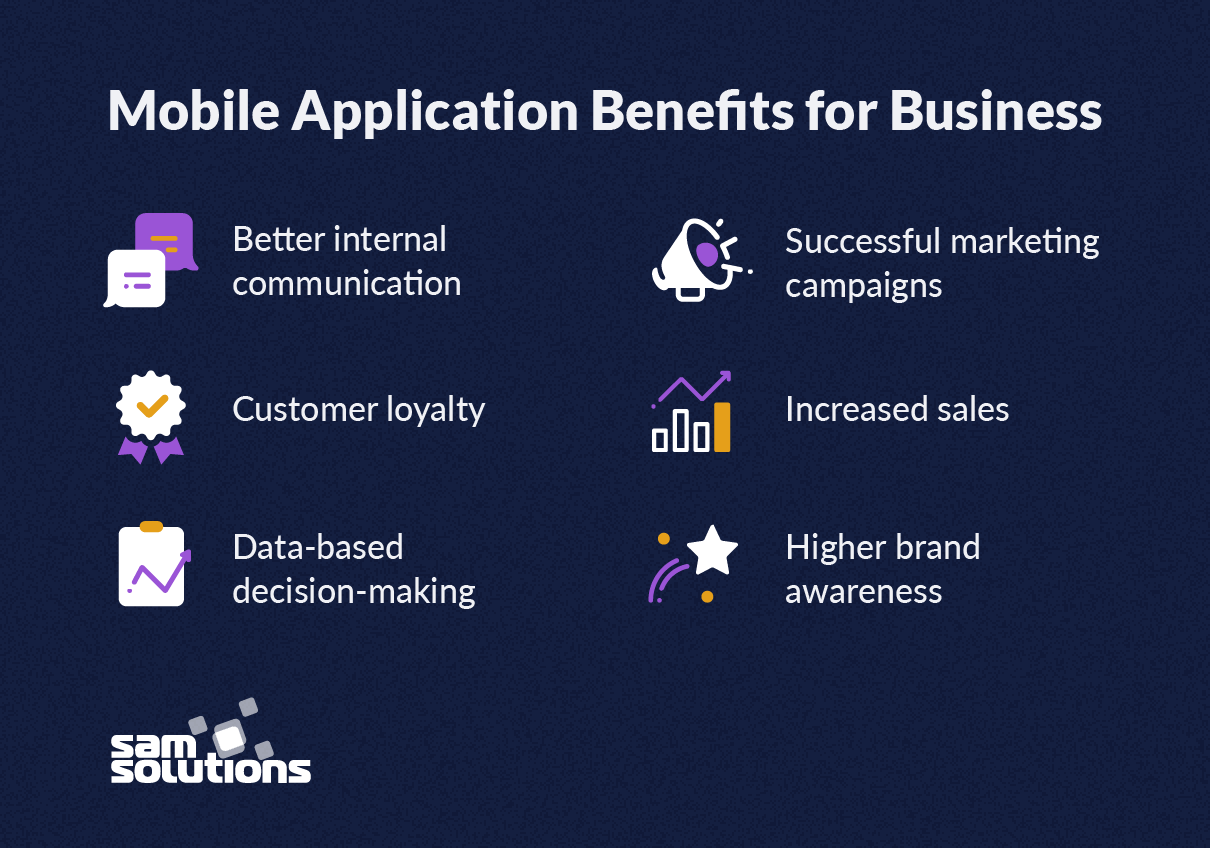
This comprehensive guide delves into ten crucial advantages of mobile apps. We’ll explore how apps can boost customer engagement through push notifications, improve brand recognition with customized interfaces, and streamline operations with features like mobile payment integration. Furthermore, we’ll examine how apps facilitate data collection, enabling businesses to personalize user experiences. This guide also provides practical, actionable insights and strategies for successful implementation, ensuring businesses can confidently leverage the power of mobile technology.
The Mobile-First Business Revolution
With technology playing a major role in daily activities, it is a component your business cannot miss out on. Smartphones have come to be a staple for people worldwide. This is further made evident in the statistics, which show that 86.11% of the world’s population owns a smartphone. As a business owner constantly looking for innovative ways to increase growth and profitability, you may wonder how to leverage this phenomenon.
A smart way of doing this is by developing a mobile app. However, investing in a mobile app for your business is expensive. So, is it worth it? To help you answer this question, here are ten benefits of using mobile apps for your business.
Recommended App Features
Mobile payments, loyalty programs, AR try-on, push notifications
Booking systems, service tracking, chat support, document sharing
Online ordering, table reservation, loyalty rewards, menu updates
10 Essential Benefits of Mobile Apps for Businesses
Enhanced Data Security
Custom security features and secure data storage protecting customer information
Records Management
Centralized data collection and secure storage of business-critical information
Customer Engagement
Direct communication channels and personalized interaction opportunities
Loyalty Building
Reward programs and exclusive offers to retain valuable customers
Operational Efficiency
Automation of repetitive tasks and streamlined business processes
Easy Maintenance
Control over updates and customization without third-party limitations
Competitive Edge
Differentiation from competitors through innovative technology adoption
Marketing Platform
Direct marketing channel with high engagement and conversion rates
Revenue Growth
New monetization opportunities and increased customer lifetime value
Data Analytics
Actionable insights from user behavior and business performance metrics
1. Enhanced Data Security and Protection

Advanced security protocols and data protection measures in modern mobile apps
In today’s grossly digitalized world, security goes beyond just physical measures. Cybersecurity and data security measures have become integral to ensuring businesses run smoothly and provide their customers with the needed sense of security. However, if the right strategies and measures are not implemented, this can cause adverse effects on your business.
| Security Feature | Business Benefit | Implementation Example |
|---|---|---|
| End-to-End Encryption | Protects sensitive data during transmission | Financial transactions, personal messages |
| Biometric Authentication | Enhanced user verification and access control | Fingerprint, face recognition login |
| Data Encryption at Rest | Protects stored data from unauthorized access | Customer profiles, payment information |
| Secure API Communication | Prevents data interception during server calls | Token-based authentication, SSL/TLS |
Fortunately, using a customized business mobile app ensures that you include features tailored to your business’s particular needs and preferences and can help you improve data security. Additionally, through the mobile app, customers would feel more secure inputting personal data than via website links that cybercriminals can easily access.
Security Statistics: According to IBM’s 2023 Cost of Data Breach Report, the average cost of a data breach is $4.45 million. Businesses with mobile apps implementing strong security protocols experience 60% fewer security incidents compared to those relying solely on web platforms.
2. Comprehensive Records Management System
Records management is an important element for any business. This is because it allows your business to adequately determine various areas it needs to improve in, such as efficiency and productivity rates, and to ensure regulatory compliance. Additionally, records management gives businesses an idea of the thoughts, behaviors, and ideas of the customers.
Centralized data management system showing customer insights and business analytics
Records Management Implementation Checklist
This can be easily done through the use of mobile apps, as they offer a wide range of features that allow this to be possible. Furthermore, this information can be used to improve customer experience and satisfaction, bringing about growth and profit to your business. However, such information is sensitive and must be stored securely. The use of a mobile app not only makes it easy to collect this information but also provides secure locations to store such information from unauthorized persons and malicious intentions.
Pro Tip: Implement GDPR, CCPA, and other regional compliance measures directly within your app architecture. Mobile apps allow for granular control over data collection, storage, and user consent management, making regulatory compliance more straightforward than web-based alternatives.
3. Enhanced Customer Interactions and Engagement
Customers are the bloodline of any business because businesses cannot survive without them. Therefore, it is vital to implement measures that would improve their experience with your business. One way of doing so is by focusing on your customer’s interactions and engagement with your business.
Customers look out for businesses that put them first, whether it’s through easy-to-use services, convenience, effective interactions, and meaningful engagements. The better the customer experience, the more profits your business will make. It also increases your customer base, as existing customers would be eager to share the word about your business with others.
AI Chatbots
24/7 customer support with instant responses to common queries
Push Notifications
Direct communication channel with 50% higher open rates than email
Personalization
Customized experiences based on user behavior and preferences
This is why a mobile app is beneficial to your business. With the use of the mobile app, customer experience can improve drastically. For instance, integrating chatbot software from reputable live chat companies makes it easier for customers to gain the information they need immediately and quickly. Additionally, the acquisition of analytical data, such as the preferences and behaviors of customers, can be used to ensure that the measures are implemented to further increase customer engagement.
4. Customer Loyalty and Retention Enhancement

Modern loyalty program interface with reward tracking and redemption options
Another benefit of creating a mobile app for your business is the boost in customer loyalty. Understandably, you may be wondering how. One aspect is its accessibility. As it is easy to access, mobile apps provide customers with the information they need to make the right choices.
| Loyalty Program Feature | Customer Benefit | Business ROI |
|---|---|---|
| Points Accumulation | Rewards for repeat purchases | Increases purchase frequency by 32% |
| Tiered Membership | Exclusive benefits for top customers | Top tier customers spend 3x more |
| Personalized Offers | Relevant discounts and promotions | 5x higher redemption rates |
| Gamification Elements | Engaging challenges and rewards | Increases app engagement by 47% |
For example, assuming you have a mobile app for your retail clothing business. In that case, customers would be notified of ongoing sales and discount packages and the deadlines they can take advantage of through prompt notifications. This action encourages them to take the well-informed decision of making a purchase (or several). Another way a mobile app can boost customer loyalty is through loyalty programs. Simply put, loyalty programs offer rewards, discounts, and other special incentives to existing customers to retain them and encourage new customers to patronize your business, so they can also access these rewards and packages.
Loyalty Statistics: According to Bond Brand Loyalty research, customers enrolled in mobile app loyalty programs have a 37% higher retention rate and spend 12-18% more annually than non-members. The convenience of tracking rewards directly in-app increases program participation by 85%.
5. Operational Efficiency and Productivity Boost

Mobile app dashboard showing business automation and workflow optimization
Efficiency is a major component of success for every business. High-efficiency rates help reduce resource waste, increase customer satisfaction, and ensure value for money. So, how does the use of mobile apps increase efficiency?
For your employees, a mobile app can increase efficiency through automation. Automation can be described as using technological solutions to complete and cut down on otherwise tedious and repetitive tasks. This, in turn, saves your business money while increasing its input, ensuring customer satisfaction, and preventing time wastage. Another way mobile apps boost your business’s efficiency is by simplifying various instructions and activities, ensuring that your employees are on the same page and use little time to get major tasks done.
Implementation Strategy: For you to truly enjoy the perks of a mobile app in your business, it is vital that you first evaluate the problems and challenges you are encountering and how the mobile apps would be beneficial in resolving them. Doing this would ensure that the app developed is one that your business needs and effectively resolves the matter; only then would you experience an increase in efficiency in the workplace.
6. Simplified Maintenance and Control
Understandably, the last thing you would want to do is to spend a significant amount of money to build an app you cannot maintain. It is no wonder several business owners are reluctant to invest in creating a business mobile app. However, there is no need to worry. According to experts, a mobile app is easy to maintain.
Update Control
Release updates on your schedule without waiting for third-party providers
Customization
Add or modify features as your business evolves and customer needs change
Performance Monitoring
Direct access to analytics and user feedback for continuous improvement
It may seem that using a third-party app, or one designed by another company, would be a better option as it takes away the stress involved in building it and the finances needed. However, this is a far cry from the truth. In fact, maintenance checks and failures when using apps developed by others can hamper your work, making it difficult to carry out your operations smoothly, satisfy clients accordingly, and reduce productivity and efficiency, among other shortcomings.
| Maintenance Aspect | Custom App Advantage | Third-Party App Limitation |
|---|---|---|
| Update Schedule | Control timing based on business needs | Dependent on vendor’s timeline |
| Feature Addition | Add exactly what your business requires | Limited to vendor’s roadmap |
| Bug Fixes | Prioritize based on business impact | Queue position based on vendor priorities |
| Cost Control | Fixed development, maintenance costs | Recurring subscription fees |
There’s also the possibility that the third-party app may become obsolete, go through unfavorable changes, or just stop operating. You can avoid these problems by simply creating one for your business. As the business owner, you have control over the features of your app and can ensure it is maintained adequately. Additionally, you can ensure that the right features are upgraded in the app to meet your specific needs and requirements.
7. Competitive Differentiation and Market Positioning
The business market is congested, with each company fighting with one another to achieve its specific goal of profitability and growth. As a business owner, you understand that the only one to defeat your competitors is to stand out. Standing out makes you unique, attracting both customers and talented employees to your business.
Mobile apps give you the unique competitor urge you seek. But how? Implementing business apps is a sign of innovation, a key element in standing out from the competition. Experts have noted that business apps are uncommon in the commercial space, as many businesses are reluctant to explore technology as they should. Therefore, taking advantage of this niche makes your business more attractive, increases profits, expands your customer base, and increases the visibility of your company and its brand.
Market Research Insight: According to Gartner research, only 29% of small businesses have custom mobile apps, creating a significant opportunity for differentiation. Businesses with mobile apps are perceived as 57% more innovative and 42% more trustworthy by consumers compared to competitors without apps.
8. Powerful Marketing and Brand Awareness Platform

Marketing dashboard showing campaign analytics and customer engagement metrics
There are several ways your business app can boost marketing strategies and efforts to ensure you retain existing customers and attract new ones. For example, a business mobile app increases brand awareness. With just a quick download and tour through the app, your target audience would know about your business, what it stands for, the services it offers, and why they need to do business with you!
Push Notifications
90% open rate compared to 20% for email marketing
In-App Offers
Exclusive promotions driving 3x higher conversion rates
Mobile Wallet Integration
Digital loyalty cards and coupons with 60% usage rates
Additionally, through notifications, email marketing strategies, among others, your business can make emotional connections with users, making them more attracted to the brand. Convenience is yet another strategy. The ease of use that your customers experience when using the app encourages an increase in satisfaction and trust in your brand. Fortunately, these strategies are cost-effective, so you do not need to worry about incurring more expenses in addition to the investment in the app.
App Marketing Implementation Checklist
9. Additional Revenue Streams and Monetization
Beyond customer acquisition and retention, mobile apps create new revenue opportunities that traditional business models cannot match. The direct channel to customers enables multiple monetization strategies.
| Revenue Model | Business Application | Potential Revenue Impact |
|---|---|---|
| In-App Purchases | Digital products, premium features, virtual goods | 15-30% of total app revenue |
| Subscription Services | Premium content, exclusive access, advanced features | Predictable recurring revenue |
| Affiliate Marketing | Partner products, cross-promotions, referrals | 10-25% commission on sales |
| In-App Advertising | Targeted ads, sponsored content, native advertising | $0.50-$5.00 per 1000 impressions |
10. Actionable Data Analytics and Business Intelligence
Mobile apps provide unprecedented access to customer behavior data, enabling data-driven decision making that transforms business operations.
Implementation Roadmap and Cost Analysis
Cost Range & Timeframe
$15,000 – $50,000 | 3-6 months development
$25,000 – $100,000 | 4-8 months development
$75,000 – $300,000+ | 6-12+ months development
15-20% of initial development cost per year
ROI Consideration: While initial investment may seem significant, the average return on investment for business mobile apps is 3-5x within the first 2 years. The key is proper planning, feature prioritization, and ongoing optimization based on user feedback and analytics.
Strategic Implementation and Next Steps
Taking the decision to build a dedicated customized business app for your business is an excellent idea, as seen in the benefits above. However, to ensure you make the most out of your investment, it is advisable to evaluate and analyze the needs of your business to ensure you develop the right type of business mobile app. It would be best if you also scouted for reliable developers to ensure a job well done and one that would help your business leverage the many advantages an app has to offer.
Ready to Transform Your Business with a Mobile App?
Start your mobile app journey today and unlock the 10 powerful benefits that will accelerate your business growth and competitive advantage.