Mastering on-page SEO techniques represents one of the most powerful strategies for establishing your website as an authoritative source in your industry. Unlike off-page SEO that focuses on external signals, on-page optimization gives you complete control over how search engines and users perceive your content’s value, relevance, and expertise.
What is On-Page SEO? Understanding the Fundamentals
Let’s start with what on-page SEO is. SEO stands for Search Engine Optimization. It’s a way to make your website more friendly to search engines like Google. Adolet is an education company that helps business owners learn digital marketing. On-page SEO is all about the changes you can make on your own website to make it better for search engines. Think of it like cleaning up your room so it looks nice when guests come over.
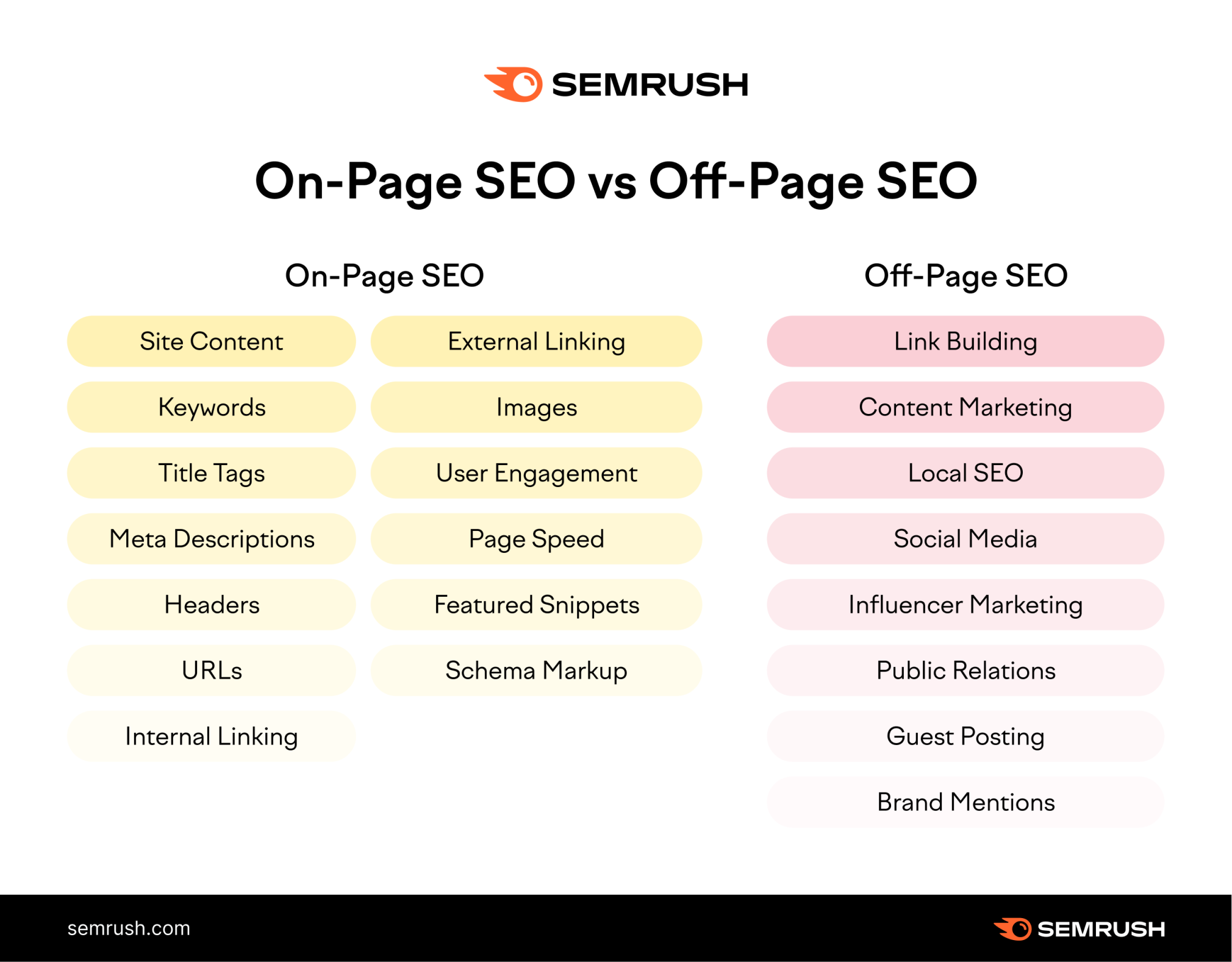
But let’s dive deeper. On-page SEO encompasses every element you control on your website pages that influences how search engines understand, categorize, and rank your content. This includes both content elements (what users see) and technical elements (what search engines crawl). Unlike off-page SEO tactics like building backlinks from other websites, on-page optimization represents the foundation of your website’s search visibility.
Modern on-page SEO has evolved far beyond simple keyword placement. Today, it involves semantic optimization, user intent matching, content depth assessment, and technical excellence. When you optimize product pages for e-commerce SEO or service pages for local search visibility, you’re implementing specific on-page strategies designed to rank for commercial intent keywords that drive conversions and revenue.
Why do you want to do on-page SEO? Well, it’s to help your website rank higher on Google. If you’re higher up, more people will click on your site. That means more people see you as an authority, or an expert, in your topic.
But the importance extends beyond simple rankings. On-page SEO directly influences what we call “E-A-T” in the SEO world: Expertise, Authoritativeness, and Trustworthiness. These are crucial quality signals that Google evaluates, especially for what they call “Your Money or Your Life” (YMYL) pages—content that could impact a person’s health, finances, or safety.
When you properly optimize your on-page elements, you’re essentially providing clear signals to search engines about your content’s purpose, relevance, and quality. This is particularly important for competitive commercial keywords where establishing topical authority can mean the difference between ranking on page one versus page five. A well-optimized page not only ranks better initially but maintains its positions longer because it better satisfies user search intent.
Consider this: when search engines crawl your pages, they’re looking for clear indicators of what your content offers. Proper heading structure tells them about content hierarchy. Strategic keyword placement helps them understand relevance. Comprehensive coverage of a topic indicates depth of knowledge. All these elements combine to build what search algorithms interpret as authority within a specific niche or subject area.
Use Keywords Smartly: Strategic Implementation Framework
This is a fairly basic on-page strategy that every SEO course covers. Keywords are the words that people type into Google when they’re searching. You want to use these words in smart places on your website. Put them in your titles, headers, and a few times in your articles. But don’t go overboard! Google is smart and doesn’t like it when you stuff too many keywords.
Today’s keyword strategy requires a more sophisticated approach than simple placement. You need to consider:
- Primary Keyword Targeting: Your main focus keyword should appear in critical locations—URL slug, H1 heading, first paragraph, meta title, and meta description.
- Secondary and Long-Tail Keywords: These are phrases that are more specific and less competitive. For instance, instead of just targeting “SEO services,” you might target “affordable local SEO services for small businesses” or “on-page SEO audit checklist for e-commerce websites.”
- Semantic Keywords: Related terms and concepts that help search engines understand context. If you’re writing about “best hiking boots,” semantic keywords might include “waterproof hiking footwear,” “trail hiking shoes,” “ankle support for hiking,” etc.
- User Intent Alignment: Different keywords indicate different user intentions—informational (learning), navigational (finding a specific site), commercial (researching before buying), or transactional (ready to purchase). Your content should match this intent.
Effective keyword implementation today means creating comprehensive content clusters. Start with a pillar page targeting a broad topic, then create supporting content pieces targeting specific long-tail variations. This structure tells search engines you have extensive authority on a subject.
For local businesses, geo-modifiers become crucial long-tail opportunities. “Emergency plumber in [City]” will often convert better than just “plumber services.” Similarly, “affordable” or “best” modifiers can capture commercial intent searches at different stages of the buyer’s journey.
Imagine going to a friend’s house and hearing the same joke ten times. You would get bored, right? It’s the same with your website content. Make sure it’s original and exciting so that people want to stay and read more. Original, good content makes you look like an expert. It’s also key to make it readable by using simple vocabulary and short sentences. Don’t make it difficult for someone to read.
However, “good content” in today’s competitive landscape requires more than just readability. It demands comprehensiveness. Google’s algorithms increasingly favor what they call “comprehensive content”—material that thoroughly covers a topic, answering not just the main question but related questions a searcher might have.
To establish true authority with your content:
- Depth Over Breadth: Rather than covering many topics superficially, focus on becoming the definitive resource on specific subjects within your niche.
- Original Research and Data: Nothing establishes authority like unique data, case studies, or research. Even small-scale original research can make your content stand out.
- Expert Citations: Reference established authorities in your field. This not only strengthens your arguments but creates natural external linking opportunities.
- Content Updating Strategy: Regularly revisit and update your best-performing content with new information, statistics, or developments.
- Multimedia Enhancement: Include original images, infographics, charts, or videos that complement and enhance your written content.
Remember that content quality directly impacts crucial engagement metrics like dwell time (how long users stay on your page) and bounce rate. These are indirect but important ranking factors that signal to search engines whether users find your content valuable.
Use Headings and Subheadings: Structural SEO for Better Understanding
Headings and subheadings make it easy for people to read your articles. They also help Google understand what your article is about. So make sure to use them and put keywords in them when you can.
Proper heading structure does more than just improve readability—it creates semantic hierarchy that search engines use to understand content organization and relevance. Here’s how to optimize this crucial on-page element:
- Single H1 Principle: Each page should have exactly one H1 tag, containing your primary keyword or close variant.
- Logical Hierarchy: Use H2 for major sections, H3 for subsections, and H4 for further divisions if needed. Never skip heading levels (going from H2 to H4, for example).
- Keyword-Rich Headings: Include target keywords naturally in your headings, but prioritize readability and user experience.
- Question-Based Headings: Many searchers use question phrases. Incorporating these as headings (H2 or H3) can help you rank for featured snippets and voice search queries.
- Scannable Structure: Most web users scan before reading. Clear headings with informative keywords help users quickly find what they need, improving engagement metrics.
Your headings should essentially create a clear outline of your content. A well-structured article with proper headings is more likely to earn featured snippet positions (position zero) in search results, which dramatically increases visibility and perceived authority.
Add Internal and External Links: Building Your Knowledge Network
Links are like roads that take you to other places. Internal links go to other parts of your own website. External links go to other websites. Use both kinds to show that you’ve done your homework. This can make you seem more trustworthy and like an expert.
Strategic linking represents one of the most powerful yet underutilized on-page SEO tactics for building authority:
- Topic Clusters: Create a pillar page covering a broad topic, then link to and from supporting cluster pages covering specific subtopics.
- Contextual Links: Place internal links naturally within content where they provide additional value, not just in footers or sidebars.
- Anchor Text Optimization: Use descriptive, keyword-rich anchor text that tells users and search engines what the linked page is about.
- Deep Linking: Don’t just link to your homepage. Link to specific, relevant articles, product pages, or resources deep within your site structure.
External Linking for Credibility Enhancement:
- Authority Sources: Link to reputable, authoritative websites in your industry. This shows you’ve researched the topic thoroughly.
- Recent Sources: When possible, link to recent studies, statistics, or news to demonstrate your content is current.
- Relevant Context: Only link externally when it provides genuine value to the reader, such as supporting data, original research, or complementary information.
A balanced linking strategy demonstrates that your content exists within a larger ecosystem of information. It shows humility (acknowledging other experts) and confidence (your content adds unique value beyond what already exists).
No one likes waiting for a slow website to load. Make sure your website is fast by reducing the size of images and using simple designs. A fast website can help you rank higher on Google.
Website speed has evolved from a mere user experience factor to a direct ranking signal and authority indicator. Here’s why speed matters for authority building:
- Core Web Vitals: Google’s Core Web Vitals—Largest Contentful Paint (LCP), First Input Delay (FID), and Cumulative Layout Shift (CLS)—are now official ranking factors. Optimizing these metrics is essential for modern SEO success.
- Mobile vs. Desktop: Speed thresholds differ by device type. Google’s PageSpeed Insights provides specific recommendations for both mobile and desktop optimization.
- E-commerce Implications: For online stores, every second of delay can significantly impact conversion rates. Fast-loading product pages signal professional, trustworthy businesses.
- Technical SEO Audit: Regular speed audits using tools like GTmetrix, WebPageTest, or Google’s PageSpeed Insights can identify performance bottlenecks.
Practical speed optimization techniques include:
- Implementing lazy loading for images and videos
- Using a content delivery network (CDN) for global reach
- Minifying CSS, JavaScript, and HTML files
- Optimizing images with modern formats like WebP
- Choosing a high-performance hosting solution
- Implementing browser caching strategies
A fast website isn’t just about rankings—it communicates technical competence and respect for users’ time, both of which contribute to perceived authority.
Lots of people browse the internet on their phones. Make sure your website looks good and works well on mobile devices. Google likes this and it can help you rank higher. Google will only put you on Page 1 if your website is perfect for mobile users so don’t miss out all the mobile users!
Mobile-friendliness has moved from “nice to have” to “non-negotiable” for authority websites. Google now uses mobile-first indexing, meaning they primarily use the mobile version of your site for ranking and indexing. Here’s what true mobile optimization involves:
- Responsive Design: Your site should adapt seamlessly to any screen size without horizontal scrolling or zooming requirements.
- Touch-Friendly Elements: Buttons, links, and form fields should be appropriately sized for finger navigation.
- Mobile Page Speed: Mobile users often have slower connections. Optimizing specifically for mobile performance is crucial.
- Readability on Small Screens: Font sizes, line spacing, and paragraph lengths should ensure comfortable reading on mobile devices.
- Mobile-Specific Testing: Use Google’s Mobile-Friendly Test tool regularly, and physically test your site on various devices.
For local businesses targeting “near me” searches or service area keywords, mobile optimization becomes even more critical. A significant percentage of these searches happen on mobile devices, often with high purchase intent. A poor mobile experience can directly translate to lost business opportunities and diminished local authority.
You wouldn’t wear the same clothes every day, so don’t let your website get stale. Update your content regularly to show that you’re active and know what you’re talking about. A lot of companies have blogs. Have your employees write about a topic they’re interested in to keep it active! This will give them the opportunity to boost their professional resume and show future employees their expertise. It’s a win-win.
Content freshness represents a significant but often misunderstood ranking factor. Google’s algorithms favor recently updated content for time-sensitive topics and value regularly maintained content for evergreen subjects. Here’s how to develop an effective content updating strategy:
- Evergreen Content Maintenance: Identify your best-performing evergreen content and schedule regular reviews (quarterly or biannually) to update statistics, refresh examples, and add new insights.
- Date Stamping Strategy: Clearly display both the original publication date and last updated date. This transparency builds trust with users and provides clear signals to search engines.
- Content Decay Prevention: Monitor for declining traffic to previously strong pages. Often, a comprehensive update can reverse traffic declines and regain lost rankings.
- Systematic Updating Process: Create a content audit spreadsheet tracking publication dates, update frequency, performance metrics, and scheduled review dates.
Beyond individual page updates, maintaining an active publishing schedule for new content demonstrates ongoing expertise and industry involvement. This is particularly important for competitive niches where stagnant websites quickly lose ground to more active competitors.
A meta description is like a mini ad for your article. It shows up under your title on Google. Make it catchy and include your keywords to encourage people to click on it. This is arguably one of the most important parts of on-page SEO. Using a strong title tag and meta description will help your website increase its relevancy. This means ranking for keywords in your industry. If you’re a music school, mention the exact term “music school” in your meta descriptions!
While meta tags aren’t direct ranking factors in the traditional sense, they significantly impact click-through rates (CTR), which indirectly influences rankings through user engagement signals. Here’s how to optimize these critical elements:
Title Tag Optimization:
- Primary Keyword Placement: Include your main target keyword near the beginning of the title tag.
- Length Considerations: Keep titles under 60 characters to avoid truncation in search results.
- Branding Strategy: Consider including your brand name at the end, especially for established businesses.
- Emotional Triggers: Use power words, numbers, or questions to increase click appeal.
- Unique Titles: Every page should have a unique, descriptive title tag that accurately reflects its content.
Meta Description Optimization:
- Compelling Summaries: Write a 150-160 character description that persuades users to click.
- Keyword Inclusion: Include primary and secondary keywords naturally.
- Call to Action: Use action-oriented language that encourages clicking.
- Benefit Highlighting: Clearly state what users will gain by clicking through to your page.
- Unique Descriptions: Avoid duplicate meta descriptions across pages.
For maximum impact, test different title and meta description variations to see which combinations generate the highest CTRs. Tools like Google Search Console provide CTR data that can inform your optimization strategy.
Beyond the fundamentals, several technical elements contribute significantly to your site’s perceived authority:
- Schema Markup Implementation: Structured data helps search engines understand your content better and can earn rich results like star ratings, FAQ snippets, or event information.
- Canonical Tags: Proper use prevents duplicate content issues, especially important for e-commerce sites with similar product variations.
- Image Optimization: Descriptive file names, alt text containing keywords, and proper compression all contribute to better rankings and accessibility.
- URL Structure: Clean, descriptive URLs containing keywords are better for users and search engines.
- SSL/HTTPS Implementation: Security is now a basic ranking signal and trust indicator for users.
On-page SEO increasingly overlaps with user experience optimization. Elements that keep users engaged also signal quality to search engines:
- Readability Optimization: Proper paragraph lengths, subheading frequency, and sentence complexity affect how long users stay on your pages.
- Multimedia Integration: Relevant images, videos, and interactive elements can increase engagement metrics.
- Internal Navigation: Clear menus, breadcrumbs, and related content suggestions help users find what they need.
- Mobile Responsiveness: Already mentioned but worth reiterating—this is fundamental to modern user experience.
- Accessibility Features: Proper contrast ratios, keyboard navigation, and screen reader compatibility demonstrate inclusive design principles.
To track your authority-building progress, monitor these key metrics:
- Organic Traffic Growth: Increasing visits from search engines indicate improving visibility.
- Keyword Rankings: Track positions for target keywords, especially competitive commercial terms.
- Click-Through Rates: Improving CTRs suggest your titles and meta descriptions are compelling.
- Bounce Rate and Dwell Time: Decreasing bounces and increasing time on page indicate content relevance.
- Backlink Acquisition: While off-page, increasing quality backlinks often follows improved on-page optimization.
- Conversion Rates: Ultimately, authority should translate to business outcomes.
Practical On-Page SEO Implementation Checklist
- Conduct comprehensive keyword research including long-tail variations
- Optimize title tags with primary keywords under 60 characters
- Write compelling meta descriptions with calls to action
- Include target keywords naturally in H1 and H2 headings
- Implement proper heading hierarchy (H1, H2, H3)
- Optimize images with descriptive file names and alt text
- Create clean, keyword-containing URL structures
- Add internal links to related content with descriptive anchor text
- Include external links to authoritative sources
- Ensure mobile-responsive design across all devices
- Optimize page loading speed for both desktop and mobile
- Implement schema markup where appropriate
- Regularly update and refresh existing content
- Monitor performance metrics and adjust strategies accordingly
Doing good on-page SEO makes your website better for both people and search engines. When search engines see that people like your site, they’ll show it to more people. This can make you become an authority, a go-to source for information or services. Being an authority is good for your reputation and can also help your business grow. So there you have it! Simple ways to use on-page SEO to become more of an authority in your field. Remember, it’s not just about one thing, but a mix of many small things that make your website great.
The true power of on-page SEO lies in its cumulative effect. Each properly optimized element contributes to a stronger overall signal of quality and relevance. While individual optimizations might yield incremental improvements, their combined impact can dramatically shift how search engines perceive and rank your website.
More importantly, comprehensive on-page optimization creates a better experience for your human visitors. When users find what they need quickly, understand your content easily, and trust your information implicitly, they’re more likely to return, share your content, link to your resources, and become customers. This virtuous cycle—where technical optimization improves user experience, which improves engagement signals, which improves rankings—represents the ultimate goal of authority-building through on-page SEO.
Begin implementing these strategies today. Start with an audit of your existing content, identify your highest-potential pages, and systematically apply these on-page optimization techniques. The journey to authority begins with a single well-optimized page, but grows exponentially as you apply these principles across your entire website.
On-Page SEO: Frequently Asked Questions
On-page SEO is no longer just about placing keywords in your title tags. In 2026, it is about Entity Coverage, User Experience (UX), and Technical Accessibility. Below are the most critical questions regarding modern on-page optimization.
1. Is “Keyword Density” still a ranking factor?
Strictly speaking, no. Google’s algorithms (like BERT and MUM) have moved beyond simple keyword counting. Instead of stuffing a keyword 10 times, focus on Term Frequency-Inverse Document Frequency (TF-IDF) and Semantic Relevance. You should cover the “entity” of your topic comprehensively by including related terms, synonyms, and contextual variations rather than repeating the exact focus keyword repeatedly.
2. How does Internal Linking affect On-Page SEO?
Internal linking is crucial for two reasons: Crawlability and Authority Transfer. It helps search engine spiders discover new pages and understand the hierarchy of your website (Site Architecture). More importantly, it passes “Link Juice” (PageRank) from high-authority pages to lower-authority pages. A good internal linking strategy uses descriptive Anchor Text to tell Google exactly what the target page is about.
Yes. While the Title Tag is what appears in search results (the SERP), the H1 Tag is the main headline displayed to the user on the page. They serve different purposes. The Title Tag drives clicks (CTR), while the H1 Tag confirms relevance to the user and reduces Bounce Rate. Best practice dictates that you should have only one H1 tag per page that clearly defines the main topic.
💡 Pro Tip: The H1 vs. Title Tag StrategyYour Title Tag should be optimized for the click (short, punchy, keyword-front-loaded). Your H1 Tag can be longer and more emotive to keep the user reading. They do not have to be identical.
4. How do Core Web Vitals impact On-Page optimization?
Core Web Vitals (CWV) are a direct ranking factor that measures user experience. Specifically, they measure:
- LCP (Largest Contentful Paint): Loading performance.
- FID (First Input Delay) / INP (Interaction to Next Paint): Interactivity and responsiveness.
- CLS (Cumulative Layout Shift): Visual stability.
If your content is great but your page shifts around or loads slowly, Google will penalize your rankings because it provides a poor user experience.
5. Does Schema Markup improve rankings directly?
Schema Markup (Structured Data) is not a direct ranking factor, but it is a massive indirect factor. It helps search engines understand your content’s context (e.g., is this a recipe, a review, or an event?). Furthermore, proper Schema can win you Rich Snippets (stars, prices, images) in the search results. These rich results significantly increase your Click-Through Rate (CTR), which is a strong signal to Google that your content is valuable.
6. What is the optimal length for a blog post?
There is no magic number (e.g., “always write 2000 words”). The optimal length is determined by User Intent. If a user is searching for “Weather in New York,” they want a short, immediate answer. If they are searching for “Guide to Corporate Tax Law,” they expect a long-form, comprehensive guide. Your content should be exactly as long as it needs to be to fully satisfy the query—no more, no less.
Audit Your On-Page Strategy
Don’t guess what Google wants. Use data-driven tools to analyze your headers, density, and technical health.