Backlinks: The Essential Tool for SEO Success in 2026
- Backlinks remain one of Google’s most powerful ranking signals in 2026 — Ahrefs data confirms that the more backlinks a page has, the more keywords it ranks for. 91% of SEO experts surveyed by Aira rate link building as effective or very effective at influencing search rankings.
- Quality now dominates quantity absolutely: One link from a topically relevant, authoritative domain is worth more than hundreds of links from low-quality or unrelated sites. Google’s internal documents (leaked in 2024) confirmed it uses a proprietary SiteAuthority score that weights link quality and diversity above raw volume.
- Backlinks now matter for AI visibility, not just Google rankings: A 2026 Ahrefs study found that 76.1% of pages cited in Google’s AI Overviews also rank in Google’s top 10 results. Strong backlink profiles directly correlate with appearing in AI-generated search answers.
- Long-form content earns dramatically more backlinks: A study of 912 million pages found that content exceeding 3,000 words earns 77.2% more backlinks than content under 1,000 words — making content depth one of the most reliable backlink-generation strategies available.
- The best backlinks are earned, not bought: Google’s algorithm updates throughout 2025 specifically targeted unnatural link patterns. White-hat strategies — original research, digital PR, skyscraper content, and genuine guest posting — are the only approaches that deliver sustainable results without penalty risk.
What Are Backlinks and Why Do They Still Matter in 2026?
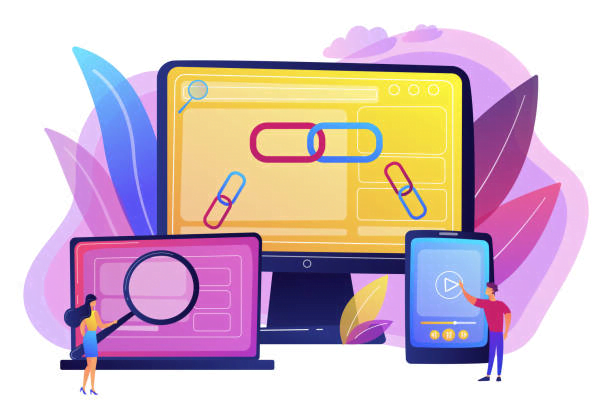
A backlink — also called an inbound link or incoming link — is created when one website links to another. From a technical standpoint, it is a standard HTML hyperlink. From an SEO standpoint, it is one of the most powerful signals that Google uses to determine whether your content deserves to rank above your competitors.
Google’s original PageRank algorithm, introduced in the late 1990s, was built on a core insight: a page that other credible pages link to is more likely to be genuinely useful than one that nobody links to. This principle has survived every algorithm update, every AI integration, and every declaration of “SEO is dead” for over two decades. The mechanism has become dramatically more sophisticated — Google now evaluates link quality, topical relevance, placement context, anchor text distribution, and linking domain authority rather than counting raw link numbers — but the foundational logic is unchanged.
What has changed in 2026 is the stakes. The explosion of AI-generated content throughout 2025 flooded the internet with mediocre articles all competing for the same backlinks. The differentiator between content that ranks and content that disappears into obscurity is increasingly the quality and relevance of its backlink profile. Companies that pivoted to publishing original research and proprietary data reported a 156% increase in link acquisition compared to generic content — a data point from Growth teams across the B2B tech sector that illustrates the new landscape clearly.
Beyond Google rankings, backlinks now directly influence visibility in AI-powered search systems. A 2026 Ahrefs study found that 76.1% of pages cited in Google’s AI Overviews also rank in Google’s top 10 organic results. The implication is direct: strong backlink profiles that drive high organic rankings are the primary pathway to appearing in AI-generated answers, making link building more strategically important, not less, in the age of AI search.
Types of Backlinks: Understanding What You Are Building

Not all backlinks are created equal — and not all backlinks signal the same thing to Google. Understanding the differences helps you build a diverse, natural-looking link profile that delivers sustainable ranking improvements rather than triggering algorithmic penalties.
1. Dofollow Links (Follow Links)
Dofollow links are the standard HTML link without any additional attributes. When Google crawls a dofollow link, it passes “link equity” — sometimes called “link juice” or PageRank — from the linking page to the destination page. This equity transfer is what makes dofollow links the most valuable type for SEO purposes. Every editorial link you earn from a relevant, authoritative source is typically a dofollow link, and building a profile of high-quality dofollow links from diverse referring domains is the central goal of any serious link-building strategy.
2. Nofollow Links
Nofollow links carry the rel="nofollow" attribute, which instructs Google not to pass PageRank through the link. These were introduced to combat comment spam and paid link manipulation. However, the assumption that nofollow links are entirely worthless for SEO is a persistent misconception. Google’s own guidance states it treats nofollow as a “hint” rather than a directive — meaning nofollow links from authoritative sources like Wikipedia, major news publications, and high-traffic forums still generate referral traffic, increase brand visibility, and likely contribute some ranking signal even without direct PageRank transfer. A diversified backlink profile that includes both dofollow and nofollow links from credible sources looks more natural than one consisting exclusively of dofollow links.
3. Sponsored or Paid Links
Links acquired through payment — including affiliate links, sponsored posts, and advertorial placements — must carry the rel="sponsored" attribute under Google’s guidelines. This tag signals to Google that the link is commercial rather than editorial. Failing to tag paid links correctly violates Google’s link spam policies and risks manual actions against your site. The most common error is treating sponsored posts as editorial backlinks — they carry less SEO value than genuinely earned editorial links and carry penalty risk when not properly attributed.
4. Editorially Placed Links
Editorially placed links — links you earn without asking for them because another website found your content genuinely valuable — are the links Google values most highly. These are the links that Backlinko’s team of over 1.5 million backlinks has identified as the most impactful for sustainable rankings. An editorially placed link from a respected industry publication or research institution carries more SEO weight than dozens of links acquired through outreach campaigns, precisely because no commercial exchange or direct request was involved. Building the conditions for editorial links — through original research, comprehensive guides, and genuinely useful tools — is the highest-leverage link-building strategy available in 2026.
5. UGC Links (User-Generated Content)
The rel="ugc" attribute marks links created in user-generated content — forum posts, community discussions, blog comments, and similar environments. These links have minimal direct SEO value but remain important brand visibility channels. Links from active, relevant communities like Reddit, Quora, and industry-specific forums drive genuine referral traffic from engaged audiences, even without significant PageRank contribution.
Why Backlinks Are Critical for SEO in 2026 — The Five Core Functions

1. They Directly Improve Search Rankings
Google’s internal documents, leaked in 2024 and extensively analysed by the SEO community, confirmed that links remain a primary ranking signal and that Google uses a proprietary SiteAuthority metric that heavily weights the quality and diversity of a site’s inbound link profile. The leaked documents specifically underscored that link relevance and quality matter far more than sheer numbers — a finding that validates what leading practitioners had observed empirically for years.
Ahrefs’ analysis of their database of over 35 trillion live backlinks confirms this relationship statistically: more backlinks to a page correlates directly with more keyword rankings and more organic traffic. Websites with strong backlink profiles tend to rank faster for new content, recover more quickly from algorithm updates, and compete effectively against larger brands with bigger content budgets — precisely because the backlink profile acts as cumulative trust infrastructure that takes years to build and cannot be replicated quickly by a new entrant.
Domain authority — measured variously as Moz’s DA, Ahrefs’ DR, or Semrush’s AS — is fundamentally a function of backlink profile quality and diversity. Sites with high domain authority rank new content faster and more consistently than low-authority sites, even when the content quality is comparable. This creates a compounding advantage: each quality backlink earned marginally increases domain authority, which marginally improves the ranking performance of every page on the site, which generates more organic traffic, which naturally attracts more backlinks over time.
This compounding effect is why building backlinks early — before you need the traffic urgently — is strategically superior to pursuing link building only when rankings have plateaued. Sites that invested in white-hat link building during their early months consistently outperform equivalent sites that delayed that investment by 12–18 months, in terms of both ranking velocity and recovery from algorithm updates.
3. They Help Google Discover and Index New Content Faster
When Google crawls a page and follows its outbound links, it discovers the linked pages and queues them for indexing. A new page with multiple quality backlinks pointing to it gets discovered and indexed significantly faster than an isolated page with no inbound links. For content publishers who rely on timely coverage — news, product launches, seasonal content — this indexing acceleration provided by backlinks is a meaningful operational advantage.
Internal links also contribute to this discovery function — a point that many link-building guides neglect. A well-structured internal link architecture distributes link equity across your site, helps Google understand your most important content, and ensures new pages are discovered quickly through existing indexed pages. Internal and external link building are complementary strategies, not alternatives.
4. They Drive Referral Traffic From Relevant Audiences
A backlink from a high-traffic, relevant publication does more than transfer PageRank — it sends actual readers to your site. Referral traffic from quality backlinks is among the highest-converting traffic sources available, because the reader clicking the link has already been pre-qualified by the context of the linking page. A visitor arriving from a link in a relevant industry article is demonstrably more engaged and more likely to convert than an equivalent visitor arriving from a generic social media share.
This referral traffic function makes backlink building valuable independent of its SEO impact. Even nofollow links from major publications that pass no PageRank generate brand awareness, introduce your content to new audiences, and drive qualified visitors who would never have found you through organic search alone.
5. They Signal Trustworthiness to AI Search Systems
The emerging importance of backlinks for AI visibility is the major development that distinguishes 2026’s link-building landscape from previous years. AI systems like ChatGPT Search, Google’s AI Overviews, and Bing Copilot are increasingly pulling answers directly from the web using Retrieval-Augmented Generation (RAG) — and the pages they cite are overwhelmingly the same pages that rank well in traditional search. There is growing evidence that these systems weight brand mentions and citations in their training data, meaning that appearing as a referenced source in quality content across the web increases your likelihood of being cited in AI-generated answers, even when those citations are not traditional backlinks.
This creates a new strategic consideration: link building in 2026 is simultaneously optimising for Google PageRank and for AI co-citation — the frequency and context with which your brand appears as a credible source across web content. The two objectives are aligned rather than competing: the strategies that build quality editorial backlinks also build the kind of brand authority that AI systems recognise as trustworthy.
Complete SEO Toolkit: The Best Tools for Backlink Building in 2026
Having the right tools transforms backlink strategy from guesswork into a systematic, measurable process. Here is the complete toolkit organised by use case, from free foundations to professional-grade paid platforms.
1. Keyword and Topic Research
Understanding what your audience searches for is the starting point for creating link-worthy content.
- Semrush: Comprehensive keyword research, competitive analysis, and backlink data. The AI integrations for keyword clustering and Brand Monitoring (tracking how your site appears in AI search results) make it particularly valuable in 2026. Paid.
- Ahrefs: Industry benchmark for keyword difficulty data and competitive keyword gap analysis. Site Explorer provides deep competitor backlink intelligence. Paid.
- Google Keyword Planner: Free, reliable search volume estimates. Requires a Google Ads account but costs nothing to use for research.
- AnswerThePublic: Visualises question-based search queries and topic clusters — excellent for identifying long-tail content opportunities that attract editorial links. Freemium.
- Google Trends: Free tool for seasonal content timing and rising topic identification by region.
2. Technical and On-Page SEO
- Google Search Console: The non-negotiable free foundation. Shows every keyword driving traffic, identifies crawl errors, tracks Core Web Vitals, and allows sitemap submission directly to Google. Start here before any paid tool.
- Screaming Frog SEO Spider: Desktop crawler that audits your entire site for broken links, missing meta tags, duplicate content, and redirect chains. Free for up to 500 URLs; paid for larger sites.
- Surfer SEO / Frase: AI-driven content optimisation that analyses top-ranking pages and provides specific on-page recommendations. Particularly valuable for content teams producing high volumes of keyword-targeted articles. Paid.
3. Backlink Analysis and Monitoring
- Ahrefs: The gold standard for backlink data. Site Explorer reveals every link pointing to any URL on the web, competitor link profiles, and link-building opportunities your site has not yet captured.
- Semrush: Maintains an extensive backlink database alongside its keyword research functionality. Backlink Gap analysis identifies referring domains your competitors have that you do not.
- Majestic: Specialist backlink platform with proprietary Trust Flow and Citation Flow metrics. Particularly useful for evaluating link quality before pursuing acquisition. Paid.
- Google Search Console: Shows your own known backlinks in the Links report. Limited compared to paid tools but authoritative — these are links Google has definitively discovered and attributed to your site. Free.
4. Core Web Vitals and Site Speed
- Google PageSpeed Insights: Analyses any URL for Core Web Vitals performance and provides specific actionable improvement recommendations. Free.
- GTmetrix / WebPageTest: Detailed performance reports with waterfall charts showing exactly which assets are slowing page loads. Freemium.
5. Local SEO Tools
- Google Business Profile: The foundational free tool for any business with a physical location. Local backlinks from regional directories, news sites, and community platforms work in conjunction with your GBP to determine map pack rankings.
- BrightLocal: Citation management, local rank tracking across multiple locations and zip codes, and local backlink monitoring. Paid.
6. AI and Future-Proofing Tools
- ChatGPT / Claude: Valuable for brainstorming linkable asset ideas, drafting outreach templates, and generating meta descriptions and schema markup. Not an SEO tool per se, but a productivity multiplier for link-building execution.
- Keyword.com: Tracks your visibility in AI-generated summaries (ChatGPT Search, Google AI Overviews) — the emerging visibility layer that supplements traditional rank tracking.
| Goal | Recommended Tool | Cost Level | Best For |
|---|---|---|---|
| All-in-One Powerhouse | Semrush | High (~$130/month) | Agencies, established sites |
| Backlink Analysis | Ahrefs | High (~$99/month) | Link building specialists |
| Technical Site Audit | Screaming Frog | Free / Mid (~£149/yr) | Technical SEO teams |
| Content Optimisation | Surfer SEO | Mid (~$99/month) | Content-focused sites |
| Budget-Friendly Suite | SE Ranking / Mangools | Low (~$49/month) | SMBs, solopreneurs |
| Just Starting Out | Google Search Console + GA4 | Free | Everyone — mandatory baseline |
| Local SEO | Google Business Profile + BrightLocal | Free + Paid | Local businesses |
| AI Visibility Tracking | Keyword.com | Paid | Brands prioritising AI search |
How to Build Quality Backlinks in 2026: 8 Proven Strategies
Backlinks cannot be reliably bought, faked, or systematically automated in 2026 without significant penalty risk. Google’s algorithm updates throughout 2025 specifically targeted unnatural link patterns, and the sites that suffered most were those that had relied on link schemes rather than earning links through genuine content quality. The following strategies are all white-hat, all sustainable, and all producing measurable results for practitioners implementing them in the current landscape.
1. Create Long-Form Original Content That Others Want to Cite
The single most reliable backlink generation strategy available is producing content so thorough, well-researched, and genuinely useful that other writers naturally reference it when covering related topics. This is not advice about writing 3,000 words for word count’s sake — it is advice about creating the definitive resource on a specific topic within your niche.
The content types that earn the most editorial backlinks in 2026 are original research (surveys, data studies, proprietary analysis), comprehensive guides that serve as single authoritative references, industry statistics compilations that journalists and bloggers cite as sources, and detailed case studies with real results. The common thread is originality — content that contains information or analysis that does not exist anywhere else on the internet compels citation by default.
The 77.2% more backlinks earned by long-form content over short-form content is not about length — it is about completeness. Long-form content tends to be more comprehensive, answer more follow-up questions, and provide more citable data points, which is why it earns more links. Prioritise depth of coverage over brevity, and structure long-form content with clear headings and jump links so specific sections can be referenced individually.
2. Digital PR and Journalist Outreach (HARO / Featured.com)
Digital PR is one of the highest-quality backlink acquisition strategies available in 2026 because it produces editorial links from established news publications and industry outlets — the category of link that Google weighs most heavily. Platforms like Featured.com (formerly Help A Reporter Out / HARO) connect journalists with expert sources. When you provide a quoted insight that appears in a published article, you typically receive an editorial backlink from the publication.
Greg Heilers of Jolly SEO, whose team has executed 200,000+ outreach pitches, reports that successful HARO pitches require brevity, specificity, and genuine expertise. Journalists receive hundreds of responses to each query — pitches that directly answer the question with a concrete, quotable statement outperform lengthy promotional responses by a significant margin. Respond within the first two hours of a query being posted for best results, and always match your pitch to the journalist’s specific request rather than sending generic brand boilerplate.
3. Strategic Guest Posting on Relevant Sites
Guest posting earned a negative reputation during the era of low-quality link farms accepting any article in exchange for a backlink. In 2026, strategic guest posting — contributing genuinely valuable, expert-level content to relevant, well-regarded publications in your industry — remains one of the most effective white-hat link acquisition strategies. The key distinctions are quality and relevance: guest posts on sites with genuine audiences in your niche, that require substantive editorial review, and that publish content your target readers would actually read.
The process: identify sites in your niche that accept guest contributions, review their existing content to understand the quality and depth standard, pitch a specific article idea with a clear angle and headline, and deliver content that meets or exceeds their published quality. Guest posts that drive genuine referral traffic and reader engagement naturally attract further links over time — compounding the initial backlink value.
4. Skyscraper Technique
The Skyscraper Technique, refined by Backlinko and widely adopted since, involves three steps: identify content in your niche that has already earned significant backlinks, create a substantially better version of that content, and systematically reach out to the sites linking to the original piece with your improved version.
The proposition to the linking site is straightforward: you currently link to an article on this topic. We have published a more comprehensive, more current version of the same content. Would updating your link to our version serve your readers better? When the original content is genuinely outdated or incomplete and your version is demonstrably superior, this outreach converts at meaningful rates. Ahrefs’ Site Explorer makes finding the original content’s backlink profile — and therefore your outreach list — straightforward.
5. Broken Link Building
Broken link building is one of the most consistently effective backlink strategies because it provides genuine value to the linking site (fixing a broken link improves their user experience) while earning a backlink for you. The process: use Ahrefs or Semrush to identify pages in your niche that have external links pointing to 404 (broken) pages. Create content that covers the topic of the dead page, then reach out to the sites linking to the broken page with a replacement suggestion.
The outreach message is simple and genuinely helpful: you have a broken link on a specific page, pointing to a URL that no longer exists. Here is a resource on the same topic that might serve as a replacement. This approach has high conversion rates relative to generic link prospecting because you are solving an actual problem the webmaster has, not asking them to do you a favour.
6. Build Linkable Assets: Tools, Templates, and Data
Linkable assets are content types that earn backlinks passively over time because they are intrinsically useful and frequently referenced. In 2026, the highest-performing linkable asset categories are free tools (calculators, generators, checkers), original data studies that journalists and bloggers cite as sources, comprehensive template libraries, and industry surveys with publishable findings.
The investment in a linkable asset is typically front-loaded — significant time to create, but minimal ongoing effort as links accumulate organically. A well-constructed free tool in your niche can earn dozens of editorial backlinks annually from writers covering topics where the tool provides useful context. Original industry data — a survey with 500+ respondents, an analysis of industry trends using proprietary data — regularly generates links from mainstream publications when pitched via digital PR channels.
7. Competitor Backlink Reverse-Engineering
Your competitors’ backlink profiles are a pre-researched roadmap to the sites most likely to link to content in your niche. Using Ahrefs or Semrush’s competitor analysis features, you can identify every domain linking to your top competitors but not to you — representing an immediate prioritised outreach list.
The analysis also reveals the content types that earn the most links in your category. If a competitor’s data study has 300 referring domains while their service pages have three each, that tells you precisely where to invest your content creation effort. Replicate the content type that earns links in your niche, do it better or more comprehensively, and systematically approach the sites already demonstrated to link to that content category.
8. Local Backlinks and Community Partnership Links
For businesses with local SEO objectives, local backlinks — from regional news sites, community blogs, local business directories, chamber of commerce websites, event pages, and geographic partnership pages — provide both domain authority and location-based relevance signals that directly improve map pack rankings.
Local link building strategies that work consistently in 2026 include sponsoring local events (event pages typically link back to sponsors), contributing expert commentary to local news outlets, partnering with complementary local businesses for reciprocal cross-promotion, and listing on authoritative local directories (not generic mass-submission directories, but curated, human-reviewed local business resources).
What Makes a High-Quality Backlink in 2026? The Evaluation Framework
Not all backlinks are worth pursuing. Before investing outreach effort, evaluate any prospective link source against these criteria:
| Quality Signal | What to Evaluate | Why It Matters | How to Measure |
|---|---|---|---|
| Topical Relevance | Is the linking site’s content related to your niche? | Relevant links signal topical authority to Google; irrelevant links add noise | Manual review of site content |
| Domain Authority | Does the linking domain have credibility signals? | High-authority links pass more ranking value than low-authority ones | Ahrefs DR / Moz DA / Semrush AS |
| Organic Traffic | Does the linking site receive real organic search traffic? | A site with no traffic likely has no real audience and carries less value | Ahrefs / Semrush traffic estimates |
| Link Placement | Is the link within editorial content or in a footer/sidebar? | In-content links carry more weight than sitewide footer or sidebar links | Manual review of linking page |
| Anchor Text | What text surrounds and forms the link? | Contextual anchor text reinforces topical relevance; unnatural anchors risk penalties | Ahrefs Anchors report |
| Link Profile Diversity | Does the linking site link out to many other domains? | Sites that link out excessively dilute the value of each individual link | Semrush/Ahrefs outbound links data |
Free SEO Toolkit: The Essential Starting Stack
Before investing in paid platforms, these free tools provide a comprehensive SEO foundation that covers the majority of daily monitoring and optimisation needs:
- Google Search Console — Organic performance monitoring, technical health, backlink data
- Google Analytics 4 (GA4) — User behaviour, conversion tracking, referral traffic analysis
- Google Keyword Planner — Search volume estimates for content planning
- Google Trends — Seasonal content timing, rising topic identification
- PageSpeed Insights — Core Web Vitals monitoring for every key page
- Screaming Frog (free for 500 URLs) — Technical site audit, broken link detection
- AnswerThePublic (free queries) — Long-tail keyword and topic cluster discovery
- How to Build Quality Backlinks — A deep-dive tactical guide to the outreach and content strategies that produce the highest-quality inbound links.
- Boost Your WordPress SEO with Rank Math: Complete 2026 Tutorial — Configure your WordPress site’s on-page SEO foundation before pursuing backlinks.
- How to Create an Effective SEO Strategy — The complete framework for building an SEO strategy where backlinks are one component of a broader approach.
- 5 Ways to Boost Your Website Domain Authority — Additional authority-building strategies that complement and accelerate backlink impact.
- 500+ High DA Blog Comment Sites for Backlinks — A curated list of high-authority sites where relevant, genuine blog comments can contribute to your brand visibility.
Summary
Backlinks remain one of the most powerful ranking signals available in SEO in 2026 — confirmed by Google’s own leaked documentation, empirical studies from Ahrefs and Semrush, and the direct experience of practitioners managing competitive sites across every industry category. The mechanism has evolved from raw link counting to sophisticated quality evaluation, but the fundamental principle is unchanged: links from credible, relevant sources signal to Google that your content is worth ranking.
The most important shift in 2026 is the expansion of backlinks’ strategic importance beyond Google rankings. The correlation between high backlink profiles and AI Overview citations (76.1% of AI-cited pages also rank in Google’s top 10) means that link building now serves both traditional search visibility and emerging AI search presence simultaneously.
Building a quality backlink profile is not a quick project — it is a long-term SEO infrastructure investment. Sites with strong backlink profiles consistently rank faster for new content, recover more quickly from algorithm updates, and compete more effectively against better-resourced competitors. Start with the free tools, produce genuinely link-worthy content, pursue editorial links through digital PR and strategic guest posting, and build consistently rather than in bursts. The compounding returns on quality link equity are one of the most reliable long-term SEO advantages a website can build.
FAQ
A: Yes — backlinks remain one of Google’s most significant ranking signals in 2026. Ahrefs’ database of over 35 trillion backlinks confirms a direct correlation between backlink count, keyword rankings, and organic traffic. 91% of SEO experts surveyed by Aira rate link building as effective or very effective. Additionally, a 2026 study found that 76.1% of pages cited in Google’s AI Overviews also rank in Google’s top 10 organic results, making strong backlink profiles critical for both traditional search and emerging AI search visibility.
A: A dofollow link passes “link equity” (PageRank) from the linking page to your page, directly contributing to your search rankings. A nofollow link carries the rel=”nofollow” attribute and historically was considered to pass no SEO value. However, Google now treats nofollow as a “hint” rather than a directive — nofollow links from authoritative sources like Wikipedia and major publications still generate referral traffic, increase brand visibility, and likely contribute some ranking signal. A natural backlink profile includes both dofollow and nofollow links from credible sources.
A: The most effective white-hat backlink strategies in 2026 are: creating original research and data studies that journalists and bloggers cite as sources; digital PR and journalist outreach via platforms like Featured.com; strategic guest posting on relevant, high-quality publications; the Skyscraper Technique (improving upon heavily-linked competitor content); broken link building (replacing dead links on quality sites with your own content); and building linkable assets like free tools and comprehensive templates. All of these strategies earn links through genuine value rather than manipulation, making them sustainable regardless of algorithm updates.
A: There is no universal number — it depends entirely on the competitiveness of your target keyword. Low-competition keywords in micro-niches can rank without backlinks if your content quality and topical authority are strong. Mid-competition keywords typically require 20–50 quality referring domains. Highly competitive terms (SEO services, legal keywords, finance terms) can require hundreds of referring domains from authoritative sites. The most actionable approach is to analyse the top 5 results for your target keyword in Ahrefs, identify their referring domain count and quality, and use that as your benchmark rather than a generic number.
A: Google Search Console is the best free backlink checker — it shows every link Google has definitively attributed to your site in the Links report, and its data is authoritative because it comes directly from Google. For checking competitor backlink profiles (not just your own), Ahrefs offers limited free searches per month through its free tier, and Semrush provides a limited free backlink analysis. For comprehensive competitor analysis, a paid subscription to Ahrefs or Semrush is necessary — but Google Search Console covers your own site’s needs at no cost.
A: No — buying backlinks violates Google’s link spam policies and carries significant penalty risk in 2026. Google’s algorithms have become substantially better at detecting unnatural link patterns, and sponsored links that are not properly tagged with rel=”sponsored” can trigger manual actions. Companies that relied on link schemes were among the sites hardest hit by 2025’s algorithm updates. Any investment in paid links should be directed toward legitimate sponsored content on relevant publications with proper attribution — not link farm purchases or private blog network (PBN) placements.