How To Optimize Your Website For SEO?
It is a plan that involves the systematic organization of a website content, based on topics to increase its likelihood of featuring in search engine results since if a person’s internet experience starts at a Search engine, as is illustrated by the 68% statistic, there must be a way of taking advantage of it to attract free traffic that originates from these sources. Here is the research conducted in Organic Search using the platform of Brightedge revealing that trackable online traffic is still occupying a powerful place in the channel. In Paid Search there is still growth. Organic social media with a traffic contribution of 1/11 of that of Organic Search and, on average, is one third that of Paid Search which started declining post 2014.
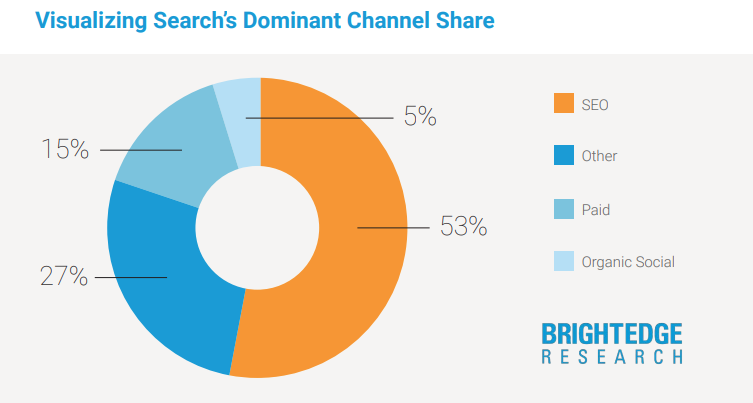
It has remained constant at 5% since that year to the present time. Thus, it is important for you to implement an SEO strategy in your site, to guarantee its optimum functionality. Your SEO works and by being able to get more traffic, your chances of getting hold of potential buyers are optimized. In addition, the website marketing oriented at sales has other beneficial parameters such as the amount of time visitors spent on the page and the level of bounce rate. Such positive signs may make it earn a better ranking from Google which is very important in the internet market. The following tips and strategies will help you to get the most of your websites both for SEO and conversions purposes.
Ensure Your Website Adds Value for Your Specific Audience
Basically, at times marketers believe they are working for Google instead of the other way around. Perhaps one would assume that the search engine has to rank the best content, or after an algorithmic update there is a vast decline in traffic. However, the truth is that your objectives and Google’s align:
- Deliver Top-notch Content for Your Audience: You and Google are trying to deliver the best content to your audience. Meanwhile, Google rank millions of web-sites, and you, in turn, pay close attention to your target audience’s behaviours.
- Enhance Website User Experience: Google like any other party aims at having a good experience in using a given website. It is important to ensure that both actors have a smooth and rather pleasant experience.
- Prioritize Value-driven Content: For Google and you, quality content is always the focus. Currently, Google looks at 200 plus ranking factors that influence the order of links on the first page given that it links to the relevant information-seeking page.
When you participate in SEO, you choose not only the main and complementary keywords corresponding to the search goal. Your content is built to be compelling and useful; meta-information helps the Google crawler. Likewise, if you are more aligned on conversion optimization, you are focusing more on persuading your visitors to go through a specific action, like filling in a newsletter or buying a product. Like Google, your goal is to deliver the exact thing the people want. Training which enhances the effectiveness of making your website both SEO and conversion friendly helps both ends find progress. It optimizes your site and the search engines, synchronizing your aims towards fulfilling your targeted users well.
Best practices to Optimize Your Website for SEO
High quality and credible content is one of the primary tools you need in improving your search engine rankings making it a player in SEO marketing. Creating top quality content for your niche, means not only increased visitors, but also sets your site as a reference for the targeted audience. Improve your web content writing ability and try to establish yourself as an authority on issues which you are discussing.
Keywords
Choose and concentrate on a specific keyword phrase for each authoritative content page on your website. Think about how users might search for that page using terms like:
- Tips for Photographing the Aurora
- Optimal Settings for Aurora Photography
- Rights of Students Under Title IX
- An Introduction to Biomedical Engineering
Multiple Keyword Phrases
It is often difficult to optimize a page for multiple keyword phrases, if they are not closely related to one another. For more extensive coverage, make separate pages for every keyword phrase of interest. Keyword Placement Once you’ve chosen a keyword phrase for a page, consider:
- Is it possible to phrase the keywords in folders for the usage of the phrase in the page URL?
- Just a quick one: character limits in URLs matter.
- Can you use it in the title of the page?
- Can you incorporate the phrase into headings and subheadings on the page?
Those questions should be answered positively to increase your search engine ranking. Don’t overuse keywords and try to keep more of a conversational and easy to read style. People should focus more on make their content easy to read and easy for the audience to use rather than on SEO.
Content Quality
Other than link, anchor, and title attributes, content itself carries an impressive weight for rankings. Your keyword phrase should form part of this page with preference being given to first and last paragraphs, headers and sub-headers and at intervals within the main text. Provide proof of your leadership and evidence of the applicable facts to your readers through URLs of related sources inside and outside your organisation.
Personal Experience and Expertise
When writing the content try to incorporate your experience and knowledge into the creation. This makes your content stand out, build credibility, attract users and ultimately lead to long-term benefits. In that respect, the proposed approach is in harmony with the mission and vision of search engines, which are to provide people with useful and accurate information. It helps enhance an internet presence and enhance SEO results; it is notable, even in the excessive number of articles and posts created with the help of artificial intelligence.
SEO Formatting
Do not neglect to make keywords keyword phrases appear bold, italicized, and under heading tags especially the H1 heading. Optimize for both; the ideal pages do not overdo keywords because they are written for the users, not the engines.
2. Keep Your Content updated
In the process of updating your content, there might be a strong urge to begin the process at once. But even in these cases, it is advisable to hit a pause and think through your next steps carefully. Updating in a haphazard manner is a complete no-no for type, as a reader can end up with an unreadable Frankenstein monster of a text. What needs to change is much clearer when you are doing planning ahead, it prevents you from experiencing this problem and it allows you to better offer more coherent updates. Keep into consideration the reason why you created the page, what it offers to individuals and where does it belong within the domain. It prevents distraction and serves to help you get what you wanted from your content.
- Decide on the Scale of Changes: First, count the time required by reading your post and or page, and estimate on its necessity. Decide whether it is best to write the whole passage anew or if just the few alterations are necessary, such as the correction of some more errors. If it is a small one then it is not a bad idea to edit them right on the spot. As a result, although it is possible to make minor editorial adjustments to content in real time, this guide deals primarily with generating larger revisions.
- Update Your Research: As a best practice start with updating research before making any updates. Learn about users’ intentions corresponding to the search and any shifts in the keywords. See more of what your competitors are up to. There is a way to learn more about users and their behavior – analyze GA or SC data is the answer. If your page has been in the lime light with specific keywords, you can tailer your page for other keywords with this update. If it’s declining, then perhaps you need to study it to find out where it went wrong.
- Review Similar Content: Do not create many identical pages on your website as this is counterproductive and negatively impacts the website ranking. Make sure that your site doesn’t have more than a couple of pages on the same topic. It is all right to have some level of overlap but if much of the content is quite similar to another page on your site then there is a problem. Cope with it by combining like articles, writing different content for the articles even if on the same material, or reconstruct articles on the same subject. It is wise to look at similar content before writing to look for problems and possibly their fixes.
3. Metadata Matters
When designing your website, the <head> tags of each page serve as a space for metadata, which provides information about the content on that page. As your site evolves, it’s important to regularly review and update this metadata.
Metadata for Title – This plays a critical role in determining page titles for browsers and search engine results. For CMS websites, the web team probably automates this process using your designated page title. To maximize impact, create well-considered page titles enriched with key phrases.
Metadata for Description – Think of this as your site’s window display—a brief, engaging description for browser viewing. A well-crafted meta description, usually two sentences long, entices visitors to explore further. Although search engines may not always show it, offering one is crucial.
Metadata for Keywords – Although not frequently utilized for search engine rankings, it’s beneficial to incorporate your identified keyword phrases into metadata. Try to target 3-7 phrases, each consisting of 1-4 words. For instance, “computer science degree.”
Alternative Text for Images – Use alt tags to describe your image and video media, which helps search engines find your page and assists users with text-only browsers or screen readers.
4. Write a Lengthy blog post
According to Buffer, a good starting point for blog post length is approximately 1,600 words.
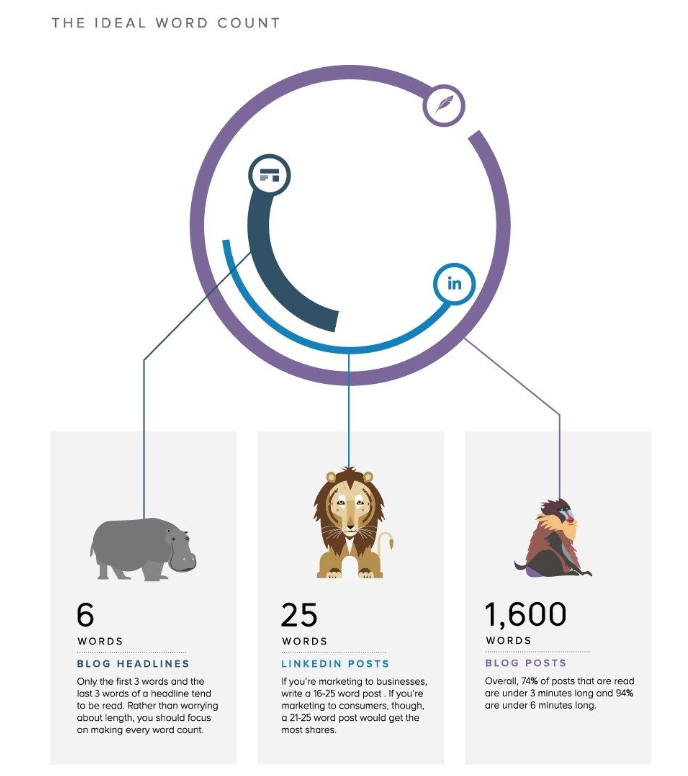
Before going for the conclusion on how long your content should be, type in your main keyword into Google and see the first 10 results. If it is longer than fifteen pages with approximately 1600 words, then it should also be long. While length is not a factor in Google ranking, offering more content signals to Google tells the entity that you are providing better information. However, if thee attract a lot of people who spend much of their time going round your page, you will fetch better rank.
5. Optimize for Mobile and Prioritize Technical SEO
Make your site friendly on both the small screen and the large screen to enhance user experience in terms of screens. Make sure that media is optimized for fast mobile loading and use applications such as Google Lighthouse to check the website on the friendliness of the mobile. Partner strongly with a strong web development team that can ensure management of technical SEO characteristics. Optimize the speed, simplicity, and effectiveness of users’ interactions through use of optimized images, few and efficient HTTP requests, browser caching, and the use of organized URLs. Optimise rich snippets using schema markup to get more visibility on search results, as below.
Conclusion
It’s important to highlight that your website’s performance growth strategy for 2025 relies heavily on understanding SEO principles. By focusing on high-quality content, effective keyword use, and a user-friendly interface, you’ll align with Google’s objectives. Striking the right balance between SEO and conversion optimization is key to creating an online marketing powerhouse that improves your search engine rankings while delivering valuable content to your audience. As SEO continues to evolve, remember: simplicity and meeting users’ needs remain paramount.
FAQs on SEO
1: Why does my site require SEO in 2025?
SEO, or Search Engine Optimization, is critical since it peoples’ site to be recognized and fetched by those search engines such as Google. Every time people want to get some information, buy something, or use a specific service, the chance for a site to appear in the list of the search results is much higher if the site is optimized.
2: How can I effectively been searching for the right keywords to use in SEO?
Consider what keywords or keyphrases your reader may enter into a search engine to find other pieces of content like yours. These are your keywords. To get the key terms; you should consider using the Google’s Keyword Planner and the use of the terms should be incorporated naturally in the website.
3: How does SEO differ from conversion optimization?
While SEO targets to optimize your web site in a manner that appeals to the search engines, conversion optimization targets guiding your site visitor to perform a special action, such as making a purchase or entering an email list. Of course, these aspects are to be balanced in order to make sure that your site ranks high, yet also offers the great experience for your visitors.
When updating old blog posts, search for the top 3 ranking pages for your target keyword. Identify what they cover that you don’t (examples, data, visuals, length). Then “skyscraper” it – create something significantly better. This strategy consistently lifts pages from page 3 to page 1.
Advanced On-Page SEO Strategies for 2026
Beyond the basics, these techniques give you an edge over competitors who only implement fundamental optimizations.
Entity-Based SEO and Topic Clusters
Google’s Knowledge Graph understands entities (people, places, things) and their relationships. Instead of optimizing for isolated keywords, build topic clusters: a central “pillar” page covering a broad topic (e.g., “On-Page SEO”) and multiple “cluster” posts covering subtopics (e.g., “meta descriptions”, “header tags”, “internal linking”). Interlink them strategically. This signals authority and comprehensiveness.
Internal Linking Automation
Manual internal linking is time-consuming. Use plugins like Link Whisper or Rank Math’s auto-linking feature to suggest relevant internal links as you write. Set rules to automatically link specific keywords to cornerstone pages. This distributes “link juice” evenly and improves crawlability.
Schema Markup Beyond Basics
Rich results increase click-through rates by 30% on average. Implement schema for:
- FAQ (as done below)
- How-to – step-by-step instructions with images
- Product – price, availability, reviews
- LocalBusiness – address, hours, phone
- BreadcrumbList – improves navigation display
Use Rank Math or Schema Pro to add these without coding. Test with Google’s Rich Results Tool.
When you have multiple pages targeting the same or very similar keywords, Google gets confused about which page to rank. This often happens when you write two blog posts about “best running shoes” without differentiating intent. Consolidate similar posts via 301 redirect or use canonical tags to specify the master page. Regularly audit your site using tools like Sitebulb or Screaming Frog to detect cannibalization.
Core Web Vitals and Real User Monitoring (RUM)
Google’s Core Web Vitals (LCP, INP, CLS) are ranking factors. Use PageSpeed Insights to measure lab data, but also set up Real User Monitoring via Google Search Console’s “Core Web Vitals” report or a tool like SpeedCurve. Focus on improving Largest Contentful Paint (LCP) below 2.5 seconds, Interaction to Next Paint (INP) below 200ms, and Cumulative Layout Shift (CLS) below 0.1. Compress images, remove unused JavaScript, and upgrade hosting.
Content Pruning and Consolidation
Low-quality or outdated pages dilute your site’s authority. Every 6 months, run an SEO audit to identify pages with:
- Zero or very low traffic (less than 10 visits per month)
- High bounce rate (>80%) and low time on page
- Thin content (under 300 words)
Either improve, merge into a stronger page, or remove (with 301 redirect to relevant content). Google rewards sites that maintain high average quality.
Key Takeaways: Your SEO Optimization Blueprint
- Value-first content: Write for humans, not search engines. Answer questions completely and uniquely.
- Keyword targeting: Focus on one primary keyword per page, plus semantic variations. Use tools like Ahrefs or Semrush for research.
- Metadata mastery: Craft unique, compelling title tags (50-60 chars) and meta descriptions (120-158 chars) for every page.
- Internal linking: Link related pages using descriptive anchor text. Aim for 3-5 internal links per new post.
- Content freshness: Update old posts with new data, examples, and insights. Add a “last updated” date.
- Mobile-first design: Test on real devices. Use responsive themes and avoid intrusive interstitials.
- Technical SEO: Optimize site speed, implement schema markup, and submit XML sitemaps to Google Search Console.
- Regular audits: Use Screaming Frog or Sitebulb quarterly to catch broken links, duplicate content, and indexation issues.
Summary
Optimizing your website for SEO is not a one‑time task but an ongoing process of refinement. By aligning your content with user intent, structuring information logically, and leveraging both on‑page and technical best practices, you create a site that search engines trust and users love. Start with the fundamentals: value‑driven content, keyword research, metadata, and mobile optimization. Then layer advanced tactics like entity‑based topic clusters, schema markup, and Core Web Vitals improvements. Regularly audit your performance using Google Search Console and analytics tools. Remember, SEO is a marathon, not a sprint. Consistent, small improvements compound into significant traffic gains over 6–12 months. Implement the strategies outlined in this guide, and your website will not only rank higher but also convert better.
Frequently Asked Questions (Expanded)