

What is Local SEO?
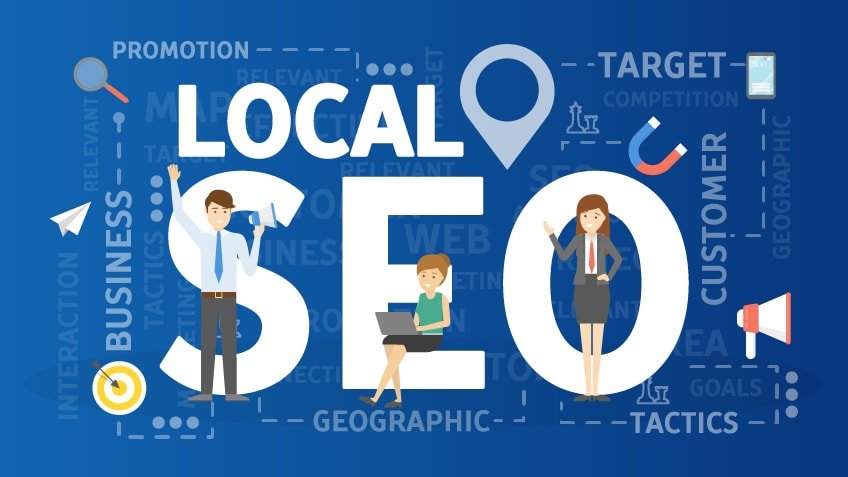
Local Search Engine Optimization (SEO) is a tactical approach designed to improve a company’s online visibility so it can directly attract customers who are actively searching for products or services within a specific geographic area. This type of optimization focuses on local searches — queries users make on search engines and online directories when they need something nearby.
The Local Search Revolution
According to Google, “near me” searches have grown by more than 500% over the past few years, and 76% of people who search for something nearby on their smartphone visit a related business within 24 hours. Nearly 30% of those visits result in a purchase. This data underscores why Local SEO isn’t just marketing—it’s the bridge between online discovery and real-world revenue.
At the center of this process is Google, particularly through its powerful tools like Google Search and Google Maps, which dominate “near me” and location-based searches. Other important platforms include Bing, the review-focused Yelp, and the navigation-driven Apple Maps.
Businesses aim to appear prominently in these local search results so potential customers can easily discover and contact them. This strategy is especially effective for brick-and-mortar stores, service-area businesses, and companies that rely heavily on local clientele or physical foot traffic.
In essence, Local SEO is a more focused and geographically targeted form of search engine optimization that drives real-world business opportunities, increases store visits, and boosts local online conversions.
Benefits of Local SEO
Having a local SEO plan has numerous benefits that cannot be disputed. Most people think of increased traffic as the first benefit, but there are numerous other advantages that might help your business develop.
Local SEO by the Numbers
BrightLocal’s annual consumer review survey reveals that 98% of consumers use the internet to find information about local businesses. Additionally, businesses that appear in the coveted “Local 3-Pack” (the top three local results shown in Google Maps) capture 44% of all local search clicks. The remaining organic results split just 56% of clicks among themselves.
The following are some advantages of local SEO:
- a rise in organic traffic – local optimization captures intent-driven searchers ready to purchase.
- higher quality traffic – visitors finding you through local searches are typically further along in the buying cycle.
- decreased expenditures for advertising – organic local rankings reduce dependence on pay-per-click campaigns.
- increased website authority – local backlinks and citations build domain strength.
- more customer testimonials – visibility encourages review generation.
- increased trust and brand recognition – appearing in local packs signals legitimacy.
- more backlinks that are local – community partnerships and local journalism create link opportunities.
- enhanced social cues – local engagement on social platforms reinforces relevance.
- improved user experience on the website – local optimization often forces better site structure and mobile responsiveness.
What exactly local SEO does for local business?
Local SEO plays a crucial role in smaller businesses that open at the regional level, While SEO aims to fill the site with traffic on searches across the world.
Local SEO assists you to promote your business’s product and services for local customers. Search engines help to collect the information for local search and it contains local content, social profile pages, links that provide the results to the user of local business.
It’s difficult and competitive for small businesses and its best which keeps you updated with new features on Search Engine Optimization Services.
There are so many plans which help you to optimize your local business existence and it will ultimately bring more traffic of new users at your site with visibility.

Initially, you have to legitimate your business to come high at search engines of Google, and in some areas you need a license for the pursuing of your business. For the listings of your business, you should put an accurate location with a short description of the product which includes your city name as well. Current Photos of your business and the category as well. You also have to use keywords.
The main plan for local listings is to get the right category of products with accurate information so that the users can stay at your site for more and spent much time over there.
Another profitable strategy is using a third party business which allows you to collect your listings and submit them. It is good for making links to put the data at other websites so that it can easily reach to the users with certain data providers. It includes bright local, text, and advice local which makes your business better with other websites and technologies.
Pro Tip: Citation Consistency Matters More Than Quantity
Search engines cross-reference your business name, address, and phone number (NAP) across dozens of directories. Even minor inconsistencies—”Street” vs “St.” or “Suite 100” vs “#100″—can confuse algorithms and hurt rankings. Tools like Moz Local, Yext, or BrightLocal can audit your citations and push corrections across the web simultaneously.
Reviews also make your business more precious. It’s having a good impact and especially on Google. It helps you to rankings high and also encourages others to have a ride over your businesses. Mostly it is seen that people come online and visits you by seeing your reviews if you have a good review then stay more at your site and if they have bad reviews it would affect you and your business badly.
They mostly read reviews for business purposes like hotels, resorts, carpet cleaners, home inspectors and carpenters, and even car leadership also includes. Then it’s important for planning a good strategy Bad execute brilliantly dealing with your users in review plays a key role. Local business needs to encourage its customers by attracting them through effective strategy and reviews. All they need is to reply positively to the quarries asked by the users or customers regarding their business or product, it will affect your business very well. And for this, you should designate one or two employees for responding or handling the reviews of the customers. Encourage the users to drop out their comments by asking them that would they like their site or boost them to drop their comments.
It optimizes your voice search through which you can search anything by saying instead of tying it saves your timings and also helps you to get more information within seconds.
Many peoples are using this voice search so that they can find a business near them easily. Local SEO is a good combination or mixture of strategies that boost or encourages the local company’s search engine rankings at both levels by map listings and organic SERPs.
Make a listing on Google My Business (GMB)
Setting up a Google My Business (GMB) listing is one of the first things to do if you want to rank in local searches. One of the benefits of having a Google My Business listing is that it serves as the modern-day counterpart of a listing in the phone book.
And secondly, it’s a crucial ranking information. Google My Business listings are the key local SEO impacting element, according to Moz’s most recent annual analysis.
Warning: Avoid GMB Suspension Triggers
Google actively monitors GMB listings for policy violations. Common suspension triggers include using virtual offices for service-area businesses that should show real locations, keyword stuffing in business names (like “Joe’s Plumbing NYC HVAC”), and having multiple listings for the same business at the same address. Once suspended, reinstatement can take weeks and requires extensive documentation.
Additionally, creating a GMB listing is not particularly difficult. You must, however, make sure that your profile is completely filled out. Google gives you a visual representation of how comprehensive your profile is. By completing all the fields, make sure this metric is at 100%.
Additionally, make sure to include a secondary business category along with your products and services. Google will prompt you to choose a primary category from a pre-selected menu of possibilities. Once this is done, you may also choose a secondary category—something many companies overlook but which provides your services additional context.
In addition, using the subcategories to your advantage will improve your Google Maps ranking.
Utilizing the Google Posts function once your listing is live is another important local SEO recommendation. You can do this to give your customers mini-posts and to demonstrate to Google that you are actively maintaining your listing. Share these posts on social media to extend the use of this function.
Google Business Profile Optimization Checklist
- Complete all information fields (100% profile completeness)
- Add primary and secondary categories
- Upload high-quality photos of your business, team, and work
- Enable messaging and respond within 24 hours
- Post weekly updates using Google Posts
- Add products or services with descriptions and pricing
- Verify your location if customers visit you
- Set service area if you travel to customers
- Respond to every review—positive and negative
- Add Q&A section and answer common questions
Optimize your web site for mobile
In recent times, Google has been shifting towards favoring websites that might be cellular pleasant, rating them increased than websites that aren’t optimized for cellular use. Just lately, Google’s algorithm modified once more, inserting quick loading cellular websites within the favored place over slower web sites.
Having an internet site with fast loading pages is already a well-known website positioning technique and with a good trigger.
At present’s web site guests need quick personal expertise. With regards to load time, 30% of holidaymakers will click on a web page in the event that they wait longer than 6 to 10 seconds for a page to load. So, a cellular-pleasant web site that hundreds rapidly must be a necessity for optimization.
Mobile Dominance in Local Search
Google’s research indicates that 82% of consumers use search engines to find local information, and 60% of all local searches now come from mobile devices. Perhaps most importantly, 88% of consumers who perform a local search on their mobile device visit or call the related business within 24 hours.
Improve your Google My Business profile.
All local businesses may use Google My Business for free to increase traffic, get customer reviews, and more. For your company to have the best chance of ranking in search, your listing must be thoroughly optimised.
Simply register for an account and add a new listing for your company. Then, so that consumers can learn more about you, you may enter your company’s address, phone number, website link, photos, hours, and more.
GMB is regarded as the most beneficial local marketing service for a reason. Use GMB to your advantage by completely improving your listing to gradually raise your local SEO.
Do inbound advertising by growing useful content material
Creating content material that provides worth is a really efficient inbound marketing technique. 71% of content marketers reported that content marketing has grown in significance in the past year.
Top-quality, useful content material is gold in terms of on-line visibility and search engine rankings. That is why it is very important to know who your purchaser personas are, and what they’re on the lookout for.
If you create related content material in your ultimate prospects, they are going to look to you for assets, and in the end for the enterprise. Having poor high-quality content material shouldn’t be going to get them there. At all times make sure that your content material solutions the questions your ultimate prospects ask, and offers the data that they want.

Local Content That Actually Works
For local businesses, content should serve hyperlocal intent. Consider creating:
- Neighborhood guides – “Best Things to Do in [Your City]” establishes local authority.
- Event coverage – Photos and recaps of local events you sponsor or attend.
- Local resource pages – Curated lists of complementary local businesses.
- “Vs” content – Comparisons between your services and alternatives.
- Behind-the-scenes – Humanizing content featuring your team and process.
Get reviews on “The Big Three”
The three huge powerhouses proper now for evaluations are Google, Fb, and Yelp. Try to be actively searching for evaluations on these platforms. Don’t make the error of discounting your organization’s on-line evaluations.
Researchers have discovered that 91% of net customers learn online reviews both often or frequently.
Much more vital, 84% say that they believe the evaluations they learn on-line as a lot as they do suggestions from associates or relations.
Pro Tip: The Review Response Formula
For positive reviews: Thank the customer specifically, mention something from their experience, and invite them back. For negative reviews: Apologize sincerely, take responsibility, move the conversation offline by providing a contact method, and follow through. Never argue publicly or make excuses—future customers are watching how you handle criticism.
Use the local business, organisation, product, and service naming conventions.
To optimise your website for local SEO, you should at the very least add local business schema, or structured data markup, to every web page. Without this, it’s extremely difficult to rank in the dreaded Google Local Pack. In order to help search engines better understand who you are, what you do, where you are located, and how you could be relevant to individuals looking for your type of products or services, you can add local schema to the pages of your website.
Your website’s product and service schema will put more of an emphasis on the specifics of each of those items. Once more, the entire philosophy of schema is aimed at conversing in the language of a robot (search engines). For them, make things simpler. English may be their second language, yet they may understand it. So, for the best local search results, communicate with them in their language.
Essential Schema Types for Local Businesses
| Schema Type | What It Does | Implementation Priority |
|---|---|---|
| LocalBusiness | Declares your business type, hours, address, and contact info | Essential – implement on homepage |
| Product/Service | Details specific offerings with pricing and descriptions | High – implement on service pages |
| Review/AggregateRating | Displays star ratings in search results | High – implement if you have 3+ reviews |
| Event | Promotes local events you’re hosting or participating in | Medium – implement when relevant |
| FAQ | Makes common questions eligible for rich results | Medium – implement on FAQ pages |
If you don’t already have one, create one on Facebook right away. Another benefit of ranking for local SEO is having social media signals pointing to your location. The very fact that the page even exists is preferable to doing nothing, even if you don’t really have to do much with it. If your business requires it, you should develop a social media plan that will enable you to manage content for multiple locations.
Create favourable customer reviews
For local SEO, the number of favourable reviews your website has on GMB plays a crucial ranking role. So one of your main objectives as a local company owner should be to gather as many favourable evaluations as you can, ideally across all of your directory platforms.
Asking clients for reviews after your engagement is a terrific approach to gather feedback. Additionally, you can send consumers follow-up emails requesting reviews on GMB, Yelp, Facebook, etc.
It’s crucial to reply to evaluations that are unfavourable. A polite, professional reaction can make a big difference. Although receiving a bad review is never pleasant, how you handle it can reveal a lot about you.
Backlinks are hyperlinks that might be posted on different websites that time to your web site – and also you want them. There are a number of methods to get backlinks from good websites, and the primary is to supply top quality, useful content material.
You need all of it to be very natural with none compelled backlinks.
Bear in mind, high quality is your major aim. When your content material will get shared, it is going to get seen and is extra prone to be referenced in others’ content material. You can even publish content material on web sites for well-known publications and embody a hyperlink to your organization within the byline and even within the physique (if it may be executed without being spammy or too sales-like). Backup links always have a good impact on your blog it makes it safe from everything.
Pro Tip: Local Link Building Strategies That Work
Sponsor local sports teams or events—they almost always link to sponsors. Join your Chamber of Commerce and get listed on their member directory. Partner with complementary local businesses for cross-promotion. Offer to write guest posts for local bloggers or news sites. Host workshops or free events and get coverage from local media. These tactics build both links and community relationships.
These are some strategies of local SEO Services to make the local search engines rankings high with some unique SEO tips and tricks. Keep one thing in mind that make your online listings up to date and add new features and functions. Also, add updated photos on your profile with a budget for local ads.
Keep optimizing your site so that mobile users or devices can quickly help them to get more rankings at Google services. Google tries to help you to send more traffic over your websites with loads of users faster than anyone with good moving web hosts on your website. In addition to this also mention your accurate telephone link so that users can call you if they found any queries regarding your business or website. Local audits links are significant which raises replies on link data it may be hurt your rankings and pull you down.
Optimize your listing for voice search
Up till just some years in the past, the one means for customers to enter data into engines like google was to sort. These days ended when Google launched its voice capabilities for looking out.
At present, increasingly individuals are utilizing their voice to seek for the issues they need. The catch is that the best way individuals speak is often completely different from the best way they sort. This might imply some revamping or at the least the addition of, extra voice pleasant key phrases. You’ll have to cease considering in textual phrases and extra in pure talking patterns. Answer the Public is an efficient place to start out.
Voice Search Optimization Tactics
Voice searches tend to be longer, more conversational, and often phrased as questions. To optimize:
- Target long-tail keywords and natural language phrases.
- Create FAQ pages that directly answer common questions.
- Optimize for “near me” searches by consistently using local schema.
- Ensure your GMB profile is complete and accurate—voice assistants pull from this data.
- Aim for featured snippets, as many voice answers are read directly from position zero.
Warning: Don’t Neglect Local Audit Links
Local audits links are significant which raises replies on link data it may be hurt your rankings and pull you down. Regularly audit your backlink profile using tools like Ahrefs or Moz to identify toxic links. Disavow spammy links that could trigger Google penalties. A clean link profile protects your rankings and maintains your local authority.
Advanced Local SEO Strategies for 2026
Hyperlocal Content and Community Integration
Search engines increasingly reward businesses that demonstrate genuine community involvement. Beyond basic citations, consider creating content that positions you as a local authority. Write about neighborhood history, sponsor little league teams and get links from their sites, participate in local events and document them on your blog. This community integration creates natural local signals that algorithms recognize.
Google Maps Optimization Beyond GMB
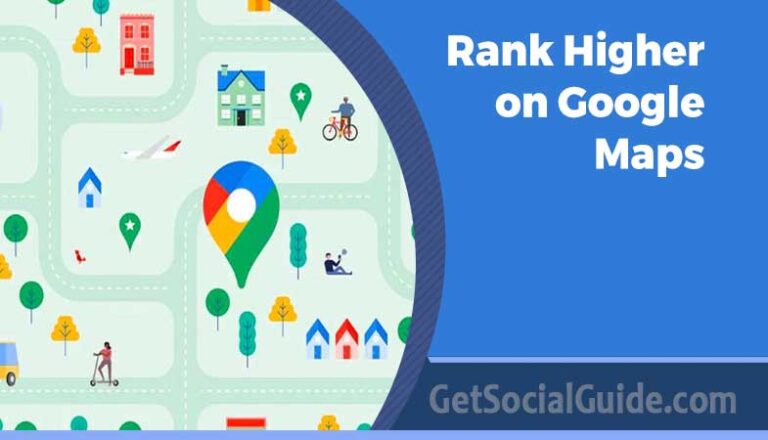
Your Google Maps ranking depends on factors beyond your GMB listing. Proximity to the searcher is crucial—you can’t change your address, but you can understand which neighborhoods you rank for. Consider service-area expansions or additional locations if your business model allows. Map placement also considers the relevance of your business category and the prominence signals from reviews, citations, and links.
Localized Link Building Through Partnerships
Build relationships with other local businesses for cross-promotion. A dentist might partner with a orthodontist for referrals—both get relevant local links. Sponsor local events and ensure you’re listed on event websites. Join your local Chamber of Commerce and get listed in their directory. These partnerships create natural, authoritative local links that search engines trust.
Measuring Local SEO Success
| Metric | What It Measures | Target Benchmark |
|---|---|---|
| GMB Insights: Search Views | How often your listing appears in search results | Increase monthly by 10-15% |
| GMB Insights: Direction Requests | How many people seek driving directions | 5-10% of total views |
| Local Pack Rankings | Position in the 3-pack for key terms | Top 3 for primary keywords |
| Review Count & Rating | Quantity and quality of customer feedback | 4.5+ stars, 10+ reviews monthly |
| Website Traffic from Local Searches | Organic traffic from location-based queries | 20-30% year-over-year growth |
| Click-to-Call Rate | Mobile users calling directly from search | 2-5% of mobile impressions |
Frequently Asked Questions
How long does it take to see results from local SEO?
Local SEO is a long-term strategy. Initial improvements may appear within 2-3 months, but significant, sustainable results typically take 6-12 months. Factors include competition in your area, the current state of your online presence, and consistent effort. Google’s algorithm updates and local market dynamics also influence timelines.
Is local SEO worth it for service-area businesses?
Absolutely. Service-area businesses (plumbers, electricians, cleaners, etc.) benefit enormously from local SEO. Setting your GMB as a service-area business allows you to hide your physical address (if you don’t serve customers there) while still ranking for the areas you serve. This protects privacy while capturing local search traffic.
How do I choose the right categories for GMB?
Your primary category should be your core business type—the most specific category available, not the broadest. For example, “Pizza Restaurant” rather than just “Restaurant.” Secondary categories can cover additional services. Review competitor listings in your area to see which categories they use successfully.
Can I do local SEO myself or should I hire a professional?
Basic local SEO—claiming your listings, encouraging reviews, creating local content—can be done in-house. However, competitive markets may require professional help for citation building, link acquisition, and technical optimization. Many businesses start with DIY efforts and escalate to agencies when they reach growth plateaus.
Conclusion
Local SEO isn’t just about rankings—it’s about connecting with customers in your community at the moment they need you. From the foundational step of claiming your Google Business Profile to advanced strategies like schema markup and voice search optimization, every effort builds toward greater visibility and more foot traffic.
The businesses that win at local SEO understand it’s an ongoing commitment. Reviews need responses. Listings need updates. Content needs refreshment. But the payoff—capturing customers ready to buy, building community trust, and dominating your local market—makes the investment worthwhile.
Start with the basics: claim and optimize your Google Business Profile, ensure consistent NAP across the web, and build a review generation system. From there, layer in content, links, and technical optimizations. With patience and consistency, your business can become the go-to choice in your community.
For authoritative guidance on local SEO best practices, consult resources from Google Search Central, which provides official documentation on local ranking factors. Moz’s Local Search Ranking Factors survey offers annual insights from industry experts. For review management strategies, Yelp for Business provides guidance on handling customer feedback professionally.
You can also learn about the importance of social media here and read the best app for online earning.




Nice info and great article. Thanks for sharing.
Thanks for nice comments keep reading and sharing
Nice Articel to read. Thanks for sharing.
thanks keep reading and sharing
I appreciate the sincerity of this write-up of yours. Can’t wait to see more!
[…] discover if the local SEO for small businesses is making your brand visible, just search your business online. It shows all relevant searches in […]
[…] products locally and optimizing local SEO can boost your sales significantly. By optimizing local SEO for your online store, search engines give more accurate and meaningful information to the local […]