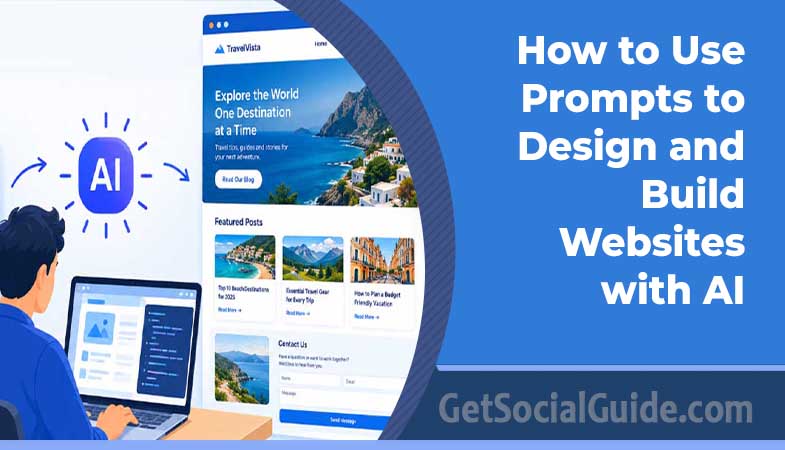
How to Use Prompts to Design and Build Websites with AI
AI website builders have changed how fast a site can go from idea to live page. But speed only helps if the output is actually good, and the output is only as good as the prompt behind it. Type “build me a website” and you’ll get something generic. Type a prompt built the way a copywriter builds a sales page, and you’ll get something that looks like it was designed for your business, not assembled from a template. This guide walks through how to think about AI prompts less like search queries and more like copywriting briefs, so the site you generate actually sounds and works like your brand.
Why Copywriting Thinking Beats “Just Describe What You Want”
Most guides to AI website prompts tell you to list your business type, pages, and color scheme. That’s a start, but it treats the AI like a form-filler instead of a collaborator. A better mental model is to write your prompt the way you’d brief a copywriter: define who you’re talking to, what they want, and why your business is the one to give it to them. AI builders generate layout, copy, and structure together, so the quality of your input copywriting directly shapes the quality of your output design.
Step 1: Know Your Audience
Before you open any AI tool, get specific about who the website is actually for. “Small business owners” is not an audience. “Independent yoga instructors who want online bookings without hiring a developer” is. The more precisely you describe the visitor, the more the AI can tailor tone, layout priorities, and even which sections matter most.
Ask yourself:
- What does this visitor already know, and what do they need explained?
- What tone do they expect — formal, casual, technical, warm?
- What decision are they trying to make when they land on the page?
- What would make them leave in the first five seconds?
Feed these answers into your prompt directly. Instead of “create a business website,” try “create a website for first-time visitors who are comparing three competitors and need to trust us within one scroll.” That single sentence changes how an AI model prioritizes hero copy, trust signals, and calls to action.
Step 2: Create Your Own Prompt Structure
Once you know your audience, don’t rely on the AI’s default questions. Build your own repeatable structure so every prompt you write covers the same five elements. This keeps your prompts consistent and makes it far easier to spot what’s missing before you ever hit generate.
1. Target Customer
Name the exact person the page is written for. Include their role, situation, or intent — not just demographics. Example: “a freelance photographer who just lost a client to a competitor with a nicer online portfolio.”
2. Desired Outcome
State what that customer wants to walk away with. Not “a website,” but the result behind the visit: more bookings, a saved hour of admin work, a sense of confidence before checkout.
3. The Benefit
Translate your product or service into the change it creates for that customer. A scheduling tool isn’t “software with calendar sync” — the benefit is “never double-book a client again.”
4. A Pain Point
Name the specific frustration your customer is currently living with. This is what your hero section and headlines should speak to directly, since people respond faster to a described problem than to a described feature.
5. The Signature Solution
Describe what makes your approach different from every other option the visitor has already looked at. This is the detail that stops a generic AI-generated page from sounding like every other AI-generated page.
Write out all five elements as short, plain sentences before you touch an AI builder. This becomes the backbone of your prompt.
Step 3: Turn the Framework into a Real Prompt
Here’s what the five elements look like combined into a single opening prompt:
“Build a homepage for independent yoga instructors (target customer) who want to fill more class spots without spending hours on admin (pain point) and want an easy way for students to book and pay online (desired outcome). The benefit is getting hours back each week and never losing a booking to a messy sign-up sheet. Our signature solution is a booking system built specifically for solo instructors, not studios, with same-day setup and no monthly software fees. Use a warm, approachable tone, an earthy color palette, and lead with a hero section that names the scheduling headache before introducing the solution.”
Notice this single prompt already tells the AI what to build (function), how to lay it out (hero-first structure), and how it should sound (warm, approachable). That’s a far stronger starting point than a one-line business description.
Step 4: Refine Section by Section
Full-page prompts rarely nail every section on the first try. Once your opening prompt generates a first draft, go section by section — hero, then about, then services, then testimonials, then contact — and refine each one using the same five-element thinking. If the pain point isn’t landing in the hero copy, rewrite that one prompt rather than regenerating the entire page. This component-by-component approach gives you far more control than trying to fix everything in one giant prompt.
Common Mistakes to Avoid
- Being too vague. “Make it look professional” gives the AI nothing to design against. Describe the audience and outcome instead.
- Skipping the pain point. Websites that jump straight to features, without naming the problem first, read as generic and forgettable.
- Treating AI output as final. AI-generated copy and layout should always be reviewed and tested by a human before it goes live.
- Reusing one prompt for every page. Your services page and your contact page serve different intents — write a fresh five-element brief for each.
Bringing It Together
AI website builders are only as sharp as the thinking you put in before you type. Skip the audience research and generic prompt, and you’ll get a generic site. Ground every prompt in a real target customer, a specific pain point, a clear desired outcome, an honest benefit, and what makes your solution different, and the AI has enough to work with to produce something that actually reads like it was written for your business. Treat your prompt like a copywriting brief, not a search query, and the design decisions that follow — layout, tone, structure — will follow naturally from it.