Is Blogging Dead? Is There Really a Future for Blogging in 2025 and Beyond?
📊 Blogging by the Numbers
- 600 million+ blogs exist out of 1.9 billion websites worldwide
- 77% of internet users read blogs regularly
- 409 million people view over 20 billion blog pages each month
- 70-80% of Google searches ignore paid ads and focus on blog posts for solutions
- 10% annual growth in Google search volume
- 53% of marketers say blogging is their top content marketing priority
- 31.7 million bloggers in the US alone (up from 31.2 million in previous year)
As we’ve established in the past, blogging is far from being extinct; in fact, it’s one of the most successful and rapidly expanding business models available online. On the other hand, there is a great deal of competition, and if you wind up making the incorrect choices, it is highly probable that you will fail. What’s the up side? If you follow the appropriate tactics, you will be able to make it work in your favour over the long run.
Pro Tip: The Blogging Mindset Shift
According to Neil Patel, the biggest mistake new bloggers make is treating their blog like a diary rather than a business. In 2025, successful bloggers think like publishers, not writers. They create content strategies, study audience analytics, and treat every post as an asset that can generate traffic, leads, and revenue for years to come.
Top Argument: Blogging is Alive
Blogging is Changing, Not Dying
Blogging is still alive. Blogging is still alive. Since the early 2000s, it has changed, just like everything else. Blogs have traditionally been considered to be opinion pieces. It was viewed as an opportunity for people to write about anything they want. With the introduction of social media and improved search engines, our method of information consumption has changed.
Podcasts are becoming more and more well-liked, and video is more powerful than ever. Old ways don’t work today, and new approaches might not work tomorrow.
Personal blogging has been slain by social networks. In light of this, blogging as a kind of content marketing is still viable and profitable for businesses, especially when it comes to SEO.
Even though social media has gained a lot of popularity, Google continues to be the most used search engine and its usage is growing by 10% annually. There are no TikTok results in Google search results. With a solid blog SEO strategy and the right content, though, you might find your blog posts on page one.
According to HubSpot, blogs are one of the three key media types used in content strategy. Currently, 77% of internet users read blogs, and this percentage won’t be declining any time soon.
| Year | Number of Blogs | Internet Users Reading Blogs | Key Trend |
|---|---|---|---|
| 2005 | 50 million | 30% | Personal journals, early adoption |
| 2010 | 150 million | 45% | Monetization begins, affiliate marketing |
| 2015 | 300 million | 60% | Content marketing explosion |
| 2020 | 500 million | 72% | Video integration, podcasting |
| 2024 | 600+ million | 77% | AI-assisted content, multimedia |
Are Blogs Still Read Today?
If you’re reading this, you probably feel hesitant to start or anxious about the future (or perhaps both). I got it. To allay some of these worries, allow me to present some facts to you.
On the internet, there are more than 1.9 billion websites. Blogs make up 600 million of those. Google receives more than 100 billion queries on average each month.
Additionally, 77% of Internet users still read blogs every day.
There are a lot of individuals reading blogs at once. But when we consider that 70–80% of Google searches disregard paid ads and concentrate on blog postings for their solutions, this becomes even better. Additionally, Google’s search volume is still increasing by 10% annually. Then, yeah Despite what internet marketing gurus claim these days, blogging is unquestionably still a thing, in my opinion.
Now that you are aware that blogging is still a viable industry, let’s discuss the elements of blogging that are now extinct or are in danger of doing so. If you want to start a blog now or have one that you want to expand in 2025 and beyond, there are several crucial factors you need to be aware of.
⚠️ Warning: The Attention Economy
According to Nielsen, the average human attention span has decreased to 8 seconds—less than a goldfish. This doesn’t mean blogging is dead; it means your content must hook readers immediately. Use compelling headlines, scannable formatting, and value-packed introductions. If you don’t capture attention in the first 3 seconds, you’ve lost a reader forever.
The End of Personal Blogging
Personal blogging — and vibrant blogging communities — used to be plentiful, but are now in decline. Personal blogs may contain journal-style posts that detail the writer’s thoughts, problems, and life events.
A celebrity-style personal blog (similar to a lifestyle blog) may cover the same topic. They usually write about their travels, marriage, children, and so on. While the second type of blogger exists, most lifestyle bloggers recognize that they must change their approach in order to keep their audience engaged.
Most people nowadays do not want to read a blog full of “what I did today” posts. As a result, the number of personal blogs is decreasing. What happens next? Blogs that are informative and inspiring.
| Blogging Type | Primary Focus | Examples | Status in 2025 |
|---|---|---|---|
| Personal Journal Blog | Daily life, personal thoughts, diary-style | “What I ate today,” “My vacation photos” | Declining rapidly |
| Lifestyle Blog | Fashion, travel, parenting, home decor | Fashion hauls, travel guides, mom blogs | Evolving (must add value) |
| Niche Authority Blog | Specific expertise, problem-solving | SEO guides, keto recipes, coding tutorials | Thriving |
| Corporate/Business Blog | Industry insights, company news, thought leadership | HubSpot blog, Moz blog | Essential for SEO |
Pro Tip: The Shift to Value-Based Blogging
According to Moz, the most successful blogs in 2025 focus on solving specific problems for a targeted audience. Instead of writing “My Favorite Recipes,” write “Keto Dinner Recipes Under 30 Minutes.” Instead of “Travel Diary,” write “How to Visit Paris on $100/Day.” The shift is from “me-focused” to “you-focused” content.
How to Build a Blog from Scratch
Here’s a step-by-step strategy to becoming a successful blogger in the face of severe competition.
Find That Perfect Niche
So, what should you write about on your blog? This is an essential question because choosing the wrong niche is the leading cause of blogger failure. Here are some pointers to help you pick the best niche for your blog. Consider your interests and passions first. What topics do you enjoy discussing? What are your specialties? Make a list of items depending on the answers to the preceding questions.
Find answers to the following questions next: What do people care about? What are people talking about on the internet? What are the current hot topics? To generate a list of keywords related to your issue, use keyword research tools such as Google Keyword Planner. Make certain that there are enough informational keywords to discuss and items to market as an affiliate. For product research, go to Amazon.com.
✅ Niche Selection Checklist
- Passion Check: Would you write about this topic for free? (Because you will, for months before making money)
- Profitability Check: Are there products to sell? Affiliate programs? Ad networks?
- Search Volume Check: Use Google Keyword Planner to verify people are searching for this topic
- Competition Check: Can you find a unique angle? Are top results thin content?
- Longevity Check: Is this a trend or evergreen topic?
Pick a Domain Name for Your Blog
When selecting a domain name for your blog, make sure it is easy to remember and fits the topic of your blog. Include your core term in your domain, but follow it with another word. For example, gaming buff. This is referred to as a partial match domain. When our domain has a goal term, it is easier to encourage visitors to click on your links. You can find available domain names by using a domain name generator like Nameboy or by visiting companies like GoDaddy and Namecheap.
According to Namecheap’s domain guide, the best domains are:
- Short and memorable (under 15 characters if possible)
- Easy to spell (avoid homophones and unusual spellings)
- Brandable (unique enough to stand out)
- .com extension (still the most trusted and remembered)
Host Your Domain
How to choose a hosting provider for your blog. With so many alternatives available, it might be difficult to select the ideal hosting service. However, it is primarily a matter of recognizing your demands and searching in the appropriate locations. Here are some guidelines to help you select the finest blog hosting service:
- Determine which features are most important. Do you require limitless storage capacity? bandwidth? a no-cost domain name? Create a list of your priorities and use them as your criteria for selecting a host.
- Consider your budget. Hosting services might cost anywhere from nothing to hundreds of dollars annually. Choose the one that meets your budget without sacrificing quality or features. I began using Namecheap since it was the most cost-effective choice available to me. Today, I continue to use it because it provides all I require as a blogger.
- Read Reviews. This is an excellent approach to determining what others think about a given host. Still undecided? Namecheap and Hostinger are now two of the most inexpensive hosting services. Therefore, selecting one of them would be prudent, especially if you wish to minimize your investment.
| Hosting Provider | Starting Price | Best For | Key Features |
|---|---|---|---|
| Namecheap | $1.98/month | Beginners, budget-conscious | Free domain, SSL, 24/7 support |
| Hostinger | $1.99/month | Performance, speed | LiteSpeed cache, free SSL, weekly backups |
| Bluehost | $2.95/month | WordPress integration | Official WordPress recommended, free domain |
| SiteGround | $3.99/month | Growing blogs, support | Excellent support, staging environments |
Create Great Content
The lifeblood of your blog is content. It must be both high-quality and SEO-friendly.
Protect your company with an SSL certificate. Order now at Namecheap for just $8.88/year!
Here are some pointers for creating affiliate-generating content:
- Create brief sentences and paragraphs.
- Use basic language and include images.
- Keyword variations should be included.
- Make extensive use of headings and bullet points.
- Write thoroughly.
You also don’t want to cram your content with keywords; this will harm your SEO rather than improve it. Include as many versions of your target keyword as feasible. You can always outsource content creation to Fiverr if you don’t want to create it yourself. You might be interested in this content writing service. You can also employ me. Send me a note with this form.
According to HubSpot, the ideal blog post length in 2025 is 2,100-2,400 words. Long-form content ranks better, gets more shares, and establishes authority. However, don’t write long just for the sake of length—every word must add value.
On-Page SEO Checklist
On-page SEO refers to optimising your content so that it ranks higher in search engines. Fortunately, building an on-page SEO strategy is similar to following a checklist. The on-page SEO checklist I employ for my blogs is as follows:
✅ On-Page SEO Checklist
- URL Structure: Include your target keyword in the URL slug. Keep it short and readable.
- Title Tag: Start with your primary keyword, keep under 60 characters, make it compelling.
- Meta Description: Include keyword naturally, write a compelling summary (155-160 characters).
- Header Tags (H1, H2, H3): Use keywords in headers, maintain hierarchical structure.
- Keyword Placement: Use primary keyword in first 100 words, naturally throughout content.
- Internal Links: Link to 2-5 related posts on your blog to keep readers engaged.
- External Links: Link to authoritative sources (they improve credibility).
- Image Optimization: Use descriptive file names and alt text with keywords.
- Mobile Friendliness: Ensure your theme is responsive and looks good on all devices.
- Page Speed: Optimize images, use caching, consider a CDN for faster loading.
- SSL Certificate: Ensure your site is HTTPS (Google ranks HTTPS sites higher).
Build Backlinks
You don’t have to start building backlinks right now. Create outstanding content, and the backlinks will follow. However, you must spread the word on many platforms such as:
- Forums
- Q&A sites on social media
- Internet forums
- Other useful websites
According to Backlinko, the best link-building strategies for 2025 include:
- Skyscraper Technique: Find popular content, create something better, and ask sites linking to the original to link to you.
- Broken Link Building: Find broken links on relevant sites, create replacement content, and notify them.
- Guest Posting: Write high-quality guest posts for authoritative sites in your niche.
- Resource Page Links: Find niche resource pages and suggest your content be added.
Post Consistently
The importance of consistent material for your blog’s growth cannot be overstated. For at least six months, publish excellent content on low-competition keywords. Eventually, you’ll start getting traffic to your content.
According to a study by Orbit Media, bloggers who post 2-3 times per week get significantly more traffic than those who post less frequently. However, quality always trumps quantity. One excellent post per week beats five mediocre posts.
How Do You Track Your Blog’s Traffic?
You can track your daily traffic with Google Search Console, as well as identify opportunity keywords to pursue, and many more uses. Opportunity keywords are search terms that are currently receiving some traffic but have the potential to provide more desirable outcomes.
Essential tools for tracking blog success:
- Google Analytics: Track visitors, page views, bounce rate, and conversions.
- Google Search Console: Monitor search performance, index status, and technical issues.
- Ahrefs/Semrush: Track keyword rankings, backlinks, and competitor analysis (paid).
- MonsterInsights: See Google Analytics data directly in your WordPress dashboard.
Pro Tip: The 80/20 Rule of Blogging
According to the Pareto Principle, 80% of your results will come from 20% of your efforts. Identify which posts are driving the most traffic, conversions, and backlinks. Then, double down on what’s working. Update and promote your top-performing content rather than constantly chasing new topics. According to Ahrefs, updating old content can increase traffic by 100%+.
Is Blogging Better than YouTube?
This question lacks a definite response. Both YouTube and blogging have advantages and disadvantages. While YouTube is better for shorter, more visual stuff, blogging is ideal for sharing longer content. While YouTube might help you reach video fans, blogging can help you develop a following of devoted readers. In the end, everything depends on your goals for your blog or YouTube channel.
| Aspect | Blogging | YouTube |
|---|---|---|
| Content Depth | Excellent for detailed, comprehensive information | Better for visual demonstrations, tutorials |
| Time Investment | 1-4 hours per post (writing, editing, images) | 3-10 hours per video (filming, editing, thumbnails) |
| Monetization | Affiliate links, ads, digital products | Ad revenue, sponsorships, merch |
| SEO | Can rank quickly for long-tail keywords | YouTube is second largest search engine |
| Audience Connection | Written word, email list building | Personal connection through video |
The best strategy? Do both. According to Social Media Examiner, bloggers who incorporate video see 3x more engagement. You can create a blog post and repurpose it into a YouTube video (and vice versa).
Evolution of Blogging
As I’ve mentioned before, there are many different types of blogging; nonetheless, personal blogging is quickly becoming an outdated form of online expression.
Content marketing is the kind of blogging that is still going strong. The primary distinction between before and after is the author/blogger putting more of an emphasis on personal blogging. However, when writing with the intention of selling content, the focus should be on the reader.
The question “How can I aid my readers to solve their problems?” is a challenge that online authors face in today’s publishing industry.
And the most successful bloggers nowadays are:
Developing content that offers solutions to problems and marketing products (their own as well as those of affiliates) that meet the challenges faced by their target demographic.
Content marketing has also grown into other areas of the internet, such as YouTube, Instagram, podcasts, and other similar mediums. And despite the fact that video is frequently touted as the medium of the future for content marketing, the printed word is still highly powerful.
| Era | Blogging Focus | Monetization | Key Platforms |
|---|---|---|---|
| Early 2000s | Personal journals, online diaries | None (hobby) | Blogger, LiveJournal |
| Late 2000s | Niche topics, authority building | Google AdSense, banner ads | WordPress, TypePad |
| Early 2010s | Affiliate marketing, product reviews | Amazon Associates, affiliate networks | WordPress, Tumblr |
| Mid 2010s | Content marketing, lead generation | Email lists, digital products | WordPress + SEO focus |
| 2020+ | Multimedia integration, authority | Courses, memberships, sponsorships | WordPress + YouTube + Podcasts |
Pro Tip: The Future is Multimedia
According to WordStream, blog posts that include video get 3x more inbound links and 83% more traffic. In 2025, successful bloggers aren’t just writers—they’re content creators who use text, video, audio, and images to serve their audience across multiple platforms.
Is Blogging Dead: FAQs
Is blogging still relevant in 2025?
Yes! In 2025, blogging will still be important. In actuality, about 409 million internet users per month read 20 billion blog pages. This is why 53% of marketers consider blogging to be their most effective content marketing technique. Furthermore, with a 12% increase over the previous five years, blogging has continued to thrive.
Are personal blogs still relevant?
In marketing, it’s essential to forging a close bond with your target market. And relating to them personally is the best approach to establish a connection. People interact and engage with content that they can relate to on a personal level. Personal blogs remain significant and are among the most often used categories of blogs. However, successful personal blogs today focus on specific niches (parenting, travel, fitness) rather than general life updates.
Do people still read blogs?
Undoubtedly, people continue to read blogs. In actuality, 77% of internet users globally enjoy reading them. Blogs are viewed by Americans alone 3X more frequently than emails. As a result, it is anticipated that there will be 31.7 million bloggers in the US this year compared to 31.2 million last year.
Is blogging dead in 2025?
No, blogging will still be relevant in 2025 and for long years to come. The fifth most trustworthy source of information on the internet, blogs are effective. What they read in blog postings is trusted by readers. According to Google, more than 60% of transactions start online, and a large portion of the search results that have an impact on sales are blog articles.
Are blogs a waste of time?
Blogging is always worthwhile, particularly if you find a market you are enthusiastic about. Blogging always yields results, whether it be for personal, professional, or brand purposes. For bloggers who wish to inform, offer counsel, share personal experiences and ideas, and promote their brand or business, blogging is a fantastic venue.
Do People Read Blogs Anymore?
Blogs are read by people, although not as frequently as they formerly were. As additional content formats have arisen, blogging has grown more competitive, therefore it’s critical for bloggers to create interesting, audience-relevant content.
Why do Most Blogs fail?
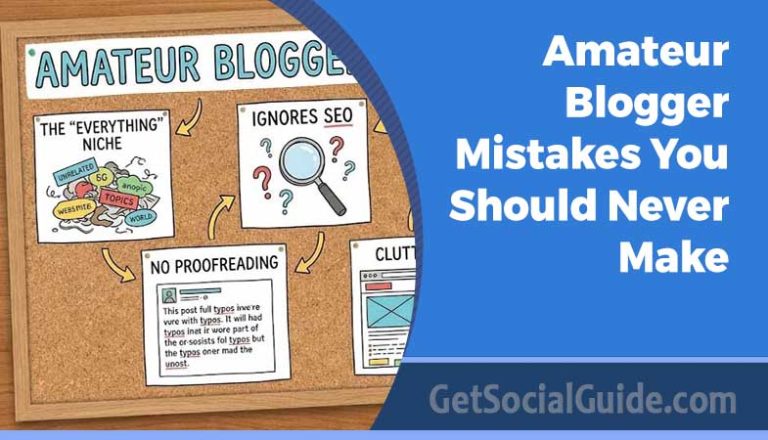
The main reason why the majority of blogs fail is that most bloggers don’t put in the effort required to make their blogs successful, however there are other factors as well. Blogging requires patience and time, so if you’re not willing to put in the time and effort, your site is probably doomed to failure. Because bloggers don’t produce content that readers want to read, many blogs fail for this reason as well.
Additional reasons blogs fail:
- Lack of promotion: Building it doesn’t mean they’ll come. You must actively promote every post.
- Inconsistent posting: Readers lose interest if you disappear for months.
- No clear monetization strategy: Without a plan to make money, you’ll burn out.
- Ignoring SEO: Great content hidden on page 10 of Google might as well not exist.
- Poor user experience: Slow sites, annoying ads, and confusing navigation drive readers away.
Does Blogging Have a Future?
There is a future for blogging, but it is unclear in what form. There are a few things that are certain, including the fact that blogs will continue to be utilised as a platform for people to express their ideas and experiences and as a crucial tool for companies to connect with clients and foster connections. With more video and audio content and more chances for readers to join in the dialogue, blogging is likely to become more interactive in the future.
Final Pro Tip: The Long Game
According to Smart Passive Income, the most successful bloggers treat their blogs as long-term assets, not get-rich-quick schemes. It typically takes 18-24 months of consistent effort to build a blog that generates meaningful income. If you’re willing to play the long game, learn continuously, and adapt to changes, blogging in 2025 and beyond offers unlimited potential.
The Future of Blogging: 2025 and Beyond
As we look toward 2025 and beyond, several trends will shape the future of blogging:
1. AI-Assisted Content Creation
AI tools like ChatGPT and Jasper are changing how content is created. However, according to Gartner, AI won’t replace human writers—it will augment them. The best bloggers will use AI for research, outlines, and first drafts, then add human insight, experience, and personality that AI cannot replicate.
2. Voice Search Optimization
With smart speakers in 35% of US households, optimizing for voice search is crucial. Voice searches are longer, more conversational, and often question-based. Bloggers who optimize for featured snippets and “people also ask” boxes will capture this growing traffic source.
3. Video Integration
Blog posts will increasingly include video summaries, tutorials, and complementary content. According to Cisco, video will account for 82% of all internet traffic by 2025. Bloggers who don’t incorporate video will fall behind.
Google’s E-E-A-T guidelines mean that blogs must demonstrate genuine expertise and experience. Personal stories, case studies, and practical examples will become even more important. Generic, AI-generated content will struggle to rank.
5. Community Building
Successful bloggers will focus on building communities, not just audiences. Email lists, membership sites, and private communities will become essential for long-term success. According to CMSWire, community-driven brands see 2x higher customer lifetime value.
6. Diversified Monetization
Relying solely on ad revenue or affiliate marketing is risky. Future-proof bloggers will diversify into digital products, courses, coaching, membership sites, and sponsored content. According to a ProBlogger survey, bloggers with 3+ income streams earn 4x more than those with just one.
Conclusion: Blogging is Alive and Thriving
Then, is blogging obsolete? In no way! Although it has undergone significant change over the past few years and is still changing, blogging is not dead. In reality, over the past few years, blogging has taken off. The majority of online business owners adore the passive revenue it provides. To make your blog successful, though, you must put effort into it just like any other business. A successful blogging formula includes being persistent and putting the appropriate strategies into practise.
No, blogging won’t disappear in 2025. and it won’t disappear in the following ten years either. However, how blog entries are consumed today is fundamentally different from how they were consumed ten years ago. If bloggers wish to continue to have success with their blogs, they must adapt and create new business models.
They will laugh in your face if you mention someone who isn’t actively participating in the company’s internet activities. They add “Don’t quit your day’s job” to the statement “Blogging is dead!” that is written on a chalkboard with nails.
Does blogging still matter? Otherwise, is it a relic of the past? Sadly, part of what the individuals are saying is true. Fortunately, neither of them is entirely true.
See, there are several types of blogging, and the sort that most people are familiar with is no longer around. It does not, however, imply that all forms of blogging are obsolete.
Read it to find out if you want to start blogging for your online business or if it’s still a good idea to establish a blog to make money!
⚠️ Final Warning: Blogging is Not a Get-Rich-Quick Scheme
The bloggers who say blogging is dead are usually the ones who gave up after 3 months of minimal results. Blogging is a marathon, not a sprint. According to ProBlogger, it takes 6-12 months of consistent effort to start seeing significant traffic and 18-24 months to build a sustainable income. If you’re willing to put in the work, learn continuously, and adapt to changes, blogging in 2025 offers unlimited potential.
You can also check following related posts regarding blogging: