The Road to WordPress 7.0: What Happened in 2026?
WordPress 7.0 — officially named “Armstrong” after jazz legend Louis Armstrong — dropped on May 20, 2026, and it is arguably the most consequential release since Gutenberg rewrote the editing experience back in 2018. Eight years of incremental evolution culminated in this single update: a native AI client baked into core, a completely rebuilt admin dashboard powered by React DataViews, PHP-only block registration, browser-side media processing groundwork, and the long-awaited groundwork for real-time collaborative editing (even if the final collaboration feature itself got pulled days before launch). Whether you manage a personal blog, a WooCommerce store, or a sprawling enterprise multisite network, WordPress 7.0 changes how you build, publish, and manage content.
This deep-dive guide covers every major feature, walks you through the safest upgrade path (including the new MySQL 8.0 / MariaDB 10.6 database floor), explains what got postponed and why, and maps out what comes next in WordPress 7.1 (“Mary Lou,” released August 19, 2026) and 7.2. Read on to get fully up to speed — and to stay ahead of the 43 percent of the entire internet that now needs to decide when and how to update.
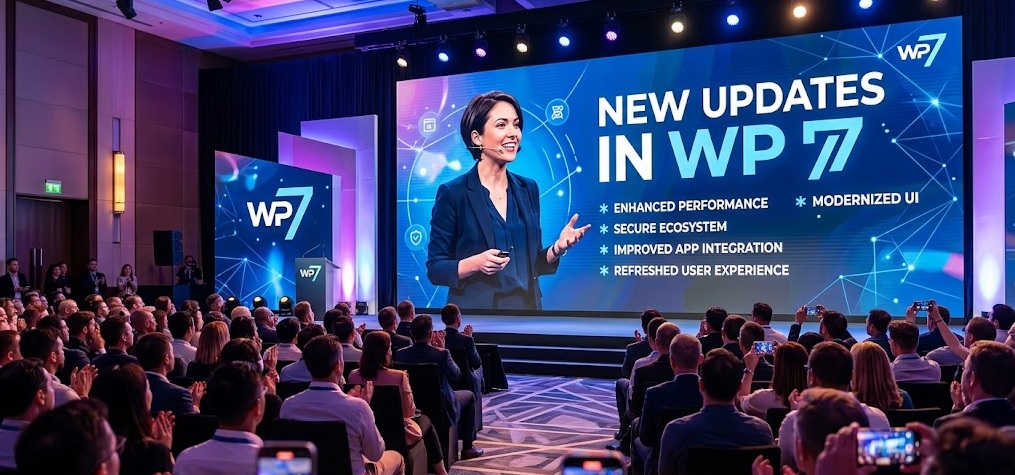
The Road to WordPress 7.0: What Happened in 2025?
To truly understand WordPress 7.0, you need to understand the turbulent year that preceded it. The WordPress community expected three major releases in 2025. That plan fell apart almost immediately. A high-profile legal dispute between WordPress.org and WP Engine created a governance crisis that had ripple effects across the entire open-source ecosystem. Automattic — the company behind WordPress.com and the single largest corporate contributor to WordPress core — temporarily halted its contributions to the project.
Because Automattic employs a disproportionately large share of core developers, that pause created an immediate capacity gap. Initiatives stalled. Coordination across teams became complicated. Mary Hubbard, WordPress Executive Director, publicly announced that no additional major release would ship until 2026. The community rallied, independent contributors stepped up, and WordPress 6.9 (“Gene”) shipped in December 2025 as a stabilization release — clearing technical debt, shipping Notes for block-level commenting, and laying the pipe for everything 7.0 would deliver.
The upside of that difficult year? The development team arrived at 7.0 with extraordinary focus. Features that shipped are stable. Features that were not ready got cut rather than rushed. That discipline shows in the release — and it is a meaningful shift in how WordPress handles major version milestones.
WordPress 7.0 Release Timeline and Development Phases
| Phase | Date | What Happened |
|---|---|---|
| Alpha / Feature Planning | November 2025 | Contributors began integrating Gutenberg Phase 3 features into core branches |
| Beta 1 | February 19, 2026 | Public testing begins; real-time collaboration features available for testing |
| Beta 2–5 | February–March 2026 | Community feedback loop; critical bugs identified in collaboration DB architecture |
| RC 1 & RC 2 | March 19, 2026 | Feature freeze; only critical bug fixes allowed |
| Extended RC Phase | April 2026 | Database stability issues discovered; RC phase extended |
| RC 3 | May 8, 2026 | Real-time collaboration pulled from core; RC 3 treated as a new beta cycle |
| RC 4 | May 14, 2026 | Final effective release candidate; final developer Field Guide published |
| Code Freeze | May 19, 2026 | No further changes permitted |
| General Release | May 20, 2026 | WordPress 7.0 “Armstrong” publicly available |
The release was originally slated for April 9, 2026 — timed to coincide with WordCamp Asia in Mumbai for maximum global visibility. The extension pushed the date back six weeks, but the core team chose stability over spectacle. The release squad was led by Matias Ventura as overall Release Lead, with Ella van Durpe, Sergey Biryukov, and Mukesh Panchal serving as technical leads, and release coordination handled by Ahmed Kabir Chaion, Amy Kamala, and Mary Hubbard.
WordPress 7.0 Key Features: A Complete Breakdown
WordPress 7.0 ships with a genuinely long list of meaningful changes. Unlike minor releases that patch bugs and tweak interfaces, this version restructures core pillars of the platform. More than 419 Core Trac tickets, 76+ enhancements, and 300+ bug fixes went into this release. Here is a structured overview before we go deep on each one:
- 🤖 WP AI Client API — Provider-agnostic, PHP-based AI infrastructure built natively into core
- 🔌 AI Connectors Screen — Unified Settings > Connectors interface for connecting OpenAI, Anthropic, Google, and other AI providers
- 🧩 Abilities API (JavaScript) — Extends AI capabilities into block-editor UI interactions
- 📋 DataViews — Modern, React-based replacement for legacy admin list tables (Posts, Pages, Media)
- 📝 Block-Level Notes — Single-user block commenting system with @mention notifications
- 👁️ Visual Revisions — Timeline slider for restoring past content versions
- 📦 PHP-Only Block Registration — Build blocks in pure PHP without JavaScript build pipelines
- 🎯 Responsive Block Visibility Controls — Hide or show blocks per device breakpoint
- 🎬 Browser-Side Media Processing Groundwork — Client-side processing APIs prepared; full feature landed in 7.1
- 🍞 New Breadcrumbs Block — Native breadcrumb navigation for FSE themes
- 🔣 New Icons Block — SVG icon embedding without plugin dependency
- 🅷 Enhanced Heading Block — More granular design and styling controls
- 🖼️ Gallery Lightbox + Slideshow — Native lightbox browsing without a plugin
- 🎥 Cover Block Video Backgrounds — Embedded video support via URL in Cover blocks
- ⌨️ Command Palette Shortcut — Faster keyboard navigation across the editor
- 🔤 Font Library — Built-in font management for all themes
- 🧱 Iframed Editor / Block API v3 — Editor runs in an iframe; legacy blocks must migrate
- 🔢 PHP 7.4 Minimum / MySQL 8.0+ or MariaDB 10.6+ — New server floors
- 🛠️ WP-CLI 3.0 — New
wp blockandwp abilitycommand sets launching alongside 7.0
WP AI Client API and Abilities API: WordPress Goes Native AI
The headline technical addition in WordPress 7.0 is the WP AI Client — a provider-agnostic PHP API embedded directly in WordPress core. For years, AI integration in WordPress meant installing heavy third-party plugins, each with their own approach, their own API keys, and their own compatibility quirks. That era is over.
The WP AI Client uses a fluent builder pattern. Developers call wp_ai_client_prompt() with method chaining: using_system_instruction(), using_max_tokens(), and generate_text(). The system is completely provider-agnostic — it does not care whether you plug in OpenAI’s GPT-4o, Anthropic’s Claude, Google Gemini, or a locally hosted model. The actual provider plugins install separately from WordPress.org and configure under a new Settings > Connectors screen.
This architecture is deliberate and clever. WordPress core does not lock users into any AI vendor. You swap providers without touching your theme or custom plugin code. For enterprise sites, that vendor flexibility is genuinely valuable — procurement teams can negotiate contracts with AI providers without forcing developers to rewrite integrations.
What Can the AI Client Actually Do?
- Adjust text tone (formal, casual, persuasive) directly in the block editor
- Summarize long-form content into excerpts
- Generate complete block patterns from a text prompt
- Answer natural language queries about site content
- Integrate with the new Abilities API for editor-level UI interactions
The Connectors API Hub
The Settings > Connectors screen is a centralised dashboard for managing all external AI API keys. Instead of pasting credentials into every plugin’s individual settings page, site administrators enter an OpenAI, Anthropic, or Google key once and every AI-aware plugin can use it. This is a genuine quality-of-life improvement for multisite networks and agencies managing dozens of client sites.
The Abilities API (JavaScript)
Alongside the PHP AI Client, WordPress 7.0 ships the JavaScript version of the Abilities API. This layer extends AI functionality into the block editor’s UI — letting plugins register their own “abilities” (discrete AI tasks) that appear contextually as users write or edit. Think of it as a structured plugin contract: rather than every AI plugin doing its own thing in the editor toolbar, they register abilities through a standard API that WordPress controls and surfaces consistently.
WP-CLI 3.0, releasing in tandem with WordPress 7.0, adds two new command sets: wp block for read-only block entity access, and the new wp ability commands for working with the Abilities API from the command line — critical for developers building automated content workflows.
ANTHROPIC_API_KEY in wp-config.php) instead of entering them in the dashboard. Also review your AI provider’s data processing agreement before connecting a site handling PII under GDPR or HIPAA.DataViews: The WordPress Admin Dashboard Is Finally Modern
If you have used WordPress for any meaningful length of time, you know the feeling: opening the Posts list, staring at a table that looked exactly the same in 2012, manually clicking through pagination to find one specific post. DataViews ends that. In WordPress 7.0, the Posts screen, Pages screen, and Media Library are rebuilt from the ground up using a modern React component architecture.
DataViews replaces static PHP-rendered admin list tables (WP_List_Table) with dynamic, client-side interfaces that support:
- Instant filtering without page reloads — filter by author, status, category, tag, or date range in real time
- Grid and list view toggle — switch between a card-based visual grid and a traditional row layout
- Inline editing — update post status, title, or author directly in the list view without opening the post
- Bulk actions — faster, more responsive handling of mass-publishing, mass-deleting, or reassigning content
- Third-party type registration via the Field API — plugins can register custom content types inside DataViews
The DataViews experience in WordPress 7.0 also includes a new Activity layout and an improved Details layout inside the Site Editor, plus a new compact list density mode. The overall effect is an admin dashboard that finally feels like a modern web application rather than a relic of the early WordPress era.
Block Editor Improvements in WordPress 7.0
WordPress 7.0 delivers a batch of editor-level improvements that content creators and site builders have been requesting for years. These are not cosmetic changes — they meaningfully expand what you can do inside the block editor without reaching for a page builder or custom plugin.
Responsive Block Visibility Controls
You can now control the visibility of any block based on the device breakpoint. A full-width hero image that looks great on desktop but clutters a mobile screen? Hide it on mobile with a toggle. A CTA block designed specifically for mobile users? Show it only on small screens. This was previously possible only through third-party plugins like Advanced Custom Fields workarounds or custom CSS classes. It is now a core feature, accessible directly from the block inspector panel.
Per-Block Custom CSS
Each block now has a dedicated Custom CSS field in the Advanced panel of the block inspector. This lets developers and advanced users write block-scoped styles without polluting the global stylesheet or adding custom CSS to the entire theme. The CSS applies only to that specific block instance, keeping stylesheets lean and debuggable.
Visual Revisions
WordPress has had revision history for years, but the old system required navigating to a separate screen and comparing text diffs. WordPress 7.0 replaces that with a visual revisions timeline — a slider that lets you scrub through past versions of a post or page and see a visual preview of each saved state. Restoring a previous version is a single click. This is particularly valuable for editorial teams where multiple contributors make changes to the same piece of content over time.
Block-Level Notes (Expanded)
Notes — which shipped initially in WordPress 6.9 — are expanded in 7.0. The system allows threaded, block-level comments tied to specific blocks rather than the document as a whole. In WordPress 7.0, Notes supports @mention notifications, so editors can tag specific team members in a comment and trigger an email notification. This creates a lightweight editorial workflow directly inside WordPress without requiring a separate project management tool.
Command Palette Shortcut
Power users gain a new command palette shortcut in the block editor, providing keyboard-driven access to common editor actions — inserting blocks, switching templates, toggling editor modes, and more. Think of it as Spotlight or VS Code’s command palette, but inside WordPress. Once you start using it, going back feels impossible.
WordPress 7.0 introduces new native blocks. The Breadcrumbs block generates dynamic breadcrumb navigation automatically based on a post’s position in the content hierarchy — essential for FSE (Full Site Editing) themes that want semantic, accessible navigation without a plugin, and it is Schema.org-ready to improve SEO structure. The Icons block lets you embed SVG icons from a built-in curated library directly into content or templates, eliminating the need for icon font plugins or custom SVG upload workarounds. The Heading block receives enhanced styling controls for more granular design work.
Gallery Lightbox and Slideshow
The Gallery block now supports a native lightbox with slideshow browsing, so visitors can click an image and page through the gallery without a plugin. This removes one of the most common reasons site owners installed third-party lightbox plugins.
Cover Block: Embedded Video Backgrounds
The Cover block — one of WordPress’s most visually versatile blocks — now supports embedded video backgrounds natively via URL. Previously, video backgrounds in Cover blocks required workarounds or custom HTML. In 7.0, you set a video URL as the Cover block’s background, and the block handles autoplay, muting, and poster fallback images automatically.
Font Library
WordPress 7.0 adds a dedicated Font Library page, giving all themes — not just block themes — built-in font management without a plugin. This is part of the broader push to reduce plugin dependency for common design tasks.
PHP-Only Block Registration: A Developer Game-Changer
This feature will not make headlines on tech blogs, but among the WordPress developer community it is genuinely transformative. Before WordPress 7.0, building a custom block required JavaScript — specifically, a React-based component registered through the block API, typically built with a Node.js build pipeline using tools like webpack or Vite.
That requirement created a meaningful barrier for developers who work primarily in PHP. A backend developer who wants to expose a custom field as a block had to either learn React tooling or hand the task to a JavaScript developer. WordPress 7.0 removes that barrier entirely. Blocks can now be registered and rendered entirely via PHP.
WordPress automatically generates Inspector controls for common attribute types — text, number, boolean, select — based on the block’s attribute schema. For simple display blocks that do not require complex JavaScript interactions, this approach eliminates build tool dependencies, reduces bundle size, and makes custom block development accessible to the entire PHP developer community. Note that at launch, PHP-only blocks are not fully dynamic and can only use certain configuration controls — complex interactive blocks still need the JavaScript API.
Iframed Editor and Block API v3: A Compatibility Deadline
WordPress 7.0 enforces an iframed post editor for any post where every block declares Block API version 3 or higher. This gives editors a much more accurate preview of the frontend, because the editor styles are isolated from admin styles. But it also creates a migration deadline: blocks still on API version 2 or lower can break inside the iframe, and the Block API documentation states that WordPress 7.0 plans to always iframe the post editor going forward.
For plugin and theme developers, the fix is straightforward: set "apiVersion": 3 in block.json and test the block inside the iframe editor. For site owners, this is another reason to audit plugins before upgrading — any custom block or third-party block that has not shipped a 2026 update is a risk.
Browser-Side Media Processing: Cut From 7.0, Shipped in 7.1
Media handling has been a persistent pain point in WordPress. Large image uploads slow down the server, eat into PHP memory limits, and create performance bottlenecks — particularly on shared hosting. The WordPress 7.0 development cycle originally planned to address this with browser-side media processing, where images and videos are compressed and resized in the user’s browser before the file is sent to the server.
That feature was cut from the 7.0 release and confirmed for WordPress 7.1, which shipped on August 19, 2026. The 7.1 implementation includes browser-side image conversion, more resilient uploads, and a new media editor modal for cropping. When it lands, the practical benefits will be significant:
- Uploading a 15MB RAW image no longer hammers the server’s PHP memory allocation
- Upload speeds improve dramatically on slow connections because the file is smaller before transfer
- Server-side PHP image libraries (GD, Imagick) handle less load
- Users on mobile connections — a growing segment of content creators — get a noticeably faster upload experience
This feature uses the browser’s native Canvas API and modern JavaScript media APIs, so there is no plugin or server configuration required. It works immediately for any site running WordPress 7.1 in a modern browser.
What Happened to Real-Time Collaboration?
The most anticipated feature in WordPress 7.0 — real-time collaborative editing, where multiple users can co-edit the same post simultaneously like in Google Docs — was pulled from the release on May 8, 2026, just twelve days before launch. This was not a soft disable or a feature flag. The code was deleted from core for RC 3.
The decision came down to architectural stability. Matt Mullenweg explained that he was “not confident with RTC being in core at this point,” citing concerns around surface area, race conditions, server load, memory efficiency, and recurring bugs found through fuzz testing. He also noted that the WP Engine lawsuit and depositions were acting as a “time DoS” for critical contributors. Project leadership made the call to cut the feature rather than ship something unstable to 500+ million websites.
The feature will be re-evaluated during the WordPress 7.1 cycle. That is not a commitment to ship it in 7.1 — it is a commitment to keep developing it. And indeed, real-time collaboration did not ship in WordPress 7.1 either. As of the 7.1 release, RTC remains in Gutenberg’s isolated experimental directory and does not currently have a targeted release date. Given how complex operational transformation (the algorithm that powers real-time co-editing) is at scale, setting realistic expectations matters. When it does ship, it will be solid.
In the meantime, editorial teams wanting collaborative WordPress workflows can look at established solutions like Notion for drafting and then publishing to WordPress via REST API, or plugins like CoAuthors Plus for multi-author attribution and workflow management.
PHP 7.4 and MySQL 8.0 / MariaDB 10.6: The New Server Floors
WordPress 7.0 raises the minimum supported PHP version to PHP 7.4, ending official support for PHP 7.2 and PHP 7.3. Both of those versions reached PHP’s own End of Life in November 2020 — they have received no security patches from the PHP project in over five years. Running a WordPress site on PHP 7.2 or 7.3 in 2026 means running on an unpatched, security-exposed server environment.
That said, the technical hard minimum documented on wordpress.org is PHP 7.2.24+, reflecting that WordPress will attempt to run on older PHP but without support or optimization. The strongly recommended minimum is PHP 8.3 or higher for security, performance, and JIT compilation benefits.
WordPress 7.0 also raises the database floor to MySQL 8.0+ or MariaDB 10.6+. This is not arbitrary — the modern database features are required for the performance and stability work in 7.0. Sites on older MySQL 5.x or MariaDB 10.x versions will not receive the update and will stay on the 6.9 branch. WordPress.org also recommends HTTPS support for every install.
| Requirement | WordPress 7.0 Status | Recommendation |
|---|---|---|
| PHP 7.2 / 7.3 | ❌ Dropped (no security updates since 2020) | Upgrade immediately — security risk |
| PHP 7.4 | ✅ Minimum supported version | Upgrade — end of life, but WP 7.0 runs |
| PHP 8.0 / 8.1 | ✅ Supported | Acceptable; plan for 8.3 upgrade |
| PHP 8.2 | ✅ Supported | Good; 8.3 preferred |
| PHP 8.3 | ✅ Recommended | Best choice for performance and security |
| MySQL 5.x / MariaDB 10.5 or older | ❌ Not supported | Upgrade database before WordPress |
| MySQL 8.0+ | ✅ Required | Minimum for 7.0 |
| MariaDB 10.6+ | ✅ Required | Minimum for 7.0 |
| HTTPS | ✅ Recommended | Enable SSL/TLS |
Most managed WordPress hosting providers — including Kinsta, WP Engine, and SiteGround — make PHP and database version changes a one-click operation in the hosting dashboard. If your host does not, it is worth evaluating alternatives before this becomes a blocking issue.
SELECT VERSION(); in phpMyAdmin or your host’s database tools.How to Upgrade to WordPress 7.0 Safely: Step-by-Step
The core team’s official guidance is to wait one to two weeks before upgrading production sites. This gives the plugin ecosystem time to release compatibility updates and gives the community time to surface any post-launch bugs. For complex sites — WooCommerce stores, multisite networks, heavy plugin stacks — that patience is well worth it. WordPress 7.0.1, released on July 9, 2026, addressed 31 bug fixes across Core and the Block Editor, including PHP 8.5 compatibility and a security-related function fix — another reason to let the first maintenance release land before upgrading production.
Pre-Upgrade Checklist
- Verify your PHP and database versions. If you are below PHP 7.4 or below MySQL 8.0 / MariaDB 10.6, upgrade those before doing anything else. Test your site on the new stack with your current WordPress version first.
- Create a full backup. Use UpdraftPlus, Jetpack Backup, or your host’s backup system. Verify the backup is complete and restorable.
- Set up a staging environment. Clone your production site to a staging URL. Your host likely provides one-click staging. If not, use a tool like Local by Flywheel for local testing.
- Update all plugins and themes on staging to their latest versions before upgrading WordPress core.
- Audit for abandoned plugins. Anything without a 2026 update is a risk — the single biggest cause of a broken upgrade is one stale plugin.
- Upgrade WordPress to 7.0 on staging and conduct thorough testing — admin screens, frontend, forms, checkout flows, editor experience.
- Pay special attention to: plugins that customize admin list tables (DataViews compatibility), editor-extending plugins (iframed editor and Block API v3), and any plugin touching PHP version-specific APIs.
- Upgrade production only after staging passes. Put your site in maintenance mode during the upgrade window.
- Monitor for 48 hours after upgrading: check error logs, test critical user journeys, and watch for unexpected behavior.
WordPress 7.1 and 7.2: What Comes Next?
WordPress returned to a three-release-per-year cadence in 2026 — a sign that the governance turbulence of 2025 is behind the project. WordPress 7.1, codenamed “Mary Lou” after jazz pianist Mary Lou Williams, shipped on August 19, 2026 — the final day of WordCamp US in Phoenix. WordPress 7.2 is planned for December 10, 2026. Here is what the roadmap looks like:
WordPress 7.1 “Mary Lou” — Released August 19, 2026
- Interactive states styling (headline feature): Style
:hover,:focus, and:activedirectly from the interface — no CSS required. Block-level support still varies, so preview the blocks you rely on. - Two new core blocks: Tabs and Playlist (with waveform visualization). The planned Table of Contents block was punted to WordPress 7.2.
- Client-side media processing confirmed: Browser-side image conversion, more resilient uploads, and a new media editor modal for cropping — the feature cut from 7.0.
- Admin and Site Editor polish: Reorganized command palette, persistent admin bar across editors, and shareable links to specific revisions.
- AI additions slipped: The proposed Guidelines system was declined for 7.1 and bigger AI Client additions were punted; Connectors did gain username and app-password authentication.
- Real-time collaboration punted entirely: Including its underlying primitives. It is not in 7.1 and has no targeted release date.
WordPress 7.2 — Planned December 10, 2026
- Table of Contents block (punted from 7.1)
- Full Gutenberg Phase 3 collaboration feature set, if the RTC architecture is resolved
- Phase 4 groundwork (Multilingual) — native multilingual support has been a Gutenberg roadmap item for years
- Advanced AI integration with the Connectors API expanded to support MCP (Model Context Protocol) adapters natively
The Gutenberg Phase 3 roadmap is ambitious. Even with the real-time collaboration delay, WordPress is moving faster toward a modern, collaborative publishing platform than at any point in its history. The Phase 4 multilingual initiative — which would build native language management directly into WordPress without requiring plugins like WPML or Polylang — remains the most transformative item on the long-term roadmap.
⚡ Key Takeaways: WordPress 7.0 “Armstrong”
- ✅ Released May 20, 2026 — named “Armstrong” after Louis Armstrong
- ✅ WP AI Client is the biggest structural addition — provider-agnostic, opt-in, and extensible, managed via Settings > Connectors
- ⚠️ AI API keys are stored in plaintext in the database by default — use environment variables for production
- ✅ DataViews replaces legacy PHP admin tables — biggest plugin compatibility risk in this release
- ✅ PHP-only block registration dramatically lowers the barrier to custom block development
- ✅ Responsive block visibility, per-block custom CSS, and visual revisions are long-overdue editor features
- ✅ New blocks: Breadcrumbs, Icons, enhanced Heading, Gallery lightbox + slideshow, and Cover video backgrounds
- ⚠️ Iframed editor enforced for Block API v3 — legacy blocks must migrate
- ❌ Real-time collaboration was cut on May 8 — code deleted from core, not just disabled, and it did not ship in 7.1 either
- ⚠️ PHP 7.4 is the new minimum, and MySQL 8.0+ / MariaDB 10.6+ is the new database floor — check both before upgrading
- ✅ WordPress 7.0.1 (July 9, 2026) fixed 31 bugs — let it land before upgrading production
- ⏳ Wait 1–2 weeks before upgrading production; always test on staging first
- 🔮 WordPress 7.1 “Mary Lou” shipped August 19, 2026; 7.2 is planned for December 10, 2026
FAQ
When was WordPress 7.0 released?
WordPress 7.0, named “Armstrong,” was officially released on May 20, 2026. The release was originally planned for April 9, 2026, but was delayed to allow additional stability work, particularly related to the real-time collaboration feature that was ultimately removed before launch.
Does WordPress 7.0 include real-time collaboration?
No. Real-time collaborative editing was pulled from WordPress 7.0 on May 8, 2026 — twelve days before launch. The code was completely removed from core (not just disabled) because Matt Mullenweg was not confident the approach was “robust enough,” citing surface area, race conditions, server load, memory efficiency, and recurring fuzz-test bugs. The feature did not ship in WordPress 7.1 either — it remains experimental with no targeted release date.
What PHP and database versions does WordPress 7.0 require?
WordPress 7.0 requires a minimum of PHP 7.4, ending official support for PHP 7.2 and PHP 7.3. The hard technical minimum documented on WordPress.org is PHP 7.2.24+, but running on these outdated versions is unsupported and insecure. The strongly recommended version is PHP 8.3 or higher. WordPress 7.0 also raises the database floor to MySQL 8.0+ or MariaDB 10.6+, and recommends HTTPS support. Check your PHP version at Tools > Site Health > Info > Server, and run SELECT VERSION(); for your database.
What is the WP AI Client in WordPress 7.0?
The WP AI Client is a provider-agnostic PHP API built natively into WordPress 7.0 core. It allows WordPress — and any plugin — to connect to external AI services (OpenAI, Anthropic Claude, Google Gemini, and others) through a standardized interface. AI provider connections are configured at Settings > Connectors using separately-installed provider plugins. The AI Client is completely opt-in — it does not activate or transmit data until a site administrator installs a connector and enters API credentials. Features include text tone adjustment, content summarization, and block pattern generation. Important: API keys entered through the UI are stored in plaintext in the database by default — use environment variables for production.
What are DataViews in WordPress 7.0?
DataViews is a modern, React-based replacement for the legacy PHP-rendered admin list tables (WP_List_Table) that powered the Posts, Pages, and Media screens in WordPress for over a decade. DataViews supports instant filtering without page reloads, switchable grid and list views, inline editing, and third-party content type registration via the Field API. It is the most significant visual and functional change to the WordPress admin dashboard in many years — and the biggest plugin compatibility risk in the 7.0 release.
Is it safe to upgrade to WordPress 7.0 immediately?
The core development team recommends waiting one to two weeks before upgrading production sites to WordPress 7.0. This allows the plugin ecosystem time to release compatibility updates and lets the first maintenance release (7.0.1, July 9, 2026, with 31 bug fixes) land. Before upgrading, you should: create a full backup, clone your site to a staging environment, update all plugins and themes to their latest versions, upgrade PHP to 7.4 or higher (8.3 recommended) and your database to MySQL 8.0+ / MariaDB 10.6+, test WordPress 7.0 thoroughly on staging — especially admin-screen plugins and editor-extending tools — and only then upgrade production. Never skip the staging test for sites with complex plugin stacks, WooCommerce setups, or customized admin screens.
What are PHP-only blocks in WordPress 7.0?
PHP-only block registration allows WordPress developers to create and register custom blocks using only PHP — without requiring JavaScript, React, or a Node.js build pipeline. WordPress automatically generates Inspector controls for common attribute types (text, number, boolean, select) based on the block’s schema. This dramatically lowers the barrier to custom block development for PHP developers and eliminates build tool overhead for simple, server-rendered display blocks. At launch, PHP-only blocks are not fully dynamic and support only certain configuration controls; complex interactive blocks still need the JavaScript API.
What are the new blocks in WordPress 7.0?
WordPress 7.0 introduces an enhanced Heading block with more styling controls, a Breadcrumbs block for dynamic navigation paths (Schema.org-ready for SEO), and an Icons block for SVG icon embedding from a built-in library. The Gallery block now supports native lightbox slideshows, and the Cover block supports embedded video backgrounds via URL. WordPress 7.1 later added Tabs and Playlist blocks.
When is WordPress 7.1 coming out?
WordPress 7.1, codenamed “Mary Lou,” was released on August 19, 2026 — the final day of WordCamp US in Phoenix. It adds interactive states styling (:hover, :focus, :active), Tabs and Playlist blocks, client-side media processing, and admin polish. It did not include real-time collaboration. WordPress 7.2 is planned for December 10, 2026, and may bring the Table of Contents block and further Phase 3 collaboration work.
Does browser-side media processing affect image quality in WordPress 7.0?
Browser-side media processing was cut from WordPress 7.0 and shipped in WordPress 7.1. It compresses and resizes images before they are uploaded to the server. The compression algorithms use quality settings designed to balance file size reduction with visual fidelity — similar to what server-side tools like ImageMagick produce. For most web use cases, the quality is indistinguishable from server-processed images. Photographers or designers uploading images for print or high-fidelity archival purposes should be aware that some lossy compression occurs and should keep original files backed up separately.
What is Block API v3 and why does it matter in WordPress 7.0?
Block API v3 is the latest block registration version. WordPress 7.0 enforces an iframed post editor when every block on the page declares API version 3 or higher, giving editors a more accurate frontend preview. Blocks still on API version 2 or lower can break inside the iframe. Developers should set "apiVersion": 3 in block.json and test inside the iframe; site owners should audit any custom or third-party blocks that have not shipped a 2026 update.
Are AI API keys stored securely in WordPress 7.0?
By default, API keys entered through Settings > Connectors are stored unencrypted in the WordPress database until an encryption patch merges. Any SQL injection, database dump, or object-cache exposure can leak the key. For production and enterprise sites, define credentials as environment variables in wp-config.php (e.g., ANTHROPIC_API_KEY) instead of entering them in the dashboard. Also review your AI provider’s data processing agreement before connecting a site that handles personally identifiable information.
Summary
WordPress 7.0 “Armstrong,” released on May 20, 2026, is the most significant major version update since Gutenberg landed in 2018. After a difficult 2025 marked by governance disputes and contributor slowdowns, the WordPress community delivered a release that is architecturally ambitious, well-tested, and genuinely forward-looking.
The headline additions — the WP AI Client, the Connectors API hub, DataViews admin redesign, PHP-only block registration, responsive block visibility controls, visual revisions, the new Heading/Breadcrumbs/Icons blocks, and native Gallery lightbox support — collectively move WordPress from a legacy CMS into a modern, extensible publishing platform capable of competing with headless and SaaS alternatives. The real-time collaboration feature was cut before launch for sound architectural reasons; its development continues, but it did not ship in 7.1 and remains experimental with no targeted release date.
The new server floors are just as important as the features: PHP 7.4 minimum and MySQL 8.0+ / MariaDB 10.6+ mean some sites cannot update until their hosting stack is modernised. And the plaintext AI API key storage is a security caveat every production site should address before connecting a provider.
For site owners and developers: upgrade your PHP to 8.3 and your database to MySQL 8.0+ or MariaDB 10.6+, test thoroughly on staging (especially admin-touching and editor-extending plugins), wait for the 7.0.1 maintenance release (July 9, 2026) before touching production, and then embrace what WordPress 7.0 brings. WordPress 7.1 “Mary Lou” has already shipped (August 19, 2026) with interactive states styling, Tabs and Playlist blocks, and client-side media processing; WordPress 7.2 is planned for December 10, 2026. The platform is in good hands, moving in the right direction, and — after a year of uncertainty — moving fast again.