📌 Key Takeaways: Your 2026 WordPress SEO Blueprint
- AI integration is non‑negotiable: Use AI tools for research, structuring, and optimization, but always inject your unique human expertise to maintain authenticity.
- Speed = rankings: Core Web Vitals (LCP, INP, CLS) are direct ranking factors. Optimize hosting, caching, images, and code for sub‑2‑second loads.
- Topic clusters build authority: Move beyond isolated posts. Create pillar pages supported by detailed cluster content to demonstrate comprehensive expertise.
- Schema markup wins clicks: FAQ, HowTo, and Review schema can earn rich results and featured snippets, dramatically improving CTR.
- Mobile‑first is the only way: Google indexes and ranks the mobile version of your site. Ensure responsive design, touch‑friendly elements, and mobile‑optimized speed.
- Continuous optimization: SEO is not set‑and‑forget. Regularly audit performance, update content, and refine your strategy based on data.
WordPress SEO 2026: The Ultimate Guide to AI Blog Optimization and Speed Performance
The WordPress SEO landscape has undergone a dramatic transformation in 2026. With artificial intelligence reshaping search algorithms and user expectations reaching new heights, bloggers and website owners must adapt their optimization strategies to remain competitive. This comprehensive guide reveals the exact techniques, tools, and tactics needed to dominate search rankings while leveraging AI capabilities and maximizing site performance.
Whether you’re launching a new WordPress blog or revitalizing an existing website, understanding modern SEO principles combined with cutting‑edge speed optimization and AI‑powered content strategies will determine your success in today’s competitive digital environment.
Understanding WordPress SEO in the AI‑Driven Era
Search engine optimization for WordPress websites has evolved far beyond basic keyword insertion and meta tag optimization. Google’s sophisticated algorithms now evaluate hundreds of ranking factors, with artificial intelligence playing a central role in determining which content deserves top positions.
The integration of generative AI in search results means your content must not only rank well but also earn citations in AI‑generated summaries. This fundamental shift requires WordPress site owners to focus on demonstrating genuine expertise, providing exceptional user experiences, and building comprehensive topical authority rather than chasing quick ranking manipulations.
The New SEO Fundamentals for WordPress
Modern WordPress SEO success depends on mastering three core pillars: technical excellence, content quality, and user engagement signals. Each element interconnects with the others, creating a holistic optimization approach that search engines reward with higher visibility and increased organic traffic.
Technical SEO foundation involves ensuring your WordPress installation runs efficiently, loads quickly across all devices, implements proper schema markup, maintains clean URL structures, and provides search engines with clear signals about your content’s purpose and relevance. Without solid technical fundamentals, even the best content struggles to achieve rankings.
Content quality standards have elevated dramatically with AI detection capabilities now identifying thin, duplicated, or artificially generated content. Your WordPress blog must publish original insights, demonstrate subject matter expertise, incorporate real‑world examples, and provide comprehensive answers that satisfy user intent completely.
User engagement metrics including dwell time, bounce rate, pages per session, and interaction signals inform search algorithms about content quality and relevance. WordPress sites that captivate visitors, encourage exploration, and deliver satisfying experiences naturally accumulate positive behavioral signals that boost rankings.
AI Blog Optimization: Leveraging Technology Without Losing Authenticity
Artificial intelligence tools have revolutionized content creation workflows for WordPress bloggers, but understanding how to use these technologies ethically and effectively separates successful sites from those that get penalized or ignored.
The Right Way to Integrate AI in Your WordPress Workflow
AI content tools should augment human creativity and expertise rather than replace them. The most successful WordPress bloggers in 2026 use artificial intelligence for research assistance, content structuring, and optimization refinement while maintaining their unique voice and genuine insights throughout all published material.
Research and ideation phase represents where AI tools provide maximum value. Use advanced platforms like ChatGPT, Claude, or specialized SEO tools to analyze competitor content, identify content gaps, discover trending topics in your niche, generate comprehensive outlines, and uncover questions your target audience frequently asks. This research foundation ensures your WordPress content addresses real user needs with depth and specificity.
Content creation process should blend AI efficiency with human expertise. Start with AI‑generated outlines and research summaries, then infuse personal experience, original case studies, unique perspectives, and practical examples that only you can provide. This combination produces content that ranks well while providing genuine value that AI alone cannot replicate.
Quality assurance and optimization represents another area where AI excels. Tools like Grammarly, Hemingway Editor, and Surfer SEO can polish your writing, improve readability scores, suggest semantic keywords, identify structural improvements, and ensure your WordPress content meets technical optimization standards before publication.
AI Tools Every WordPress Blogger Should Use
The WordPress ecosystem in 2026 offers numerous AI‑powered plugins and platforms designed specifically for content optimization and search engine performance.
| Tool | Primary Function | Best For | Integration |
|---|---|---|---|
| Rank Math SEO | AI‑powered content analysis & on‑page optimization | Real‑time suggestions, competitor comparison, schema | WordPress plugin |
| Clearscope / MarketMuse | Content optimization & topic research | Identifying semantic keywords, content grading | Web app + API |
| Jasper / Copy.ai | AI writing assistance | Headlines, meta descriptions, first drafts | Web app + browser extensions |
| Surfer SEO | Real‑time content scoring & competitor analysis | Keyword density, content length, structure | WordPress plugin + web app |
| Grammarly / Hemingway | Writing polish & readability | Grammar checks, style improvements | Browser extensions, WordPress via plugins |
Rank Math SEO has emerged as the leading WordPress SEO plugin, incorporating AI‑powered content analysis that provides real‑time suggestions for improving on‑page optimization. The plugin analyzes your content against top‑ranking competitors, suggests semantic keywords, evaluates readability, checks schema markup implementation, and offers actionable recommendations for enhancement.
Clearscope and MarketMuse represent premium content optimization platforms that analyze top‑ranking content for your target keywords, identify critical topics and subtopics you must cover, suggest semantic terms for natural integration, and provide content grading that predicts ranking potential before publication.
Jasper and Copy.ai serve as AI writing assistants that can generate first drafts, create multiple headline variations, develop content outlines, write meta descriptions, and produce social media promotion copy. Remember these tools work best when providing the initial framework that human editors then refine and personalize.
Surfer SEO integrates directly with WordPress through plugins, offering real‑time content scoring as you write, keyword density recommendations, optimal content length suggestions, and competitive analysis that ensures your content matches or exceeds what currently ranks in top positions.
WordPress Speed Optimization: The Non‑Negotiable Ranking Factor
Page speed has transitioned from nice‑to‑have to absolutely essential for WordPress SEO success. Google’s Core Web Vitals now directly impact rankings, with slow‑loading sites suffering significant visibility losses regardless of content quality.
Core Web Vitals Mastery for WordPress
Understanding and optimizing the three Core Web Vitals metrics determines whether your WordPress site succeeds or struggles in search rankings.
Largest Contentful Paint (LCP) measures how quickly your main content loads and becomes visible to users. WordPress sites must achieve LCP under 2.5 seconds for good user experience. Factors affecting LCP include server response time, render‑blocking resources, slow resource load times, and client‑side rendering delays.
Improving LCP on WordPress requires selecting quality hosting providers with SSD storage and adequate resources, implementing robust caching solutions that serve static content instantly, optimizing images through compression and modern formats like WebP, eliminating render‑blocking CSS and JavaScript, and using content delivery networks to serve assets from geographically closer servers.
First Input Delay (FID) and its replacement metric Interaction to Next Paint (INP) evaluate how quickly your WordPress site responds to user interactions. Visitors expect immediate feedback when clicking buttons, filling forms, or navigating menus. Sites with JavaScript‑heavy themes or excessive plugins often struggle with interaction responsiveness.
Optimize interaction metrics by minimizing JavaScript execution time, breaking up long tasks into smaller chunks, using web workers for heavy computations, implementing code splitting to load only necessary scripts, and regularly auditing plugins for performance impact.
Cumulative Layout Shift (CLS) measures visual stability during page loading. WordPress sites frequently suffer from layout shift issues caused by images without defined dimensions, advertisements that load asynchronously, dynamically injected content, and web fonts that cause text reflow.
Eliminate layout shift by specifying width and height attributes for all images, reserving space for advertisements before they load, avoiding inserting content above existing content, and using font‑display: swap for web fonts with proper fallback sizing.
Essential WordPress Speed Optimization Techniques
Implementing systematic speed optimization transforms WordPress site performance and directly improves search rankings.
Premium hosting selection represents the foundation of WordPress speed. Shared hosting environments rarely provide the resources needed for optimal performance. Managed WordPress hosting from providers like WP Engine, Kinsta, or Cloudways delivers optimized server configurations, automatic scaling, built‑in caching, and expert support specifically for WordPress sites.
Caching implementation dramatically reduces server load and improves response times. WordPress caching operates at multiple levels: page caching stores complete HTML output, object caching saves database query results, browser caching stores assets locally on visitor devices, and CDN caching distributes content globally. Install WP Rocket or W3 Total Cache to implement comprehensive caching strategies with minimal configuration.
Image optimization workflow should become standard practice before uploading any media to WordPress. Convert images to WebP format for 25‑35% smaller file sizes without quality loss, compress images using tools like ShortPixel or Imagify, implement lazy loading so images load only when entering viewport, and serve responsive images with appropriate sizes for different devices.
Database maintenance prevents WordPress from slowing down over time as unnecessary data accumulates. Regularly remove post revisions, delete spam comments, clean expired transients, optimize database tables, and limit posts loaded on archive pages. WP‑Optimize automates these maintenance tasks on a scheduled basis.
Plugin audit and minimization directly impacts both speed and security. Each active plugin adds code execution overhead, database queries, and potential security vulnerabilities. Regularly review installed plugins, deactivate and delete unused ones, consolidate functionality where possible, and choose well‑coded plugins with good performance profiles.
Content Delivery Network integration serves static assets from servers geographically closer to your visitors, dramatically reducing load times for international audiences. Cloudflare offers free CDN services with additional security features, while premium options like StackPath or BunnyCDN provide enhanced performance and detailed analytics.
Advanced WordPress SEO Strategies for 2026
Beyond fundamental optimization, sophisticated WordPress SEO techniques separate leading blogs from the competition.
Search engines increasingly favor websites that demonstrate comprehensive expertise in specific subject areas rather than sites with scattered content across unrelated topics.
Topic cluster architecture organizes your WordPress content around central pillar pages supported by detailed cluster articles that explore specific subtopics. This structure signals topical authority to search engines while providing visitors with comprehensive information resources.
Create pillar content that covers broad topics comprehensively in 3,000+ word articles serving as definitive resources. Develop 10‑20 cluster articles that dive deep into specific aspects of your pillar topic, each targeting long‑tail keywords and addressing particular user questions. Implement strategic internal linking between pillar pages and clusters, and maintain consistent content quality across all related articles.
For example, a WordPress SEO pillar page might support clusters covering plugin comparisons, technical optimization guides, content strategy development, link building tactics, local SEO implementation, and analytics interpretation. Each cluster links back to the pillar while interconnecting with related clusters, creating a web of topical relevance.
Schema Markup Implementation for Rich Results
Structured data helps search engines understand your WordPress content and display enhanced results that attract more clicks.
Article schema should be implemented on every blog post, including headline, author information, publication date, featured image, and publisher details. Most modern WordPress SEO plugins automatically generate basic article schema, but manual optimization can add additional properties for enhanced visibility.
FAQ schema transforms question‑answer sections into expandable rich results that dominate search engine result pages. Format your frequently asked questions with clear markup that search engines can extract and display prominently, often earning featured snippet positions.
HowTo schema applies to tutorial and instructional content, displaying step‑by‑step instructions directly in search results with images, time estimates, and supply lists. WordPress sites publishing tutorials should implement HowTo schema for maximum visibility.
Review and rating schema enables star ratings to appear in search results for product reviews, comparisons, and recommendation articles. These visual enhancements significantly improve click‑through rates from search engine result pages.
Implement schema markup using WordPress plugins like Rank Math or Yoast SEO Pro, or add custom JSON‑LD code to your theme. Validate all structured data using Google’s Rich Results Test and monitor performance in Search Console’s Rich Results report.
Mobile Optimization Excellence
With mobile‑first indexing now the default, Google exclusively uses your mobile site version for ranking decisions.
Responsive design principles ensure your WordPress theme adapts seamlessly across all device sizes, from smartphones to tablets to desktop monitors. Test your site on multiple devices and screen sizes, verify that all content remains accessible on mobile, ensure navigation works with touch interactions, and confirm that text remains readable without zooming.
Mobile speed optimization requires special attention since mobile connections are often slower and less reliable than desktop. Minimize mobile page size below 1‑2MB when possible, eliminate unnecessary elements on mobile layouts, optimize images specifically for mobile viewing, and implement aggressive caching for mobile users.
Touch‑friendly interface elements make mobile interaction comfortable and intuitive. Ensure buttons and links have sufficient size (minimum 48×48 pixels), provide adequate spacing between clickable elements, avoid hover‑dependent functionality, and test form usability on mobile devices.
Content Optimization Strategies That Drive Rankings
Quality content remains the cornerstone of WordPress SEO success, but modern content optimization involves sophisticated strategies beyond basic keyword usage.
Keyword Research and Intent Matching
Effective WordPress content begins with understanding what your target audience searches for and why they’re searching.
Search intent classification divides queries into informational (learning about topics), navigational (finding specific sites), commercial (researching products), and transactional (ready to purchase). Align your WordPress content with appropriate intent stages to satisfy user expectations.
Long‑tail keyword targeting offers beginners and smaller sites the best opportunity for quick ranking success. These 3‑5 word phrases have lower competition, clearer intent, and often higher conversion rates than broad single‑word keywords.
Keyword clustering groups related search terms that can be addressed within single comprehensive articles rather than creating separate thin content for each variation. This approach builds topical depth while avoiding keyword cannibalization where multiple pages compete for the same rankings.
Use keyword research tools like Ahrefs, SEMrush, or free alternatives like Google Keyword Planner to identify opportunities. Prioritize keywords based on search volume, competition level, relevance to your expertise, and commercial potential.
Writing Content That Earns Featured Snippets
Position zero in search results provides maximum visibility and drives significant organic traffic to WordPress sites.
Featured snippet formats include paragraph snippets (40‑60 word answers), list snippets (numbered or bulleted steps), table snippets (comparison data), and video snippets (YouTube content). Structure your WordPress content to match these formats for specific target queries.
Answer questions directly in concise, clear language immediately after relevant headings. Search engines often extract these direct answers for featured snippet display. Follow answers with additional context and details for readers wanting comprehensive information.
Use strategic formatting including header tags (H2, H3) for question‑style queries, numbered lists for step‑by‑step processes, tables for comparative information, and bullet points for feature lists. This formatting makes content easy for both humans and search algorithms to parse and understand.
Internal Linking Architecture
Strategic internal linking distributes page authority throughout your WordPress site while helping search engines understand content relationships and site structure.
Contextual link placement within article body content provides the most SEO value. Link to related articles when naturally referencing topics covered elsewhere on your site, use descriptive anchor text that includes target keywords, and aim for 3‑5 internal links per 1,000 words of content.
Hub page strategy creates central resource pages that link to all related content on specific topics while cluster articles link back to the hub. This architectural approach concentrates authority on important pages while distributing it strategically throughout your WordPress site.
Fresh content linking involves regularly updating older high‑performing articles to link to newer related content. This practice keeps authority flowing throughout your site while improving the discoverability of new articles.
While on‑page optimization and technical excellence provide the foundation, building external authority through quality backlinks remains essential for competitive WordPress SEO.
Ethical Link Building Strategies
Focus on earning natural links through exceptional content and strategic outreach rather than manipulative schemes that risk penalties.
Guest posting on authoritative sites in your niche provides valuable backlinks while exposing your expertise to new audiences. Pitch unique, high‑quality content to sites that already cover topics related to your WordPress blog’s focus, provide genuine value in guest articles, and include natural contextual links back to relevant content.
Digital PR and media outreach can earn high‑authority links from news sites, industry publications, and influential blogs. Create newsworthy content like original research, data studies, expert surveys, or trend analyses that journalists and bloggers want to reference.
Resource page link building involves finding curated resource lists in your niche and requesting inclusion when your WordPress content provides exceptional value. Search for “keyword + resources” or “keyword + useful links” to discover these opportunities.
Broken link building identifies valuable pages with broken outbound links and suggests your relevant content as replacement. Use tools like Ahrefs or Check My Links browser extension to find broken link opportunities on high‑authority sites.
Content promotion and amplification increases the likelihood of earning natural links as more people discover your WordPress content. Share new articles across social media, engage with influencers in your niche, participate in relevant online communities, and reach out to people mentioned in your content.
Monitoring Performance and Continuous Improvement
Successful WordPress SEO requires ongoing measurement, analysis, and refinement based on performance data.
Essential Analytics Setup
Implement comprehensive tracking to understand how visitors find and interact with your WordPress site.
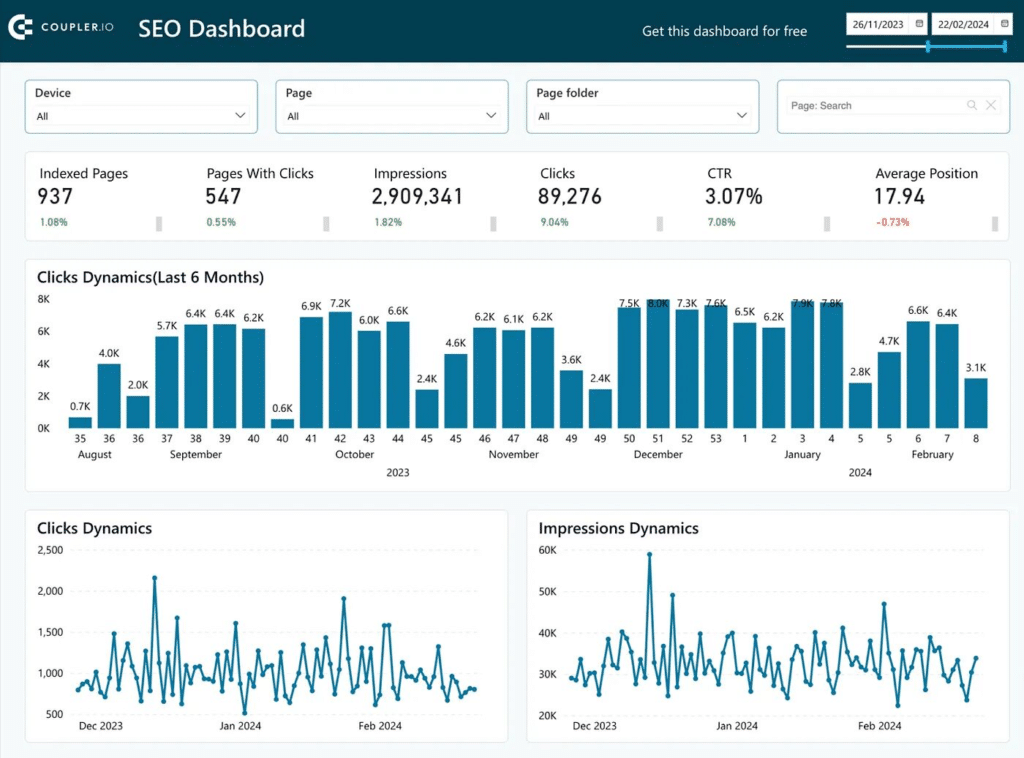
Google Search Console provides direct insight into how Google perceives your site, tracks search performance including impressions and clicks, identifies indexing issues, monitors Core Web Vitals performance, and alerts you to manual actions or penalties.
Google Analytics 4 measures user behavior, tracks traffic sources, analyzes engagement metrics, monitors conversions, and provides demographic information about your audience.
Rank tracking tools monitor your WordPress site’s search positions for target keywords over time. While rankings fluctuate, tracking trends helps evaluate SEO strategy effectiveness and identify optimization opportunities.
Performance Analysis and Strategy Refinement
Regular analysis of SEO metrics enables data‑driven optimization decisions.
Monthly SEO audits should examine organic traffic trends, evaluate ranking changes for target keywords, identify top‑performing content, discover ranking opportunities (positions 11‑20), review technical issues from Search Console, and assess backlink profile growth.
Content performance evaluation reveals which topics resonate with your audience, which formats drive engagement, which call‑to‑actions convert best, and which articles need updating or improvement.
Competitor analysis keeps you informed about industry trends, content gaps to fill, link building opportunities, and technical optimizations to implement.
Frequently Asked Questions
Is AI‑generated content penalized by Google?
Google’s algorithms focus on content quality, not how it was produced. AI‑generated content that is helpful, original, and demonstrates E‑E‑A‑T (Experience, Expertise, Authoritativeness, Trustworthiness) can rank well. However, thin, auto‑generated spam violates Google’s guidelines. Always edit and add unique human insight.
What is the best WordPress SEO plugin for 2026?
Rank Math SEO is currently the most feature‑rich and AI‑integrated option, offering powerful schema generation, keyword tracking, and content analysis. Yoast SEO remains a solid choice for beginners, while SEOPress offers a lightweight alternative.
How often should I update my WordPress site for SEO?
Update content regularly – aim to refresh top‑performing articles every 6‑12 months with new data, examples, and links. Core WordPress, plugins, and themes should be updated as soon as security patches are released to maintain performance and safety.
Do I need a separate mobile site for SEO?
No, Google recommends responsive design (the same HTML served to all devices with CSS adapting layout). This simplifies maintenance and avoids common pitfalls of separate mobile sites like duplicate content.
How important are backlinks in 2026?
Backlinks remain a strong ranking factor, but quality now far outweighs quantity. A few links from authoritative, relevant sites matter more than hundreds of low‑quality directory links. Focus on earning links through exceptional content and genuine relationships.
What is the ideal WordPress site speed?
Aim for LCP under 2.5 seconds, INP under 200ms, and CLS under 0.1. Total page load time should ideally be under 3 seconds. Use tools like GTmetrix and Google PageSpeed Insights to monitor.
Should I use a page builder for SEO?
Modern page builders like Elementor and Bricks Builder can produce SEO‑friendly code if optimized. However, some builders add bloat. Test your site’s performance and consider lightweight themes like GeneratePress or Kadence if speed is a priority.
How do I recover from a Google penalty?
Identify the penalty type via Search Console. Manual actions require fixing the issue (e.g., removing spammy links) and submitting a reconsideration request. Algorithmic drops require improving overall site quality – focus on E‑E‑A‑T, removing thin content, and enhancing user experience.
Conclusion: Your WordPress SEO Action Plan
WordPress SEO success in 2026 requires balancing technical optimization, strategic AI integration, superior content quality, and exceptional user experiences. The strategies outlined in this guide provide a comprehensive roadmap for achieving and maintaining top search rankings.
Begin by auditing your current WordPress site’s speed performance and Core Web Vitals scores. Implement fundamental speed optimizations including quality hosting, caching, and image optimization. Install and configure a comprehensive SEO plugin like Rank Math to handle technical optimization fundamentals.
Develop your content strategy around topic clusters that demonstrate expertise in specific areas rather than publishing scattered articles across unrelated subjects. Use AI tools to enhance research and optimization while maintaining authentic human insights and experiences in all published content.
Build authority gradually through consistent quality content publication, ethical link building, and genuine engagement with your niche community. Monitor performance metrics regularly, learn from successes and failures, and continuously refine your approach based on data insights.
The WordPress sites that dominate search rankings in 2026 combine technical excellence with exceptional content and strategic promotion. By implementing these strategies systematically and maintaining consistent effort, your WordPress blog can achieve sustainable organic traffic growth and long‑term SEO success.
Ready to Dominate WordPress SEO in 2026?
Download our free “WordPress SEO Audit Checklist” – a 50‑point actionable guide to audit and optimize your site for speed, AI readiness, and rankings.