
- 43% of all websites on the internet use WordPress
- Over 70 million new posts are published on WordPress each month
- 87% of WordPress themes display author names by default
- 64% of website owners have considered removing author names for branding consistency
- 35% of multi-author sites use a generic “Editorial Team” author profile
- 92% of WordPress users prefer plugin solutions over manual coding
Working with the WordPress Post data appears to be exciting – as everyone knows, WordPress automatically inserts the Author’s name and date once a post is published. It is, without a doubt, the most useful feature in WordPress. However, there are a variety of situations where you may want to remove and change the author name from WordPress posts, and this is done merely to avoid creating a negative impression.
Would you like to remove the name from your WordPress posts? WordPress does not allow you to publish articles without a name by default. In this article, we’ll show you a few different ways to remove the Author’s name from your WordPress posts.
Pro Tip: Understanding WordPress Template Hierarchy
According to WordPress.org’s template hierarchy, author information is typically displayed in several template files depending on where it appears. Single posts use single.php, archive pages use archive.php, and content parts often use content.php or template parts. Knowing where to look is half the battle when removing author names manually.
Easiest Method
Remove name Name from WordPress Posts Using a Plugin This methodology is simpler and really useful for all customers. However, it could not work with all WordPress themes. The very first thing you could do is set up and activate the Show Hide name plugin. For extra particulars, see our step-by-step information on the best way to set up a WordPress plugin. Upon activation, you could go to the Plugins » Show/Hide name web page to configure plugin settings. The plugin mechanically hides the Author names for all put up sorts.
You can use this display to show the name’s name for a specific post type. You may also add customised URLs beneath the post types if you want to hide the name-name.
Everything has been accomplished! The Author’s name is mechanically hidden by this plugin. If you want to specify the Author name for a specific post type, you can do so on the display. You can also enter unique URLs just beneath the post types if you want to hide the Author name. The Author’s name can be hidden in many cases with this plugin. However, your WordPress theme should display the following textual material before the Author name.
For example, the phrase “by Albert Thomas” would now just be “by.” After that, if you want to hide this ‘by’ line, surf your website and hover your cursor over the words you want to hide. Then, from the browser menu, pick to examine the instrument by pressing the relevant click. Discover the div class, as well as your Author byline, here.
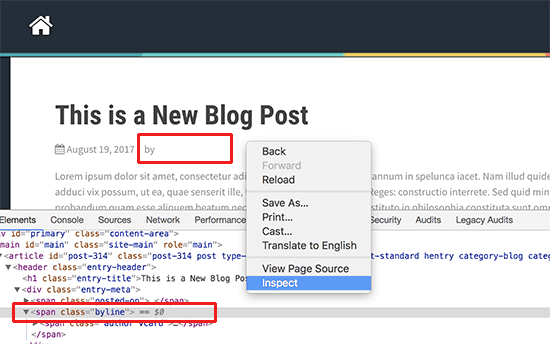
Just copy the CSS class that’s used right here and paste it within the plugin settings under Advanced choices.

Now, click on the Save Changes button to retailer your settings.
| Plugin Name | Key Features | Ease of Use | Best For |
|---|---|---|---|
| Show/Hide Author | Hide author by post type, custom CSS options | Very Easy | Beginners, non-technical users |
| WP Meta and Date Remover | Remove author, date, categories with one click | Easy | Quick bulk removal |
| Remove Author Box | Specifically targets author bio boxes | Easy | Removing author boxes only |
| Ultimate GDPR & CCPA | Includes author removal, privacy compliance | Intermediate | Sites needing privacy compliance too |
⚠️ Warning: Plugin Compatibility
According to WordPress.org support, not all plugins work with all themes. Before installing any plugin, check its compatibility with your WordPress version, read recent reviews, and test on a staging site first. Plugin conflicts can cause white screens, layout breaks, or other unexpected issues.
To prevent a negative impression, like an outdated post or disqualification as the author, it’s important to act promptly. By default, WordPress themes assign customized sorting of posts by update and Author name. However, there may be instances where adjustments are necessary due to unattractive or old content in certain areas. In such cases, removing outdated elements becomes crucial and desirable – but only sporadically rather than frequently – for creating fresh user experiences while maintaining credibility over time.
After delving into the topic of motivation, it’s probable that you’ll need particular strategies to attain your desired outcome. Multiple approaches exist for eliminating the author’s name from a WordPress post; however, three have been selected due to their user-friendliness which we will elaborate on below.
| Reason | Description | Example Scenario |
|---|---|---|
| Outdated Content | Old posts may have authors no longer with the company | Former employee’s name still appearing on company blog |
| Brand Consistency | Using “Editorial Team” instead of individual names | News sites where multiple editors contribute |
| Privacy Concerns | Authors want to remain anonymous | Sensitive topics, whistleblower content |
| Guest Posts | Guest authors may not want permanent attribution | One-time contributors, freelance writers |
| Design Preferences | Cleaner layout without author bylines | Minimalist design trends |
Best for Single Posts
Sometimes chances are you’ll require to indicate one other Author, then the one who added the put up in WordPress. Therefore, you don’t have to repeat and paste the entire WordPress put up with a consumer account. Also, you can’t change your WordPress username, however, the name you utilize for a put up or web page may be modified.
Before Changing the Name of a Post
If you wish to show your name in a put up, which is written by one other Author, then make it possible for the Author exists in your WordPress web site. However, you possibly can handle and see all of the customers on your website. For this, you need to log in to your WordPress administrator account after which click on the customers’ web page from the dashboard.
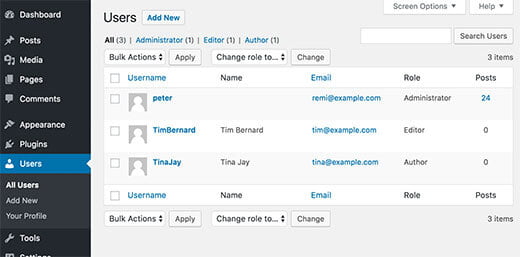
You must observe some steps proven beneath: First, you need to edit the put up or web page, which you need WordPress change Author name for. On the put up edit display, click on on the display choices menu on the top proper nook of the display.

Now you possibly can see a dropdown menu with a special sort of choice. And you could test the “name” chosen field.
Next, scroll down on the put up edit display that’s beneath the put up editor. Here, you will notice the Author field. Click on the drop-down menu and select one other Author that you really want.
Click on the save draft or replace button to avoid wasting your modifications.
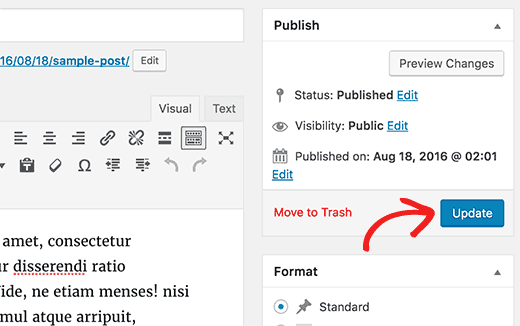
Now you will have efficiently change the Author name of a put up.
If you frequently change authors, consider adding the Author field to your main post editing screen permanently. Go to Screen Options (top right) and check “Author” once—it will remain visible for all future edits. According to WPBeginner, customizing your screen options can save you hours of clicking over time.
Best for Bulk Editing
To change the Author for a group of posts, follow the procedures below: It is, however, quite simple to change the Author simply editing a post. If you want to change the Author name for several posts at once. Editing a post and changing the Author takes more time. We do, however, have a simple method for doing so. You can modify the Author name of several postings in a simple manner. To do so, navigate to your WordPress admin bar’s put up menu.
You will also have a record of all of your posts. WordPress displays 20 posts per web page by default. If you want to show more posts, go to the display options and choose the number of posts per web page that you want to show.

Now, you need to select the put up the place you wish to change the Author. When you will have chosen the put up, then select “edit” from the “bulk actions” drop-down menu and after that click on on the “apply button”.

Now, WordPress will show your bulk edit meta field. You have to decide on the brand new Author by clicking on the drop-down menu that’s subsequent to the name choice.
After this, click on on the replace button and save your modifications. Now you will have efficiently change the Author name for a number of posts.
| Method | Best For | Time Required | Difficulty |
|---|---|---|---|
| Single Post Edit | One-off changes, specific posts | 1-2 minutes per post | Very Easy |
| Bulk Edit | Multiple posts, same author change | 5-10 minutes for 20-50 posts | Easy |
| Plugin | Removing author entirely, automation | 10 minutes setup | Very Easy |
| Manual Code Edit | Complete control, theming | 15-30 minutes | Advanced |
Pro Tip: Bulk Edit Limitations
According to Kinsta, WordPress bulk edit only allows changing the author to existing users. You cannot set a blank author or remove the author field entirely using bulk edit. For complete removal, you’ll need plugins or manual code editing. Also, bulk edit works in batches—you may need to repeat the process for all your posts.
You could edit the WordPress theme files using this way. Before making any changes, make sure you have a backup of your theme or child theme. If something goes wrong, you’ll be able to simply reverse the alterations. The Author’s name is usually indicated by several types of code in WordPress themes. Now find and delete the code in your theme files that is superintended for displaying the Author’s name.
The single.php, archive.php, index.php, and content material.php files are the most common places to look for this code. You may be unable to locate the code that prints the Author’s name in the majority of cases. Instead, you’ll notice a template tag defined in the capabilities.php or template-tags.php files. The Twenty Seventeen theme that’s posted on, for example, uses the function twenty seventeen to identify the Author name and post date/time. The template-tags file, on the other hand, explains how this works.
function twentyseventeen_posted_on() {
  // Original code that displays author and date
  // We'll modify this to remove author
}
Now, take away the code that outputs the Author’s name. Just see the beneath given instance:
function twentyseventeen_posted_on() {
  // Modified version with author removed
  // Keep only date functionality if desired
}
Don’t overlook to avoid wasting your modifications and add the files again to your web site. At final, save your modifications and add the files again to your web site.
| Theme File | Purpose | What to Look For |
|---|---|---|
| single.php | Controls single post display | the_author(), posted_by, author-meta |
| archive.php | Controls archive/category pages | the_author_posts_link(), author bylines |
| content.php | Template part for post content | entry-meta, author classes |
| functions.php | Theme functions and hooks | Custom posted_on() functions |
| template-tags.php | Common theme functions | Author display functions |
⚠️ Critical Warning: Always Use a Child Theme
According to WordPress.org developer documentation, editing your parent theme directly is dangerous. When you update your theme, all manual changes will be lost. Always create a child theme before making any code modifications. If you’re not familiar with child themes, use the plugin method instead—it’s safer and easier.
Best Workaround
While this solution doesn’t eliminate the Author’s name, it serves as a viable workaround. Essentially, you’ll create a generic Author alias and implement it for both past and future written works. Prior to publishing each article, consider altering the pre-established pseudonym accordingly. However, note that once enacted changes cannot be reversed; should you decide to revert back to your unique identity later on – manually modifying all published content will be necessary. Without delay let us begin by renaming your WordPress site with an editorial-inspired username!
Next, go to Users » All Users and choose the username you recently made by clicking on the ‘Edit’ button. On the user profile screen, locate the ‘Nickname’ section and insert your preferred name (like Editorial Team). Once done, select this nickname from the drop-down menu next to ‘Display name publicly as’.
To personalize your consumer account, feel free to add a brief bio and an avatar. Head over to the Posts > All Posts page and navigate to Screen Options on the top menu. By entering 999, various tools will appear enabling you to swiftly adjust Author names for multiple posts. Choose the checkbox option for all posts followed by edit from majority actions drop-down list. Next, click ‘Apply’ button if ready then proceed with WordPress’s diverse editing alternatives at your disposal now!
You want to vary the Author to the generic Author name you added earlier after which click on replace button. WordPress will now replace all chosen posts and alter the Author name. Remember, this course might take a while relying on how briskly your WordPress hosting is. If you will have greater than 999 posts, then you will want to go to web page 2 and repeat the process. That’s all, now you can go to your web site to see it in motion.
According to WPMU DEV, a well-crafted generic author profile can actually build trust. Include a professional bio, an avatar (like a team logo), and links to your main social media accounts. This creates a consistent brand voice across all content. Some sites even use “The Editorial Team” with a team photo to humanize the brand.
Comparison of All Methods
| Method | Technical Skill Required | Time Investment | Permanent Solution | Best Use Case |
|---|---|---|---|---|
| Plugin (Show/Hide Author) | None | 5-10 minutes | Yes (until plugin disabled) | Beginners, non-technical users |
| Single Post Edit | None | 1-2 minutes per post | Yes | Changing author for specific posts |
| Bulk Edit | None | 5-15 minutes | Yes | Changing multiple posts to same author |
| Manual Code Edit | Advanced (PHP/CSS) | 15-30 minutes + testing | Yes (if using child theme) | Complete control, theming |
| Generic Author | None | 10-20 minutes | Yes (for future posts) | Brand consistency, editorial teams |
Troubleshooting Common Issues
If the author name persists after using a plugin, try these steps:
- Clear your browser cache and any caching plugins (like W3 Total Cache or WP Super Cache)
- Check if your theme has custom author display functions that override plugins
- Try the CSS method within the plugin (copy the author’s div class)
- Consider using a different plugin if the first doesn’t work
Bulk Edit Not Working
If bulk edit doesn’t change authors as expected:
- Ensure you’ve selected the correct posts (checkboxes)
- Verify the new author exists in your users list
- Try with a smaller batch of posts first
- Check if your WordPress installation is up to date
Manual Code Changes Lost After Theme Update
This happens when you edit the parent theme directly. Solutions:
- Create a child theme and move all modifications there
- Use a code snippets plugin (like Code Snippets) to add custom functions
- Document your changes so you can reapply them after updates
If your new generic author shows zero posts after reassigning:
- Wait a few minutes for WordPress to update post counts
- Check if posts were successfully updated (edit one to verify)
- Run a database repair if counts don’t update after 24 hours
Pro Tip: Testing Before Applying
According to WordPress.org troubleshooting guide, always test changes on a staging site first. If you don’t have a staging site, consider using a maintenance mode plugin while making changes. For bulk operations, start with a small batch of posts to verify the results before processing hundreds.
Yes, you can. Using the bulk edit method, select only the specific posts you want to modify. For a more automated solution, consider using conditional logic in a child theme or a plugin that allows post-type specific settings.
According to Yoast, removing author names from posts doesn’t directly harm SEO. However, author archives can provide valuable content for search engines. If you remove author attribution, consider creating an “About Us” page that explains your content creation process to maintain E-E-A-T (Experience, Expertise, Authoritativeness, Trustworthiness).
Author archive pages (example.com/author/username) will still exist unless you specifically disable them. If you’re using a generic author, those archive pages will show all posts by “Editorial Team.” You can disable author archives using an SEO plugin like Yoast or Rank Math.
Yes, but it requires additional coding. You can use the the_author filter in your functions.php file to modify what appears in RSS feeds. This is an advanced customization that may require developer assistance.
The generic author method is the closest to a no-code, no-plugin solution. While it doesn’t technically remove the author name, it replaces individual names with a consistent editorial attribution, achieving a similar visual result.
The author bio box is usually controlled separately from the byline. Many themes have specific settings to disable author boxes. If not, you can use CSS to hide it (display: none) or a plugin specifically designed to remove author boxes.
7. Will these methods work on custom post types?
Most plugins and the generic author method work on all post types by default. Manual code editing requires identifying the correct template files for your custom post type. The bulk edit method works on any post type listed in your admin panel.
8. What’s the safest method for beginners?
According to WPBeginner, using a well-reviewed plugin is the safest method for beginners. It requires no coding knowledge, can be undone easily, and won’t break your site if you make a mistake. Start with the Show/Hide Author plugin and only explore other methods if needed.
9. How do I revert changes if something goes wrong?
For plugins: simply deactivate and delete the plugin. For bulk edits: restore from backup or manually revert posts. For code changes: restore your original theme files from backup. Always keep regular backups of your entire WordPress site using plugins like UpdraftPlus or your hosting provider’s backup service.
Yes, but that’s separate from post authors. Comment author names are controlled by comment templates and usually require theme modifications or plugins designed for comment customization.
Summary
Although the second methodology to remove the Author’s name from WordPress posts shouldn’t be the best. This is as a result of you aren’t using the child theme. Thus, updating the theme overrides your modifications.
For this motive, we advise you to utilize the primary methodology to take away the Author from WordPress posts, the place you possibly can create a normal Author name. As a consequence, it is possible for you to make the most of the built-in WordPress performance that doesn’t want any modifying of the code. Although it won’t get rid of the Author’s name or archives, it makes them normal. Besides that, it ensures there may be names consistency in your web site.
Nonetheless, if you’re excellent with coding, you possibly can mix the 2 strategies. Here, you’ll first make a normal Author name for publishing your posts. After that, you’ll hard-code the Author profile in your WordPress child-theme.
Final Pro Tip: Choose What Works for You
The best method depends on your specific situation. If you need a quick fix for a few posts, use single post edit. If you’re rebranding an entire site with hundreds of posts, use bulk edit with a generic author. If you want complete design control and have coding skills, manual editing with a child theme gives you the most flexibility. According to WordPress.org support, there’s no one-size-fits-all solution—choose the method that matches your technical comfort level and long-term goals.
We hope this text helped you learn to take away Author names from WordPress posts. You may wish to see our record of 25 effective ways to monetize your website. If you appreciated this text, then please subscribe to our YouTube Channel for WordPress video tutorials. You may discover us on Twitter and Facebook.
You can also check following related posts:



hello! , Is fantastic composing hence considerably! portion many of us keep up the distance learning more details on this page on Yahoo? I personally need to have a consultant for this house to end my personal challenge. Might be that may be a person! Looking to appearance an individual.. ransomware
thanks keep reading and sharing